
How Student Loan Default Can Threaten a Law License
A practical guide to how student loan default can affect attorneys, bar admission, and professional standing.
Why Student Loan Default Matters for Lawyers
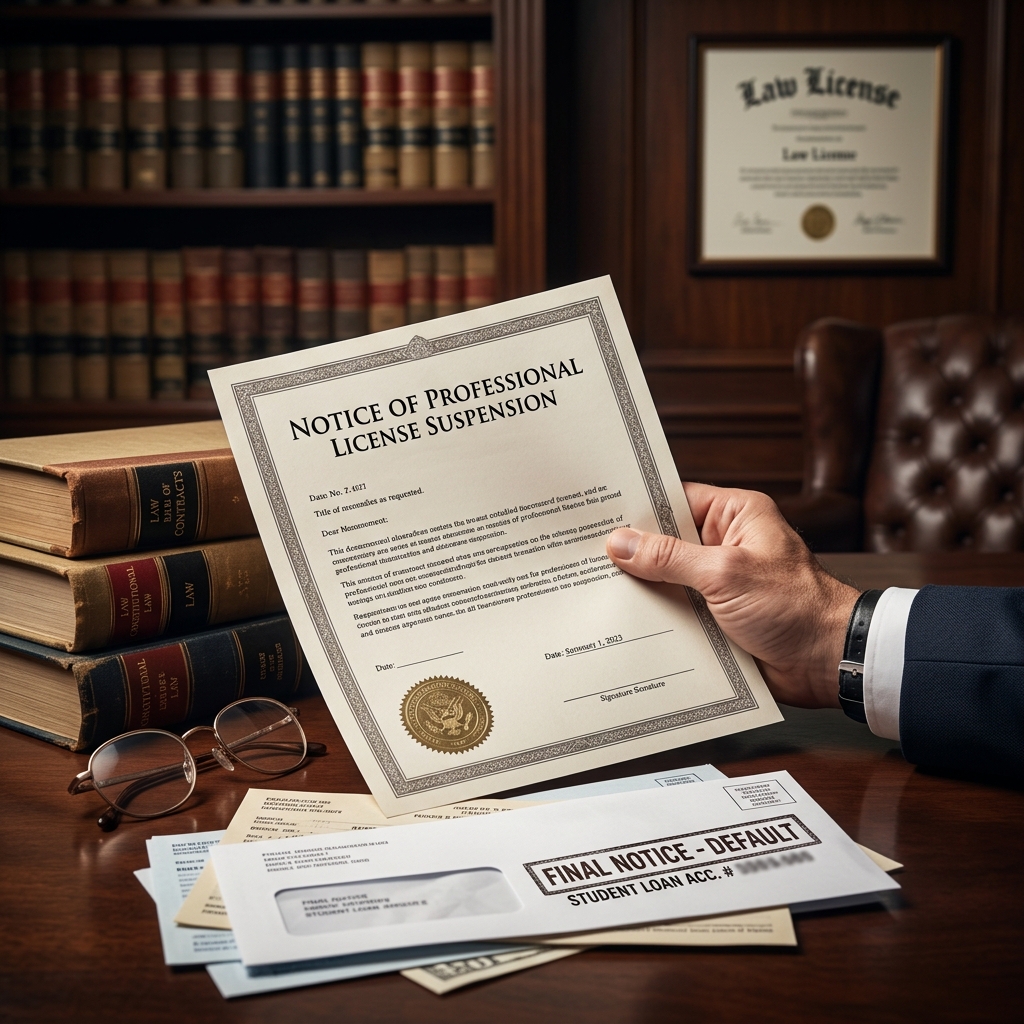
Student loan default is often discussed as a credit problem, but for lawyers it can become a professional problem as well. A borrower who falls too far behind may face collection costs, legal action, and long-term damage to credit, but attorneys may also face questions about licensing and professional discipline in some jurisdictions.
That makes student loan default different from ordinary consumer debt. For a lawyer, the consequences can extend beyond personal finances and affect the ability to practice, renew a license, or obtain approval from a professional board that has authority to review financial responsibility.
What Counts as Default on a Student Loan?
A student loan generally enters default after a borrower has missed payments for a long enough period, with federal sources commonly identifying 270 days, or about nine months, of nonpayment as the threshold for default.
Once the loan is in default, the borrower is no longer simply late. The full unpaid balance may become immediately due, collection activity can begin, and the borrower typically loses access to options such as deferment, forbearance, and certain repayment plans.
- Delinquency means payments are late.
- Default means the missed payments have reached the legal threshold.
- Acceleration can make the entire debt due at once.
- Collection costs may be added to the balance.
How Default Can Affect a Legal Career
For attorneys and law school graduates, default can create a distinct licensing risk. Some states allow professional and vocational boards to revoke, suspend, or refuse to certify a license when the license holder has defaulted on student loan debt, and the category can include attorneys, teachers, physicians, and other licensed professionals.
This does not mean every state automatically disciplines lawyers for default. Instead, it means the legal profession is one of several fields where state oversight can intersect with debt enforcement. A lawyer may still owe the debt regardless of licensing status, but in some places the debt can also become relevant to professional standing.
In practice, the risk often depends on state law, the licensing board involved, and whether the board has specific authority to review unpaid obligations tied to student loans. Because the rules vary, lawyers facing default should not assume that a private financial problem will stay private.
Financial Consequences That Can Spill Into Practice
Default can affect more than a license. It can also put pressure on a lawyer’s personal finances and, indirectly, on a legal practice. Federal sources state that borrowers may owe late fees, additional interest, and collection costs, and that the debt may be transferred to a collection agency.
That pressure can matter for solo practitioners, small-firm lawyers, or recent graduates building a practice. A default can make it harder to obtain new credit, buy a car, qualify for a mortgage, or maintain the stable cash flow often needed to support a growing practice.
Common consequences include:
- damaged credit history
- loss of eligibility for new federal student aid
- collection fees and added charges
- possible wage garnishment or offset of tax refunds
- court action by the government or lender
What the Government and Lenders Can Do
Federal student loan debt can be aggressively collected. According to federal sources, the Department of Education may sue to collect a defaulted loan, and there is no traditional statute of limitations limiting its ability to pursue collection. Collection tools may include wage garnishment, tax refund offset, liens on real property, and recovery from bank accounts or other assets.
Private lenders can also pursue collection, though their methods usually depend on contract rights and court procedures. In many cases, a private lender must sue, obtain a judgment, and then use that judgment to pursue remedies such as garnishment or seizure through lawful process.
The following comparison shows the practical difference between federal and private collection paths:
| Topic | Federal Student Loans | Private Student Loans |
|---|---|---|
| Collection authority | Government collection powers can include administrative remedies | Usually requires court process and a judgment |
| Wage garnishment | May occur through federal collection tools | Generally requires court order |
| Tax refund offset | Possible | Typically not available in the same way |
| License impact | Can matter where state law allows board action | Depends on state rules and case outcomes |
Why Credit Damage Matters for Attorneys
Lawyers often depend on strong credit for both personal and professional reasons. A default can lower credit scores and remain visible on a credit report for years, making future borrowing more expensive or difficult.
That matters because many lawyers rely on credit to manage bar dues, office space, equipment, transportation, relocation, or a transition between jobs. A damaged credit profile can also affect housing, insurance, and utility approvals, creating additional friction during a career when flexibility is already limited.
For a lawyer, this is more than an inconvenience. It can affect the ability to start a practice, relocate for work, or handle the uneven income common in the early years of legal employment.
Ways to Get Out of Default
The good news is that default is not always permanent. Federal borrowers may have several paths to restore the account to good standing, including rehabilitation and consolidation, and some borrowers can regain eligibility for federal student aid by making satisfactory repayment arrangements.
Loan rehabilitation often requires a series of timely payments over a set period, while consolidation can combine the defaulted loan into a new federal loan under qualifying conditions. These options do not work the same way, so the best choice depends on the borrower’s income, timing, and the status of the debt.
- Rehabilitation can help repair the default through a payment plan.
- Consolidation can move the debt into a new federal loan if the borrower qualifies.
- Settlement may reduce the amount owed on some private loans, but may not erase default status.
- Direct communication with the loan holder is often the first step.
What Lawyers Should Do Early
Because default can affect both finances and professional standing, lawyers should respond quickly rather than wait for collection action to escalate. The first step is to identify whether the debt is federal or private, since the available remedies differ significantly.
After that, borrowers should review whether rehabilitation, consolidation, or repayment negotiations are available. If a lawsuit has already been filed, it is important not to ignore the case. A failure to respond can lead to a default judgment, which may give the creditor stronger tools to collect.
Attorneys should also check state licensing rules, since some boards have special procedures for delinquent or defaulted student debt. A lawyer who practices in more than one jurisdiction may need to review each state separately.
Best Practices for Protecting Your License and Career
Lawyers facing student loan problems can reduce risk by acting early and documenting every step. Even if the debt feels overwhelming, a structured response is usually better than silence.
- Confirm whether the loans are federal, private, or a mix of both.
- Request a current account status and identify whether the loan is delinquent or already in default.
- Ask about rehabilitation, consolidation, settlement, or repayment plans.
- Review state bar or licensing rules for financial responsibility requirements.
- Keep records of every payment, letter, and phone call.
- Get legal help quickly if a lawsuit or license issue has started.
Frequently Asked Questions
Can student loan default automatically take away a law license?
No. Default does not automatically remove a law license everywhere. Some states give licensing boards authority to revoke, suspend, or refuse to certify certain professional licenses, but the rule depends on state law and the specific board involved.
Does default mean the full loan balance is immediately due?
Yes. Once a loan enters default, the lender or government can treat the full unpaid amount as due immediately, which is often called acceleration.
Can the government take a lawyer’s tax refund or wages?
Yes, federal sources say the government can pursue wage garnishment, tax refund offset, and other collection tools against defaulted federal student loans.
Is there any way to fix a defaulted loan?
Yes. Depending on the loan type, borrowers may be able to rehabilitate the loan, consolidate it, or negotiate another resolution. The correct path depends on whether the loan is federal or private.
Should a lawyer wait to see if the problem goes away?
No. Default can trigger fees, collections, court action, and possible licensing consequences. Early action usually provides more options than waiting.
When Professional Help Makes Sense
Many borrowers can start by contacting the loan servicer, but lawyers may benefit from additional help when the debt has reached default or when a license is at stake. A student loan attorney, consumer lawyer, or professional licensing lawyer can help evaluate defenses, negotiate with the lender, or respond to a lawsuit.
This is especially important if a state licensing board has begun asking questions, because those proceedings can carry deadlines and formal disclosure duties. A coordinated response can help protect both the debt position and the ability to keep working.
References
- Consequences of a Student Loan Default — FindLaw. N.D. https://www.findlaw.com/bankruptcy/debt-relief/consequences-of-a-student-loan-default.html
- Consequences of Default and Actions to Take — UCCS Financial Aid. N.D. https://finaid.uccs.edu/types-of-aid/educational-loans/default15
- Student Loan Default — Goldenberg Law Firm. N.D. https://www.goldenbergfirm.com/debt-relief/student-loans/student-loan-default/
- Lawsuits to Collect Federal Student Loans — Student Loan Borrower Assistance. N.D. https://studentloanborrowerassistance.org/for-borrowers/dealing-with-student-loan-debt/default-debt-collection/collection-of-student-loan-debt/lawsuits-to-collect-federal-student-loans/
- What to Do If You’re Facing Student Loan Default — Kaplan Law Firm. N.D. https://www.financialrelief.com/what-to-do-if-youre-facing-student-loan-default/
- Student Loan Delinquency and Default — Federal Student Aid. N.D. https://studentaid.gov/manage-loans/default
Similar Articles








Read full bio of Sneha Tete




