
How School Districts Influence Child Custody Decisions
Understanding how school quality, location, and educational stability can shape custody arrangements and court decisions about your child’s future.
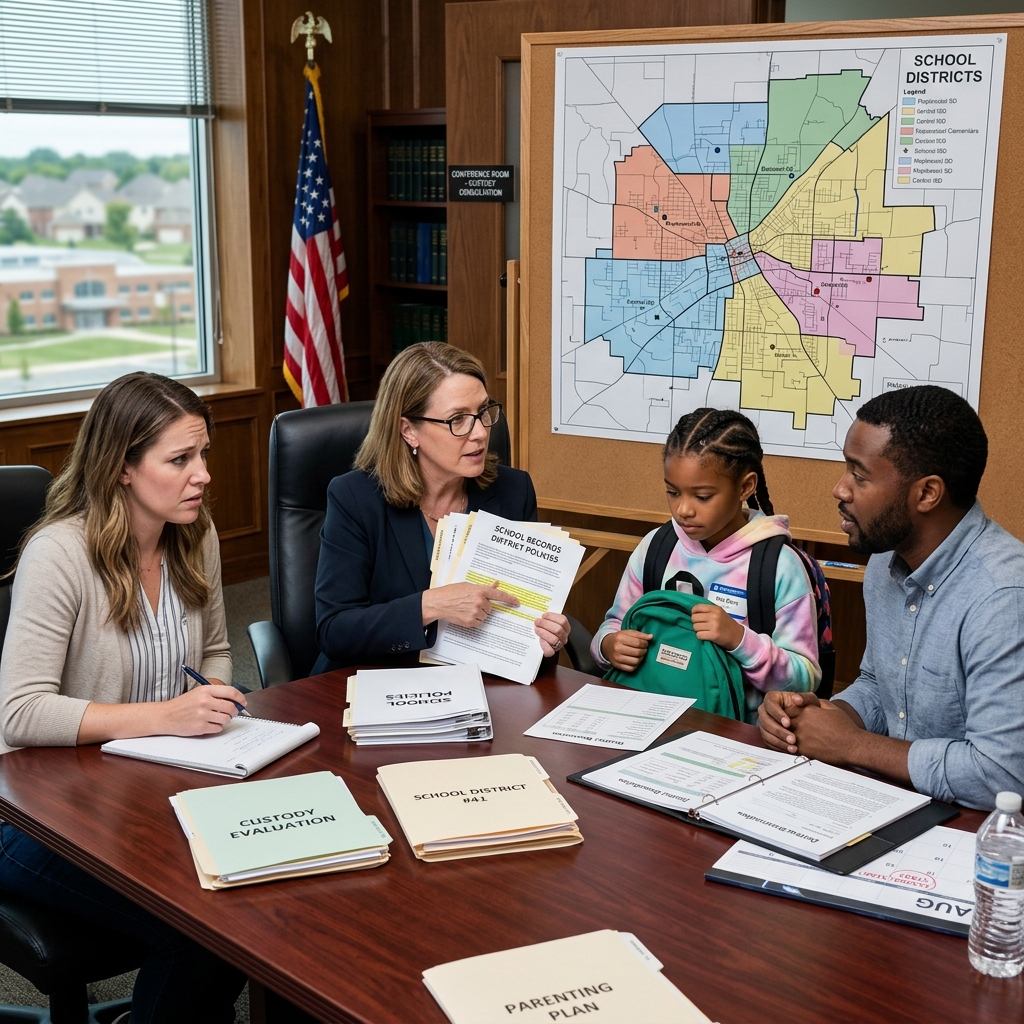
When parents separate or divorce, questions about where a child will go to school often become just as important as questions about parenting time and support. School district quality, location, and stability can influence both parenting plans and court decisions, but they are only part of a larger picture focused on the child’s best interests.
This guide explains how school districts can affect custody outcomes, what judges typically consider, and how parents can prepare and negotiate effectively when education becomes a point of conflict.
School Districts and the “Best Interests of the Child” Standard
Family courts in the United States decide custody and major parenting decisions using a broad “best interests of the child” standard. This framework looks at a range of factors—emotional, educational, physical, and social—to determine which arrangements will support a child’s long-term well-being.
School-related considerations typically fall under this standard. Judges may examine how a proposed school district affects the child’s education, stability, social connections, and access to services.
- The child’s academic and developmental needs
- Continuity of schooling and peer relationships
- Quality and resources of each proposed school district
- Logistics such as transportation and schedules
- Each parent’s ability to support the child’s education
It is rare for school district quality alone to decide a case. Instead, it becomes one factor among many within the overall best‑interests analysis.
How Legal Custody and Physical Custody Affect School Enrollment
To understand how school districts come into play, it helps to distinguish between legal custody and physical custody:
| Type of Custody | What It Covers | Impact on School Choice |
|---|---|---|
| Legal custody | Authority to make major decisions (education, healthcare, religion). | Determines who can choose the school or participate in school‑related decisions. |
| Physical custody | Where the child lives day‑to‑day. | Determines which school district the child is entitled to attend as a resident. |
Sole Legal Custody
When one parent has sole legal custody, that parent generally has the final say regarding the child’s school. They may enroll the child in a school in their district or another district if allowed by local regulations, often without needing the other parent’s consent.
Joint Legal Custody
With joint legal custody, both parents must participate in major decisions, including school choice. If they disagree:
- They may need mediation or other dispute‑resolution methods.
- Courts can be asked to decide which school better serves the child’s interests.
Primary vs. Shared Physical Custody and Residency Rules
Many states tie public school eligibility to the child’s district of residence. If a child lives mostly with one parent, the child typically attends the school in that parent’s district, unless a court order says otherwise.
- Primary physical custody: Children usually attend school in the district where they live most of the time.
- Equal physical custody: Some state rules allow parents to choose either parent’s district when time is truly split equally.
- Court orders: Judges can direct enrollment in a particular district even when the child spends less time there if it clearly benefits the child.
When School District Quality Matters in Custody Cases
Court decisions rarely turn solely on test scores or district rankings, but school quality can carry weight in several situations.
Significant Differences in Academic Quality
When there is a clear gap in performance or educational resources between proposed districts, judges may view the stronger district as one more factor favoring the parent who lives there.
Evidence might include:
- Publicly reported test scores and graduation rates
- Availability of advanced coursework or enrichment programs
- Accreditation status and recognized awards
However, courts generally avoid using school rankings in isolation. They weigh them alongside the child’s existing school ties, needs, and home environment.
Special Education and Specialized Programs
If a child requires special education services, bilingual support, gifted education, or other specialized programs, the availability and quality of those programs in each district can be crucial.
- Access to individualized education programs (IEPs)
- Therapy or support services provided at school
- Programs for advanced or highly motivated students
Parents may present documentation from schools, evaluations, and experts to show that one district is better equipped to meet the child’s particular needs.
Continuity and Stability
Courts often prioritize keeping children in a familiar school environment when possible, especially if they are thriving there.
- Strong peer relationships and supportive teachers
- Established routines, activities, and sports teams
- Good academic progress and emotional adjustment
Even if another district ranks higher on paper, judges may conclude that remaining in a stable, known school better serves the child’s interests.
Key Factors Judges Commonly Consider About Schools
When education issues reach the courtroom, judges typically examine a set of school‑related factors within the broader custody analysis.
- Academic performance and resources: How well proposed schools perform and what they can offer the child.
- Learning style fit: Whether the teaching approach matches the child’s strengths and needs.
- Special requirements: Support for disabilities, behavioral challenges, or advanced learning.
- Transportation and distance: Commute length, safety, and feasibility for both households.
- Impact on parenting time: Whether a school choice forces major changes to the parenting schedule or makes exchanges difficult.
- Parental involvement: Track record of each parent in attending conferences, helping with homework, and supporting school activities.
- Family conflict level: Whether high conflict would disrupt the child’s school life, and which arrangement minimizes that impact.
Courts aim to balance educational opportunities with practical realities so that children can succeed academically without undermining healthy relationships with both parents.
Public vs. Private Schools and Cost Considerations
Some custody disputes involve not only which district the child will attend, but also whether the child should attend public or private school.
In many jurisdictions, private school tuition may be treated as an additional child support expense when it is reasonable under the family’s circumstances and demonstrably benefits the child.
- If private school was the family’s norm before separation, courts may be more inclined to preserve that arrangement.
- Judges can allocate tuition costs between parents through support orders, directing payments either to the school or to the parent who pays the bill.
- The court examines whether the expense is affordable and appropriate in light of both parents’ incomes and the child’s needs.
Disputes may arise when one parent wants to move a child from a private school to a public school, or vice versa. Such changes can become part of a larger custody or support modification case.
Practical Steps for Parents in School District Disputes
When parents disagree about where a child should attend school, approaching the issue methodically can reduce conflict and strengthen each parent’s position if court involvement becomes necessary.
1. Review Existing Orders and Agreements
- Read your custody order carefully to see whether it already specifies a school or district.
- Check any provisions about decision‑making authority for education.
- Identify whether changes to school arrangements require mutual consent or a court modification.
2. Research the Relevant School Districts
- Gather data on academic performance, graduation rates, and available programs.
- Visit schools, meet administrators, and ask about resources that match your child’s profile.
- Document findings in a clear, organized way that can be shared with the other parent or court.
3. Focus on the Child’s Specific Needs
- Clarify your child’s learning style and any special supports they require.
- Note how they are currently performing in school—grades, teacher feedback, and social adjustment.
- Consider whether a change of district would help or disrupt their progress.
4. Communicate and Try Mediation First
- Share your research with the other parent in a calm, structured way.
- Listen to their concerns and preferences, and look for common ground.
- If direct discussion fails, consider mediation to reach a child‑focused compromise.
5. Involving Experts When Appropriate
- Educational consultants can evaluate schools from a professional standpoint.
- Child psychologists may offer insight into how a move or particular environment could affect the child’s emotional well‑being.
- These expert opinions can be persuasive when presented to a court.
6. Preparing for Court if Agreement Is Not Possible
If negotiations fail and litigation becomes necessary, careful preparation is essential.
- Organize documents such as report cards, attendance records, and notes from teachers.
- Compile evidence showing participation in extracurricular activities and social ties.
- Prepare a clear explanation of how your proposed school choice supports the child’s best interests.
Courts generally respond best to calm, child‑centered arguments grounded in facts rather than personal grievances.
Co‑Parenting Strategies Around School and District Choice
Even when school district issues are resolved, maintaining a cooperative approach to education benefits the child and reduces the likelihood of future disputes.
Aligning Schedules with the School Year
- Distinguish clearly between summer and school‑year parenting schedules.
- Plan transportation for regular school days and extracurricular activities.
- Use shared calendars to track pickups, drop‑offs, and school events.
Sharing Educational Responsibilities
- Agree on expectations for homework at each household.
- Coordinate attendance at parent‑teacher conferences and school meetings.
- Ensure both parents are listed on school forms and can receive communications.
Supporting the Child During Transitions
- Monitor how the child responds to any district or school changes.
- Maintain routines and reassure the child about consistent support from both parents.
- Invite the child’s input about school experiences, when age‑appropriate, while keeping adult decisions your responsibility.
Frequently Asked Questions
Does a “better” school district automatically give one parent custody?
No. A stronger school district can be a positive factor, but custody decisions are based on many aspects of the child’s best interests, including safety, emotional stability, and the child’s bond with each parent.
Can our child attend school in both districts if we share time equally?
Generally, a child is enrolled in one district at a time. In some states, if parents truly share physical custody equally, they may choose which of their two districts the child will attend.
What if we disagree about switching schools?
If you have joint legal custody and can’t agree, you may need mediation or, as a last resort, a court ruling. Judges will focus on what arrangement best supports your child’s overall well‑being.
Does my child’s opinion about school matter?
Courts vary on how much weight they give a child’s preferences, but older children’s views are often considered, especially when they relate to comfort, safety, or academic success.
Should I move to a different district to improve my custody chances?
Relocation decisions are complex. Moving solely to gain a perceived advantage based on school ranking may backfire if it disrupts the child’s stability or diminishes contact with the other parent. Legal advice is essential before relocating.
References
- School-Related Custody Issues: Critical Considerations for Co-Parents — Hangley Aronchick Segal Pudlin & Schiller. 2021-05-10. https://www.hangley.com/blog/school-related-custody-issues
- School Choice in Custody Cases: How Attorneys Can Help Keep the Focus on the Child — American Academy of Matrimonial Lawyers. 2022-03-15. https://www.aaml.org/school-choice-in-custody-cases-how-attorneys-can-help-keep-the-focus-on-the-child/
- How Joint Custody Impacts a Child’s School Enrollment — Boyd Law. 2019-08-20. https://www.boydlaworangecounty.com/how-joint-custody-impacts-a-childs-school-enrollment/
- Choosing a School Together: Co-Parenting Strategies — The Law Shop. 2021-09-01. https://www.thelawshopmn.com/choosing-a-school-together-co-parenting-strategies/
- When Parents Battle Over School Districts — Charles Bendig Law. 2023-02-10. https://www.injuryanswers.com/when-parents-battle-over-school-districts/
- Child Custody and Back to School in North & South Carolina — Collins Family Law Group. 2023-08-15. https://www.collinsfamilylaw.com/blog/2023/august/child-custody-and-back-to-school-in-north-south-/
- Should School District Influence Physical Custody Decisions? — St. Charles Divorce Attorneys Blog. 2017-09-12. https://stcharlesdivorceattorneysblog.com/blog/should-school-district-influence-physical-custody-decisions/
Similar Articles








Read full bio of medha deb


