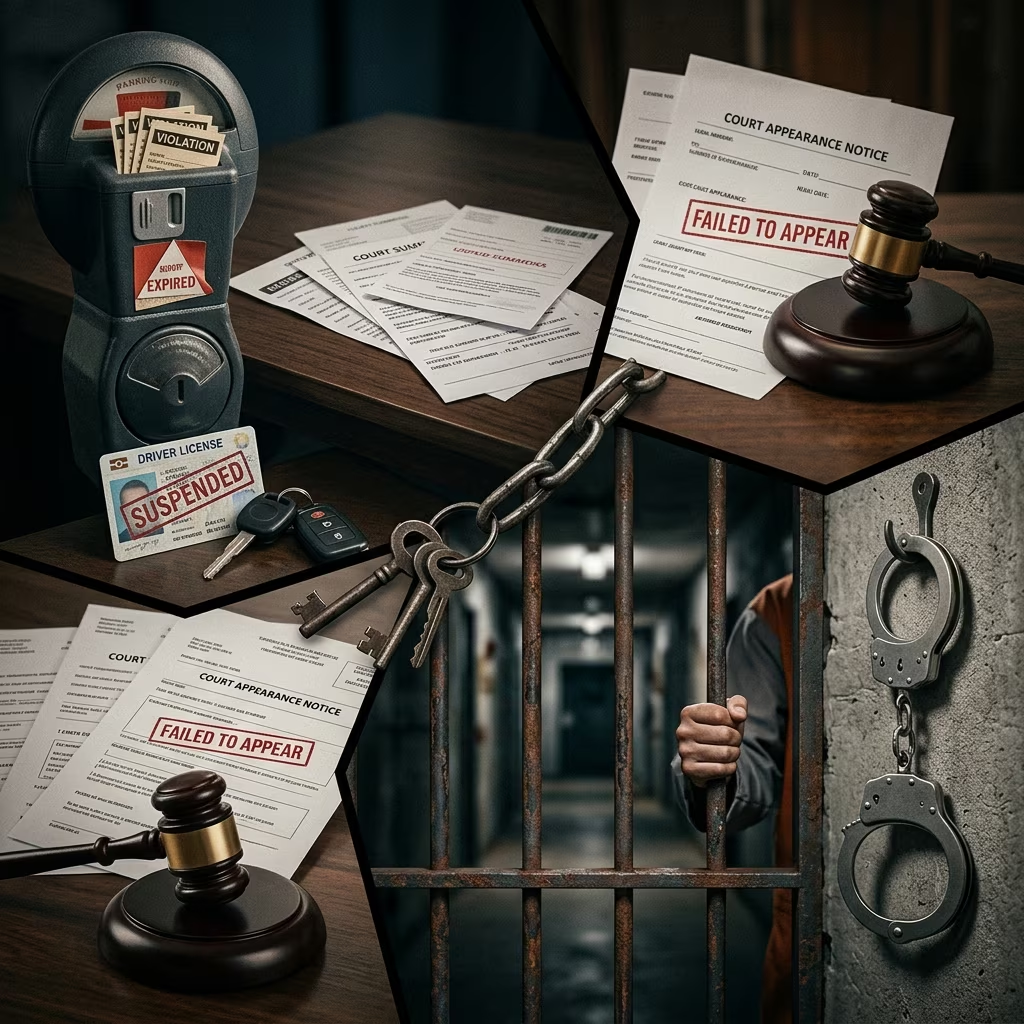
Small crimes are often treated as less serious than violent felonies, but that does not mean they are harmless or consequence-free. A low-level offense can still result in arrest, booking, court appearances, fines, probation, license consequences, and in some situations, time behind bars.
Many people assume jail is reserved for major crimes. In practice, the legal system can turn seemingly minor conduct into a custodial sentence when the facts, the defendant’s history, or the procedural setting make detention more likely.
Why a “minor” offense can still become a jail case
The word “minor” usually refers to the seriousness of the charge, not the seriousness of the process that follows. Misdemeanors and other low-level offenses may carry shorter maximum penalties than felonies, but they still expose a person to arrest and court-ordered detention.
Minor offenses can trigger jail for several reasons: the law may authorize incarceration, a judge may impose jail as part of sentencing, or a defendant may be held before trial because of bail conditions or missed court dates.
- The charge itself may allow a short jail term.
- The person may be held until bail is posted.
- Pretrial release conditions may be strict enough that a violation leads to custody.
- A prior record may make a judge less willing to use leniency.
Common low-level charges that can still result in custody
Many everyday offenses are handled as misdemeanors or similar lower-level crimes, but they still carry meaningful consequences. Examples often include shoplifting, trespassing, public intoxication, disorderly conduct, minor drug possession, and certain traffic-related violations.
These cases are frequently described as “small,” yet they can become serious quickly if police decide to make an arrest, if the person cannot post bail, or if the case involves prior convictions.
| Type of offense | Why it can lead to jail |
|---|---|
| Shoplifting | Can be charged as a theft offense that carries jail exposure, especially with repeat conduct. |
| Public intoxication | May lead to arrest, holding, or overnight custody depending on local rules and safety concerns. |
| Trespassing | Can escalate if the person refuses to leave private or restricted property. |
| Minor drug possession | May be treated as a criminal offense with detention, probation, or treatment conditions. |
| Traffic offenses | Some traffic-related conduct can bring arrest, especially if it involves suspended licensing or repeated violations. |
Arrest does not always mean release
One of the biggest surprises in low-level criminal cases is how quickly a brief encounter can turn into time in jail. A person may be arrested for an offense that appears minor, booked, and then held until the next court date or until bail is posted.
Pretrial detention is not limited to the most serious crimes. Data from the Bail Project notes that many people held in local jails before trial are detained on nonviolent charges, and in 2023 more than two-thirds of people held pretrial in local jails were there on nonviolent charges.
That means the immediate question is not only whether the charge is “small,” but also whether the system treats the person as a flight risk, a public-safety concern, or someone who must remain in custody until a judge reviews the case.
How bail can turn a small case into a jail stay
Bail is one of the clearest ways a minor charge becomes a jail problem. A person may be legally eligible for release but still remain in custody simply because they cannot afford the amount set for bond.
In that situation, the offense may be minor in name, yet the practical result is incarceration. This is one reason low-level cases can have disproportionate impacts on work, housing, childcare, and transportation.
- Cash bail can keep a person in custody even before guilt is decided.
- Missing paperwork or a delayed hearing can prolong detention.
- Release conditions may require payment, supervision, or both.
When repeat behavior matters more than the first incident
Judges often respond differently when a low-level offense is not the first one. A single citation or arrest may end with a warning, diversion, or fine, but repeated conduct can justify a more severe sentence.
Prior convictions can affect whether a court sees jail as necessary. Repeat offenses may also convert an apparently minor matter into a more serious charge under local law or sentencing rules.
This is especially important because many people think of minor offenses as isolated events. In reality, the record created by an earlier case can change how the next case is charged, negotiated, and punished.
Probation and court orders can create jail risk later
Even when a person avoids immediate jail time, the case may continue through probation, community supervision, or other court-ordered conditions. Failing to follow those rules can lead to a violation hearing and possible custody.
This means the jail risk does not end at sentencing. Missing meetings, failing drug tests, ignoring restitution orders, or not appearing in court can bring the case back before a judge and result in detention.
For that reason, a seemingly small offense can have a long tail. The legal issue is not only the original conduct, but also how well the person navigates every requirement that follows.
Why minor offenses can affect more than liberty
Jail time is only one part of the problem. Low-level convictions can also produce fines, fees, probation terms, a criminal record, and collateral consequences that last much longer than the sentence itself.
Those consequences can affect employment applications, rental screenings, professional licensing, immigration-related concerns, and access to education or public benefits. A short sentence can therefore create a much larger legal and practical burden.
- Employment opportunities may shrink after an arrest or conviction.
- Housing applications may be harder to complete successfully.
- Driver’s license problems may follow certain offenses.
- Future charges may be treated more harshly because of the record.
What influences whether jail is actually imposed
Not every minor offense ends in incarceration. Courts often consider the nature of the conduct, the person’s criminal history, whether anyone was harmed, whether the accused cooperated, and whether a plea agreement is available.
Local law also matters. Some jurisdictions treat specific conduct more harshly than others, and some offenses come with mandatory minimum consequences or structured sentencing rules that limit judicial discretion.
Even where the maximum jail term is short, judges may still impose custody in cases involving public disorder, repeated misconduct, or noncompliance with release conditions.
How to reduce the chance that a small case becomes a big one
The most important step is to take the charge seriously from the start. Early action can make a major difference in whether a case stays minor or turns into incarceration, added fees, or a record that follows the person for years.
- Appear at every required court date.
- Follow every release condition exactly.
- Keep records of paperwork, payments, and notices.
- Do not assume a low-level charge will be ignored by the court.
- Seek legal advice early, especially if there is a prior record or a pending bail issue.
When a lawyer is involved early, there may be options to negotiate a dismissal, a diversion program, reduced charges, or a noncustodial sentence. The earlier those possibilities are explored, the better the odds of avoiding unnecessary jail exposure.
Frequently asked questions
Can a misdemeanor really lead to jail? Yes. Even lower-level offenses can carry jail exposure, especially when the law authorizes custody or the court believes detention is appropriate.
Can someone be jailed before conviction? Yes. Pretrial detention can happen when a person is arrested, cannot post bail, or violates release conditions.
Do nonviolent charges ever lead to jail? Yes. Many people held before trial are facing nonviolent charges, and low-level offenses may still lead to custody depending on the facts and local procedures.
Why does a small case sometimes become more serious later? Prior offenses, probation violations, missed court dates, and repeated misconduct can all increase the chance of jail or harsher sentencing.
Is jail the only consequence to worry about? No. Fines, fees, probation, a criminal record, and future legal consequences can be just as important as the immediate sentence.
References
- Convictions For Small Crimes Can Have Big Consequences — PBC Law. 2024-01-01. https://www.pbclaw.com/convictions-for-small-crimes-can-have-big-consequences/
- Crimes You Didn’t Know Could Mean Jail Time — MontanaroLaw P.C. 2024-01-01. https://montanarolaw.com/crimes-you-didnt-know-could-mean-jail-time/
- Minor Offenses, Major Consequences: Pretrial Incarceration — The Bail Project. 2024-01-01. https://bailproject.org/learn/minor-offenses-major-consequences/
- Mandatory Minimum Penalties — United States Sentencing Commission. 2024-01-01. https://www.ussc.gov/research/quick-facts/mandatory-minimum-penalties
- Crimes With Mandatory Minimum Prison Sentences — Connecticut General Assembly. 2008-01-01. https://www.cga.ct.gov/2008/rpt/2008-r-0619.htm