
How Long Traffic Tickets Stay on Your Record
Understand how long traffic tickets follow you, how they affect insurance and licenses, and what you can do to reduce the impact.
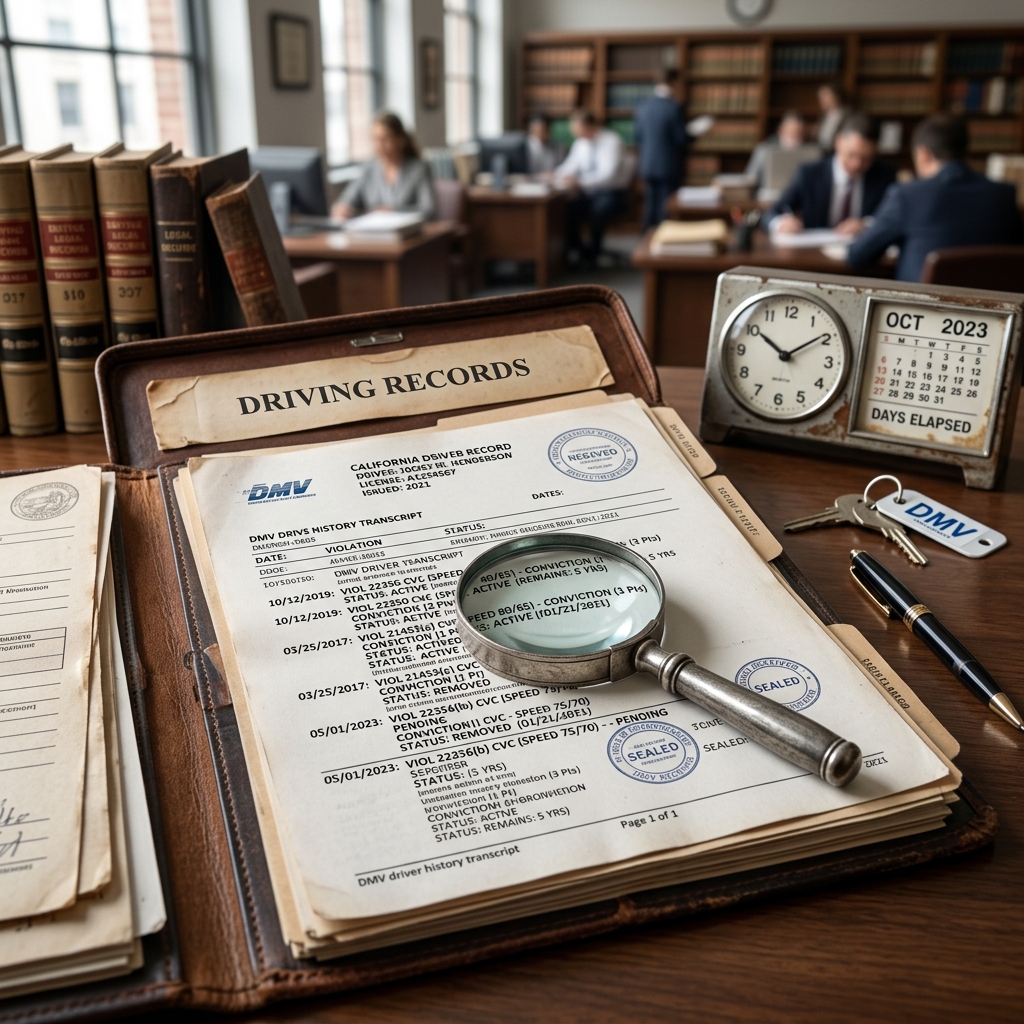
Receiving a traffic ticket may feel like a minor inconvenience, but it can leave a lasting footprint on your driving and insurance records. Understanding how long a traffic ticket stays on your record, and what that means for your license, insurance premiums, and even employment, is crucial if you want to limit the long-term consequences.
This guide explains how traffic tickets are recorded, typical time frames in many U.S. states, how insurers treat violations, and what options you may have to reduce or remove the impact of a ticket.
Driving Record vs. Insurance Record vs. Criminal Record
When people ask how long a ticket “stays on your record,” they may be talking about very different systems. It helps to separate three distinct records:
- Driving record (motor vehicle record) kept by your state’s motor vehicle agency.
- Insurance record used by auto insurers to assess risk and set premiums.
- Criminal or court record maintained by courts and law enforcement for more serious offenses.
Each of these records can retain information for different lengths of time and for different purposes.
Your official driving record
Every state maintains a motor vehicle record (MVR) for each licensed driver, usually through a department of motor vehicles (DMV) or similar agency. It typically includes:
- Traffic convictions (such as speeding or running a red light)
- License points assessed for violations, if your state uses a point system
- Accidents and serious infractions (like DUI)
- Suspensions, revocations, and reinstatements
In many states, routine moving violations remain on the driving record for around three to five years, although serious violations can remain much longer or be kept permanently.
The insurance company’s view of your record
Auto insurers regularly review your driving history when you apply for coverage or renew your policy. While they often use the same MVR obtained from your state, they apply their own internal rules for how long a violation matters to your premium.
- Insurers commonly focus on the past three years of violations for minor tickets.
- Some companies consider tickets for up to five years, especially repeated offenses or accidents.
- Very serious violations, such as DUI, can influence premiums far longer than minor speeding tickets.
Even after points expire at the DMV, an insurer might still factor a conviction into your pricing for a few years based on its own risk models.
When a ticket becomes part of a criminal record
Most routine traffic tickets are civil or administrative matters, not criminal offenses. However, some serious traffic-related violations are treated as crimes, including:
- Driving under the influence (DUI or DWI)
- Hit-and-run or leaving the scene of an accident
- Reckless driving, depending on state law
Criminal convictions typically remain on your criminal record for a very long time and may require separate legal procedures—such as expungement or record sealing—to limit their visibility, if allowed under your state’s law.
Typical Time Frames for Traffic Tickets
The specific length of time a ticket stays on your record depends on your state and the type of violation. While you must check your own state’s rules for precise timelines, there are typical patterns.
Common retention periods for driving records
Many states follow these general ranges for traffic violations on a driving record:
- Standard moving violations (e.g., moderate speeding, improper lane change): often three to five years from the conviction date.
- Non-moving violations (e.g., parking tickets, equipment violations): often shorter or not recorded for point purposes, depending on the state.
- Serious violations (e.g., high-speed reckless driving, DUI): can remain on your record for 10 years, 15 years, or permanently, depending on state law.
Some states offer multiple types of records. For example, a short “snapshot” record may show only the past three years of violations, while a complete history records all known violations regardless of age.
| Type of record | What is commonly shown | Typical time frame |
|---|---|---|
| Standard driving record | Recent moving violations and accidents | 3–5 years in many states |
| Complete driving history | All recorded violations and actions | Often permanent record, subject to state rules |
| Insurance review period | Tickets considered for pricing | Typically 3–5 years |
These examples are for illustration only; always verify your own state’s rules to know how your situation will be handled.
How long points stay on your license
More than half of U.S. states use a point system to track traffic violations. Each qualifying violation adds a certain number of points to your license. Accumulating too many points within a given time can lead to license suspension or other penalties.
- Points from a single ticket often remain active for two to three years in states that use point systems.
- Some states remove points gradually if you maintain a clean record (for example, a few points may drop off after 12 months without additional violations).
- Even after points drop away, the underlying conviction can remain visible on your driving record for longer.
Because each state sets its own thresholds and time periods, it is important to review your state’s official driver handbook or motor vehicle agency guidance.
Impact of Traffic Tickets on Insurance
For many drivers, the most noticeable consequence of a ticket is the effect on insurance premiums. A single ticket may not lead to suspension, but it can still cost thousands of dollars in increased insurance over several years.
How a ticket can change your premium
When an insurer reviews your history and finds a recent moving violation, it may categorize you as a higher risk. Industry data indicates that a speeding ticket can increase premiums by around double-digit percentages on average, with some analyses estimating roughly a 16% rise, depending on the insurer and state.
Key insurance considerations include:
- Severity of the violation – Going 5 mph over the limit usually has less impact than excessive speeding or reckless driving.
- Number of tickets – Multiple recent violations can quickly escalate premiums or trigger non-renewal.
- Time since the violation – The impact of a ticket typically diminishes over the three- to five-year window as time passes without new violations.
- Overall profile – Age, claims history, location, and type of vehicle all interact with your ticket history.
When the insurance increase shows up
The effect of a ticket on your rate is not always immediate. Insurers usually adjust premiums at renewal, when they pull or re-check your motor vehicle record.
- If your policy renews months after the violation, the higher premium may not appear until that renewal period.
- Some insurers may forgive a first minor violation depending on your prior clean driving history and their internal rules.
- Shopping around for quotes after a ticket can sometimes reduce the financial impact, as different companies weigh violations differently.
How Long Tickets Can Affect Employment and Licensing
For certain jobs and licenses, driving history matters beyond personal insurance costs. Employers, professional licensing boards, and government agencies may review your driving record for specific purposes.
Commercial drivers and professional roles
Commercial drivers and individuals in transportation-heavy jobs are often subject to stricter standards:
- Employers may request full or multi-year driving histories.
- Federal and state regulations for commercial drivers can require reporting and retention of certain violations for extended periods, particularly serious offenses.
- Multiple tickets, even if they are minor, may affect your eligibility for certain positions.
Insurance-related licensing and other checks
Some professional licensing bodies and insurance underwriting processes require reviewing your history beyond the standard three-year snapshot. In these cases, older tickets can reappear if a complete driving history is requested from the state.
Options to Reduce the Impact of a Traffic Ticket
Although you cannot always prevent a ticket from appearing on your record, there are several strategies that may reduce its effect or shorten the time it matters.
Contesting the ticket in court
One option is to challenge the ticket rather than immediately paying it. By going to court, you may be able to:
- Obtain a dismissal if the evidence is insufficient or procedures were not followed.
- Negotiate a reduced charge that carries fewer or no points.
- Secure an outcome that avoids a conviction on your record (depending on state procedures).
Because rules vary widely, many drivers consult a traffic attorney to evaluate whether contesting the ticket is worthwhile, especially for more serious violations or when they already have points on their license.
Defensive driving and traffic school programs
Some states allow drivers to take a defensive driving or traffic school course to reduce or avoid the negative record impact of a ticket. Depending on the jurisdiction, successful completion may:
- Prevent points from being added to your record for a particular violation.
- Lead to a dismissal of the ticket, so no conviction appears in your official record.
- Qualify you for a small insurance discount, though this depends on your insurer’s policies.
There are often limits, such as how frequently you can use such a course or which types of violations are eligible. You may need court approval or to meet specific deadlines after receiving the ticket.
Clean driving and point reduction over time
In many states that use point systems, the simplest way to improve your record is to maintain a clean driving history over time:
- Points may automatically drop off after a set period with no new violations (for example, some states subtract points every 12 months of violation-free driving).
- Once points are removed, the risk of suspension decreases, although the underlying conviction might still be visible for a while.
- A consistent record of safe driving can also gradually reduce your insurance premium, especially after the three- to five-year look-back window closes.
Record sealing, expungement, and administrative remedies
For serious traffic-related offenses that are treated as crimes, such as DUI, some states provide limited mechanisms for expungement or record sealing. These procedures are complex and may require:
- A waiting period after completion of all penalties.
- Proof of rehabilitation and a clean record since the offense.
- A court petition or hearing, often with the assistance of an attorney.
These remedies are generally not available for routine tickets, but they can be important for individuals whose employment or licensing is affected by serious traffic-related convictions. You should consult your state’s statutes or a qualified attorney to determine what relief may be available.
How to Check How Long Tickets Stay on Your Record
Because ticket retention rules differ from state to state, the most accurate way to understand your situation is to review your own records and your state’s official guidance.
Ordering your driving record
Most state motor vehicle agencies let you request a copy of your driving record online, by mail, or in person. When you do, pay attention to:
- Record type – Whether you are receiving a limited-year snapshot (such as a three-year record) or a complete history.
- Items listed – Look for open tickets, convictions, points, accidents, and any suspensions.
- Time frames – Some reports indicate how long each item will remain or when points were assessed.
Reviewing state rules and driver handbooks
State agencies often publish driver handbooks or online FAQs explaining:
- How long points remain on your license.
- Thresholds for suspension or revocation based on point totals.
- Which violations count as moving versus non-moving.
- Whether traffic school or defensive driving can reduce points or prevent a conviction from appearing.
Because laws change, ensure you are reading the most recent version of your state’s materials or statutes.
Frequently Asked Questions
Does a traffic ticket stay on my record forever?
In many states, routine moving violations do not stay on your standard driving record forever. They often remain for about three to five years, though serious offenses may be recorded for much longer or permanently. Some states keep a complete history internally even if shorter records are commonly used.
Will my insurance company always see every ticket?
Insurers typically focus on tickets from the last three to five years and may obtain only the type of record they consider most relevant. However, if a full driving history is requested, older violations can sometimes be visible. Each insurer has its own underwriting rules.
Can I get a traffic ticket removed from my record?
In some states, completing a court-approved defensive driving or traffic school course can prevent a ticket from resulting in points or a conviction, but eligibility rules vary. Once a conviction is recorded, removing it is more difficult and often only possible for certain serious offenses through expungement or similar procedures, if permitted by law.
How long do points from a ticket stay on my license?
Where point systems are used, points commonly remain for about two to three years, though this varies by state. Some states gradually remove points during periods of violation-free driving. The underlying violation might still appear on the record even after points expire.
Is it better to just pay the ticket instead of going to court?
Paying a ticket is usually treated as admitting responsibility and can result in a conviction on your record. Depending on your state, your prior history, and the severity of the violation, contesting the ticket or exploring alternatives such as traffic school may reduce the long-term impact. Consider speaking with a traffic attorney to evaluate your options.
References
- Driver’s License Points System — Maryland Motor Vehicle Administration. 2023-05-01. https://mva.maryland.gov/drivers/Pages/points.aspx
- How Long Does a Speeding Ticket Stay on Your Record? — AutoInsurance.com. 2023-08-10. https://www.autoinsurance.com/faqs/how-long-speeding-ticket-stay-on-record/
- How Long Does a Speeding Ticket Stay on Your Record? — U.S. News & World Report. 2022-11-15. https://www.usnews.com/insurance/auto/how-long-does-a-speeding-ticket-stay-on-record
- How Long Does a Speeding Ticket Stay on Your Texas Driving Record? — Texas Department of Licensing and Regulation–approved course provider summary. 2023-04-20. https://www.tdlrapproved.com/how-long-does-a-speeding-ticket-stay-on-your-record-texas/
- Traffic Violations: Frequently Asked Questions — Pennsylvania Department of Transportation (PennDOT). 2022-09-01. https://www.penndot.pa.gov/Driver-and-Vehicle-Services/Pages/default.aspx
Similar Articles








Read full bio of Sneha Tete


