
How Long Does It Really Take to Repair a Credit Score?
Understand realistic timelines, key steps, and smart strategies to rebuild your credit score after financial setbacks.
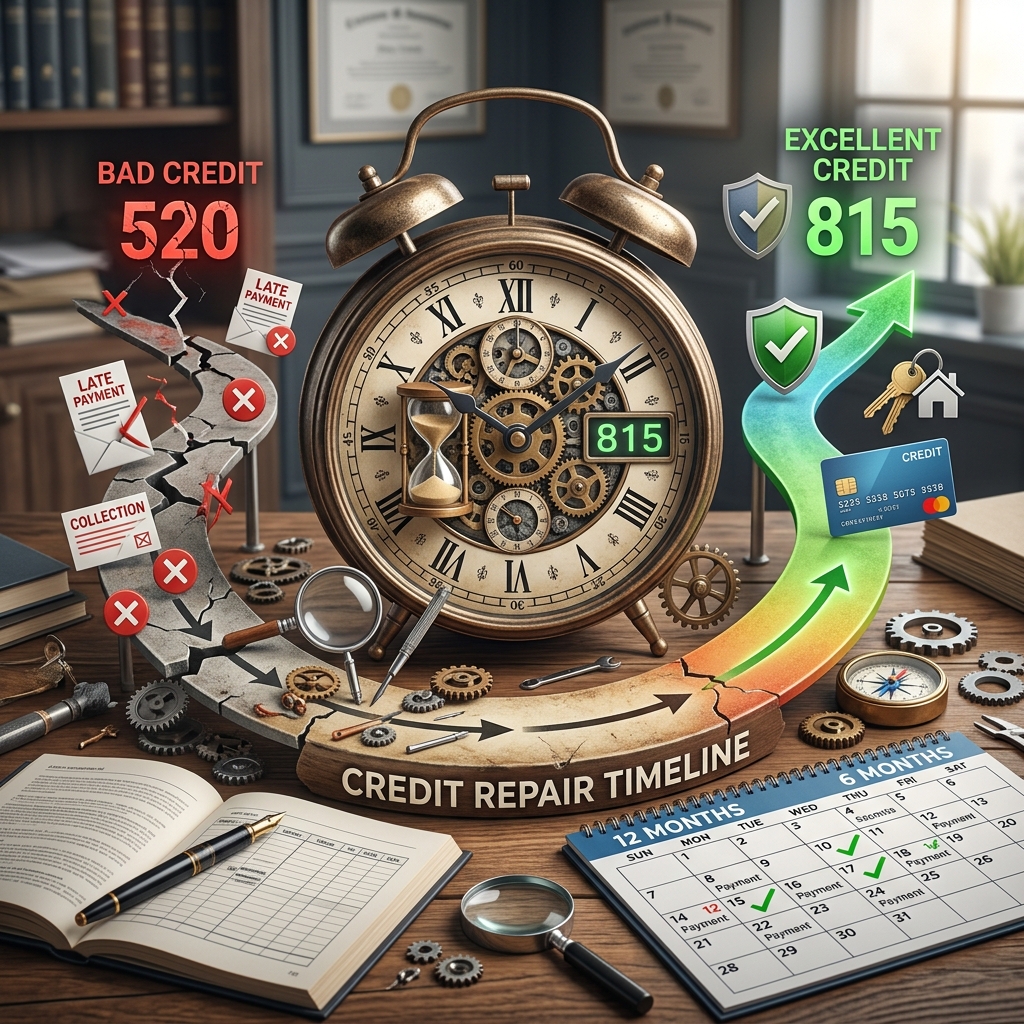
Repairing a damaged credit score is not a quick fix or overnight process. It takes time, consistent effort, and a clear understanding of how credit scores work. Depending on the severity of the problem, rebuilding a score can take a few months to several years, but nearly every situation can improve with the right strategy and habits.
This guide explains the typical timelines, the factors that influence how fast you can recover, and the practical steps you can take to steadily move your score in the right direction.
Understanding How Credit Scores Change Over Time
A credit score is a snapshot of your recent and long-term borrowing behavior. It reacts to new information reported by lenders, both positive and negative. Because scores are based on patterns, meaningful improvement requires time for better behavior to show up as a trend.
Major credit scoring models (such as FICO and VantageScore) rely on your credit reports from the three main credit bureaus: Equifax, Experian, and TransUnion. These reports are updated regularly as lenders report your balances and payments. That means:
- Small improvements can appear within a few months of sustained good habits.
- Larger improvements generally require at least 6–12 months of consistent behavior.
- Serious negative marks can take years to fully lose their impact, even if your score starts rising earlier.
There is no guaranteed timeline, but your starting point and actions over time largely determine how quickly your score improves.
Typical Credit Repair Timelines by Situation
While every person’s credit profile is unique, you can think about repair timelines in rough ranges based on the type and extent of damage.
Short-Term Improvement: 3 to 6 Months
Relatively mild issues often respond within a few months of focused effort. For example:
- A few recent late payments, with otherwise solid history.
- Moderately high credit card balances but no accounts in collections.
- Limited credit history where you’re starting to build a record of on-time payments.
If you bring accounts current, avoid new delinquencies, and reduce credit card utilization (the percentage of your available credit you are using), you may notice meaningful score improvements in about 3–6 months.
Medium-Term Recovery: 6 to 24 Months
More serious setbacks usually require a longer horizon. Examples include:
- Multiple late payments over several accounts.
- High overall utilization (using large portions of your total credit limits).
- A few collection accounts that you are actively resolving.
In these situations, you can often repair your profile enough to move from “poor” or “fair” to a stronger range (for example, into the “good” category) over 1–2 years, assuming you consistently pay on time, gradually lower balances, and avoid new negative marks.
Long-Term Rebuilding: Multiple Years
The longest recovery timelines are linked to serious derogatory items, such as:
- Major delinquencies (60–90+ days late).
- Charge-offs and accounts sent to collections.
- Bankruptcy, foreclosure, or repossession.
Under federal law, many negative items can remain on your credit report for up to seven years, and certain bankruptcies for as long as ten years. While your score can begin improving well before those marks disappear, their presence may limit how high you can go until enough time passes.
For these types of events, think in terms of a multi-year plan. You can usually see noticeable progress within the first 12–24 months of strong habits, but full recovery to top-tier scores may take longer.
What Factors Control How Fast You Can Repair Your Score?
Credit scoring models weigh different aspects of your profile. Understanding these components helps you focus on actions that deliver the biggest impact.
| Key Factor | Approximate Importance | Impact on Repair Timeline |
|---|---|---|
| Payment history | High | New on-time payments gradually outweigh older late payments. |
| Credit utilization | High | Lowering balances can improve your score within one or two billing cycles. |
| Length of credit history | Medium | Time-based factor that improves slowly as accounts age. |
| Credit mix | Medium | Diverse account types can help, but changes are gradual. |
| New credit activity | Medium | Frequent new applications can temporarily hurt, slowing recovery. |
Because payment history and utilization carry substantial weight, focusing on those issues often brings the fastest visible improvements.
Step-by-Step Actions to Accelerate Credit Repair
While there is no way to instantly erase accurate negative information, you can take specific actions that steadily push your score upward. Many of these steps are highlighted by consumer protection agencies and major credit bureaus.
1. Review Your Credit Reports Regularly
You cannot repair what you do not understand. Begin by reviewing your credit reports from all three major bureaus—Equifax, Experian, and TransUnion.
- Obtain reports at least annually, or more often while actively repairing your credit.
- Confirm that all personal information is correct.
- List all negative items, including late payments, collections, and public records.
Federal law gives you the right to access your credit reports and dispute inaccurate information at no cost.
2. Dispute Errors and Outdated Information
Errors—such as accounts that do not belong to you, misreported limits, or incorrect late payments—can unfairly damage your score. If you find mistakes:
- File a dispute with the credit bureau that shows the error.
- Contact the lender or business that reported the information.
- Provide documentation supporting your claim (statements, letters, identity theft reports, etc.).
Under the Fair Credit Reporting Act (FCRA), bureaus typically must investigate disputes within about 30–45 days and correct or remove information that cannot be verified. Resolving serious inaccuracies can produce relatively quick score improvements, often within a couple of reporting cycles.
3. Bring Past-Due Accounts Current
Late payments are among the most damaging items for your score. If you have past-due accounts:
- Pay any amounts due as soon as possible, starting with accounts that are more than 30 days late.
- Ask your lender about hardship programs, modified payment plans, or temporary relief if you are struggling.
- Commit to making every payment on time going forward.
Although a late payment can remain on your report for years, its impact diminishes as you build a longer record of on-time payments. Many consumers see gradual improvement after 6–12 months of consistent payments.
4. Lower Your Credit Card Utilization
Your credit utilization ratio—the amount of revolving credit you are using compared with your total available limit—is a major factor in most scoring models. High utilization signals risk and can reduce your score even if you never miss a payment.
Practical ways to reduce utilization include:
- Paying down existing balances as quickly as your budget allows.
- Making multiple payments during the month so that lower balances are reported.
- Avoiding new purchases on already high-balance cards.
Experts often recommend keeping utilization below about 30%, and lower levels—such as under 10%—may help optimize scores. Because lenders typically report monthly, improvements to utilization can show up relatively quickly, sometimes within one or two billing cycles.
5. Avoid Unnecessary New Credit
Every time you apply for certain types of credit, a hard inquiry may appear on your report. Several new inquiries in a short time can slightly lower your score and signal risk to lenders.
- Limit new credit applications while you are in repair mode.
- Research eligibility before applying to reduce the chance of denial.
- Use new accounts selectively, and only when they will support your long-term plan (for example, a responsible credit-builder loan).
By keeping new inquiries low, you avoid adding fresh negative elements that could slow your recovery.
6. Use Starter Tools When You Have Limited or Damaged History
If you have thin credit history or severe damage, traditional cards and loans may be hard to obtain. In that case, consider tools designed for rebuilding credit:
- Secured credit cards: You provide a security deposit, and the card issuer extends a credit limit—often equal to your deposit. Responsible use and on-time payments can help build positive history.
- Credit-builder loans: A small loan where the funds are often held in a savings account until you finish payments. On-time payment reporting can support score improvement.
These products do not instantly boost your score. Instead, they create a pattern of positive information over time, which gradually outweighs older negative marks.
7. Maintain Good Habits Consistently
Perhaps the most important principle of credit repair is consistency. Federal consumer agencies emphasize that there are no secret tricks—only habits sustained over months and years.
- Pay every bill on or before the due date.
- Keep revolving balances as low as reasonably possible.
- Regularly review your reports to catch issues early.
Even if your starting point is very low, following these basics will steadily move you toward stronger credit health.
How Long Do Negative Marks Stay on Your Credit Report?
Understanding how long different negative events can appear on your reports helps you set realistic expectations. While exact durations can vary, common timelines under U.S. law include:
- Late payments: Often reported for up to seven years from the date of the delinquency.
- Collection accounts: Generally up to seven years from the original missed payment that led to collection.
- Charge-offs and defaults: Commonly up to seven years.
- Certain bankruptcies: May remain for up to ten years, depending on type.
These time frames describe how long information may be reported, not how long your score is heavily affected. As negative items age and are surrounded by stronger positive history, their influence on your score can decline substantially.
Managing Expectations: What “Repair” Really Means
Many people ask, “How long until my credit is fixed?” A better question is, “How long until my credit allows me to reach my goals?” For example, your goal might be:
- Qualifying for a mortgage with favorable terms.
- Obtaining a low-interest auto loan.
- Reducing credit card interest costs.
Because lenders use different score thresholds, you may not need a perfect score to reach these goals. With 12–24 months of improved behavior, many borrowers can move from a high-risk range into a more favorable bracket, even if some older negative marks remain on their reports.
Think of credit repair as a progression:
- Short term: Stabilize your situation and stop new damage.
- Medium term: Replace negative patterns with positive ones.
- Long term: Maintain strong habits while older issues gradually lose impact.
Frequently Asked Questions About Credit Repair Timelines
Can a credit repair company fix my score quickly?
Companies that promise fast or dramatic credit repair often claim they can remove negative items. Federal guidance explains that no company can legitimately remove accurate, timely negative information from your report. They may help you dispute errors, but you can also do this yourself at no cost.
Will paying off a collection immediately improve my score?
Paying off a collection can be an important step in improving your overall financial health and may help your score over time. However, the collection account itself may remain on your report for several years, even after payment. Some newer scoring models treat paid collections more favorably, but you should not expect an instant large increase. The main benefit is that you stop additional negative reporting and show responsibility going forward.
How often should I check my credit while rebuilding?
During active repair, many experts recommend checking your reports and scores several times a year, and at least once annually. Regular monitoring helps you track progress and quickly catch errors or signs of identity theft.
Is it possible to improve my score in under three months?
Significant score changes in under three months are unusual, but not impossible. If your main issue is high utilization, paying down balances can sometimes lead to noticeable improvement within a couple of billing cycles. If you correct a major error through a dispute, your score might also improve relatively quickly once the credit bureau updates your report.
Do I need multiple types of credit to rebuild my score?
Having a mix of installment credit (like auto loans) and revolving credit (like credit cards) can slightly help your score, but it is not the primary driver. Payment history and utilization are usually more important. You do not need to open new accounts just for the sake of diversity if it would strain your finances.
Practical Timeline Example for Credit Repair
While every situation differs, the following general scenario illustrates how timelines might look for someone with several late payments and high credit card balances:
- Month 1–2: Review reports, dispute any errors, bring accounts current, and create a realistic budget.
- Month 3–6: Make every payment on time, steadily reduce credit card balances, and avoid new credit applications. Early score improvements may begin to appear.
- Month 7–12: Continue lowering utilization and strengthen your payment history. At this stage, many borrowers see more noticeable progress.
- Year 2 and beyond: As you maintain good habits and avoid new derogatory marks, older issues have less impact. Your score can move into increasingly favorable ranges, supporting major financial goals.
This kind of trajectory requires discipline but demonstrates that credit repair is achievable with a structured, consistent approach.
Key Takeaways for Planning Your Credit Repair Journey
- Expect months, not days: Rebuilding credit typically takes several months to years, depending on your starting point and habits.
- Focus on what you can control: Payment history and utilization are powerful levers for improvement.
- Use your rights: You can check your reports and dispute errors for free.
- Recognize legal time limits: Negative marks remain for years, but their impact usually fades as you build positive history.
- Choose sustainable strategies: A realistic budget and long-term habits matter more than quick fixes.
Although the timeline may feel long, every on-time payment and every dollar of reduced debt contributes to a stronger credit profile. By focusing on consistent action rather than instant results, you can steadily repair your score and build a healthier financial future.
References
- How Long Does It Take to Repair Your Credit? — Experian. 2023-06-09. https://www.experian.com/blogs/ask-experian/how-long-take-repair-credit/
- How to Rebuild Credit: 9 Ways to Get Started — TransUnion. 2023-02-15. https://www.transunion.com/blog/debt-management/how-long-rebuild-credit
- How to Rebuild Your Credit — Consumer Financial Protection Bureau. 2023-04-12. https://www.consumerfinance.gov/consumer-tools/credit-reports-and-scores/how-to-rebuild-your-credit/
- How Long Does Credit Repair Take? — Mizrahi Kroub LLP. 2022-11-01. https://www.mizrahikroub.com/blog/how-long-does-credit-repair-take
- How to Repair Your Credit in 11 Steps — Experian. 2023-05-22. https://www.experian.com/blogs/ask-experian/how-to-repair-credit/
- Fixing Your Credit FAQs — Federal Trade Commission. 2023-01-10. https://consumer.ftc.gov/articles/fixing-your-credit-faqs
Similar Articles








Read full bio of Sneha Tete




