
How Hawaii Homeowners Can Handle Lava Claims
A practical guide to lava-related home damage, policy checks, and the claims process in Hawaii.
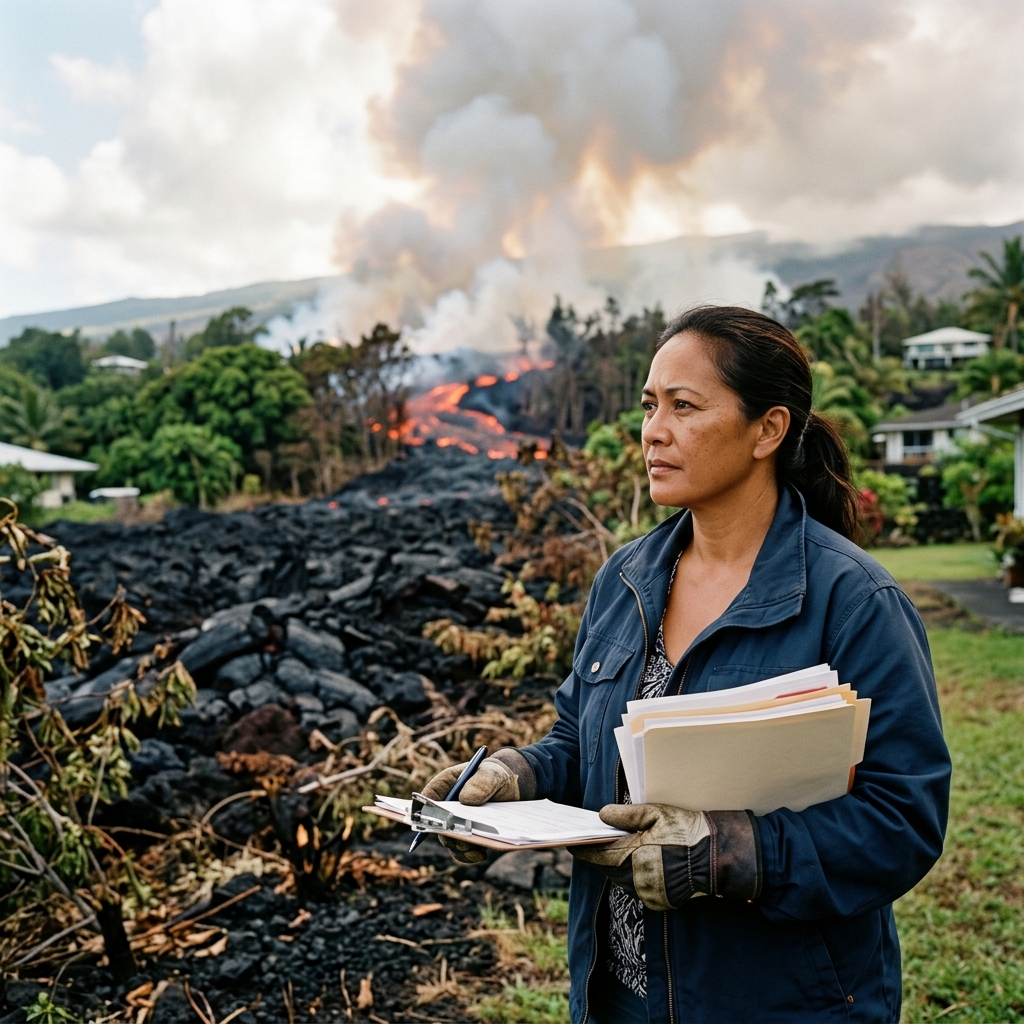
Living in Hawaii means accepting certain natural hazards as part of island life, and volcanic activity is one of the most serious. When lava threatens a home, the most important question is not only whether the property can be saved, but also whether insurance will help pay for repairs, rebuilding, temporary housing, and related losses. In many cases, the answer depends on the exact wording of the policy and on how the damage occurred.
This guide explains how lava-related claims usually work, why policy language matters so much, and what homeowners can do before and after a volcanic event to protect their financial interests.
Why lava damage requires a closer look than ordinary fire claims
Many homeowners assume that if a house burns, the loss is automatically covered as fire damage. That assumption can be correct in some situations, but volcanic events often create a mix of harms: direct lava intrusion, radiant heat, smoke, ash, explosions, and fire caused by eruptive activity. Insurers may treat each of these differently, so a claim cannot be evaluated by labels alone.
Coverage often turns on causation. If the loss is caused by fire, that may fall within a standard homeowners policy. If the loss is caused directly by lava flow or by a specific volcanic hazard, the outcome may depend on whether the policy includes volcanic eruption coverage or excludes that peril altogether. Because of that, two neighbors on the same street can receive different answers from their insurers if their policies are not identical.
What a typical homeowners policy may cover
Standard homeowners insurance is usually designed to protect the dwelling, other structures, personal belongings, and some additional living expenses when a covered loss makes the home uninhabitable. In a volcanic event, the policy may respond to several forms of damage if the peril is included or if the damage is treated as a covered fire loss.
- Dwelling coverage may help repair or rebuild the structure if the damage is within the policy’s covered perils.
- Personal property coverage may apply to furniture, clothing, electronics, and other belongings damaged by a covered volcanic event.
- Loss of use coverage may help pay for temporary housing and related living costs while the home is being repaired.
- Debris removal or cleanup benefits may be available in some policies if ash, dust, or related materials must be removed after a covered event.
Even when a policy includes broad protection, the insurer may apply sub-limits, deductibles, or special conditions. That is why homeowners should not rely on a general summary of coverage; they should review the declarations page and the exclusion section carefully.
How volcanic eruption coverage is commonly described
Insurance guidance on volcanic losses often notes that policies may cover damage caused by a volcanic blast, airborne shock waves, ash, dust, lava flow, or fire and explosion resulting from volcanic activity. The practical point is that not every volcanic loss is treated the same way, even within one policy form. Some policies address volcanic eruption directly, while others cover the downstream effects through fire provisions or related endorsements.
That distinction matters in real claims. For example, a home destroyed when lava ignites nearby vegetation may present a different coverage question from a home buried by advancing lava. The first may be viewed as fire-related, while the second may depend more heavily on whether volcanic eruption is expressly included as a covered peril.
Hawaii’s high-risk lava zones and insurance availability
Because of Hawaii’s unique geography, insurers assess risk by location. Properties in higher-risk lava zones can face fewer private-market options and higher premiums. In the most exposed areas, homeowners may need to look beyond the standard private market for coverage or consider state-related mechanisms where available.
Risk-based pricing is not unusual in property insurance, but volcano exposure makes the issue especially significant. Insurers may limit coverage, refuse certain risks, or impose higher deductibles when the property sits in a zone with greater lava likelihood. The practical result is that location affects both access to coverage and the cost of protecting the home.
Policy exclusions that can change the outcome
One of the most important steps is checking for exclusions. Even if a policy seems to cover fire damage, a separate exclusion may remove lava-related loss from that protection. If a policy specifically excludes lava damage, the fire section may not help, even if fire was involved in the event.
Homeowners should also look for limits on earth movement, volcanic eruption, or surface flows, because insurance contracts often separate these risks from ordinary fire losses. A single paragraph in the exclusions section can completely alter the claim result. For that reason, the precise policy language is more important than general assumptions about what “should” be covered.
Before a volcanic event: practical steps to prepare
Preparation can make a major difference after a disaster. A homeowner who has organized records and understands the policy can move faster and avoid common disputes about what was owned, where it was located, and how much it was worth.
- Keep a copy of the policy, declarations page, and contact information for the insurer and agent.
- Photograph or video each room, the exterior of the home, and major possessions before a loss happens.
- Maintain a written inventory of valuable items, including receipts, model numbers, and serial numbers when possible.
- Store documents digitally and in a separate physical location so they remain accessible if the home is damaged.
- Review the deductible, coverage limits, and any special endorsements that affect volcanic, fire, or evacuation-related claims.
Advance planning is especially useful in Hawaii because a volcanic event may also disrupt roads, mail service, utilities, and access to the property itself. The less a homeowner depends on memory after the event, the easier the claim process becomes.
What to do immediately after lava or eruption damage
Once the property is safe enough to approach, homeowners should focus on documentation and loss mitigation. The insurer will generally expect the policyholder to take reasonable steps to prevent additional damage, but those steps should never put anyone in danger.
- Notify the insurer as soon as possible and start the claim.
- Photograph and video the damage before cleanup begins.
- Keep receipts for emergency expenses, temporary repairs, and alternate housing.
- Do not discard damaged items until the insurer or adjuster has had a chance to inspect them, unless the items present a safety hazard.
- Track all communications with the insurance company, including dates, names, and claim numbers.
If the home is in an unsafe area, the insurer may ask for later inspection or may use remote documentation first. In that situation, the quality of the homeowner’s own evidence becomes especially important.
How insurers usually evaluate a lava-related claim
After notice is given, the insurer typically assigns an adjuster to inspect the property, review the policy, and determine whether the damage falls within covered terms. The adjuster may consider whether the damage came from direct lava, heat, fire, ash, or another related cause. The insurer may also request proof of ownership, repair estimates, and records showing the condition of the property before the loss.
The claim can become more complicated when different parts of the property suffered different causes of damage. For instance, one structure may have been burned, while another was buried under lava or covered by ash. Separate causes may lead to separate coverage analyses, and some losses may be approved while others are denied.
Common disagreements between homeowners and insurers
Disputes often arise over cause of loss, valuation, and the scope of required repairs. An insurer may argue that the damage is excluded volcanic loss rather than covered fire damage. A homeowner may argue that the home was damaged by a covered peril, or that the insurer undervalued the cost to rebuild in a high-cost island market.
Other disputes involve additional living expenses, replacement cost versus actual cash value, and whether cleanup or debris removal is included. In volcanic events, these disagreements can be especially significant because rebuilding may be slower, more expensive, and more complicated than an ordinary property repair.
Comparing a few likely coverage outcomes
| Type of damage | Possible coverage issue | What to check in the policy |
|---|---|---|
| Home burns after lava ignites nearby materials | May be treated as fire damage | Fire peril language, volcanic exclusions |
| Home is buried by lava flow | Coverage may depend on volcanic eruption wording | Volcanic coverage, exclusions, endorsements |
| Belongings damaged by ash or dust | May be covered if volcanic loss is included | Personal property terms, cleanup provisions |
| Family must move out during repairs | May trigger additional living expense benefits | Loss of use limits and time restrictions |
When to ask for help
Not every claim needs a lawyer or outside expert, but professional help can be valuable when the insurer denies coverage, delays a decision, or offers an amount that does not appear to reflect the actual loss. Help may also be useful if the policy contains conflicting language, if the property sits in a high-risk zone, or if the claim involves both fire and volcanic hazards.
A policyholder can also seek assistance from the state insurance regulator when a disagreement cannot be resolved directly. That step does not replace the claim process, but it can help clarify policy questions and consumer rights.
Frequently asked questions
Does homeowners insurance in Hawaii automatically cover lava damage?
Not automatically. Coverage depends on the policy language, including whether volcanic eruption or related fire damage is included and whether any exclusions apply.
Is fire damage from volcanic activity treated differently from lava damage?
Yes. Fire caused by volcanic activity may be covered under a fire peril provision, while direct lava damage may require specific volcanic eruption coverage or may be excluded.
What should I do first after a lava-related loss?
Notify the insurer, document the damage thoroughly, and take reasonable steps to prevent additional harm without risking personal safety.
Can I recover for temporary housing while my home is repaired?
Possibly. Many policies include loss of use or additional living expense coverage, but the amount and duration depend on the policy terms.
Why does location matter so much in Hawaii?
Because homes in higher-risk lava zones may be harder to insure and may face different pricing, availability, and underwriting decisions than homes in lower-risk areas.
References
- Is There Such a Thing as Lava Insurance in Hawaii? — Property Insurance Coverage Law. 2024-05-??. https://www.propertyinsurancecoveragelaw.com/blog/is-there-such-a-thing-as-lava-insurance-in-hawaii/
- Volcanic eruption coverage — Insurance Information Institute. 2024-??-??. https://www.iii.org/article/volcanic-eruption-coverage
- Does Home Insurance Cover Volcanic Eruptions? — Progressive. 2024-??-??. https://www.progressive.com/answers/does-insurance-cover-volcano-damage/
- Protect Your Home — Hawaiʻi Emergency Management Agency. 2024-??-??. https://dod.hawaii.gov/hiema/prepare-your-home/
- Homeowner’s Insurance Lava Flow — United Policyholders. 2018-??-??. https://uphelp.org/wp-content/uploads/2020/09/brochure_lava_insurance_2018_hawaii_county_0.pdf
- Does Insurance Cover Volcanos, Worried Hawaii Homeowners … — NBC Philadelphia. 2018-05-??. https://www.nbcphiladelphia.com/news/national-international/hawaii-volcano-insurance-kilauea-eruption/2062612/
Similar Articles








Read full bio of Sneha Tete




