
Fathers’ Custody Rights In New York: Practical Parenting Plan
A practical guide to custody rights, paternity, and the factors NYC courts weigh most.
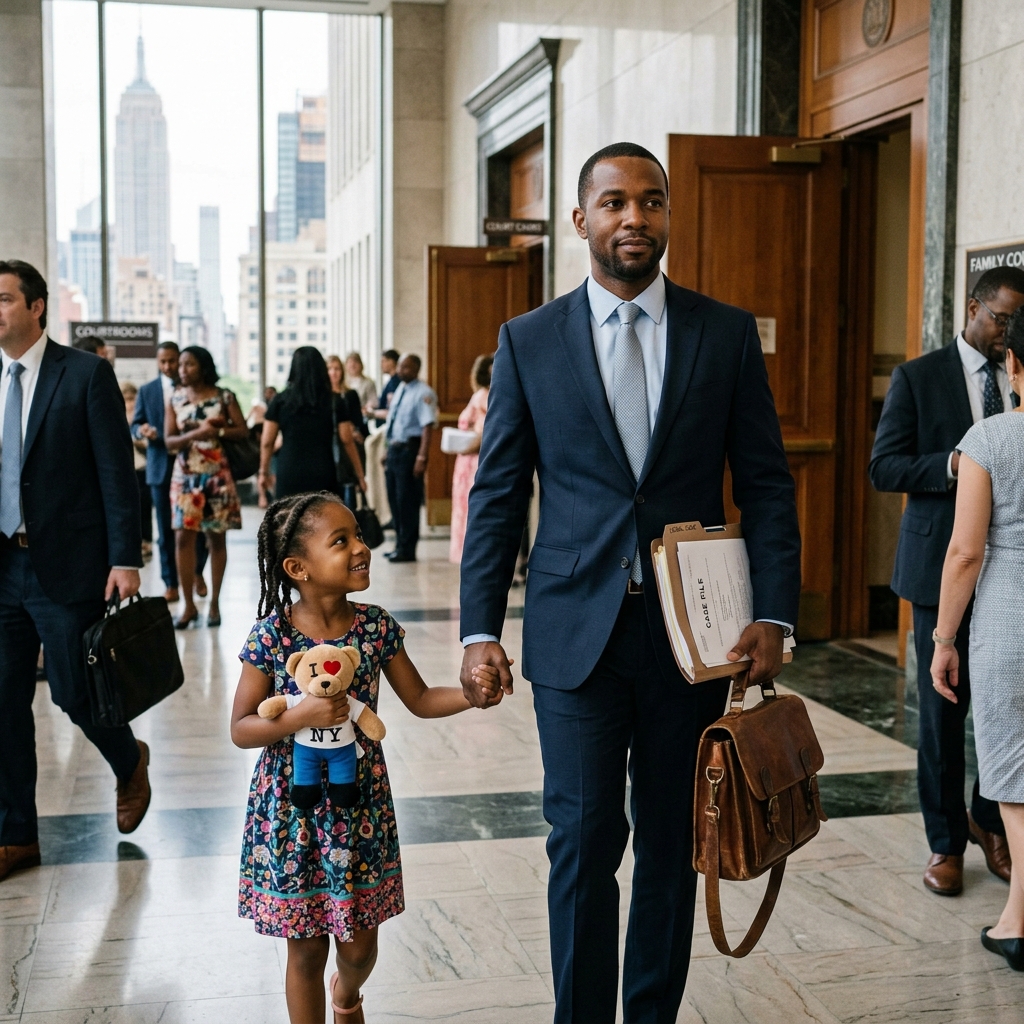
In New York City, fathers have the same legal opportunity as mothers to seek custody of a child. The deciding question is not gender, but whether the proposed arrangement serves the child’s best interests. That standard gives fathers a real path to sole custody, joint custody, or a primary parenting role when the facts support it.
Winning custody usually requires more than saying you want it. A father needs legal standing, a stable plan for the child, and evidence showing that his home, routine, and involvement make him a strong custodial parent. Courts look closely at parenting history, safety, cooperation, and the child’s daily needs.
What New York Courts Actually Decide
Custody cases in New York usually involve two distinct questions: where the child will live and who will make important decisions. Physical custody concerns the child’s residence and day-to-day care. Legal custody concerns authority over education, health care, religion, and similar major issues.
A court may award one parent both forms of custody, split the responsibilities, or create a shared arrangement. In many cases, a parent with primary physical custody still shares legal custody with the other parent. The final structure depends on what best supports the child’s stability and development.
| Custody Type | What It Means | Common Result |
|---|---|---|
| Physical custody | Where the child lives most of the time | One parent may be primary residential parent |
| Legal custody | Authority to make major life decisions | Often shared, even when physical custody is not |
| Joint custody | Both parents share responsibilities | Possible when cooperation and logistics support it |
| Sole custody | One parent holds main decision-making or residential authority | Used when conflict, safety, or instability makes sharing impractical |
Why Paternity Comes First for Many Fathers
For married parents, paternity is usually not disputed. For unmarried fathers, however, legal paternity may need to be established before custody or visitation rights can be fully enforced. Without that legal step, a father may face difficulty asking the court for an order.
Paternity can be established through formal acknowledgment or through a court proceeding. Once that status is recognized, the father can ask for custody, parenting time, and decision-making rights just like any other legal parent. This step is often the gateway to the rest of the case.
The Best-Interests Standard Is the Heart of the Case
New York family courts decide custody based on the child’s best interests. That broad standard allows a judge to weigh many facts rather than rely on assumptions about either parent. The court may consider each parent’s relationship with the child, caregiving history, ability to cooperate, home environment, and willingness to support the child’s relationship with the other parent.
Judges are also alert to practical concerns. A parent who can provide a consistent school routine, reliable transportation, medical follow-up, and emotional support may have an advantage. A father who has remained present in everyday care can make a compelling case when those facts are well documented.
- Who has been the child’s primary caregiver
- Whether the child has a safe and stable home
- Each parent’s mental and physical health
- Any history of domestic violence, neglect, or abuse
- Each parent’s willingness to encourage the child’s relationship with the other parent
- The child’s school, medical, and emotional needs
What Strengthens a Father’s Custody Petition
A successful custody request is usually built on evidence, not just good intentions. Fathers should be prepared to show a pattern of involvement and responsibility. Records, messages, calendars, school communications, and medical documents can help demonstrate a meaningful parenting role.
Courts respond well to concrete examples. If a father regularly attends appointments, handles homework, participates in school events, and maintains reliable housing, those facts can help show that he is not a weekend visitor but an engaged parent. A stable job, a child-friendly residence, and a predictable schedule can also support the request.
- Keep copies of school emails and report cards
- Save texts or emails that show your parenting involvement
- Maintain records of medical and extracurricular participation
- Document time spent caring for the child
- Show proof of housing, income, and childcare plans
When Fathers May Have an Advantage
There is no automatic preference for mothers in New York custody law. Fathers can prevail when the evidence shows that their home is better suited to the child’s needs or that the other parent’s circumstances create risk or instability. That does not mean a father must prove the other parent is a bad person; it means he must show why his proposed arrangement works best for the child.
Examples may include situations where one parent has substance abuse issues, mental health challenges that impair parenting, a history of neglect, repeated interference with visitation, or an inability to provide a stable environment. The court’s focus remains the child, but serious problems in the other household can matter greatly.
Joint Custody Is Possible, But Cooperation Matters
Many parents hope for shared parenting, and New York courts may approve it when both parents can communicate and cooperate. Joint custody works best when parents can discuss schedules, medical choices, education, and day-to-day changes without constant conflict. If communication is highly toxic, a judge may decide that one parent should have primary authority instead.
For fathers, asking for joint custody can be a strong strategy when they have a close bond with the child and can show they are flexible, dependable, and child-focused. Still, a joint arrangement is not always a 50/50 split in practice. The schedule may be uneven while decision-making remains shared.
Custody, Visitation, and Child Support Can Overlap
Many parents assume custody and support are the same issue, but they are handled separately. A parent with primary physical custody may receive child support from the other parent. A shared parenting schedule does not automatically eliminate support obligations. Instead, support is usually based on income, time spent with the child, and the child’s financial needs.
That means a father seeking custody should understand that support may still be part of the outcome. A court can award him custody and also order the other parent to contribute financially. In other cases, shared custody may still involve a support order if the income levels are unequal.
Common Mistakes That Hurt a Father’s Case
Some fathers weaken their own position by focusing on the other parent’s flaws instead of their own parenting strengths. Courts want proof that a father can meet the child’s needs, not just criticism of the other household. Emotional outbursts, inconsistent contact, and poor recordkeeping can also undermine credibility.
Another common mistake is failing to follow temporary orders or informal agreements. Judges often notice which parent honors schedules, communicates respectfully, and keeps the child out of adult conflict. A father who behaves predictably and respectfully can stand out in a disputed case.
- Do not withhold the child outside a court order
- Do not speak badly about the other parent in front of the child
- Do not miss scheduled visits without a clear reason
- Do not ignore school, medical, or court communications
- Do not rely on verbal promises instead of written records
How a Parenting Plan Can Support the Request
Courts often want to see a realistic plan, not just a demand for custody. A father who can explain how school mornings, homework, transportation, holidays, and medical care will work gives the judge more confidence that the arrangement will succeed. Specificity matters because it shows preparedness.
A strong plan should address the child’s age, school schedule, extracurricular activities, and any special needs. It should also explain how the father will handle communication with the other parent. If the plan anticipates problems and offers workable solutions, it may appear more credible than a vague request for more time.
What If the Other Parent Blocks Access?
If one parent interferes with parenting time or refuses to follow an existing order, the father can ask the court to enforce the agreement. In some cases, repeated interference may also help support a modification request. Courts do not usually reward a parent who undermines the child’s relationship with the other parent.
A father facing obstruction should keep detailed records of missed visits, denied calls, and hostile communication. That documentation can matter later if he needs to prove a pattern of interference. The key is to stay calm, follow legal procedures, and avoid retaliation.
Practical Steps Fathers Can Take Early
Custody disputes are often won through preparation. Fathers who begin building a record before filing may be in a much stronger position. Even small habits, repeated over time, can show reliability and commitment.
- Stay consistently involved in daily care
- Attend school conferences, doctor visits, and activities
- Keep a calendar of parenting time and important events
- Secure appropriate housing for the child
- Preserve respectful communication with the other parent
- Consult counsel before making major custody moves
Questions Fathers Often Ask
Can a father get primary custody in NYC? Yes. New York courts can award primary custody to a father if the evidence shows that doing so serves the child’s best interests.
Does an unmarried father have the same rights? He does once paternity is legally established. Without that step, he may face barriers to seeking custody or visitation.
Can custody be shared even if parents disagree? Sometimes, but only when the parents can cooperate enough to make the arrangement work for the child.
Will child support still be ordered in a shared arrangement? Often yes, because support depends on financial factors and the child’s needs, not custody labels alone.
What matters most to the judge? The child’s safety, stability, and overall well-being, supported by reliable evidence.
FAQs
Do fathers have to prove the mother is unfit to get custody?
No. A father can seek custody by showing that his own home and parenting plan best support the child’s interests. Evidence of the other parent’s problems can help, but it is not always required.
Can a father get custody without going to trial?
Yes. Many custody disputes are resolved through negotiation or settlement. If both parents agree to a plan, the court may approve it if it appears fair and child-focused.
What if the father was not the child’s primary caregiver before?
That does not automatically prevent custody. The father may still prevail if he can show strong involvement, a stable environment, and a plan that supports the child’s needs.
Should a father keep evidence even before filing?
Yes. Records of parenting time, messages, school involvement, and caregiving responsibilities can become important evidence later.
References
- Child Custody and Visitation in New York — LawNY. 2026-07-10. https://www.lawny.org/page/8/child-custody-and-visitation-new-york
- New York State Child Custody Laws for Unmarried Parents — Levoritz Law. 2026-07-10. https://www.levoritzlaw.com/blog/unmarried-parents-child-custody-ny/
- Do Fathers Have Equal Rights in New York Family Court? — V. Stark Law. 2026-07-10. https://vstarklaw.com/do-fathers-have-equal-rights-in-new-york-family-court/
- As a Father, Can I Get Primary Custody of My Child? — Barrows Levy. 2026-07-10. https://www.barrowslevy.com/do-men-ever-get-primary-custody-of-a-child-garden-city-ny-fathers-rights-lawyers/
Similar Articles








Read full bio of Sneha Tete


