
How Far Should Facial Recognition Bans Go?
Exploring the expanding legal, ethical, and policy debates around banning facial recognition in government, business, and public spaces.
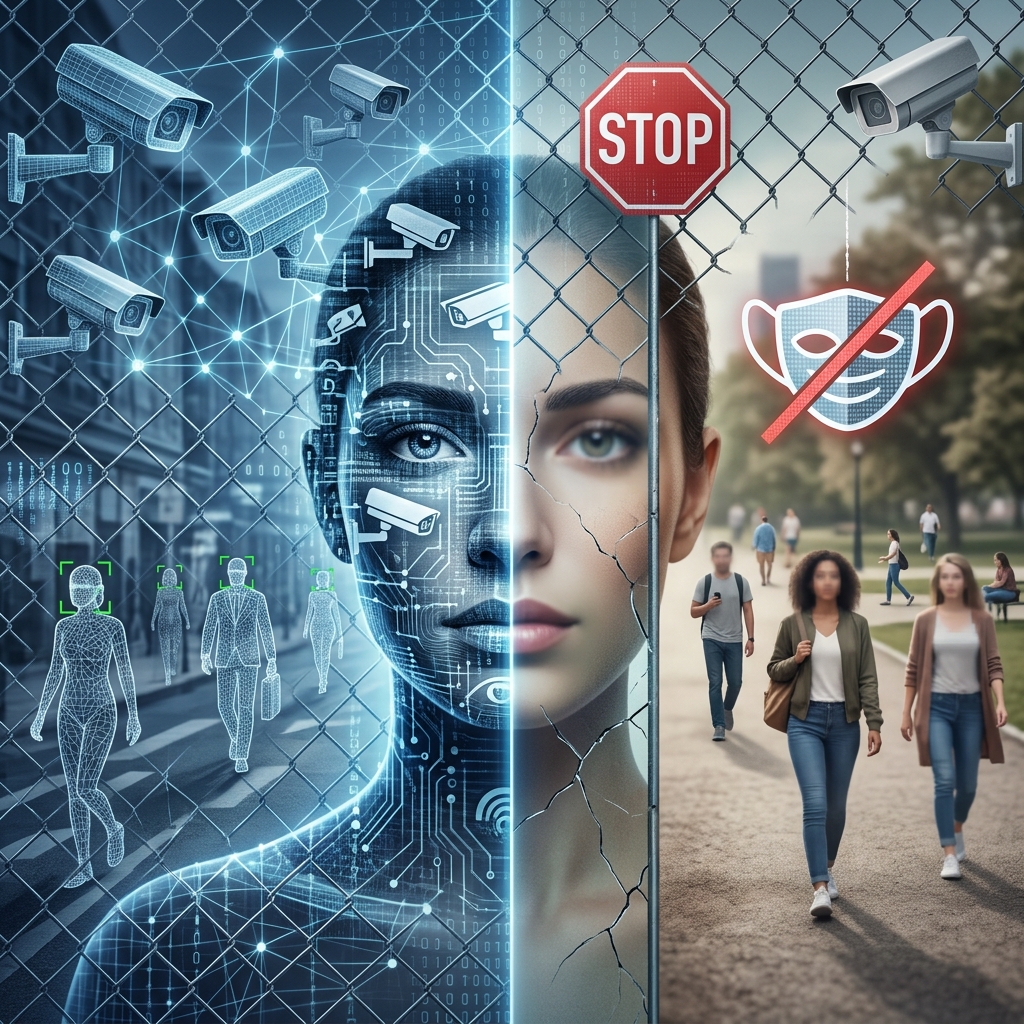
Facial recognition has rapidly moved from science fiction to everyday reality, powering phone unlock features, retail analytics, and police investigations. Yet this same technology raises profound questions about privacy, civil liberties, and state power, prompting a global debate over whether it should be strictly regulated—or banned outright in some contexts.
Legal reforms and advocacy campaigns increasingly focus not on how to improve facial recognition, but on how far to limit or prohibit its use, especially for mass surveillance in public spaces, policing, and border control.
From Novel Tool to Ubiquitous Surveillance
Facial recognition systems use algorithms to compare images of faces against databases, producing matches that may be used to identify individuals in photos, videos, or live camera feeds. When combined with existing camera networks, this allows governments and companies to track people across cities, airports, stadiums, and online platforms in real time or retrospectively.
- Law enforcement deploys facial recognition for suspect identification and dragnet searches across large video datasets.
- Border and migration authorities test facial recognition at checkpoints and airports to verify travelers and asylum seekers.
- Private businesses use it for customer profiling, fraud prevention, and security at entertainment venues and retail locations.
What began as a promising security tool has morphed into a potential infrastructure for blanket surveillance of entire populations, with limited transparency, weak safeguards, and growing evidence of serious risks.
Why Advocates Call for Bans, Not Just Regulation
Human rights organizations and digital rights groups increasingly argue that facial recognition is too powerful and too dangerous to deploy in many public settings. Their concerns go beyond technical accuracy to focus on structural harms that may be impossible to mitigate through ordinary regulation.
Key Human Rights and Civil Liberties Risks
- Mass surveillance: Networked cameras plus facial recognition can enable blanket, indiscriminate monitoring of protests, religious services, workplaces, and daily life.
- Chilling effect on democracy: Knowing that attendance at a protest or political rally can be permanently logged and analyzed may discourage people from exercising fundamental rights.
- Targeting vulnerable groups: Authorities can use facial recognition to identify and track immigrants, refugees, and marginalized communities, facilitating detention, deportation, or harassment.
- Bias and error: Studies have shown higher error rates for women and people with darker skin, increasing the risk of false accusations and wrongful arrests.
- Lack of clear legal frameworks: In many jurisdictions, there are no comprehensive statutes governing how facial recognition can be deployed, audited, or challenged.
These risks drive calls for outright bans in specific contexts, such as police use on public streets, real-time scanning in public spaces, and deployment at borders.
Government Use: Local Bans and State-Level Guardrails
Some of the most significant efforts to limit facial recognition focus on government and law enforcement. Municipalities and states in the United States and elsewhere have begun to experiment with bans and strict guardrails.
Local Government Bans
Cities such as San Francisco have adopted first-of-its-kind ordinances banning government agencies from using facial recognition technology for surveillance. In the years since, more than a dozen municipalities have followed with local bans covering police departments and multiple city agencies.
- Broad definitions: Robust ordinances define facial recognition broadly to avoid loopholes.
- Restrictions on derived information: Some cities prohibit officials from relying on facial recognition results generated by third parties, even if the city does not directly operate the technology.
- Community enforcement: Private rights of action allow residents to sue when agencies violate bans, making enforcement less dependent on internal oversight.
These local bans reflect a view that certain government uses—especially continuous surveillance in public spaces—cannot be safely regulated and should simply be prohibited.
State Laws: Limits Rather Than Total Prohibition
Parallel to city-level bans, a growing number of U.S. states have passed laws that limit but do not entirely ban police use of facial recognition. By the end of 2024, at least fifteen states had adopted some form of restriction.
| Policy Type | Example States | Purpose |
|---|---|---|
| Warrant requirement | Colorado, Washington, Montana, Utah | Police must show probable cause to a court before using facial recognition for identification. |
| Serious crime limit | Maine, Utah, Montana | Use restricted to investigating defined serious offenses, such as violent felonies. |
| Notice to defendants | Montana; court decision in New Jersey | Defendants must be notified if facial recognition contributed to an investigation, protecting due process rights. |
| Match not sufficient for arrest | Alabama, Colorado, Maine, Virginia, Washington | Facial recognition alone cannot serve as probable cause for a search or arrest. |
| Near-total moratorium | Vermont | Prohibits use in almost all situations, with narrow exceptions like certain child exploitation cases. |
These approaches aim to constrain use without fully banning it, recognizing both law enforcement interests and civil liberties concerns.
Should Bans Reach Private Sector Uses?
Regulation and bans often focus on government surveillance, but private companies also deploy facial recognition widely—in retail, entertainment, and online services. This raises questions about whether bans should extend beyond public authorities to corporate and commercial deployment.
Business Adoption and Misuse Risks
Entertainment venues and other businesses increasingly explore facial recognition for security and customer experience, but legal protections for consumers remain limited in many jurisdictions.
- Companies may collect and store biometric data without clear notice, consent, or limits on retention.
- Systems can be used to profile customers, identify perceived troublemakers, or track attendance at events, raising risks of discrimination and blacklisting.
- Data breaches involving biometric information are particularly serious, as facial features cannot be changed like passwords.
Unlike government programs, these practices often operate in the background, leaving individuals unaware that their faces are being scanned and analyzed.
Emerging Biometric Privacy Laws
A few jurisdictions have enacted laws directly addressing private sector use of biometrics. For example, Illinois’ Biometric Information Privacy Act (BIPA) requires informed consent before collecting, storing, or using biometric identifiers and restricts their sale. Similar proposals, such as New York’s Biometric Privacy Act bill, aim to impose comparable obligations.
Key elements of strong biometric privacy laws include:
- Explicit consent before collection or use of facial templates.
- Clear notice that facial recognition is in operation and how data will be used.
- Restrictions on sharing and sale of biometric data to third parties.
- Security requirements for storage, transmission, and eventual deletion.
- Private rights of action enabling individuals to sue for violations.
Whether these regimes qualify as a ban depends on their design. Some advocates argue that high-risk uses—such as real-time customer tracking or hidden profiling—should be prohibited entirely, not merely subject to consent rules.
Border Control and Public Spaces: Calls for Global Prohibitions
Human Rights Watch and dozens of other organizations have urged governments and companies worldwide to stop using facial recognition for surveillance in public spaces and in migration and asylum contexts. Their position is that the technology, when used for monitoring crowds and border populations, inherently threatens human rights.
Public Space Surveillance
Deploying facial recognition across streets, squares, and transportation hubs creates a capacity for continuous tracking of everyone who enters those areas, regardless of suspicion or wrongdoing. This can undermine:
- Freedom of assembly: Participation in protests or demonstrations is logged and could later be used against individuals.
- Freedom of religion: Attendance at religious services becomes traceable, potentially exposing people to discrimination.
- Freedom of association: Visits to unions, advocacy groups, or community organizations are recorded and analyzable.
For these reasons, many rights groups support national or regional legislation explicitly banning facial recognition surveillance in public spaces, rather than relying on agency-level policies.
Migration and Border Contexts
At borders and in migration systems, facial recognition can be used to verify identity, track movements, and monitor asylum seekers. Human rights advocates warn that in these highly coercive environments, individuals have limited ability to refuse or challenge such systems.
The concern is that facial recognition may reinforce existing power imbalances and expose migrants to automated risk scoring, misidentifications, or targeted surveillance without adequate safeguards or remedies.
How Far Should Bans Extend? Policy Options
Debates over the scope of facial recognition bans often revolve around where to draw lines between acceptable, risky, and unacceptable uses. Policymakers face choices ranging from narrow restrictions to broad prohibitions.
Option 1: Ban Only Untargeted, Mass Surveillance
One approach is to ban untargeted facial recognition scans—that is, systems that scan everyone passing through a camera’s field of view—while allowing strictly controlled, targeted use in serious criminal investigations.
- Prohibit real-time scanning of public spaces such as streets, parks, and transit hubs.
- Allow post-incident analysis of specific footage only with a warrant and probable cause.
- Exclude low-stakes contexts like marketing analytics from using identifiable facial templates.
This option attempts to preserve some investigative utility while eliminating the most dangerous forms of dragnet surveillance.
Option 2: Moratoria or Time-Limited Bans
Another strategy is to impose temporary bans or moratoria, giving legislatures time to study impacts, develop standards, and decide whether permanent prohibition is necessary. Vermont’s near-total moratorium is one example, with narrow exceptions for defined serious crimes.
Moratoria can be designed to:
- Pause expansion of facial recognition while impact assessments are conducted.
- Require public consultations and independent research on bias, accuracy, and rights impacts.
- Automatically renew unless clear evidence supports limited, accountable use.
Option 3: Comprehensive Sector-Specific Bans
A more ambitious policy is to adopt sector-specific bans targeting high-risk environments:
- Ban facial recognition for police surveillance in public spaces.
- Ban its use for border surveillance and migration management, prioritizing less invasive identity verification methods.
- Ban deployment in schools and childcare settings, recognizing unique risks for minors.
- Ban covert use in employment and entertainment venues, where power imbalances limit meaningful consent.
Under this model, limited, transparent uses—such as personal device unlocking or voluntary, on-device verification—might remain permissible, while surveillance-oriented applications are prohibited.
Option 4: Strict Regulation Instead of Bans
Some policymakers prefer strict regulation over outright bans. They propose combining warrant requirements, crime limits, transparency rules, and accuracy standards to keep use within narrow bounds.
Essential safeguards in such frameworks include:
- Judicial oversight via warrants and probable cause.
- Limiting use to defined serious offenses.
- Mandating notice to defendants and disclosure of system details.
- Separating investigative decisions from algorithmic outputs, ensuring humans cannot rely solely on a facial recognition match.
- Independent testing and accuracy standards for systems, with regular audits.
Critics of this approach argue that, despite safeguards, the structural risk of facial recognition—especially for public space surveillance—remains too high.
Frequently Asked Questions (FAQs)
Is facial recognition always inaccurate or biased?
No. Some systems perform well under controlled conditions. However, research and advocacy reports document higher error rates for women and people with darker skin, especially in real-world environments. Even low error rates can be unacceptable when used for criminal investigations or mass surveillance.
Can better algorithms solve the human rights problems?
Improved accuracy can reduce misidentification, but it does not resolve core issues like mass tracking, chilling effects on protest, or coercive use at borders. Many experts argue that some uses remain incompatible with fundamental rights, regardless of technical performance.
Why focus on bans instead of more transparency?
Transparency—such as notifying defendants or publishing policies—helps, but does not prevent abuses when surveillance infrastructures are deeply embedded. Advocates push for bans where the risk of rights violations is inherent, such as real-time scanning of public spaces or surveillance of migrants.
Do any countries or regions fully ban facial recognition?
Comprehensive national bans are still rare, but multiple cities and some U.S. states have adopted strong restrictions or moratoria, particularly for law enforcement and schools. At the international level, coalitions of rights groups continue to pressure governments to adopt broader prohibitions.
What about everyday uses like unlocking smartphones?
Most policy debates distinguish between user-controlled, on-device uses (such as unlocking phones) and surveillance-oriented deployments (such as scanning crowds). Bans typically target the latter, especially when individuals cannot meaningfully opt out.
Looking Ahead: Designing Limits for a Pervasive Technology
Facial recognition is deeply intertwined with modern camera networks, databases, and AI systems. The question for policymakers is no longer whether the technology exists, but how far bans and restrictions should go to preserve privacy, liberty, and equality.
Emerging practice suggests a layered approach:
- Outright bans on public space surveillance and certain border uses.
- Strict, enforceable limits on law enforcement, including warrants, serious crime thresholds, and prohibition of untargeted scans.
- Robust biometric privacy laws for private actors, with consent, transparency, and litigation pathways.
- Ongoing public debate and independent research to inform whether temporary moratoria should become permanent bans.
Ultimately, the debate over banning facial recognition is not just about technology; it is about what kind of society we want, how visible or invisible our movements should be, and who controls the infrastructures that record our faces wherever we go.
References
- The Movement to Ban Government Use of Face Recognition — Electronic Frontier Foundation. 2022-05-18. https://www.eff.org/deeplinks/2022/05/movement-ban-government-use-face-recognition
- Time to Ban Facial Recognition from Public Spaces and Borders — Human Rights Watch. 2023-09-29. https://www.hrw.org/news/2023/09/29/time-ban-facial-recognition-public-spaces-and-borders
- Why Ban Facial Recognition? — Minnesota Legislative Commission on Data Practices and Privacy. 2021-11-30. https://www.lcc.mn.gov/lcdp/meetings/11302021/whybanFRT
- Limiting Face Recognition Surveillance: Progress and Paths Forward — Center for Democracy & Technology. 2021-06-29. https://cdt.org/insights/limiting-face-recognition-surveillance-progress-and-paths-forward/
- Status of State Laws on Facial Recognition Surveillance: Continued Progress and Smart Innovations — Tech Policy Press. 2024-12-20. https://techpolicy.press/status-of-state-laws-on-facial-recognition-surveillance-continued-progress-and-smart-innovations
- Privacy vs. Security: The Legal Implications of Using Facial Recognition Technology at Entertainment Venues — New York State Bar Association. 2023-04-03. https://nysba.org/privacy-vs-security-the-legal-implications-of-using-facial-recognition-technology-at-entertainment-venues/
Similar Articles








Read full bio of medha deb


