
How Criminal Law Protects Reporters From Assault
Exploring how assault laws, enhanced penalties, and constitutional protections work together to safeguard journalists during newsgathering.
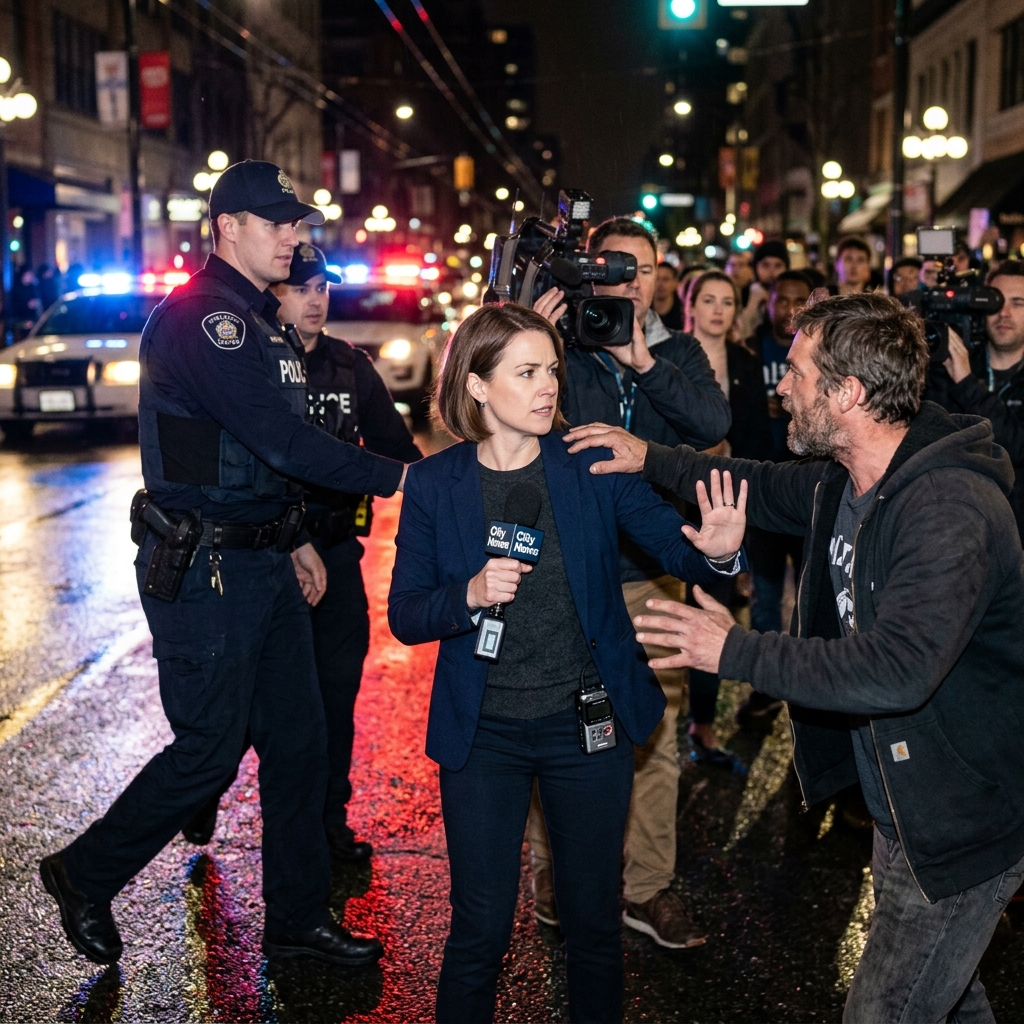
Reporters often work where tensions are high: protests, crime scenes, political rallies, and conflict zones. In those environments, journalists are sometimes assaulted or intimidated because of their work. This article explains how criminal laws and related legal protections in the United States address violence against reporters, and how those rules fit within a broader framework of press freedom and public safety.
Why Violence Against Reporters Is a Legal Concern
When someone attacks a journalist, the harm goes beyond one individual. Violence or threats aimed at reporters can chill coverage, limit the public’s access to information, and undermine democratic oversight. Courts and lawmakers increasingly recognize that protecting journalists is part of protecting the public’s right to know, rooted in the First Amendment guarantee of freedom of speech and press.
- Individual harm: Assault can result in physical injury, trauma, and loss of professional equipment.
- Societal harm: Intimidation of reporters can reduce scrutiny of government, law enforcement, and powerful private actors.
- Legal harm: Targeted attacks may interfere with constitutionally protected newsgathering and public oversight.
Because of these overlapping harms, legal systems rely on both general criminal laws (such as assault and battery statutes) and, in some jurisdictions, special measures or sentencing enhancements when the victim is a journalist.
Core Criminal Offenses That Protect Journalists
In most U.S. jurisdictions, reporters are protected by the same core criminal laws that apply to any person who is assaulted or threatened. Journalists do not need a special status for these laws to apply; the fact that they were attacked while working can still be relevant, especially at sentencing.
Assault and Battery Statutes
Every state criminalizes assault and battery, though definitions differ. In general, battery involves unlawful physical contact or injury, while assault often refers to threatened harm or attempts to injure.
- Simple assault or battery: Often charged when there is minor injury or threatened harm.
- Aggravated assault: Charged when serious bodily injury, use of a weapon, or other aggravating factors are present.
When a journalist is attacked while recording a protest or interviewing a source, these statutes typically provide the basis for criminal prosecution. The perpetrator can face charges just as they would for assaulting any member of the public, but motives related to press coverage can shape how prosecutors present the case.
Threats, Harassment, and Intimidation
Violence is not limited to physical contact; credible threats or sustained harassment can also trigger criminal liability. Many jurisdictions have laws criminalizing:
- Criminal threats (sometimes called terroristic threats) when a person intentionally threatens serious harm.
- Stalking or harassment involving repeated unwanted contact or intimidation.
- Interference with public duties, when threats prevent a person performing lawful work, which can sometimes include journalists.
If a person sends repeated death threats to a reporter because of a particular story or confronts them with menacing behavior at public events, these laws may be invoked alongside assault statutes.
Enhanced Penalties and Special Protections
While general assault laws protect everyone, some legal discussions focus on whether journalists should receive additional protection, similar to how many jurisdictions treat assaults against police, emergency workers, or public officials. Legal scholars have proposed using sentencing enhancements or creating specific offenses tied to violence against reporters.
Sentencing Enhancements Based on Victim Status
Sentencing enhancements are rules that allow or require judges to increase punishment when certain aggravating factors are present. In many states, attacking particular categories of victims—such as law enforcement or vulnerable individuals—can trigger enhanced penalties. Scholars have argued that:
- Assaults on journalists aimed at silencing coverage implicate the public’s access to information.
- Enhanced penalties could deter targeted attacks on reporters and reinforce the importance of press freedom.
- Existing frameworks for protected classes (for example, hate crime laws) show how motive and victim identity can affect sentencing.
Some proposals would not create new crimes, but rather direct judges to consider a journalist’s role and the motive behind the assault as aggravating factors in sentencing.
Federal Legislative Proposals
At the federal level, advocates have pursued legislation specifically aimed at protecting reporters from violence. One notable proposal has been the Journalist Protection Act, which would make it a federal crime to intentionally intimidate or cause bodily harm to a journalist in the course of newsgathering or reporting.
If enacted in robust form, laws like the Journalist Protection Act would:
- Give federal prosecutors authority to pursue cases when state or local authorities decline or are unable to act.
- Highlight newsgathering as a federally protected activity, linking criminal prosecution to First Amendment values.
- Potentially provide uniform protection for reporters covering national events, protests, or politically sensitive topics.
Although these proposals do not replace state assault laws, they add an additional layer of enforcement and signal the importance of protecting journalists from targeted attacks.
Constitutional Protection: When Violence Targets Newsgathering
Criminal assault laws operate alongside constitutional rights. When a reporter is attacked because of their work, the incident can implicate the First Amendment and other constitutional protections, especially when government officials are involved.
First Amendment and Retaliatory Violence
The First Amendment protects freedom of speech, press, and peaceful assembly. When law enforcement or other government actors assault or threaten reporters to stop coverage of public events, it may constitute unconstitutional retaliation against protected activity.
In the U.S., journalists at protests have the same right as other members of the public to observe and document events in public spaces. Courts have increasingly recognized a right to record public officials, including police, performing their duties.
| Constitutional Provision | Protected Interest | Relevance to Journalists |
|---|---|---|
| First Amendment | Speech, press, assembly | Protects newsgathering, publication, and recording of public events. |
| Fourth Amendment | Freedom from unreasonable searches and seizures | Limits arrests, use of force, and seizure of journalistic equipment. |
| Fourteenth Amendment | Due process and equal protection | Supports claims when authorities selectively target or fail to protect reporters. |
When violence or arrest is used to deter reporting, journalists may have access not only to criminal law remedies as victims, but also to civil actions asserting constitutional violations.
Civil Rights Actions for Constitutional Violations
Reporters who are assaulted or unlawfully arrested by government officials sometimes pursue civil remedies under federal civil rights statutes. In particular, 42 U.S.C. § 1983 allows individuals to sue state actors who violate their constitutional rights.
These civil suits supplement criminal prosecution in several ways:
- Accountability: Civil litigation can hold individual officers and agencies responsible when criminal charges are not brought or result in acquittal.
- Deterrence: Damage awards and court orders can incentivize reforms in police training and crowd-control tactics.
- Recognition: Courts can expressly affirm the rights of journalists to record and report, clarifying legal standards.
These civil actions do not replace criminal law, but they play an important role when violence against reporters is tied to official misconduct.
Journalists’ Rights During Protests and High-Risk Events
Protests and mass demonstrations are contexts where violence against reporters has recently drawn significant attention. Organizations such as the Reporters Committee for Freedom of the Press and the Committee to Protect Journalists publish guidance to help journalists understand their rights and the legal landscape.
Right to Observe, Record, and Report
In public spaces, journalists generally have the same rights as other members of the public to be present, observe events, and record images or audio. Under current case law and guidance:
- Journalists may photograph and record officers and protesters in public areas, subject to reasonable time, place, and manner restrictions.
- Police cannot lawfully arrest or assault a reporter solely because they are documenting events, assuming the reporter is not otherwise breaking the law.
- Physical interference with a reporter aimed at preventing recording can raise both criminal and constitutional issues.
These rights do not grant immunity from lawful orders—reporters may still be required to comply with curfews or dispersal orders—but they do mean that journalism itself is not a lawful basis for violence or arrest.
Fourth Amendment Limits on Use of Force and Seizure
The Fourth Amendment protects against unreasonable searches and seizures. For reporters, this affects both personal safety and the security of their equipment and materials. Guidance from press freedom organizations notes that officers must have probable cause to arrest and may not indiscriminately seize press equipment or search digital devices without proper legal basis.
- Arrests require probable cause that a journalist is committing a crime, not merely that they are near unlawful activity.
- Searches of devices such as phones or cameras typically require a warrant, subject to limited exceptions such as exigent circumstances.
- Use of force must be reasonable; excessive force can result in both criminal charges and civil liability.
These constitutional limits reinforce criminal assault laws by constraining how much force officials may use and when they may interfere with newsgathering.
International Humanitarian Law: Journalists in Armed Conflict
Although this article focuses on criminal law in a domestic setting, it is worth noting that international humanitarian law offers protection to journalists working in armed conflict zones. Under treaties such as Additional Protocol I to the Geneva Conventions, journalists engaged in dangerous missions in areas of armed conflict are considered civilians and enjoy protections against attacks and arbitrary measures.
Key principles include:
- Journalists are protected as civilians so long as they do not take a direct part in hostilities.
- News media facilities are generally treated as civilian objects, and attacking them can violate the prohibition on targeting civilian infrastructure.
- Attacks on journalists or media may constitute war crimes when they form part of unlawful targeting of civilians.
These rules operate in parallel to domestic criminal law, providing a framework for accountability in armed conflict when journalists are deliberately targeted.
State Duties to Prevent and Punish Violence Against Journalists
Beyond individual criminal cases, international and regional human rights bodies emphasize that states have a positive obligation to protect journalists, particularly when authorities know or should know that a reporter faces a real and immediate risk.
This obligation has several dimensions:
- Prevention: States should adopt effective criminal laws and enforcement mechanisms to deter attacks on journalists.
- Protection: When authorities are aware of specific risks, they may be required to take reasonable measures to shield journalists.
- Investigation and punishment: Credible investigations and prosecution of attacks are critical to preventing impunity.
In practice, this means that failure to adequately investigate or prosecute violence against reporters can itself raise human rights concerns, especially where attacks appear linked to journalistic work.
Practical Legal Safeguards for Reporters
Understanding the legal framework is one step; reporters also benefit from practical strategies that align with these protections. Guidance from press freedom organizations suggests steps journalists can take to reduce risk and use the law effectively.
- Know local laws: Familiarity with protest, trespass, and curfew rules reduces the risk of arrest and helps distinguish unlawful violence from lawful enforcement.
- Carry clear press identification: While not legally required in all contexts, press IDs can help officers recognize a journalist’s role and may influence how incidents are treated.
- Document incidents: When safe to do so, recording or noting details of threats or assaults can support both criminal complaints and civil rights actions.
- Engage legal counsel: Early consultation with attorneys or press freedom hotlines can clarify options for pursuing criminal charges, filing complaints, or initiating civil litigation.
These safeguards do not replace the protections of criminal law, but they help reporters make those protections more effective in practice.
Frequently Asked Questions
Are journalists treated as a special protected class under assault laws?
In most U.S. jurisdictions, journalists are protected by the same assault and battery statutes as any other person. Some legal proposals advocate for sentencing enhancements or specific federal offenses when a reporter is attacked because of their work, but many protections currently operate through general criminal laws and constitutional rights.
Can the government be held responsible when police assault reporters?
Yes. In addition to criminal investigation of individual officers, reporters may bring civil rights actions under federal law, such as 42 U.S.C. § 1983, alleging violations of First and Fourth Amendment rights. Courts can award damages and, in some cases, order institutional reforms.
Does filming the police give journalists extra legal rights?
Journalists and members of the public generally have a right to record police in public spaces, subject to reasonable restrictions. That right does not grant immunity from all law enforcement, but it does mean that officers cannot lawfully arrest or assault a person merely for recording their public conduct.
What international rules apply when reporters are attacked in war zones?
In armed conflict, journalists are treated as civilians under international humanitarian law, including Additional Protocol I to the Geneva Conventions. They are protected from direct attacks unless they take a direct part in hostilities, and deliberate targeting of journalists can amount to a war crime.
What should a reporter do after being assaulted because of their work?
Reporters are encouraged to document the incident, seek medical care, report the crime to local authorities, and contact legal counsel or press freedom organizations. Depending on the circumstances, they may pursue both criminal complaints against the assailant and civil actions if constitutional rights were violated.
References
- Police, Protesters, and the Press — Reporters Committee for Freedom of the Press. 2020-06-01. https://www.rcfp.org/resources/police-protesters-and-the-press/
- Case-law on Violence Against Journalists: A Global Inquiry — Columbia Global Freedom of Expression. 2023-01-05. https://globalfreedomofexpression.columbia.edu/wp-content/uploads/2023/01/Case-law-on-Violence-Against-Journalists-A-Global-Inquiry_FINAL-Jan-5.pdf
- Guide to Legal Rights in the U.S. — Committee to Protect Journalists. 2024-07-01. https://cpj.org/2024/07/guide-to-legal-rights-in-the-u-s-2/
- First Amendment Fight Matters for Journalists and for Those We Serve — Radio Television Digital News Association. 2018-02-21. https://www.rtdna.org/news/first-amendment-fight-matters-for-journalists-and-for-those-we-serve
- Protection of Journalists — International Committee of the Red Cross. 2015-01-01. https://casebook.icrc.org/case-study/protection-journalists
- Using State Sentencing Enhancements to Protect Journalists from Violence — Villanova Law Review. 2018-01-01. https://digitalcommons.law.villanova.edu/cgi/viewcontent.cgi?article=3707&context=vlr
Similar Articles








Read full bio of Sneha Tete




