
Criminal Jury Selection: A Complete Guide To The Process Now
A clear, practical guide to the steps that shape a criminal jury from summons to sworn service.
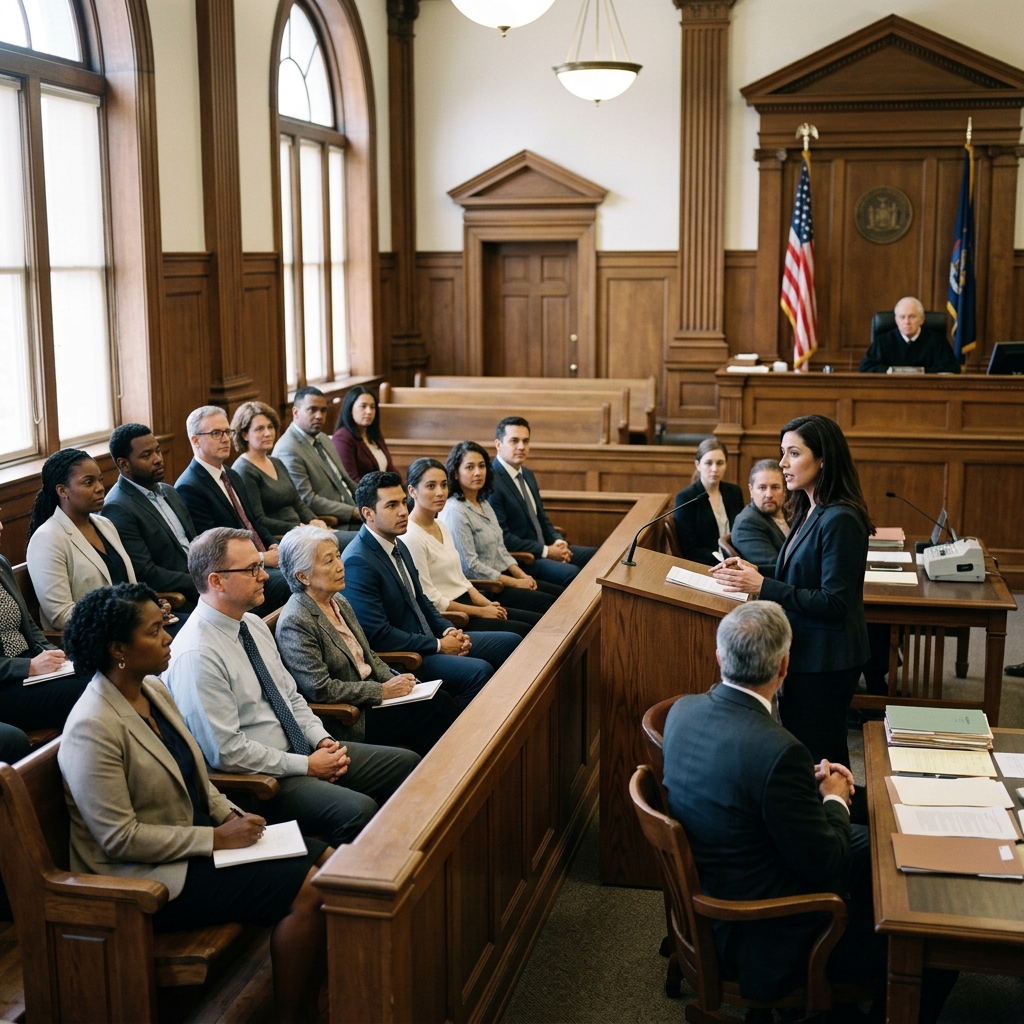
Jury selection is one of the most important parts of a criminal trial because it helps determine who will hear the evidence and decide the verdict. The process is designed to start with a broad pool of citizens and gradually narrow that group until twelve jurors, plus alternates when needed, are seated and sworn in. In practice, the process is less about choosing a preferred jury than removing people who cannot serve fairly or legally in the case.
Although the exact procedure varies by court, most criminal jury selections follow the same general path. A large pool is summoned, basic qualifications are reviewed, prospective jurors answer questions from the judge and lawyers, and the parties use challenges to remove people who may not be suitable for the trial. The goal is to create a jury that is impartial, attentive, and legally qualified to decide the case.
Where the jury pool comes from
Court systems begin with a large list of potential jurors, usually gathered from voter registration records and other public databases such as driver’s license lists. In some jurisdictions, additional records may also be used so the pool reflects a broader cross-section of the community.
From that master list, the court randomly selects people and sends out jury summonses. A summons is a formal notice telling the recipient when and where to report for service. This is the point at which jury duty becomes an official obligation, unless the person is later excused or disqualified.
- The initial pool is meant to be random, not handpicked.
- The summons gives the date, time, and place to appear.
- Courts rely on large pools because many people will later be excused or removed.
Why some people are excused before questioning begins
Not everyone who receives a summons ends up in the courtroom for questioning. Some people are excused early because they do not meet the basic legal requirements for jury service, while others are removed for hardship or practical reasons. Courts may excuse prospective jurors who have medical problems, language barriers, or other issues that would make service impossible or unfair.
This first screening stage helps the court avoid spending time questioning people who clearly cannot serve. It also protects the integrity of the process by making sure only qualified individuals move forward. In many courts, this early filtering reduces a large group to a smaller panel that is often described as the “jury pool” or “venire.”
The courtroom questionnaire and basic screening
Once the prospective jurors are brought into court, the judge usually begins with a few basic questions. These questions often cover where a person lives, what work they do, and whether they have children at home or other responsibilities that may affect service.
The purpose of this early questioning is not to build a case for either side. Instead, it helps the court confirm that the prospective jurors are legally qualified and that nothing obvious would prevent them from serving. Some jurisdictions also use written questionnaires before oral questioning, especially in more complex or high-profile cases.
Typical screening goals include the following:
- Confirming that the person is eligible for jury service.
- Identifying conflicts of interest.
- Finding obvious bias or inability to remain neutral.
- Determining whether service would cause undue hardship.
What voir dire means in a criminal case
The central phase of jury selection is called voir dire, a term that refers to questioning prospective jurors under oath. During voir dire, the judge and the lawyers ask questions to learn whether any juror may be unable to decide the case fairly.
This stage is especially important in criminal cases because the outcome can affect a defendant’s liberty. The questioning may address personal experiences, media exposure, beliefs about police or prosecutors, relationships with the parties, and attitudes that might affect judgment. The aim is not to find perfect jurors, but to identify jurors who can be fair and follow the law.
Voir dire also gives both sides a chance to evaluate how people respond. Lawyers pay attention not only to the words jurors use, but also to tone, hesitation, and consistency in their answers. That information helps them decide whether a person should remain in the panel.
How lawyers and judges use challenges
After questioning, the parties begin removing jurors through challenges. These challenges are the main tools used to narrow the field from a larger panel to the final jury. There are two broad kinds of challenges: challenges for cause and peremptory challenges.
| Type of challenge | What it does | Why it matters |
|---|---|---|
| Challenge for cause | Requests removal of a juror who appears legally unqualified or biased | Protects the right to an impartial jury |
| Peremptory challenge | Allows a side to remove a juror without giving a reason, subject to legal limits | Gives each side limited control over the final panel |
A challenge for cause is used when a juror has a clear reason they should not serve, such as a direct conflict, a fixed opinion about the case, or another factor that would prevent impartial service. If the judge agrees, that juror is removed.
Peremptory challenges work differently. They allow attorneys to strike a juror without explaining the decision, although those strikes cannot be used for unlawful discrimination. Courts recognize that parties need some flexibility to shape the jury, but that discretion has limits.
Why jury selection is often described as “deselection”
Jury selection is sometimes called jury “deselection” because attorneys usually do not pick jurors they favor one by one. Instead, they remove people they believe should not sit on the case until the remaining panel becomes the trial jury.
This is an accurate description of how the process works in many criminal cases. The prosecution and defense each have their own view of what makes a fair juror, but the court’s role is to make sure the final group can decide the case based on the evidence and the law. The result is a panel formed through a process of elimination rather than selection in the everyday sense.
How many jurors are seated
In a standard criminal trial, twelve jurors are usually selected, and courts may also choose alternate jurors in case someone becomes ill or otherwise unable to continue. Federal criminal trials also use twelve jurors in ordinary cases.
The final number can vary depending on the court, the type of offense, and local procedural rules. Some cases resolve before trial ends, but when the jury is fully seated, those jurors take an oath and begin their service.
What the final panel is expected to do is straightforward in theory but demanding in practice: listen carefully, follow the judge’s instructions, deliberate with other jurors, and reach a verdict based only on the evidence presented in court.
What happens after the jury is chosen
Once the final jurors are selected, they are sworn in. The oath marks the end of jury selection and the beginning of their formal role in the trial.
After that, the judge usually gives instructions about conduct and responsibility. Jurors are expected to avoid outside information, remain impartial, and follow the rules the court sets for the duration of the case. In many courts, they are also told how to behave during recesses, what to do if they have concerns, and how to handle questions about the case from others.
At the close of trial, jurors deliberate in private. In criminal cases, the verdict typically must be unanimous, meaning all twelve jurors must agree.
Why fairness in jury selection matters
Fair jury selection is essential because the jury is the fact-finding body in a criminal case. If the panel is biased or improperly chosen, the rest of the trial can be compromised. That is why courts use random selection at the beginning, legal screening in the middle, and sworn questioning before the final jury is seated.
The process is also a safeguard for both sides. The prosecution has an interest in a lawful verdict based on credible evidence, while the defense has a right to a jury that can consider the case fairly and without prejudice. Jury selection is where those interests are balanced most directly.
In practice, the process can be time-consuming. It may take several rounds of questioning and multiple removals before the court reaches the required number of jurors and alternates. That delay is part of the system’s effort to reduce bias before deliberations ever begin.
Common questions about criminal jury selection
Do lawyers get to choose the exact jurors they want?
No. Lawyers usually work by removing jurors they do not want, within legal limits, until the final panel is formed.
Can a juror be removed just because a lawyer dislikes them?
Not without limits. Challenges for cause require a valid reason, while peremptory challenges are limited and cannot be used for unlawful discrimination.
Why do courts start with such a large group?
Because many people are excused, disqualified, or removed during screening and questioning. A larger group gives the court enough qualified jurors to complete the trial panel.
Is voir dire the same in every court?
No. The basic idea is similar, but the exact questions, length of questioning, and number of jurors can vary by jurisdiction.
What happens if the jury cannot reach a verdict?
If the jury cannot reach a unanimous decision within a reasonable time, the judge may declare a mistrial or otherwise dismiss the jury, depending on the circumstances and applicable rules.
Key takeaways about the process
Criminal jury selection begins long before opening statements. It starts with a random summons from a large pool, continues through eligibility screening and voir dire, and ends when the remaining jurors are sworn in and instructed by the court.
The system is designed to balance randomness with fairness. Random selection helps create a representative pool, while questioning and challenges help remove people who cannot be impartial. The final result is not a perfect jury, but one that is legally qualified to hear the case and decide it according to the evidence.
References
- How Are Members Of The Jury Chosen Before A Criminal Trial? — Criminal Law Center. 2024-10. https://www.criminallawcenter.com/blog/2024/october/how-are-members-of-the-jury-chosen-before-a-crim/
- How Juries Are Selected in Criminal Cases — Super Lawyers. 2026. https://www.superlawyers.com/resources/criminal-defense/how-juries-are-selected-in-criminal-cases/
- Jury Selection in Criminal Cases — Nolo. 2026. https://www.nolo.com/legal-encyclopedia/jury-selection-criminal-cases.html
- Trial — U.S. Department of Justice, U.S. Attorneys. 2026. https://www.justice.gov/usao/justice-101/trial
- About the Trial Process — California Courts. 2026. https://courts.ca.gov/courts/jury-service/about-trial-process
Similar Articles








Read full bio of Sneha Tete




