
Undefined Criminal Charges In Canada: What You Need To Know Now
Understand who can lay criminal charges in Canada, how the process works, and what victims and accused persons should realistically expect.
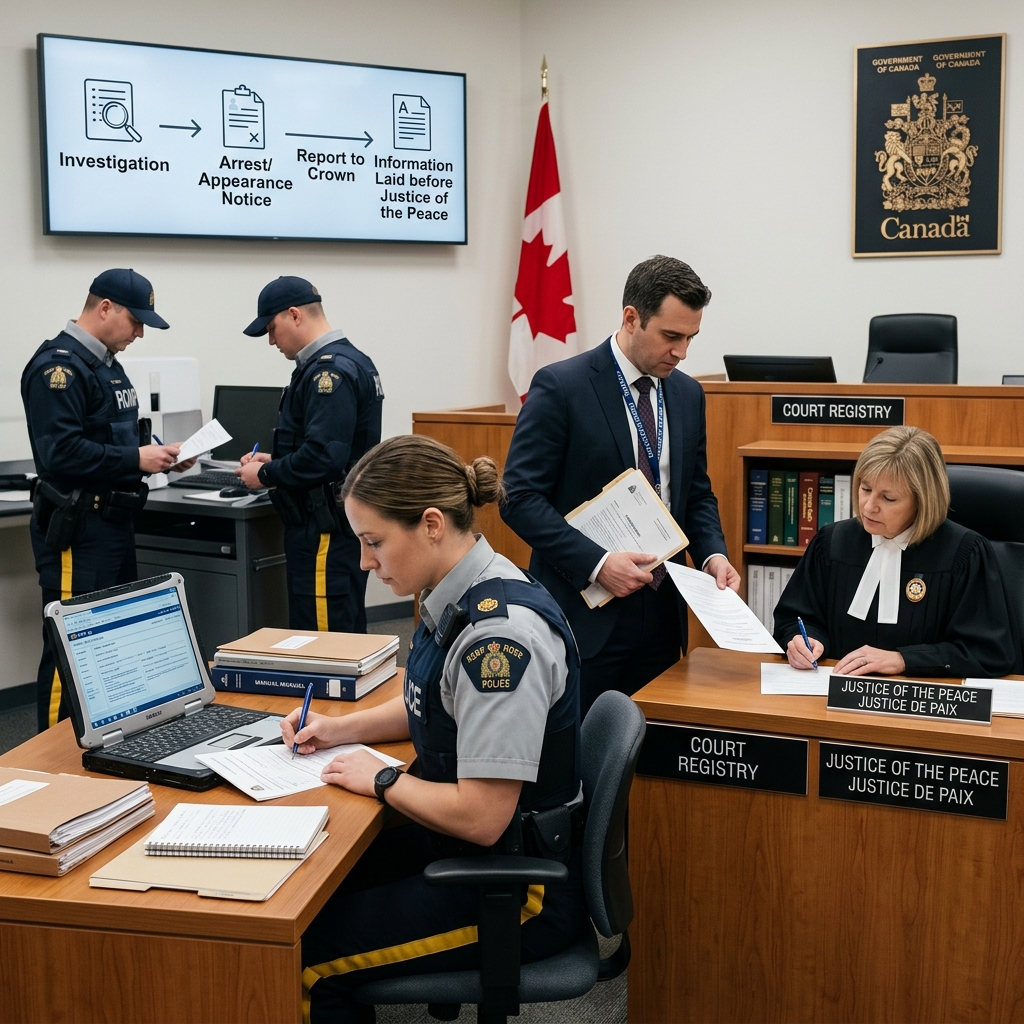
Many people believe that a victim can “press charges” on their own or that police choose charges at will. In Canada, the reality is more structured and controlled: the state, through the Crown, is responsible for laying criminal charges, and the process is designed to balance public safety with the rights of the accused.
This guide explains who can lay charges, how the process usually unfolds, and what you can realistically expect whether you are a victim, a witness, or the person accused of a crime.
Core Principles Behind Criminal Charging in Canada
Canada’s criminal justice system is built on a few key principles that explain why charging works the way it does.
- Presumption of innocence: Every accused person is presumed innocent until proven guilty in court.
- The state prosecutes crimes: Crimes are treated as offences against society, so the Crown, not the victim, decides whether to lay charges.
- High standard to convict: The Crown must prove guilt beyond a reasonable doubt before someone can be convicted.
- Lower threshold to charge: Police need only reasonable grounds to believe an offence was committed to arrest and recommend charges, which is a much lower threshold than proof beyond a reasonable doubt.
These principles aim to prevent wrongful convictions while still allowing police and prosecutors to respond promptly to alleged criminal conduct.
Who Actually Lays Criminal Charges?
Understanding the roles of victims, police, and Crown prosecutors is essential. Each has a distinct function.
Role of the Victim
Victims cannot formally charge anyone with a criminal offence. Their primary responsibilities are to report the crime and cooperate with the investigation.
- Contact police to report what happened and provide as much detail as possible.
- Offer statements, documents, or other evidence that might support the case.
- Participate as a witness if the matter proceeds to trial.
Victims can express their wishes about whether they want charges to proceed or not, but the final decision does not belong to them. The Crown considers the public interest and the available evidence rather than private preferences.
Role of the Police
Police investigate, identify possible offences, and may arrest a suspect when they have reasonable grounds to believe a crime has occurred.
- Receive reports from victims or witnesses and open an investigation.
- Gather evidence through interviews, forensic work, and document collection.
- Arrest suspects when there are reasonable grounds to believe an offence has been committed.
- Prepare an information or other charging documents to be submitted to the Crown or court.
In many cases, police “lay” a charge by completing the information that formally accuses a person of a specific offence. However, charging decisions are subject to Crown review and screening, especially for more serious matters.
Role of the Crown Prosecutor
The Crown prosecutor is the legal representative of the government who decides whether to proceed with charges in court.
- Reviews police reports and evidence to decide whether charges are appropriate.
- Applies charge screening policies to ensure there is a reasonable prospect of conviction and that prosecution is in the public interest.
- Drafts, amends, or withdraws charges as the case progresses.
- Presents evidence in court, even when that evidence may sometimes support the defence (for example, exculpatory evidence).
Because the Crown serves the public interest, they must act fairly and cannot pursue charges that lack evidentiary support or are not justified.
From Incident to Charge: Typical Steps
While details vary by province and by case, the charging pathway usually follows a recognizable pattern.
| Stage | What Happens | Key Participants |
|---|---|---|
| 1. Report | Victim or witness contacts police to report a suspected crime. | Victim, witness, police |
| 2. Investigation | Police gather statements, physical evidence, and records to assess what occurred. | Police, victim, witnesses |
| 3. Arrest or Summons | If reasonable grounds exist, police may arrest the suspect or issue a promise to appear or summons. | Police, accused |
| 4. Charging Decision | Police complete an information and the Crown reviews evidence to decide whether to proceed with charges. | Police, Crown |
| 5. First Appearance | The accused appears in court, is informed of the charges, and may seek bail or legal counsel. | Accused, judge, Crown, defence |
Once the charge is formally laid, the accused is officially informed of the allegations and the case moves into the court process.
Being Charged vs. Being Convicted
It is essential to distinguish between simply being charged with an offence and being convicted after trial or a guilty plea.
Threshold to Lay a Charge
Police require reasonable grounds to believe an offence was committed to arrest and recommend charges.
- This is a combination of subjective belief by the officer and objective support from facts or evidence.
- Even a modest amount of credible evidence can meet this standard.
- The aim is to allow authorities to intervene promptly while limiting arbitrary arrests.
Standard to Convict
To convict someone, the Crown must prove each essential element of the offence beyond a reasonable doubt.
- This standard is close to reasonable certainty, though not mathematically absolute.
- If the judge or jury has any reasonable doubt about guilt, they must acquit.
- The presumption of innocence continues until this demanding standard is satisfied.
This difference in thresholds explains why some cases lead to charges but later result in acquittals or withdrawn charges.
Types of Criminal Offences and Charging Options
The way a charge is handled depends partly on the classification of the offence under the Criminal Code of Canada.
- Indictable offences – Serious offences such as murder; they involve more formal procedures and may include preliminary inquiries and jury trials.
- Summary conviction offences – Less serious offences (for example, some types of mischief) handled through a simpler process, often with lower maximum penalties.
- Hybrid offences – The most common category; the Crown chooses whether to proceed by indictment or summary conviction depending on case circumstances.
This classification affects maximum penalties, procedural rights, and which court the case is heard in, but the basic charging logic—police investigate, Crown screens, court oversees—remains the same.
What It Means for the Accused
Being charged with a criminal offence can be life-changing, even before any conviction is entered.
- You are officially accused of a specific crime set out in the charging document (information).
- You may face conditions such as bail terms, no-contact orders, or travel restrictions while the case is pending.
- You have crucial rights, including the right to be informed of the reason for your arrest, to consult a lawyer, and to remain silent.
- A criminal charge alone may affect employment, immigration, and reputation, even though you remain legally presumed innocent.
Because of these consequences, accessing legal advice early in the process is strongly encouraged.
What It Means for the Victim
For victims, understanding the charging process can reduce frustration and clarify expectations.
- Your report can trigger an investigation, but you do not control whether charges are laid or stayed.
- You may be called as a witness if the case goes to trial, and your testimony can be central to the outcome.
- You may have access to victim services and support programs, depending on your province.
- Even if you later change your mind about wanting the accused prosecuted, the Crown may continue if the evidence and public interest support it.
The system is designed to treat offences as public matters rather than private disputes, which means victims participate but do not direct prosecutions.
Frequently Asked Questions
Can I decide not to “press charges” after calling the police?
Once police are involved, the decision to lay or continue charges rests with the Crown and police. You can inform them of your wishes, but you cannot directly stop a prosecution if authorities believe charges are necessary.
Can I start criminal charges against someone myself?
In Canada, you generally cannot lay criminal charges on your own. The usual route is to report the incident to police, who investigate and, if appropriate, initiate charges that are then screened by the Crown.
What is an “information” in criminal court?
An information is the formal document that sets out the offence(s) a person is charged with. When you are charged, you are entitled to receive a copy of this document so you know the exact allegations.
Do police always need to arrest someone before charges are laid?
No. In some situations, police may release the person with a form requiring them to attend court, or a summons may be issued. Arrest is not always necessary, but there must still be reasonable grounds supporting the allegation.
Why would charges be withdrawn after being laid?
Charges may be withdrawn if new evidence emerges, key witnesses become unavailable, legal flaws are identified, or the Crown concludes there is no longer a reasonable prospect of conviction or that continuing is not in the public interest.
What should I do if I’m charged with a crime?
You should promptly seek legal advice, avoid discussing the case with anyone except your lawyer and necessary contacts, and ensure you understand and comply with any release conditions. You remain presumed innocent unless and until the Crown proves the case beyond a reasonable doubt.
References
- Criminal Code – General – Canadian Legal FAQs — Centre for Public Legal Education Alberta. 2023-05-01. https://www.law-faqs.org/national-faqs/criminal-code/criminal-code/
- Laying criminal charges — Department of Justice Canada. 2022-09-15. https://www.justice.gc.ca/eng/cj-jp/victims-victimes/report-signale/charges-accusations.html
- Criminal charge process — Legal Aid Ontario. 2023-04-10. https://www.legalaid.on.ca/faq/criminal-charge-process/
- Charged with an Offence? A Step-by-Step Guide — Port Hope Police Service. 2021-11-01. https://www.phps.on.ca/charged-with-an-offence.php
- Criminal Charge vs. Conviction — Vakili Law Group. 2022-06-20. https://vakililaw.com/criminal-charge-vs-conviction/
- Charge Screening Practices and Crown Evidentiary Assessment — International Centre for Criminal Law Reform. 2024-02-14. https://icclr.org/wp-content/uploads/2024/02/Justice-Efficiencies-Report-ENG-2024.02.14-V.2.pdf
Similar Articles








Read full bio of Sneha Tete




