
How Bail Proceedings Work in Criminal Cases
A clear guide to what happens at a bail hearing, what judges weigh, and how release conditions are set.
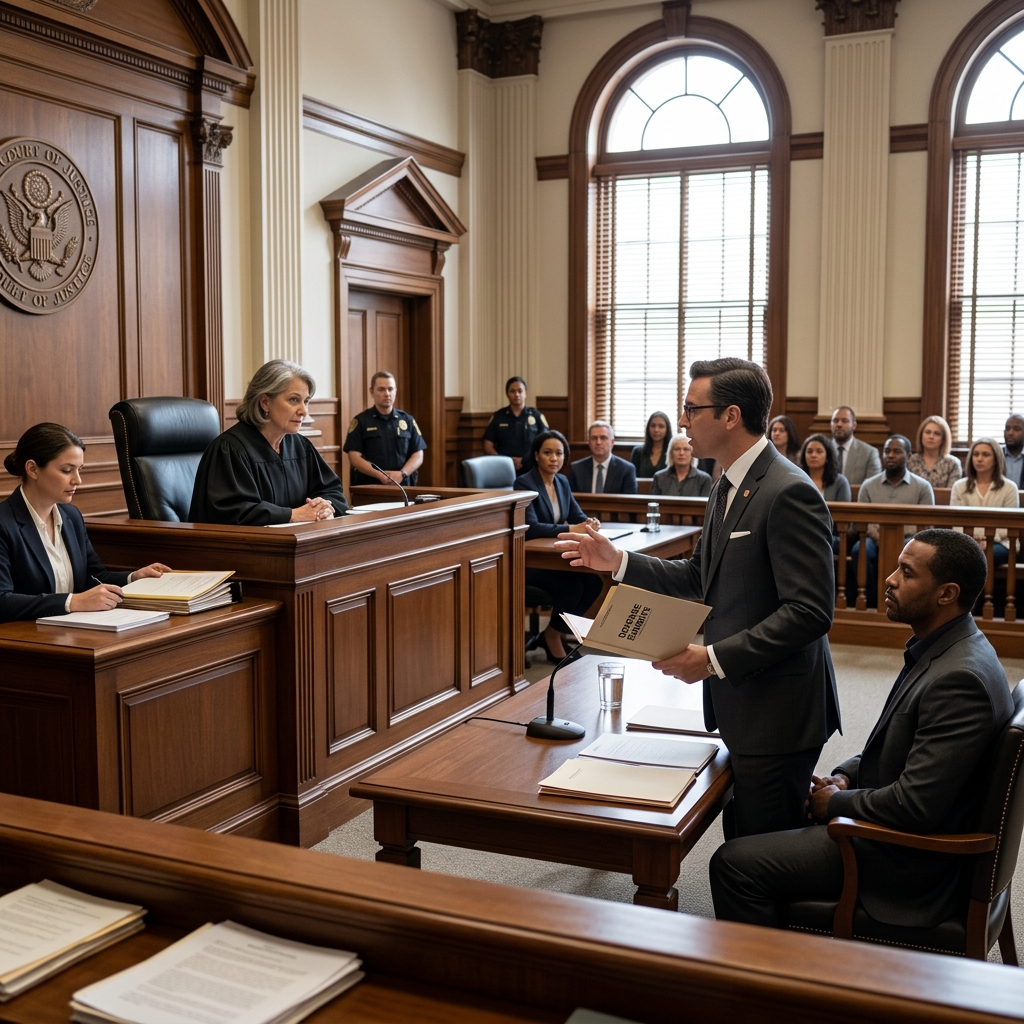
What Bail Proceedings Are Designed to Do
Bail proceedings are part of the pretrial phase of a criminal case. Their purpose is to decide whether a person accused of a crime will remain in custody or be released while the case moves forward. The basic idea is not punishment; it is to manage risk before trial, especially the risk that the defendant will miss court or create a danger to the public.
In many systems, the judge’s task is to balance several interests at once. Those interests usually include the defendant’s liberty, the need to preserve public safety, and the need to make sure the court process continues without disruption.
The First Decision After Arrest
After an arrest, the court’s first bail-related decision often happens quickly. In federal criminal cases, a judicial officer must make a release-or-detention determination when the defendant first appears before the court. That initial step may happen at the first appearance or at a short follow-up hearing if more time is needed to prepare.
The court can choose among several general outcomes. It may release the defendant on personal recognizance, release the defendant with conditions, temporarily detain the person for a specific legal reason, or order detention if the law permits it. The exact options depend on the jurisdiction, the charges, and the facts of the case.
Why Bail Is Not the Same as a Fine
Bail is sometimes misunderstood as a penalty, but it serves a different function. The American Bar Association explains that bail is money or another assurance used to secure a defendant’s return to court, not a punishment or a fine. If the defendant appears as required and follows the court’s rules, the money may be returned after the case ends, although some jurisdictions deduct administrative fees.
This distinction matters because bail is tied to future conduct, not guilt. A defendant may be released while still presumed innocent, and the release decision is meant to support that pretrial status rather than replace the trial itself.
What Judges Usually Consider
Judges do not decide bail by guessing. They evaluate specific factors that help predict whether release is appropriate and what conditions, if any, are needed. The details vary by court, but the main considerations often include the following:
- the seriousness of the charge
- the strength of the evidence
- the defendant’s criminal history
- the defendant’s ties to the community
- past appearances in court
- financial circumstances
- the potential risk to public safety
These factors are used to decide whether release can occur safely and, if so, what level of supervision is necessary.
Release on Personal Recognizance
One common outcome is release on personal recognizance, sometimes called release on one’s promise to appear. Under this approach, the defendant is allowed to leave custody without paying money upfront, but must return for hearings and comply with any other court instructions.
This option is generally reserved for cases where the court believes the person will return voluntarily and where the charges or circumstances do not point to a serious safety concern. In federal court, release on recognizance or on an unsecured appearance bond is one of the statutory options the judge may select.
When the Court Imposes Conditions
If a simple promise is not enough, the court may attach conditions to release. The goal is to use the least restrictive measures that still reasonably protect the public and ensure court appearance. Conditions can be tailored to the person and the case rather than imposed in a one-size-fits-all way.
Common conditions may include travel restrictions, regular check-ins, supervision by a responsible third party, limits on contact with certain people, or electronic monitoring. Some systems also use curfews, house arrest, or testing requirements where appropriate.
These restrictions are meant to reduce risk, not to create unnecessary hardship. When a court uses conditions effectively, the defendant can remain in the community while the case continues, and the system avoids unnecessary detention.
When Detention Becomes Possible
Not every defendant qualifies for release. In federal law, detention without bail is allowed only in certain categories of cases, such as crimes of violence, offenses carrying a possible sentence of life imprisonment or death, certain serious drug offenses, repeat felony situations, or cases involving substantial risks of flight, obstruction, or witness tampering.
When detention is being considered, the court typically holds a separate hearing to decide whether the legal standard for holding the defendant has been met. That hearing is important because detention before trial is a significant restriction on liberty and is not supposed to happen automatically.
In some jurisdictions, the law also allows detention or denial of bail when the court concludes that no available conditions would adequately manage the risk. In practice, that means the judge must consider whether any combination of release conditions could work before ordering custody.
The Role of Money in Bail Decisions
Money can still play a role in bail systems, but it is not the only tool. In some courts, especially at the federal level, there is often no fixed cash amount and no traditional bail bond arrangement. Instead, the court may require an unsecured bond or another form of assurance tied to court appearance.
Some discussions of bail reform focus on whether financial conditions unfairly keep low-income defendants in jail while allowing wealthier defendants to go free. Reform efforts in some jurisdictions have moved toward assessment systems that emphasize risk and supervision rather than cash alone.
That shift reflects a broader policy question: whether pretrial freedom should depend on ability to pay or on an individualized assessment of risk.
What Happens If Bail Conditions Are Broken
Release comes with obligations. If a defendant fails to appear or violates a condition of release, the court may respond in several ways, including revoking release, tightening conditions, or ordering detention. In federal practice, the court may also hold a hearing to decide whether the alleged violation justifies custody.
A breach can have additional consequences. The bond may be forfeited, and the defendant may face new charges or face greater difficulty obtaining release in the future. Courts treat violations seriously because they can undermine trust in the pretrial process and signal a higher risk of future noncompliance.
A Simple Comparison of Common Bail Outcomes
| Outcome | What It Means | Typical Use |
|---|---|---|
| Release on recognizance | The defendant is released on a promise to return. | Lower-risk cases with stable court ties. |
| Conditional release | The defendant is released with court-ordered restrictions. | Cases needing added safeguards. |
| Temporary detention | The defendant is held briefly for a legal reason. | Specific procedural or immigration-related situations. |
| Pretrial detention | The defendant remains in custody until the case progresses. | Higher-risk cases where release is not permitted or not safe. |
How Public Safety and Court Attendance Are Balanced
Bail law reflects two core concerns: getting the accused back to court and protecting the community while the case is pending. Those goals can conflict. A release decision that is too lenient may increase the risk of nonappearance or harm, while a decision that is too strict can keep low-risk people in jail unnecessarily.
That is why modern bail hearings are supposed to be individualized. Rather than relying only on the charge name or a fixed payment amount, the court reviews the person’s circumstances, the nature of the allegations, and the practical options available for monitoring release.
Why the Supreme Court and Congress Matter
In the United States, bail rules are shaped by constitutional interpretation and federal statutes. The Department of Justice explains that the Supreme Court has held that the Eighth Amendment prohibits excessive bail but does not itself create an absolute right to bail in every criminal case. Congress then provided a federal framework through the Bail Reform Act of 1984, which guides release and detention decisions in federal matters.
That framework gives judicial officers a structured set of choices and standards. It also reflects the idea that pretrial decisions should be made by a neutral decision-maker using lawful criteria rather than by automatic jail or automatic release.
Practical Steps for a Defendant Facing a Bail Hearing
A bail hearing can shape the rest of the case, so preparation matters. A defendant usually benefits from being ready to present information about stable housing, employment, family support, treatment history if relevant, and any record of appearing in court in the past.
Defense counsel may also argue for specific conditions that are less restrictive than detention but still address the court’s concerns. Examples include supervision, a travel limit, or electronic monitoring. Prosecutors, in contrast, may point to prior failures to appear, serious allegations, or safety concerns that support a tighter order.
Frequently Asked Questions
Is bail always available?
No. Some cases and some jurisdictions allow detention without bail when the law authorizes it and the court finds that release would not be appropriate.
Can a person be released without paying money?
Yes. Courts can release a defendant on recognizance or with non-monetary conditions if that is enough to manage the risk.
Does paying bail mean the charges go away?
No. Bail only affects pretrial custody. The criminal case still moves forward, and the defendant must still appear in court and follow all conditions.
What happens if the defendant misses court?
The court may issue a warrant, forfeit the bond, and impose further penalties or stricter release terms.
Can bail be changed later?
Yes. Courts can revisit release conditions if circumstances change, new evidence emerges, or a violation occurs.
Key Takeaways About the Bail Process
- Bail is a pretrial tool, not a punishment.
- Judges look at risk, safety, and appearance in court.
- Release can be unconditional, conditional, or denied in limited cases.
- Money is only one part of the system and is not always required.
- Violating release terms can lead to revocation, detention, or new charges.
References
- Release And Detention Pending Judicial Proceedings (18 U.S.C. 3141 et seq.) — U.S. Department of Justice. 1990. https://www.justice.gov/archives/jm/criminal-resource-manual-26-release-and-detention-pending-judicial-proceedings-18-usc-3141-et
- How Courts Work: Bail — American Bar Association. 2026. https://www.americanbar.org/groups/public_education/resources/law_related_education_network/how_courts_work/bail/
- Backgrounder: The Bail Process — Department of Justice Canada. 2026. https://www.justice.gc.ca/eng/cj-jp/bail-caution/index.html
- Bail and Pretrial Detention — Federal Defenders of New York. 2026. https://www.federaldefendersny.org/bail-pretrial-detention
- Pretrial Justice Essentials — The Pretrial Justice Institute / Advancing Pretrial. 2026. https://www.advancingpretrial.org/pretrial-justice-essentials/
- Bail in the United States — Wikipedia. 2026. https://en.wikipedia.org/wiki/Bail_in_the_United_States
Similar Articles








Read full bio of Sneha Tete




