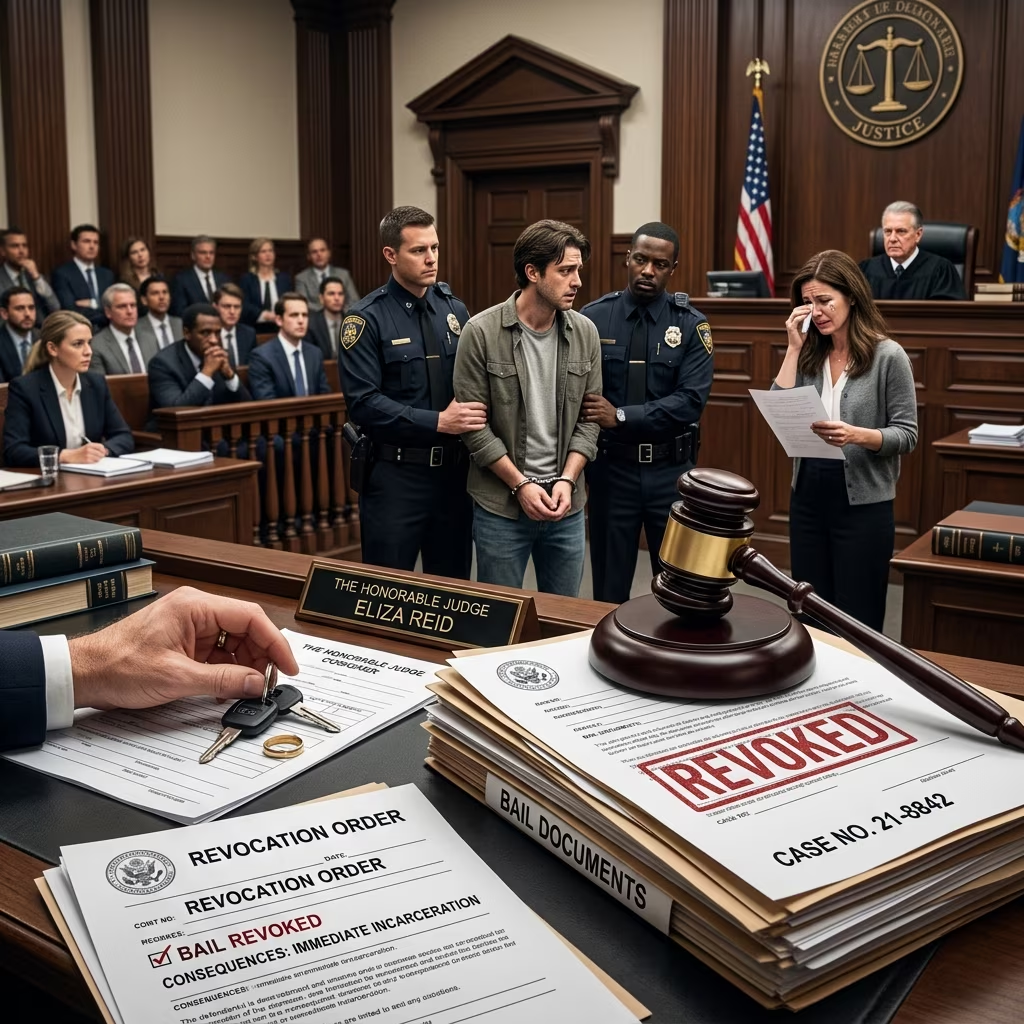
Bail is meant to strike a balance between a defendant’s right to liberty and the legal system’s need to ensure court appearances and public safety. When that balance is disrupted, courts, prosecutors, or even private cosigners may seek to revoke bail, sending the defendant back into custody. Understanding how and why this happens is essential for anyone involved in a criminal case.
Understanding Bail and Pretrial Release
Bail is a mechanism that allows a defendant to remain free while a case is pending, usually in exchange for money, a bond, or conditions such as no-contact orders and travel restrictions. Courts use bail to reduce the risk that a defendant will flee or commit new crimes before trial. When bail is granted, it often comes with explicit conditions of release, and a warning that violating those conditions can lead to revocation.
- Cash bail: Money deposited with the court directly, refunded if the defendant complies with all obligations.
- Bail bond: A contract involving a bail bond company and a cosigner who guarantees the defendant’s appearance in exchange for a fee.
- Non-monetary conditions: Supervision, no-contact orders, curfews, and similar restrictions designed to protect the community.
Revoking bail means cancelling this arrangement and returning the defendant to jail, either until trial or until a new bail decision is made.
Who Can Seek Bail Revocation?
Bail revocation does not happen automatically. Different actors can initiate the process depending on the situation and the type of bail involved.
| Actor | Role in Revocation | Typical Trigger |
|---|---|---|
| Judge | Has ultimate authority to revoke, modify, or continue bail. | Violation of release conditions, new charges, or failure to appear. |
| Prosecutor | Files motions to revoke bail or tighten conditions. | Evidence of new crimes or safety concerns while on release. |
| Bail bond company | Can surrender the defendant and cancel the bond in specific circumstances. | Suspected flight risk, violation of contract or non-payment. |
| Cosigner/surety | May request bond revocation and removal from the agreement. | Loss of trust in defendant’s compliance or concern about financial risk. |
Although cosigners and bail agents can initiate the process, a court order is usually required to formally revoke bail and keep the defendant detained.
Common Reasons Bail Is Revoked
Not every mistake or minor misstep leads to bail revocation. Courts and bond companies typically focus on behavior that suggests a serious risk to public safety, a likelihood of fleeing, or a clear breach of the bail agreement.
1. New Criminal Charges While on Bail
Many jurisdictions allow bail to be revoked if the defendant is charged with a new offense while already out on bail. In those systems, the prosecution can file a motion to revoke the existing bail based on statutory criteria such as probable cause of the new offense and risk to the community.
- Being arrested for a new felony or serious misdemeanor while on release.
- Evidence that the defendant continues the same type of alleged criminal behavior.
- Prosecutor motions arguing that detention is necessary for public safety.
Courts often consider whether the new alleged offense shows the defendant is unwilling or unable to comply with conditions of release.
2. Violating Conditions of Release
Bail conditions can be strict, especially in cases involving alleged violence, substance misuse, or contact with victims. When those conditions are broken, judges may revoke bail or impose tighter restrictions.
- Contacting a protected victim or witness in violation of a no-contact order.
- Leaving the jurisdiction without permission.
- Ignoring curfews, electronic monitoring rules, or reporting requirements.
- Using drugs or alcohol contrary to court orders.
Under some statutes, revocation requires clear and convincing evidence of a violation combined with a finding that the person is a danger to others or unlikely to obey future conditions.
3. Failing to Appear (“Jumping Bail”)
One of the most straightforward reasons for revoking bail is failing to appear for a scheduled court hearing. Courts often treat this as a serious breach of trust.
- Missing a required court date without a valid excuse may result in immediate revocation.
- Judges commonly issue arrest warrants when a defendant “jumps bail.”
- In many jurisdictions, failing to appear is itself a separate criminal offense.
Once a defendant is arrested on the warrant, the judge may deny further bail or set much stricter conditions because the risk of nonappearance has been demonstrated.
4. Bail Bond Contract Problems
In cases involving private bail bond companies, there is an additional layer of obligations: the contract between the defendant, the cosigner, and the bondsman. Breaching that contract can lead to bond surrender and effectively revoke bail even without a new crime.
- Changing address without notifying the bondsman.
- Refusing to pay the premium or breaching payment terms.
- Going into hiding or avoiding communication with the bond agency.
- Behavior that leads the bondsman to believe the defendant is a flight risk.
When a bail bond is surrendered, the bond company can return the defendant to custody and seek release from its financial obligation to the court.
How Courts Decide Whether to Revoke Bail
Bail revocation is not automatic; judges generally consider legal standards and evidence before making a decision. In some states, specific statutes lay out the findings a court must make, such as those governing revocation procedures for violations or new offenses.
Key Questions Judges Consider
- Was the defendant warned? Many statutes require proof that the defendant received a clear bail warning about the consequences of violations.
- Is there probable cause of a new offense? Courts often require some level of proof, such as a new complaint or arrest with supporting facts.
- Would continued release endanger anyone? Judges evaluate whether the defendant’s release would seriously endanger a person or the community.
- Is the defendant likely to obey conditions? Some laws allow revocation if the court finds the defendant is unlikely to abide by any combination of release requirements.
After a revocation motion is filed, the court may hold a hearing where both sides can present evidence, argue about the alleged violation, and suggest alternatives such as stricter conditions instead of full detention.
Cosigner and Surety Rights: Removing Your Name From a Bail Bond
Individuals who sign as cosigners on bail bonds (also called sureties) carry significant financial risk. If they lose confidence in the defendant’s behavior, many jurisdictions allow them to seek removal from the bond.
When Cosigners Consider Revoking Support
- Suspicions that the defendant plans to flee or avoid future court dates.
- Evidence of ongoing criminal activity or substance misuse that could result in new charges.
- Non-payment of fees or unwillingness to follow bond company instructions.
- Repeated disregard for court-ordered conditions.
To revoke their participation, cosigners typically contact the bail bond company, explain their concerns, and formally request to withdraw from the agreement.
Steps Cosigners Commonly Take
- Contact the bond company and state a clear request to be removed as cosigner.
- Provide reasons and evidence supporting concerns about the defendant’s compliance.
- Assist in locating or surrendering the defendant, if required by the bond agent.
- Allow the court process to run, as the bond company or court notifies judges and seeks formal revocation.
After the defendant is surrendered and the court formally revokes or replaces the bond, the cosigner may be released from future obligation, though outcomes vary depending on contract language and jurisdiction.
What Happens After Bail Is Revoked?
Revocation does not end the criminal case. It changes where and how the defendant waits for resolution, and it may alter future bail decisions.
Immediate Consequences
- Return to custody: Law enforcement or bail agents apprehend the defendant and take them back to jail.
- Formal notice to the court: The court is informed that the bond has been surrendered or a violation has occurred.
- Possible bail hearing: Judges can schedule a new hearing to determine whether any bail will be allowed going forward.
Longer-Term Effects
- Courts may deny further bail, especially after serious violations or repeated noncompliance.
- Future bail decisions may involve higher amounts or stricter conditions because of demonstrated risk.
- Defendants may face additional charges, such as failing to appear or contempt of court.
- Cosigners may be relieved of obligations if the bond is properly surrendered, but they could still be responsible for past fees or losses depending on contracts.
Preventing Bail From Being Revoked
For defendants and cosigners, the best strategy is to avoid the behavior that leads courts and bond companies to question the reliability of the release arrangement.
- Attend every court date and verify schedule changes with counsel.
- Follow all conditions precisely, including travel limits, monitoring rules, and no-contact orders.
- Communicate with your attorney and bond company about any changes in address, employment, or personal circumstances.
- Address underlying issues, such as substance use or unstable housing, which may make compliance difficult.
- Cosigners should monitor risk and act early if they see signs the defendant may violate terms.
Proactive compliance not only reduces the risk of revocation but can also be looked upon favorably by courts when making decisions about future bail, sentencing, or diversion opportunities.
Frequently Asked Questions (FAQs)
Can a judge revoke bail even if I haven’t committed a new crime?
Yes. In many jurisdictions, a judge can revoke bail based on violations of release conditions or findings that the defendant is unlikely to obey any combination of conditions, even without a new criminal charge. Evidence such as no-contact violations or leaving the jurisdiction may be enough.
If I cosigned someone’s bail bond, can I change my mind later?
In many cases you can request to be removed from a bail bond if you believe the defendant is a risk. The process usually involves contacting the bail bond company, providing reasons for revocation, and cooperating in surrendering the defendant to custody. The court then formalizes the revocation.
What happens if a defendant misses a court date?
A missed appearance often leads to revocation of bail, issuance of an arrest warrant, and potential new charges for failing to appear. Judges may be reluctant to grant bail again, or may impose stricter conditions, because the risk of nonappearance has been demonstrated.
Does revoking a cash bail guarantee I get my money back?
Not necessarily. If you posted cash bail directly with the court and it is revoked due to violations or nonappearance, the money can be forfeited under applicable rules. Local law and the specific circumstances of revocation determine whether any portion is returned.
Are bond revocation rules the same in every state?
No. Procedures and standards for revoking bail vary significantly by jurisdiction. Some states have detailed statutes specifying what courts must find to revoke bail, while others rely more on general judicial discretion. Anyone facing revocation should consult local counsel to understand the rules that apply in their case.
References
- Bail — Bureau of Justice Statistics, U.S. Department of Justice. 2022-03-15. https://bjs.ojp.gov/glossary/bail
- Bail Revocations | Framingham Crime Lawyer Cappetta Law Offices — Cappetta Law Offices. 2023-06-01. https://www.cappettalaw.com/bail-revocations.html
- Can Bail be Revoked? — Law Office of Matthew D. Sharp. 2021-11-10. https://sharpcriminalattorney.com/blog/criminal-law/can-bail-be-revoked/
- How to Get Your Name Off of Someone’s Bail Bond — Justice Bail Bonds. 2020-09-18. https://www.justicebailbonds.com/blog/297-how-to-get-your-name-off-of-someones-bail-bond
- Can I Revoke a Bail Bond? — Signature Bail Bonds. 2019-07-22. https://signaturebail.com/revoke-bail-bond/
- Can You Revoke Bail If You Post It for Someone? — Balboa Bail Bonds. 2023-02-14. https://balboabailbonds.com/blog/can-you-revoke-bail-if-you-post-it-for-someone/
- How to Prevent Your Bail from Being Revoked — A 2nd Chance Bail Bonds. 2022-05-09. https://www.a2ndchancebailbonds.com/how-to-prevent-your-bail-from-being-revoked/