What a DUI Means for a Commercial Driver
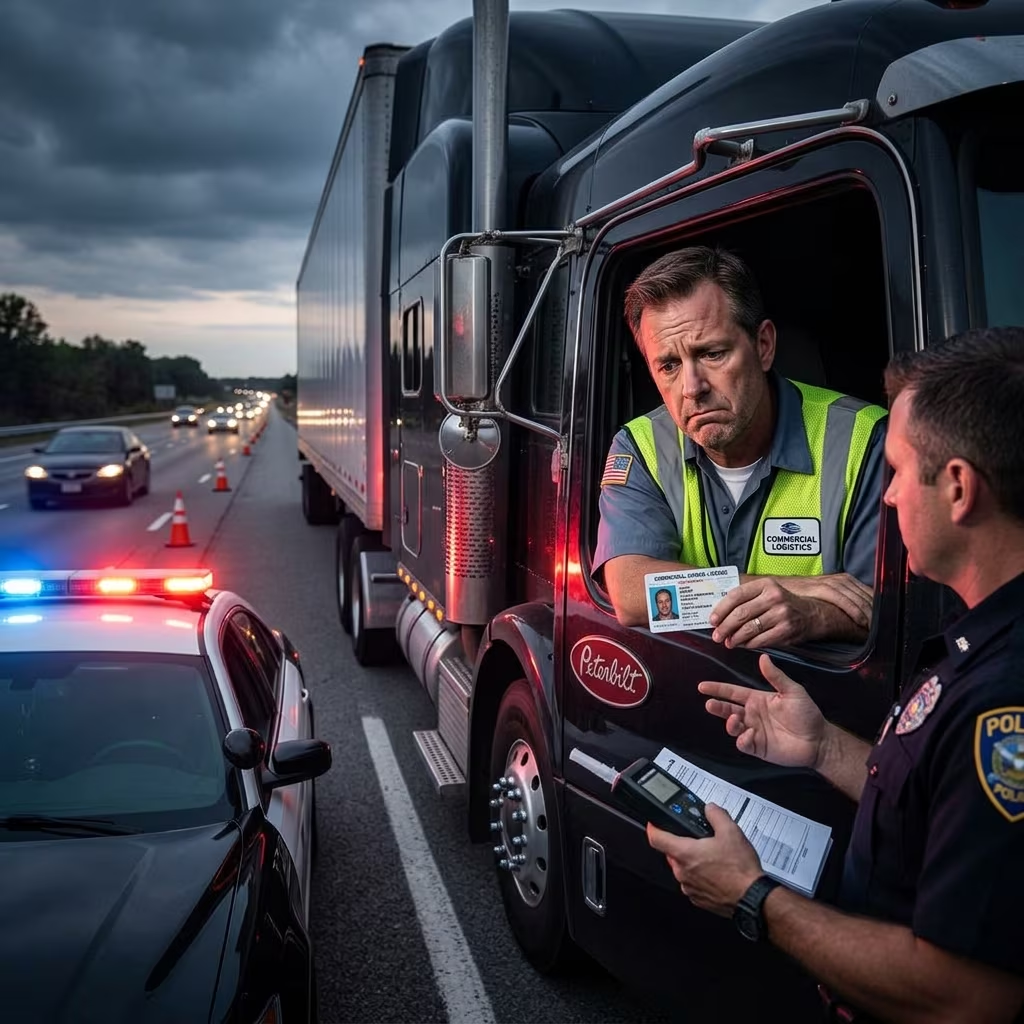
A DUI can have consequences that go far beyond an ordinary traffic case when the driver holds a commercial driver’s license. For CDL holders, the issue is not only a criminal charge or a driver’s license suspension; it can also affect the ability to work, keep endorsements, maintain insurance, and preserve long-term career opportunities. In many states, a DUI can trigger an automatic CDL disqualification even if the arrest happened in a personal vehicle rather than a commercial truck.
The rules are strict because commercial driving is treated as a safety-sensitive occupation. Federal and state systems work together to impose reporting duties, licensing penalties, and employer consequences. As a result, even one alcohol-related offense can create a chain reaction that reaches far beyond the courtroom.
Why CDL Holders Face Stricter Standards
Commercial drivers are held to a lower blood alcohol concentration threshold than most drivers. In many jurisdictions, a CDL holder can be treated as impaired at 0.04% BAC while operating a commercial vehicle, which is lower than the 0.08% standard that usually applies to non-commercial motorists. That means conduct that might not lead to a DUI for another driver can still jeopardize a commercial license.
The reason is straightforward: large trucks, passenger buses, and hazardous materials vehicles carry greater risks when anything goes wrong. Licensing authorities and employers therefore treat alcohol or drug violations as serious reliability concerns, not just isolated traffic matters.
Immediate Effects After an Arrest or Conviction
Once a DUI enters the picture, the first impact is often administrative. State agencies may suspend or revoke the CDL, sometimes before the criminal case is fully resolved. In many states, a first offense results in at least a one-year disqualification, while transporting hazardous materials can increase that period to three years or more.
In practical terms, this can mean the driver is no longer permitted to operate commercial vehicles at all. For someone whose income depends on over-the-road trucking, delivery routes, bus driving, or specialized hauling, the inability to legally work can begin immediately.
| Situation | Typical CDL Result |
|---|---|
| First DUI offense | Often at least one year of CDL disqualification |
| Hazardous materials involvement | Often a longer disqualification, commonly around three years |
| Second DUI offense | May lead to lifetime or long-term disqualification |
| DUI in a personal vehicle | Can still affect CDL status in many states |
How a DUI Can Affect Employment
For CDL holders, the employment consequences can be as damaging as the license penalties. Many transportation companies require drivers to report alcohol-related arrests or convictions, and federal reporting rules may also require notice to an employer within a limited period of time. Once an employer learns of the offense, termination is a real possibility, especially if the company has a zero-tolerance policy.
Even if a driver is not fired immediately, the absence of a valid CDL can make continued employment impossible. A suspended or revoked license prevents the driver from performing the core duties of the job, and a record of DUI may make future employers hesitant to hire the applicant.
- Loss of current driving assignments
- Possible termination under employer policy
- Reduced chances of being hired by another carrier
- Loss of endorsements tied to specialized work
- Long-term damage to professional reputation
Endorsements and Specialized Driving Can Be at Risk
Many CDL holders depend on endorsements for passenger transport, tanker work, or hazardous materials hauling. A DUI can interfere with those endorsements separately from the base CDL. In some cases, the driver may lose only one endorsement at first; in others, the offense can eliminate the ability to keep certain specialized privileges at all.
This matters because endorsements often open the door to better-paying routes and more stable work. Losing them can force a driver into lower-wage positions or out of the industry entirely.
Financial Consequences Reach Beyond Fines
A DUI creates financial pressure in several layers. Criminal fines, court costs, license reinstatement fees, treatment programs, and mandatory classes can add up quickly. For commercial drivers, the lost wages from being unable to work may be even more severe than the legal costs.
Insurance is another major issue. A DUI can raise premiums or make coverage harder to obtain, particularly for drivers who need commercial policies or who rely on employers that screen for risk. Because transportation work often depends on continuous coverage, this can create a separate barrier to returning to the road.
Additional expenses may include:
- Reinstatement and administrative fees
- Alcohol education or treatment programs
- Ignition interlock requirements for a personal vehicle
- SR-22 or similar proof-of-responsibility filings
- Legal representation and court-related costs
Can a DUI in a Personal Vehicle Still Affect a CDL?
Yes. One of the most important points for commercial drivers is that the offense does not have to happen behind the wheel of a tractor-trailer or bus to cause CDL consequences. Many state and federal systems treat a DUI in any vehicle as a threat to CDL status. That means a driver can face commercial disqualification after being arrested while driving home in a private car.
This rule surprises many drivers because the offense feels disconnected from work. Legally, however, licensing agencies often view the person’s overall fitness to operate commercial equipment, not just the type of vehicle involved in the arrest.
First Offense vs. Repeat Offenses
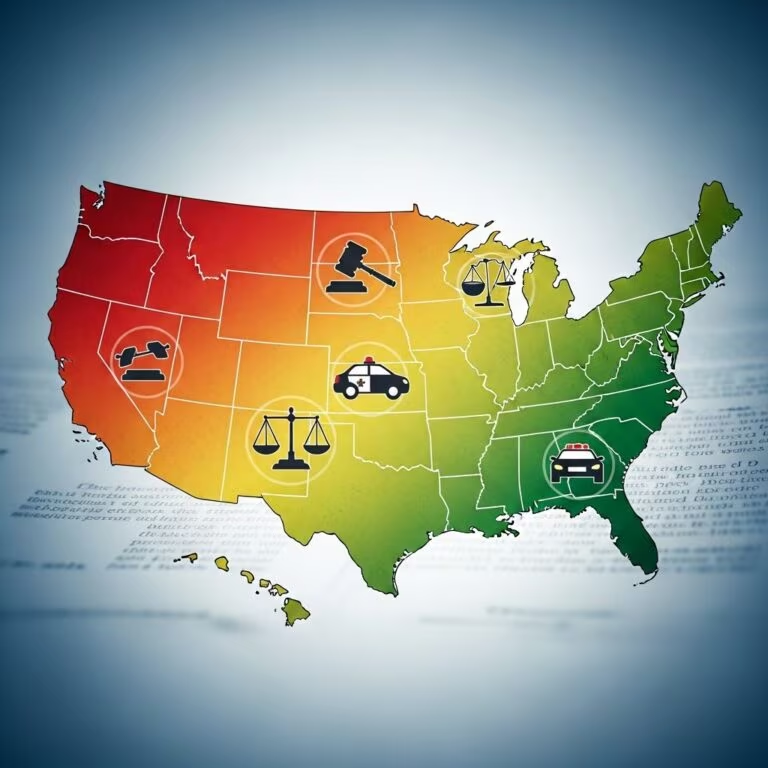
The difference between a first DUI and a repeat offense is enormous. A first violation may result in a fixed suspension period and a path toward reinstatement. A second offense, by contrast, can lead to permanent or near-permanent loss of commercial driving privileges in many states.
That harsher treatment reflects the belief that repeat violations show a continuing safety problem. For a working driver, the practical result is that one mistake may be survivable, while a second can end a commercial driving career.
Reinstating a CDL After a First DUI
In many cases, a driver can regain commercial privileges after the first offense, but only by meeting every condition imposed by the state. Reinstatement usually does not happen automatically when the suspension period ends. The driver may need to submit an application, pay fees, complete treatment or education requirements, and sometimes retake testing.
The process often includes administrative review by the DMV or equivalent agency. Officials may require proof that the driver has fulfilled all conditions before considering reinstatement. Depending on the case, additional screening or a skills test may also be required.
- Wait out the full disqualification period
- Pay reinstatement and court-related fees
- Complete any alcohol assessment or treatment program
- Provide proof of insurance or financial responsibility if required
- Apply through the licensing agency and satisfy any testing requirements
When a Second DUI Becomes a Career Problem
Repeat offenses are where CDL rules become especially severe. Many jurisdictions impose lifetime disqualification after a second qualifying DUI, with limited exceptions in some states after many years have passed. Even when reinstatement is technically possible, the burden of proof can be high and the path uncertain.
That is why a second offense should be treated as a major career threat, not merely another suspension. A commercial driver with two alcohol-related violations may face barriers that cannot be solved with time alone.
Steps Drivers Should Take After a DUI
A commercial driver facing a DUI should act quickly and carefully. Deadlines for hearings, administrative appeals, and employer notice can arrive fast. Because the criminal case and licensing case move on separate tracks, a driver may need to defend both matters at once.
Useful next steps often include:
- Review every notice from the court and DMV immediately
- Track all deadlines for hearings and appeals
- Notify the employer when required by law or policy
- Gather records related to the stop, arrest, and testing
- Consult counsel familiar with both DUI and CDL rules
Prompt action can matter because a missed deadline may turn a temporary problem into a much longer disqualification.
Frequently Asked Questions
Does a DUI always destroy a CDL permanently?
No. A first offense often leads to a suspension or disqualification period, after which reinstatement may be possible. Repeat offenses are much more dangerous and can lead to permanent loss in many states.
Can I keep my regular license if I lose my CDL?
Sometimes, but not always. A DUI can affect both the personal driving privilege and the commercial privilege, and the outcomes may differ depending on the state and the facts of the case.
What if I refused a breath or blood test?
Refusal can trigger separate administrative penalties under implied consent laws. For CDL holders, that can mean immediate or additional consequences even before a DUI conviction is entered.
Can I drive commercially while my case is pending?
Usually not if the state has already imposed a disqualification or suspension. The exact answer depends on the status of the license and any emergency or limited driving privileges available under local law.
Will I have to retake the CDL test?
Sometimes. Some states require renewed testing, while others focus on fees, proof of rehabilitation, or administrative approval. The reinstatement rules are state-specific.
Why Early Legal Guidance Matters
Because a DUI can affect both criminal exposure and commercial driving status, the stakes are unusually high for CDL holders. A driver may be dealing with jail exposure, fines, insurance problems, employment loss, and license disqualification at the same time. Careful legal guidance can help identify deadlines, challenge improper procedures, and prepare for reinstatement if that becomes an option.
For commercial drivers, the central issue is not just whether a conviction occurs, but how the offense will affect the ability to keep working. That is why a DUI should be treated as a licensing crisis as much as a criminal one.
References
- Commercial Driver’s License Standards: Medical Qualification and Safety-Sensitive Rules — Federal Motor Carrier Safety Administration. 2025-01-15. https://www.fmcsa.dot.gov/
- Driver Qualification Files and Alcohol/Controlled Substances Testing Requirements — Federal Motor Carrier Safety Administration. 2025-06-10. https://www.fmcsa.dot.gov/regulations
- Commercial Driver License Disqualification — U.S. Department of Transportation. 2024-11-08. https://www.transportation.gov/
- Impaired Driving: State and Federal Enforcement Overview — National Highway Traffic Safety Administration. 2024-09-20. https://www.nhtsa.gov/risky-driving/drunk-driving
- Commercial Driver License Manual — U.S. State Licensing Agency Publication. 2025-03-01. https://www.fmcsa.dot.gov/registration/commercial-drivers-license