
Hotel Staff Guide: Discovering Drugs in Guest Rooms
Essential protocols for hotel employees finding illegal substances, ensuring safety, legal compliance, and property protection in high-stakes scenarios.
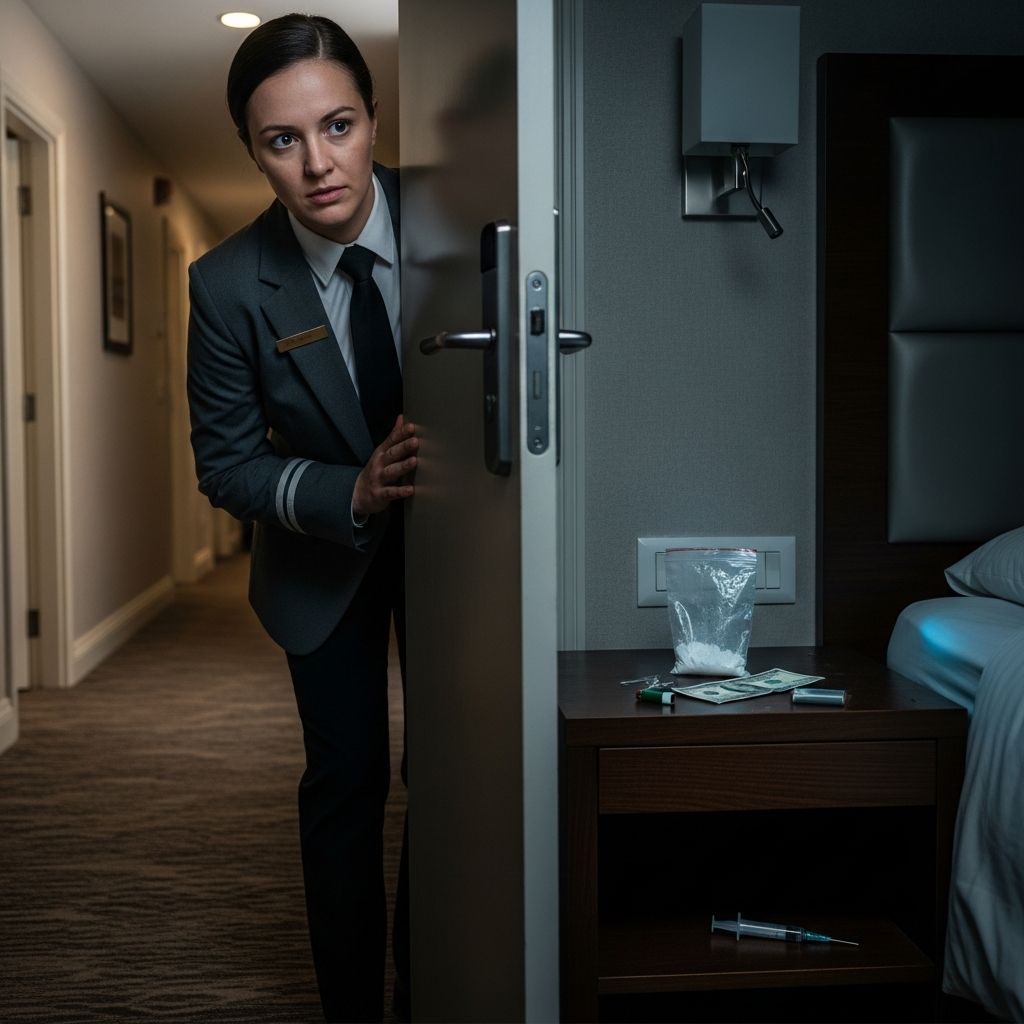
Discovering illegal substances during routine cleaning poses immediate dangers and legal complexities for hotel housekeeping teams. Proper handling protects employees, guests, and the business from harm and prosecution risks.
Recognizing Potential Hazards in Guest Rooms
Housekeeping staff enter diverse environments daily, where guests may leave behind pharmaceuticals, illicit drugs, or related paraphernalia. These items range from prescription opioids like fentanyl patches to street drugs such as methamphetamine or heroin. Exposure risks include skin absorption, inhalation, or accidental ingestion, particularly hazardous for pregnant workers or those with compromised immunity.
Common indicators include powdery residues, needles (sharps), burnt foil, or unusual odors. Hotels near medical facilities face higher chances of encountering discarded prescription medications, which OSHA flags as growing occupational threats. Staff must train to spot these without direct contact, using visual cues to assess and retreat if needed.
- Powder or crystals: Possible cocaine, fentanyl, or methamphetamines.
- Small bags or vials: Often contain heroin or ecstasy.
- Patches or pills: Leftover pharmaceuticals like opioids.
- Sharps containers or needles: High-risk for bloodborne pathogens.
Training programs should emphasize these signs, drawing from hospitality guidelines that stress environmental scans before entry.
Immediate Safety Protocols for Staff Protection
Personal safety overrides all other actions. Upon sighting suspicious items, staff should not touch, move, or investigate further. Back away immediately to avoid airborne particles or residue transfer, especially with fentanyl, which can penetrate skin or become aerosolized.
Hotels must supply personal protective equipment (PPE) like nitrile gloves, masks, and gowns. Designated responders—trained personnel only—handle collections, treating pharmaceuticals like sharps: bag from a distance and secure. Emergency protocols include notifying supervisors without re-entering, then washing exposed skin thoroughly.
| Scenario | Action | PPE Required |
|---|---|---|
| Visible powder | Exit and report | Mask, gloves |
| Needles/sharps | Do not touch; isolate area | Full PPE kit |
| Suspected overdose | Call 911; do not approach | Stay outside room |
| Abandoned items post-checkout | Secure door; notify management | Gloves minimum |
Post-exposure, provide medical evaluation and grief support if a body is found, as these incidents traumatize staff. Comprehensive PPE and protocols align with CDC and OSHA recommendations for hazardous material handling.
Legal Framework: Guest Rights and Hotel Authority
Guests enjoy Fourth Amendment protections against unreasonable searches while lawfully occupying a room. Housekeepers lack authority to search; any discovery during active occupancy may render evidence inadmissible if obtained without consent or eviction.
Protections end upon checkout, eviction for policy violations (e.g., excessive noise or damage), or abandonment. At that point, hotels can inspect freely, and findings become prosecutable evidence. For instance, drugs left post-checkout or after eviction notices can lead to charges, as seen in high-profile cases involving executives.
Management must document eviction processes meticulously to validate searches. Retaining criminal defense counsel early can challenge improper procedures, potentially dismissing cases or enabling lawsuits against the hotel.
Step-by-Step Reporting Procedures
Clear chains of command prevent errors. Staff report to supervisors immediately via radio or phone, providing room number and description without speculation. Management assesses: if guest present, knock and request access or evict; if vacant, secure and call authorities.
- Exit room; do not disturb scene.
- Contact supervisor: “Room X has potential contraband.”
- Supervisor notifies security/police; logs incident.
- Police arrive: provide access, hand over keys.
- Post-incident: deep clean with EPA-approved disinfectants.
For medical emergencies like overdoses, prioritize 911 calls. Hotels housing rehab patients need heightened protocols, coordinating with local health boards.
Training and Policy Development for Hotels
Proactive education is mandatory. Programs cover drug identification, PPE use, legal boundaries, and escalation paths. Partner with experts like infection prevention specialists for fentanyl awareness.
Site-specific policies address local risks—e.g., urban hotels near clinics emphasize prescription hazards. Annual drills, WHMIS-compliant supplies, and grief counseling build resilience. Enhanced standards, like those from AHLA, include temperature checks and quarantine protocols adaptable to drug scenes.
- Monthly sessions on hazard recognition.
- Certification in bloodborne pathogen handling.
- Simulation exercises for overdose responses.
- Updates on evolving threats like synthetic opioids.
Brands like Hilton integrate Mayo Clinic partnerships for rigorous cleanstay programs, setting industry benchmarks.
Health Risks from Pharmaceuticals and Illicit Substances
Beyond illegals, legal drugs pose threats. Cancer treatments or chemotherapy agents warn against handling by women of childbearing age due to teratogenic effects. Fentanyl patches, common near hospitals, release lethally if crushed.
Hotels must treat all unknown substances as hazardous. Designated disposal mirrors healthcare: double-bagging, sharps containers, and professional waste services. OSHA urges housekeeping to adopt healthcare-level precautions proactively.
Case Studies: Lessons from Real Incidents
A Fortune 500 executive’s arrest stemmed from a housekeeper’s post-checkout find of heroin, cocaine, meth, and ecstasy—evidence upheld due to abandonment. In contrast, mid-stay discoveries often fail in court absent eviction.
Overdose responses highlight risks: staff trained to recognize blue lips or pinpoint pupils save lives but must avoid contact. A 2024 report notes 65% of guests prioritize bathroom sanitation, underscoring deep cleans post-incidents.
Liability Mitigation Strategies
Hotels reduce exposure via insurance riders for drug-related claims, robust CCTV, and guest contracts banning illegals. Staff non-disclosure agreements protect privacy unless legally required.
Compliance with public health acts—like Ontario’s or BC’s—ensures DIN-approved cleaners. Quarantine rooms post-event, using CDC-guided disinfection.
Frequently Asked Questions (FAQs)
What if I accidentally touch suspected drugs?
Wash immediately with soap; seek medical help. Report for monitoring; fentanyl effects can delay.
Can hotels search rooms anytime?
No, only post-checkout or eviction. Active guests have constitutional rights.
Should I confront the guest?
Never. Exit and report to management/security.
What about prescription meds?
Treat as hazardous; do not handle. Many pose reproductive risks.
How to train for fentanyl exposure?
Use PPE, recognize signs, call experts. Avoid skin/airborne contact.
Post-incident room return?
Quarantine, deep clean with EPA products, inspect before reuse.
This guide equips hotel teams for rare but critical events, blending safety, law, and operations for seamless handling.
References
- Can drug charges follow a hotel housekeeper’s discovery of drugs? — Braun Forte & Frendel. Accessed 2026. https://braunfotelandfrendel.com/can-drug-charges-follow-a-hotel-housekeepers-discovery-of-drugs/
- How to Safely Respond to Medical Episodes in a Hotel — Hospitality Lawyer. Accessed 2026. https://hospitalitylawyer.com/how-to-safely-respond-to-medical-episodes-in-a-hotel/
- Housekeeping Beware: Hazardous Drug Exposure — Hospitality Lawyer (PDF). 2019-01. https://hospitalitylawyer.com/wp-content/uploads/2019/01/HousekeepingBeware-hazardous-drug-exposure.pdf
- Hotel Housekeeping Guide for 5-Star Results — Winsham. Accessed 2026. https://www.winsham.com/blogs/view/hotel_housekeeping_guide
- Enhanced Industry-Wide Hotel Cleaning Standards — American Hotel & Lodging Association (AHLA) (PDF). 2020-05. https://www.friscogov.com/wp-content/uploads/2020/05/AHLA-Hotel-Cleaning-Protocols.pdf
Similar Articles








Read full bio of Sneha Tete


