
Homeowners Insurance and Dog Breed Rules Explained
Understand how dog ownership and breed restrictions can change your homeowners insurance coverage, costs, and legal exposure.
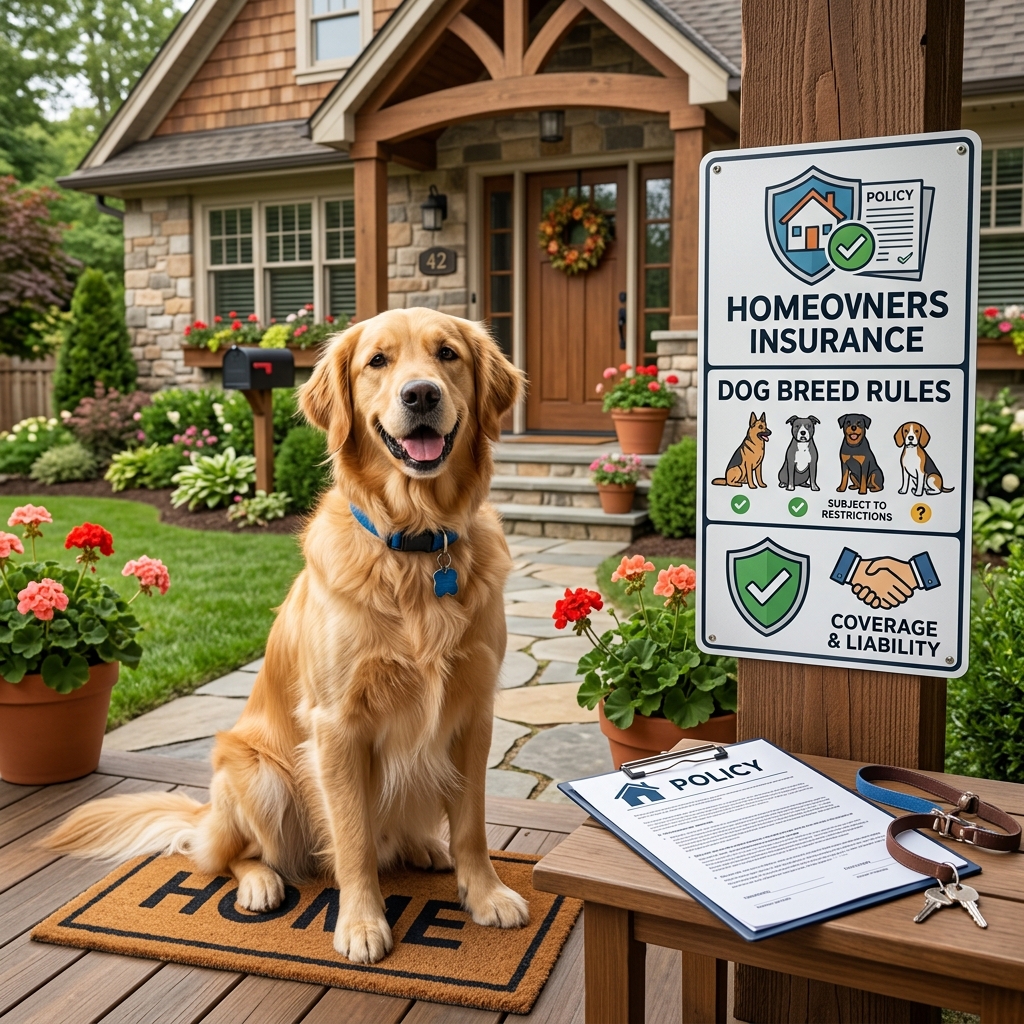
Owning a dog changes more than your daily routine. It can also reshape your homeowners insurance coverage, especially if your dog belongs to a breed that insurers label as higher risk for bites or aggressive behavior. Understanding how these rules work is essential for protecting both your finances and your pet.
Why Dogs Matter in Homeowners Insurance
Homeowners insurance is designed to protect you from financial loss related to your home, your belongings, and your legal liability to other people. Dogs fit into the liability part of that equation. If your dog injures someone or damages their property, the claim is often handled under the personal liability coverage in your policy.
Insurers pay close attention to dog-related risks because dog bites are a significant source of liability claims. These claims can involve expensive medical treatment, lost wages, and legal costs. That pattern has led many companies to adopt specific rules based on the breed of dog you own.
- Liability coverage typically ranges from about $100,000 to $500,000 on standard homeowners policies.
- Dog-related claims may trigger higher premiums in future years if the insurer continues coverage.
- Some companies will refuse coverage or exclude the dog entirely if they judge the risk to be too high.
How Liability Coverage Applies to Dog Incidents
When a dog causes harm, the key question is whether the event is covered by the homeowners policy. In typical situations, the liability section of the policy responds to injury or property damage suffered by other people, not by the policyholder or household members.
Coverage usually applies in the following ways:
- Dog bites and injuries to others — Medical bills, legal defense costs, and settlements or judgments may be covered if the incident is not excluded.
- Incidents off your property — Liability often follows you and your dog away from home, such as at a park or a friend’s house.
- Dog in someone else’s care — Coverage can still apply even if a friend is pet-sitting, as long as the incident falls within policy terms.
- Property damage to others — If your dog damages someone else’s property, liability coverage may respond.
However, most policies do not pay for:
- Medical care for your own dog, which is typically handled through separate pet insurance.
- Damage or injuries suffered by members of your household arising from your pet.
Commonly Restricted or Banned Dog Breeds
Many insurers maintain a list of dog breeds they classify as higher risk. These lists draw on claims data and bite statistics, not individual behavior, and they vary from company to company.
| Breed Category | Examples Often Listed | Typical Insurance Response |
|---|---|---|
| Guard and protection breeds | Pit bull-type dogs, Rottweilers, Doberman pinschers | Coverage may be denied, limited, or require special underwriting. |
| Large working breeds | German shepherds, Mastiffs, Great Danes, Akitas | Subject to restrictions or higher premiums in some policies. |
| Spitz and hybrid breeds | Chow chows, Husky-type dogs, wolf hybrids | Often appear on restricted lists, especially in liability coverage. |
| Other labeled “dangerous” breeds | Presa Canario, Cane Corso, Alaskan Malamute | May face outright bans or exclusions depending on the insurer. |
Some companies even flag mixed-breed dogs when they believe the mix includes one of these higher risk categories. At the same time, not all insurers use breed lists, and a growing number evaluate dogs on a case-by-case basis.
Ways Insurers Handle Dog-Related Risk
Insurers use different strategies to manage the financial risk associated with dog ownership. These strategies can significantly affect your ability to obtain or keep homeowners coverage.
- Declining an application — A company may refuse to issue a policy if you own a dog on its restricted breed list.
- Non-renewal or cancellation — If your dog bites someone or is deemed aggressive, the insurer may decide not to renew your policy or could cancel in accordance with local law.
- Excluding the dog from liability coverage — Some policies are issued with a specific exclusion stating that any claims arising from your dog are not covered.
- Charging higher premiums — Owning a dog, especially one considered higher risk, can result in increased liability premiums.
- Requiring documentation — Certain insurers ask for proof of training, veterinary letters, or in-person assessments before extending coverage.
State Laws and Regulation of Breed-Based Rules
Insurance rules are not identical nationwide. Some states allow insurers wide flexibility to restrict or deny coverage based on breed, while others limit how heavily breed alone can influence underwriting decisions.[10]
States Limiting Breed-Based Decisions
A growing number of jurisdictions are rethinking the use of dog breed as the sole factor in insurance decisions. For example, Arizona has adopted a law that prevents insurers from relying only on the dog’s breed when deciding whether to write, renew, cancel, or price a homeowners or renters policy.
- Insurers in Arizona may still consider dog-related risk, but breed cannot be the only factor.
- Companies can ask about breed on applications, yet must demonstrate that other risk elements are also considered.
Other states, such as those listed in some consumer insurance analyses, restrict the ability of home insurers to deny or cancel policies solely because the owner has a dog labeled as dangerous. However, many states still allow breed-based decisions as part of ordinary underwriting.
States Allowing Breed-Based Underwriting
In contrast, some state reports note that insurers may freely consider a dog’s breed when evaluating homeowners applications, and only a few jurisdictions specifically limit that practice.[10] This can lead to significant differences in the availability of coverage for owners of certain breeds depending on where they live.
Finding Dog-Friendly Homeowners Insurance
Despite restrictions, dog owners still have options. Some insurance companies are known for being more dog-friendly and either accept all breeds or evaluate each dog individually.
Steps to locate dog-friendly coverage include:
- Ask directly about dog policies — Before buying a policy, ask the insurer whether they maintain a restricted breed list and how they treat dog-related claims.
- Work with an agent or broker — Experienced agents often know which insurers are more flexible about dog breeds and can compare offers across multiple companies.
- Look for companies known to accept all breeds — Some insurers are recognized in consumer guides and advocacy materials as accepting a wide variety of dogs or judging them by behavior rather than breed.
- Consider state-backed options — In a few states, a FAIR Plan or similar program may provide basic homeowners coverage when private insurers decline you, though dog-related liability terms can vary.
Managing Risk: Training, Documentation, and Umbrella Coverage
Demonstrating responsible dog ownership can improve your chances of securing favorable insurance treatment. While it does not guarantee coverage, it can help an insurer see your dog as lower risk compared to claims statistics for the breed.
Training and Behavior Evidence
Insurers may respond positively if you can show that your dog has completed credible training or has a record of good behavior.
- Obedience training certificates — Formal programs, such as widely recognized good citizen training courses, can signal consistent, safe behavior.
- Veterinarian letters — A written statement from a veterinarian describing your dog’s temperament and lack of aggression can sometimes support your case.
- Behavior assessments — Some insurers may accept evaluations from qualified trainers or behavior specialists.
Umbrella Liability Insurance
Even if your homeowners policy covers dog-related incidents, limits may be too low compared with your overall risk. In that situation, an umbrella liability policy can add an extra layer of protection above your standard limits.
- Umbrella policies provide additional liability coverage that applies when claims exceed your homeowners limits.
- They can be valuable for dog owners because serious injuries can generate high medical and legal costs.
- Coverage terms vary, so you must confirm that dog-related claims are not excluded.
Practical Tips for Dog Owners Concerned About Insurance
Preventing incidents is as important as having insurance. Responsible dog ownership reduces risk for everyone and improves the chances that your insurer will continue coverage without severe restrictions.
- Follow local leash and licensing laws to avoid citations and show that you manage your dog responsibly.
- Keep vaccinations current, including rabies shots, to minimize health concerns if a bite occurs.
- Understand your dog’s triggers and personality so you can avoid situations likely to cause fear or aggression.
- Use non-aggressive play and avoid encouraging protective or confrontational behaviors that might raise risk.
- Supervise interactions with children and unfamiliar adults, and teach children appropriate behavior around dogs.
- Secure your property by using fences, gates, and clear signage when appropriate to prevent accidental encounters.
Frequently Asked Questions (FAQs)
Does homeowners insurance always cover dog bites?
Not always. Many policies cover dog bites under the liability section when the dog is not excluded, but coverage can be denied if your policy contains a specific exclusion for certain breeds or for your individual dog.
Can an insurer cancel my policy because of my dog?
In many states, insurers may cancel or refuse to renew a policy if they consider your dog too risky, especially after a bite or if the breed is on their restricted list. However, some states limit the ability to rely solely on breed when making these decisions.
Is it legal for insurers to deny coverage due to breed?
In most states, it is legal for insurers to consider dog breed as part of underwriting, and only a few jurisdictions restrict breed-based decisions explicitly.[10] Always check the law in your state or speak with a knowledgeable insurance professional.
What if my dog has bitten someone before?
A prior bite typically raises serious concerns for insurers. Some companies will exclude future dog bite liability, increase premiums, or decline coverage after a documented incident. You should disclose any bite history honestly when applying for insurance.
Are there insurers that accept all dog breeds?
Yes. Certain companies, highlighted in consumer and advocacy materials, are known to accept a wide range of breeds or to evaluate dogs based on individual behavior rather than breed alone. Availability and terms can differ by state, so you must confirm details directly with the insurer.
Does renters insurance treat dogs the same way?
Renters insurance often has similar liability rules for dog ownership, including breed restrictions and exclusions, because the liability coverage structure is comparable to homeowners policies. Renters should ask the same questions about breed lists and dog-related claims.
References
- Dog Breeds Banned by Homeowners Insurance Companies — U.S. News & World Report. 2023-08-11. https://www.usnews.com/insurance/homeowners-insurance/dog-breeds-banned-by-home-insurance-companies
- Do You Need Dog-Friendly Homeowners Insurance? — Progressive. 2023-04-10. https://www.progressive.com/answers/dog-friendly-homeowners-insurance/
- Restricted Dog Breed List: Home Insurance & Rental Rules Explained — Kin Insurance. 2023-06-22. https://www.kin.com/blog/restricted-breeds/
- Dog Owner’s Guide to Homeowners Insurance — Farm Bureau Financial Services. 2022-09-15. https://www.fbfs.com/learning-center/dog-owner-guide-to-homeowners-insurance
- New Arizona Law Related to Dog Breeds and Homeowners Insurance — Arizona Department of Insurance and Financial Institutions. 2023-06-30. https://difi.az.gov/sites/default/files/Dog%20Breed%20FAQ.pdf
- Dog Breed Restrictions in Homeowners Insurance — Connecticut General Assembly Office of Legislative Research. 2005-07-05. https://www.cga.ct.gov/2005/rpt/2005-r-0399.htm
- Home Insurance and Pets — MSPCA-Angell. 2021-03-01. https://www.mspca.org/home-insurance-and-pets/
Similar Articles








Read full bio of medha deb




