
Homeowner Revenge: Legal Perils of Confronting Burglars
When burglary victims fight back with force, the line between defense and crime blurs—explore real cases and legal boundaries.
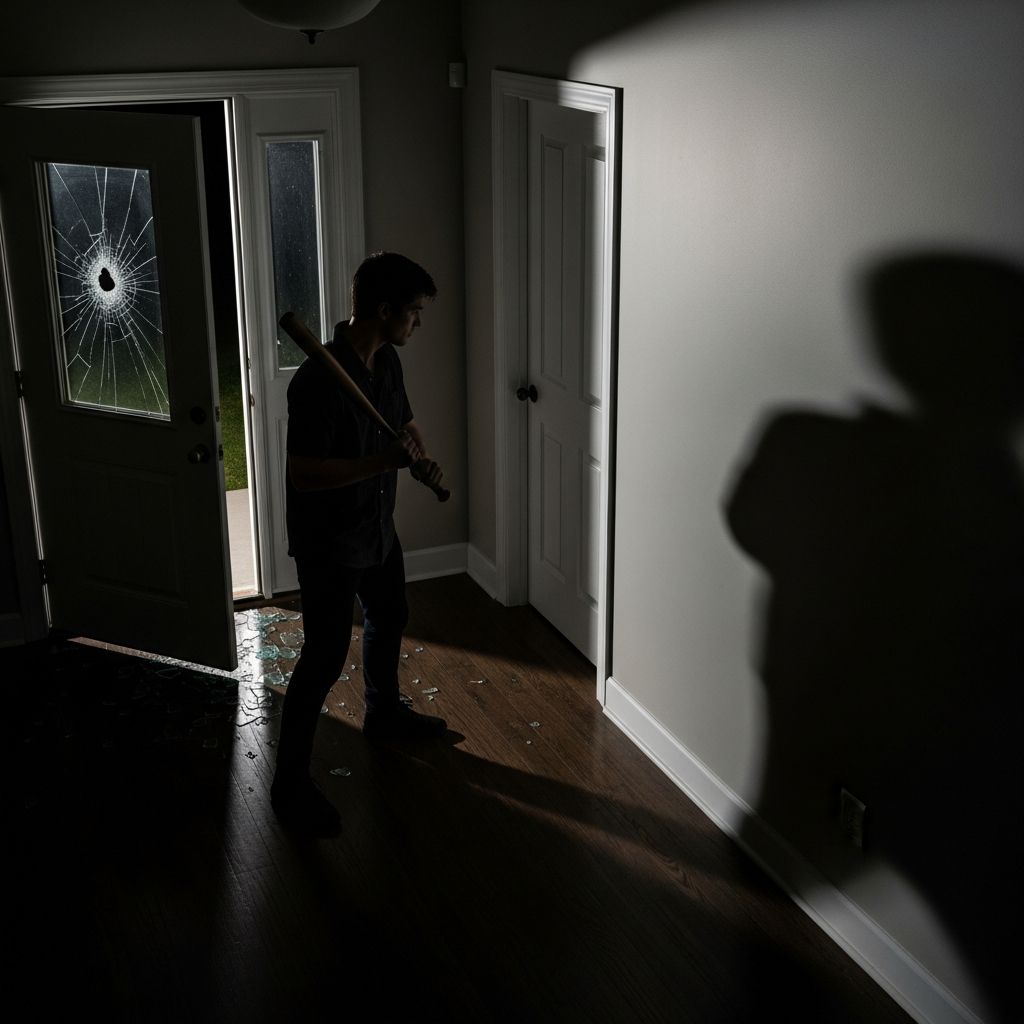
Burglaries provoke intense emotions, often leading homeowners to take matters into their own hands. While the instinct to protect one’s property is understandable, crossing into excessive force can transform victims into defendants. This article examines real-world cases where confrontations escalated dramatically, resulting in arrests on both sides, and outlines the legal frameworks governing such scenarios.
The Instinct to Fight Back: Why Homeowners Confront Intruders
When discovering a burglar in the act, adrenaline surges, prompting immediate action. Property owners frequently arm themselves or physically subdue intruders to prevent theft or escape. However, what feels like justified retribution can violate criminal statutes if it exceeds reasonable bounds.
- Psychological triggers: Fear and anger drive split-second decisions, overriding rational assessment of legal risks.
- Common responses: Shouting alarms, physical restraint, or brandishing weapons to detain suspects until police arrive.
- Rising trends: Home security systems and armed citizenry increase confrontation opportunities, amplifying potential for violence.
Statistics from the Bureau of Justice Statistics indicate burglaries occur roughly every 25 seconds in the U.S., with many involving direct homeowner encounters. These moments test the boundaries of personal autonomy versus state-mandated restraint.
Defining Self-Defense: Core Legal Principles
Self-defense laws form the foundation for evaluating homeowner actions. At its core, this doctrine permits force proportional to the threat posed. Key elements include:
| Element | Description | Legal Test |
|---|---|---|
| Imminent Threat | Reasonable belief of immediate harm | Objective: What would a prudent person perceive? |
| Proportionality | Force matches danger level | Deadly force only against deadly threats |
| Retreat Duty | Some states require escape attempts | Stand-your-ground eliminates this |
| Reasonable Belief | Subjective fear must be justifiable | Court weighs circumstances |
These principles derive from common law, refined through statutes like those in Florida’s stand-your-ground law, which presumes reasonable fear inside one’s home.
Castle Doctrine: Fortress or Trap?
The castle doctrine, rooted in English common law, asserts a person’s home as a sanctuary where retreat is unnecessary. Modern U.S. versions, adopted in over 30 states, extend protections:
- No duty to retreat against intruders.
- Presumption of fear if unlawfully entered.
- Immunity from civil suits for justified acts.
Yet, limitations apply post-neutralization. Once a threat ends—say, an intruder subdued—continued violence breaches the doctrine, inviting charges like assault or false imprisonment.
Case Study 1: The Bicycle Shop Standoff
In a Florida incident, two burglars shattered a bike shop window at night, triggering an alarm. Owner Robert Antley arrived swiftly, confronting the pair inside amid scattered merchandise. What followed was a prolonged ordeal: the suspects claimed Antley forced them to disrobe to underwear, beat them severely, and held them at gunpoint for over two hours.
Police arrested all three upon arrival. The burglars faced burglary charges, while Antley was detained for alleged kidnapping and aggravated assault. Prosecutors scrutinized whether his actions constituted citizen’s arrest or unlawful detention. Outcomes hinged on video evidence and witness statements, illustrating how extended restraint invites liability.
Lessons: Detain briefly, prioritize police summons, avoid humiliation tactics that courts deem punitive.
Case Study 2: Naked Intruder Rampage in Missouri
A bizarre early-morning burglary spree in Moberly, Missouri, saw 35-year-old J’Angelo Robinson break into three homes naked, damaging property and assaulting a resident. A homeowner chased the fleeing suspect, leading to his capture by police.
Robinson faced first-degree burglary, assault, and child endangerment charges (later adjusted), held on $50,000 bond. Here, the homeowner’s pursuit stayed within defensive bounds, avoiding backlash. Contrastingly, the intruder’s nudity and aggression escalated the threat, bolstering any self-defense claims.
Case Study 3: Seattle Truck Burglary Backfire
Randall Dykstra awoke to noises outside his Seattle home, spotting a burglar rifling his truck. Barefoot and in pajamas, he and his girlfriend pursued and physically subdued the intruder until authorities arrived.
No charges against the homeowners ensued, as their response matched the non-lethal threat. This case exemplifies proportional force: tackling and holding without weapons or excess.
When Defense Turns Criminal: Common Pitfalls
Homeowners often err by:
- Prolonging captivity: Hours-long detentions risk kidnapping accusations.
- Humiliating suspects: Forced nudity or beatings signal revenge, not safety.
- Weapons misuse: Brandishing post-subdual invites aggravated assault claims.
- No witnesses: Solo confrontations complicate ‘reasonable fear’ proofs.
Courts apply the ‘reasonable person’ standard, disallowing vigilante excesses even against clear criminals.
Citizen’s Arrest: A Risky Alternative
All 50 states permit private citizens to arrest for felonies witnessed or with probable cause. Protocols demand:
- Verbal announcement of intent.
- Immediate police notification.
- Minimal necessary force.
Violations expose arrestors to lawsuits or countersuits, as seen in the Florida case.
State Variations: A Comparative Overview
| State | Castle Doctrine? | Stand-Your-Ground? | Duty to Retreat? |
|---|---|---|---|
| Florida | Yes | Yes | No |
| California | Limited | No | Yes (public) |
| Texas | Yes | Yes | No |
| New York | No | No | Yes |
| Missouri | Yes | Yes | No |
Knowing local laws prevents overreach. Consult state statutes or attorneys for specifics.
Preventive Strategies: Safer Alternatives to Confrontation
Minimize risks through preparation:
- Install cameras, alarms, and motion lights for evidence.
- Use non-lethal tools like pepper spray or tasers.
- Fortify entries with deadbolts and shatterproof glass.
- Enroll in self-defense courses emphasizing de-escalation.
- Communal watches deter via visibility.
The FBI reports armed homeowners deter 60% of burglaries without confrontation.
Aftermath: Investigations and Trials
Post-incident, expect scrutiny:
- Police interviews without counsel risk self-incrimination.
- Forensic analysis of injuries determines force levels.
- Prosecutors weigh charges based on totality of circumstances.
Acquit rates for clear self-defense hover at 80%, per legal analyses, but ambiguities prolong ordeals.
Frequently Asked Questions
Can I use deadly force against a non-violent burglar?
No, unless they pose imminent deadly threat. Property alone doesn’t justify lethal response in most jurisdictions.
What if I catch a burglar fleeing my property?
Pursuit risks escalation; call police. Chasing off-property may impose retreat duties.
Does homeowner insurance cover legal defense costs?
Some policies include self-defense liability; review for criminal defense riders.
Are pit bulls or guard dogs legally viable deterrents?
Yes, if attacks stem from intrusion; owners liable for prior aggression history.
How long can I hold a burglar before police arrive?
Only as needed for safety and summoning aid—minutes, not hours.
Expert Advice: Staying Within the Law
Criminal defense attorneys recommend: Document everything, invoke silence rights, retain counsel immediately. Prevention trumps reaction; fortified homes and awareness reduce burglary rates by 50%, per criminology studies.
Ultimately, the justice system handles retribution. Homeowners preserve liberty by confining actions to defense, not punishment.
References
- Burglars say shop owner tortured them, made them strip naked after break-in — Atlanta Journal-Constitution (AJC). 2015-08-12. https://www.ajc.com/news/national/burglars-say-shop-owner-tortured-them-made-them-strip-naked-after-break/AmzqW8uqZA8ZGdLMwyCdpL/
- Police arrest naked burglar who broke into 3 houses, assaulted homeowner — FOX 32 Chicago. 2023-02-XX. https://www.fox32chicago.com/news/police-arrest-naked-burglar-who-broke-into-3-houses-assaulted-homeowner
- Naked homeowners beat up burglar in Seattle — ABC7 News. 2010-08-18. https://abc7news.com/archive/8273993/
- Burglars say shop owner tortured them after break-in — Action News Jax. 2015-08-XX. https://www.actionnewsjax.com/news/trending-now/burglars-say-shop-owner-tortured-them-made-them-strip-naked-after-they-broke-into-store/458322240/
- Burglars accuse shop owner of torture post-burglary — Atlanta Journal-Constitution (AJC). 2015-08-XX. https://www.ajc.com/news/national/burglars-say-shop-owner-tortured-them-made-them-strip-naked-after-they-broke-into-store/LaOiZ7dyRrxx6wEgZ1GTBK/
Similar Articles








Read full bio of Sneha Tete




