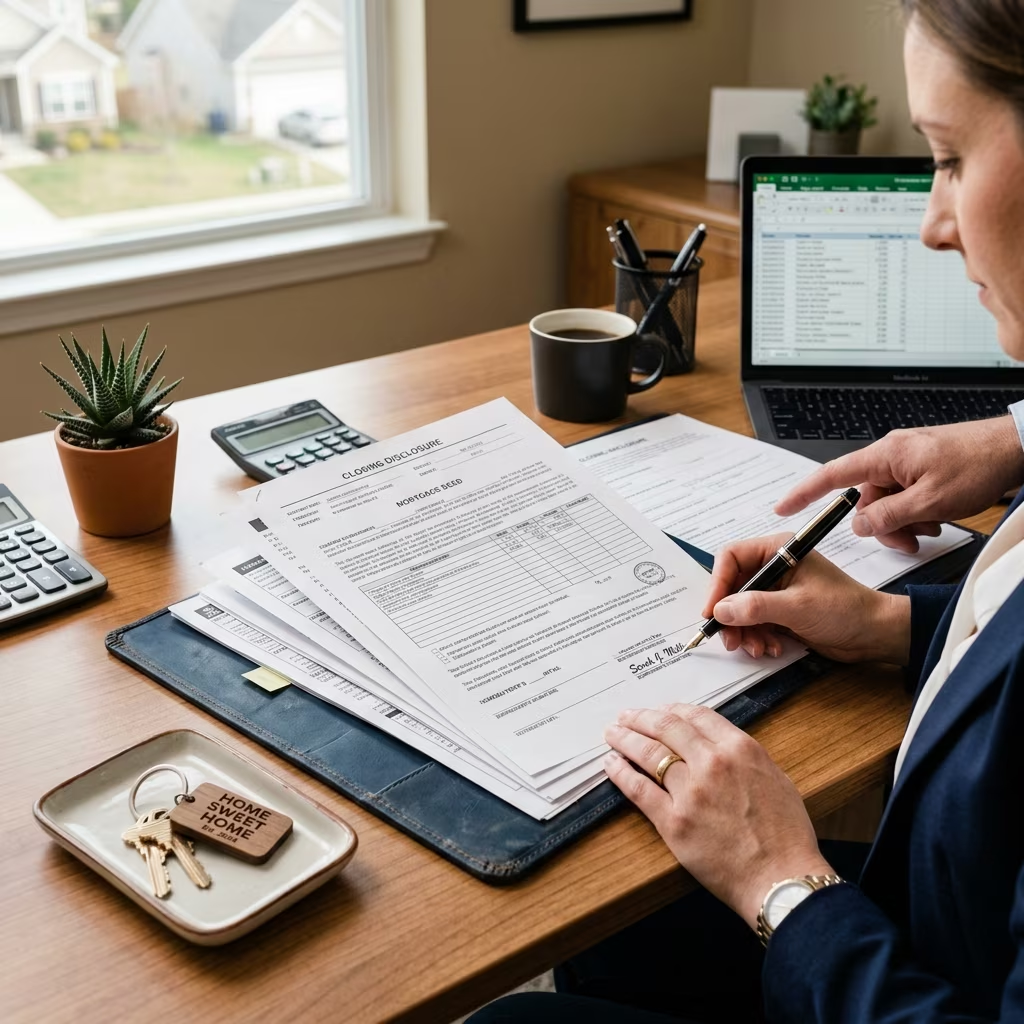
For most buyers, the closing appointment is the moment when years of saving, weeks of house hunting, and a stack of paperwork finally come together. It is also the time when you sign legally binding documents that determine your rights, obligations, and costs for years to come. Understanding what you will sign at closing—and how each document affects you—helps you approach this milestone with confidence instead of confusion.
This guide explains the major documents you can expect to see, what they mean in everyday language, what you should bring to closing, and how to prepare in the days leading up to your home purchase. It is written for buyers using a typical mortgage loan in the United States, though many concepts apply more broadly.
What “Closing” Really Means for a Homebuyer
Closing is the formal legal event where ownership of the property is transferred from the seller to you, and your mortgage loan becomes final. At the end of closing:
- You sign documents that create your mortgage debt and give your lender a security interest in the property.
- The seller signs documents transferring title to you.
- Money changes hands: your down payment, closing costs, and the lender’s funds are distributed.
- Once documents are signed and funds are disbursed, you typically receive the keys to your new home.
Depending on your state, closing may take place at a title company, a real estate attorney’s office, or another designated settlement location.
Core Loan Documents You Will Sign
The heart of your closing package is the set of loan documents that define the debt you are taking on and how your lender can enforce it. You should expect at least the following core items.
Closing Disclosure
The Closing Disclosure is a detailed, standardized five-page form that lists:
- Your final interest rate, monthly payment, and loan term.
- All closing costs, including lender fees, third-party charges, and prepaid taxes and insurance.
- Cash you must bring to closing (or receive back if you are refinancing).
- Loan features such as whether the rate can change, whether there is a prepayment penalty, and how escrow works.
Federal law requires your lender to provide this document at least three business days before closing, giving you time to review and compare it to your earlier Loan Estimate. You will sign the Closing Disclosure at closing to confirm that you have received and reviewed it.
Promissory Note
The promissory note is your formal promise to repay the loan. In practical terms, it is the IOU that spells out:
- The principal amount borrowed.
- Your interest rate and whether it is fixed or adjustable.
- Payment schedule and due dates.
- What happens if you pay late or default, including fees and acceleration (making the whole balance due).
Once you sign the note, you are personally liable for the debt under the terms stated in this document.
Mortgage, Deed of Trust, or Security Instrument
The mortgage or deed of trust (sometimes called a security instrument) links the promissory note to the property. It grants the lender a legal interest in your home as collateral for the loan.
This document typically includes:
- A legal description of the property.
- Your obligation to maintain insurance, pay property taxes, and keep the property in good condition.
- Remedies the lender can use if you default, including foreclosure.
Both the note and the mortgage/deed of trust are crucial; together they define the financial and property rights involved in your loan.
Documents Related to Owning the Property
In addition to loan-specific paperwork, closing includes documents that transfer ownership and clarify title.
Deed: The Transfer of Title
The deed is the document that transfers title from the seller to you, the buyer. The deed:
- Identifies the seller (grantor) and buyer (grantee).
- Describes the property.
- Specifies the form of ownership (for example, sole ownership or joint tenancy).
After closing, the deed is recorded in the public land records by the closing agent or attorney so that your ownership is officially recognized.
Title and Settlement Statements
Depending on your jurisdiction and loan type, you may receive a settlement or closing statement from the title company or settlement agent. This document (sometimes referred to historically as the HUD-1) itemizes all money flowing in and out of the transaction:
- Purchase price and loan amount.
- Credits, such as seller concessions or earnest money.
- Fees for title search, title insurance, recording, and other services.
Reviewing this statement helps you see exactly how the numbers in your Closing Disclosure translate into actual disbursements.
Insurance, Taxes, and Escrow Paperwork
Lenders want certainty that critical home-related costs are paid on time. At closing, you may sign documents related to insurance, property taxes, and escrow arrangements.
Homeowners Insurance Proof and Agreements
You must provide proof of homeowners insurance, such as a policy declaration or binder. Lenders generally require the policy to be in place starting on the day you take ownership.
Insurance-related documents may include:
- Evidence of coverage with the property address and coverage limits.
- Information on premiums and the insurer.
- Instructions if your lender will pay premiums through an escrow account.
Escrow Account Agreement
Many lenders require an escrow account for property taxes and homeowners insurance. You pay a portion of those costs each month along with your mortgage payment, and the lender uses the escrow funds to pay bills when due.
An escrow agreement explains:
- Which expenses are included in escrow (taxes, insurance, possibly mortgage insurance).
- How escrow deposits are calculated and adjusted over time.
- How shortages or surpluses will be handled.
What You Should Bring to Closing
Arriving prepared to closing helps avoid delays and last-minute stress. Commonly recommended items include a mix of identification, financial documents, and transaction paperwork.
| Item | Purpose at Closing |
|---|---|
| Government-issued photo ID | Verifies your identity for all legal documents and notary requirements. |
| Cashier’s or certified check / proof of wire | Covers down payment and closing costs; personal checks are usually not accepted. |
| Closing Disclosure | Allows you to compare final documents and confirm figures before signing. |
| Proof of homeowners insurance | Shows the property is insured as required by your lender. |
| Purchase contract | Provides reference for agreed terms, credits, and contingencies. |
| Additional lender-requested documents | Ensures final underwriting conditions are satisfied. |
Ask your closing agent or lender for a personalized checklist a few days in advance so you can gather everything without rushing.
Preparing in the Days Before Closing
The closing appointment itself usually lasts one to two hours, but good preparation happens in the week leading up to it. Federal consumer protection rules give you important rights during this period, especially around receiving and reviewing your Closing Disclosure.
Steps to Take Three to Seven Days Before Closing
- Confirm the closing details. Ask who will conduct your closing, when and where it will take place, and what you should expect.
- Request your closing documents. Obtain your Closing Disclosure at least three business days before closing and ask for other documents in advance if you want more time to read them.
- Compare key documents. Carefully compare your Closing Disclosure to your most recent Loan Estimate. Look for changes in interest rate, loan costs, and cash to close.
- Arrange payment of funds to close. Coordinate with your bank to obtain a cashier’s check or wire transfer for the exact amount needed, allowing time for any funds to clear.
- Verify repairs and property condition. Conduct a final walk-through to ensure agreed repairs are completed and the property is in the expected condition.
At the Closing Table: What to Expect
On closing day, you will sit down with a closing agent, real estate professionals, and possibly your lender’s representative. The process typically includes:
- Verification of your identity and review of the closing package.
- Explanation of major documents like the Closing Disclosure, note, and mortgage/deed of trust.
- Signing of each required document; some states also require notarization.
- Collection or confirmation of your funds to close.
- Final review to ensure all signatures are complete and conditions met.
Do not hesitate to pause and ask questions. You are entitled to understand each document before you sign it, and experienced closing professionals are accustomed to explaining terms in plain language.
After Closing: What To Do With Your Documents
Once closing is complete and you have your keys, you will receive a packet containing copies of everything you signed. These documents are important references for future questions, refinancing, or selling the property.
- Store the entire packet safely. Keep physical copies in a fire-resistant home file and consider scanning digital backups.
- Note key terms. Record your loan amount, interest rate, monthly payment, and escrow details for budgeting.
- Update your address and accounts. File a change of address with the postal service, update utilities, and notify relevant institutions.
- Review future expenses. Account for property taxes, insurance, maintenance, and any homeowners association dues when planning your budget.
Frequently Asked Questions About Closing Documents
1. Can I see my closing documents before the actual closing appointment?
Yes. You must receive your Closing Disclosure at least three business days before closing, and you can ask your lender or closing agent for early access to other documents. Reviewing them in advance gives you time to ask questions or correct errors.
2. What if numbers on my Closing Disclosure look different from my Loan Estimate?
Some differences may be normal (for example, taxes based on updated information), but significant changes in interest rate, loan costs, or cash to close should be explained. Contact your lender immediately to understand the reason and ensure there were no errors.
3. Is homeowners insurance really required at closing?
Almost all mortgage lenders require proof of homeowners insurance before they will release funds for closing. This protects both you and the lender if the property is damaged soon after you take ownership.
4. Why are personal checks usually not accepted for closing funds?
Closing agents and lenders need guaranteed funds that will not bounce or be delayed. Cashier’s checks and bank wires provide greater certainty and help ensure the transaction is completed on schedule.
5. Do I need a lawyer at closing?
In some states, an attorney is required to oversee real estate closings; in others, you may choose to hire a lawyer for advice and representation. Even where not required, some buyers find it helpful to have legal counsel when reviewing complex or high-value transactions.
Key Takeaways for Homebuyers
Closing day is more than a ceremonial exchange of keys—it is a legal and financial event with long-term consequences. When you understand the main documents you will sign, prepare a complete set of items to bring, and use the days before closing to review your Closing Disclosure and settlement paperwork, you greatly reduce the risk of unpleasant surprises.
By approaching closing as an informed participant rather than a passive signer, you protect your interests, build a clearer picture of your obligations, and start homeownership on a solid, well-documented foundation.
References
- House Closing Checklist — Travelers Insurance. 2023-05-01. https://www.travelers.com/resources/home/buying-selling/house-closing-checklist
- Your Mortgage Closing Checklist — Consumer Financial Protection Bureau. 2020-06-01. https://files.consumerfinance.gov/f/documents/cfpb_buying-a-house_mortgage-closing_checklist.pdf
- Real Estate Closing Checklist for Buyers — Manifestly. 2022-09-15. https://www.manifest.ly/use-cases/realtors/real-estate-closing-checklist-for-buyers
- Your Ultimate Real Estate Closing Checklist — Stewart Title. 2023-03-10. https://www.stewart.com/en/insights/your-ultimate-real-estate-closing-checklist
- What to Bring to Closing: A Buyer’s Checklist — Rocket Mortgage. 2023-02-20. https://www.rocketmortgage.com/learn/what-to-bring-to-closing
- Pre-Closing and Closing Checklist for Home Buyers — Bank Five Nine. 2022-08-05. https://www.bankfivenine.com/living-quarters/pre-closing-and-closing-checklist-for-home-buyers/
- Closing on a House Checklist for Buyers — U.S. Bank. 2021-11-12. https://www.usbank.com/financialiq/manage-your-household/life-events/shopping-for-your-home/closing-on-a-house-checklist-for-buyers.html