
Home Smoke Alarm Essentials for Fire Safety
A practical homeowner’s guide to choosing, placing, testing, and maintaining smoke alarms to reduce fire risk and protect your household.
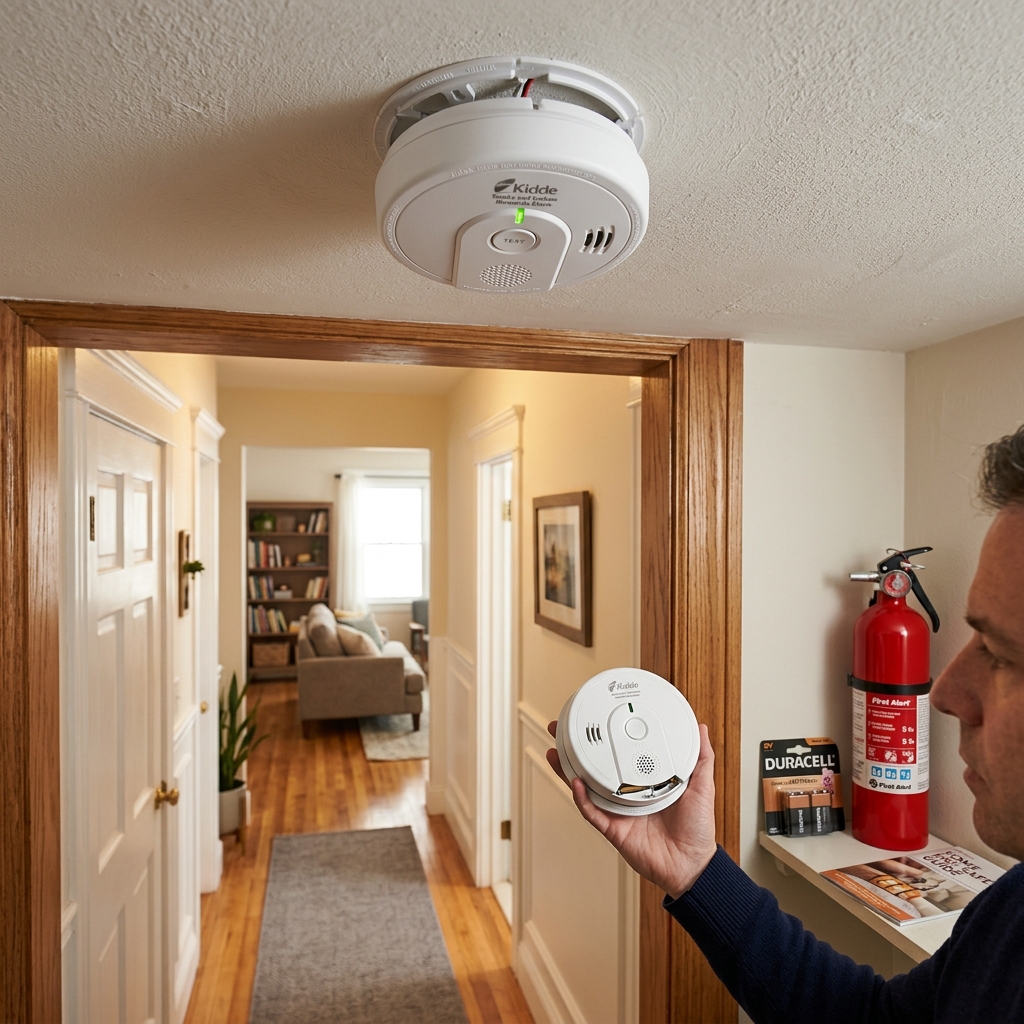
Smoke alarms are one of the simplest and most cost-effective safety devices you can install in your home, yet they play a critical role in reducing injuries and deaths from residential fires.[10] When fires start, they spread quickly and produce toxic smoke that can overwhelm occupants in minutes. A properly installed and maintained smoke alarm can provide the early warning your family needs to escape.
Why Every Home Needs Reliable Smoke Alarms
Fire incidents in homes often occur at night or when occupants are distracted, making early detection essential. Modern smoke alarms are designed to sense smoke particles and trigger an audible signal before conditions become unsurvivable.[10] This early alert gives you valuable time to evacuate and call emergency services.
National fire safety standards and government agencies strongly recommend comprehensive smoke alarm coverage in all dwellings. The National Fire Protection Association (NFPA) and the U.S. Fire Administration (USFA) advise placing alarms on every level of the home, inside each bedroom, and outside every sleeping area for effective protection.[10]
- Early warning: Alarms detect smoke before flames are visible.
- Night-time protection: Alerts sleeping occupants who may not notice a fire otherwise.
- Low-cost safety: Basic alarms are inexpensive relative to the damage and injury a fire can cause.
- Legal compliance: Many states require smoke alarms in residential properties and rentals.
Understanding Smoke Alarm Technologies
Not all smoke alarms work the same way. Different technologies are better suited to detect certain types of fires, and many homes benefit from a mix of devices.
Ionization vs. Photoelectric vs. Combination Alarms
| Alarm Type | How It Detects Smoke | Best At Detecting | Common Use |
|---|---|---|---|
| Ionization | Uses a small amount of radioactive material to ionize air; smoke disrupts the current and triggers the alarm. | Fast-flaming fires with small particles. | General living areas; often used but can be prone to false alarms near kitchens. |
| Photoelectric | Uses a light beam and sensor; smoke scatters the light and activates the alarm. | Smoldering fires that produce larger smoke particles. | Bedrooms, living rooms, and areas where slow-burning fires may start. |
| Combination (Dual-sensor) | Includes both ionization and photoelectric sensors in one unit. | Broad detection of both flaming and smoldering fires. | Whole-home coverage when you want a single device type. |
Many fire safety professionals recommend photoelectric or dual-sensor alarms in bedrooms and common areas because they perform well for typical residential fire scenarios and may reduce nuisance alarms near kitchens. Always review the manufacturer’s specifications and local regulations when choosing devices.
Where Smoke Alarms Should Be Installed in a Home
Correct placement is as important as choosing the right type of alarm. National guidelines and federal safety agencies emphasize installing alarms in locations where smoke is likely to travel and where people sleep.[10]
Minimum Recommended Coverage
According to NFPA and USFA guidance, most homes should follow these baseline rules:[10]
- Install alarms on every level of the home, including the basement.[10]
- Place alarms inside each bedroom and outside every sleeping area such as hallways near bedrooms.
- Make sure alarms are interconnected whenever possible, so that when one sounds, they all sound.
Height and Distance Guidelines
Smoke rises, so alarms must be positioned high on walls or ceilings to work correctly.[10]
- Ceiling mounting is preferred; place the alarm in the center of the room or at least several inches from walls.[10]
- When mounting on a wall, install the top of the alarm within about 12 inches of the ceiling.[10]
- Keep alarms at least 10 feet (about 3 meters) from cooking appliances to reduce false alarms.[10]
- Avoid installing directly next to vents, windows, or ceiling fans where air flow can prevent smoke from reaching the sensor.[10]
Special Considerations for Basements, Attics, and Garages
Every level of the home, including the basement, should have at least one smoke alarm.[10] Some codes exempt unoccupied attics and certain storage spaces, but additional alarms can increase safety if those areas contain electrical equipment or fuel.
Garages can be more complicated due to exhaust fumes and temperature extremes. Instead of conventional smoke alarms, some homeowners and professionals opt for heat detectors in garages, but local building and fire codes should guide your choice.
Legal Requirements and Evolving Smoke Alarm Laws
Beyond best practice guidelines, most U.S. states have specific legal requirements for smoke alarms in homes, rental units, and other residential buildings. These laws frequently reference national standards, such as NFPA codes and Underwriters Laboratories (UL) safety standards.
Common Elements of State Smoke Alarm Laws
- Required locations: Many states mandate alarms in or near sleeping areas and on every level of a dwelling.
- Device standards: Laws often require alarms that comply with nationally recognized standards like UL 217 and NFPA fire alarm codes.
- Responsibility: Landlords are typically responsible for providing compliant alarms in rental housing, while tenants must not disable them.
- Replacement timelines: Some laws specify when older alarms must be upgraded, especially if they use removable batteries or outdated technology.
Example: Long-Life Battery Requirements
Several states now require or strongly encourage the use of alarms with long-term, sealed batteries. For instance, updated law in Illinois requires new smoke alarms installed in most dwellings to have 10-year sealed batteries, with certain exemptions for homes that already have hardwired or integrated systems. Similar trends exist in other states, reflecting the importance of alarms that cannot easily be disabled and that require less frequent battery replacement.
Because laws change and vary by jurisdiction, homeowners and landlords should consult their state fire marshal, building code authority, or local housing department for up-to-date requirements.
Installation: Professional vs. Do-It-Yourself
Many battery-powered smoke alarms can be installed by homeowners with basic tools. However, hardwired systems that connect to a home’s electrical supply or to centralized fire alarm panels should be installed and serviced by qualified electricians.
When to Use a Professional
- Installing or modifying hardwired alarms connected to household wiring.
- Connecting alarms to central fire panels or building-wide systems, common in multi-unit dwellings.
- Integrating alarms with smart home systems or wireless networks that require technical configuration.
Some fire departments and local safety organizations offer programs to install battery-operated smoke alarms at little or no cost for qualifying residents. These programs can be especially helpful for seniors, people with disabilities, or households with limited resources.
Routine Testing, Maintenance, and Replacement
Installing smoke alarms is only the first step. Devices must be tested regularly and replaced when they reach the end of their service life. Over time, sensors can degrade and become less effective, even if the alarm still appears to function.
Recommended Testing Schedule
Federal and state safety offices consistently emphasize monthly testing for all smoke alarms.
- Press and hold the built-in test button until the alarm sounds.
- If the alarm does not sound, replace the battery and test again.
- If the device still fails to sound, replace the entire unit.
Battery Replacement Guidelines
For alarms powered by replaceable batteries:
- Replace batteries at least once a year, or sooner if the alarm chirps to indicate a low battery.
- Never remove batteries to silence nuisance alarms when cooking or showering. Instead, use a hush feature if available, open windows, or move the alarm slightly farther from steam sources.
For alarms with sealed long-life batteries, follow the manufacturer’s replacement schedule. When the device signals end-of-life, the entire unit must be replaced.
Replacing Old Smoke Alarms
Even if your alarm seems to work, it should be replaced about every 10 years. Many state and local agencies repeat this guidance because aging sensors become less reliable. The manufacturing date is usually printed on the back of the alarm; if the device is older than 10 years, schedule a full replacement.
Practical Tips to Reduce False Alarms
Occasional nuisance alarms can discourage people from maintaining their devices properly. However, there are safe ways to reduce false alarms without compromising protection.
- Observe distance from cooking appliances: Keep alarms at least 10 feet from stoves and ovens.[10]
- Use appropriate technology: Photoelectric alarms may be less prone to cooking-related false alarms in some locations.
- Ventilate while cooking: Use range hoods and open windows to disperse smoke.
- Use hush features: Many modern alarms have a temporary silence button that quiets the device while it continues to monitor for serious smoke conditions.
The key is to avoid disabling or removing batteries from alarms. Doing so not only increases risk but may violate local law or lease agreements.
Smoke Alarms in Rental Properties and Multi-Unit Housing
In rental housing, both landlords and tenants play important roles in maintaining effective smoke alarm coverage.
- Landlord responsibilities: Typically include installing required alarms, ensuring they meet code, and replacing devices according to legal and manufacturer standards.
- Tenant responsibilities: Usually include reporting malfunctioning alarms, not disabling devices, and allowing access for inspections or replacements.
- Interconnected systems: Many multi-story or multi-unit buildings have interconnected alarms or central fire alarm systems that require professional maintenance.
Landlords should regularly review state and local regulations, such as requirements for long-life sealed batteries or hardwired alarms, and incorporate smoke alarm checks into routine property inspections.
Frequently Asked Questions (FAQs)
How many smoke alarms does my house need?
Most homes should have at least one alarm on every floor (including the basement) plus one inside every bedroom and one outside each sleeping area. Larger homes or homes with complex layouts may need additional alarms to ensure occupants can hear them from all rooms.
Where is the best place to install smoke alarms?
Install alarms on ceilings or high on walls, away from corners and air vents.[10] Keep them at least 10 feet from cooking appliances to reduce false alarms and follow the manufacturer’s instructions for precise positioning.
How often should I replace my smoke alarms?
Most official guidance recommends replacing smoke alarms every 10 years, even if they still appear to work. Check the manufacturing date on the back of the device; if it is older than 10 years, schedule a replacement.
Do I need a professional to install my alarms?
If your alarms are hardwired into household electrical systems or integrated into building-wide fire systems, a qualified electrician or fire protection professional should install and service them. Battery-only devices are usually appropriate for homeowner installation, as long as manufacturer instructions and local codes are followed.
What should I do if my alarm keeps going off while I cook?
Do not remove the battery. Instead, try moving the alarm farther from the kitchen, using a hush button if available, and improving ventilation. If nuisance alarms persist, consider whether a different type of sensor would better suit that location.
References
- Smoke Alarms — U.S. Fire Administration. 2023-05-01. https://www.usfa.fema.gov/prevention/home-fires/prepare-for-fire/smoke-alarms/
- Installing and Maintaining Smoke Alarms — National Fire Protection Association (NFPA). 2022-09-15. https://www.nfpa.org/education-and-research/home-fire-safety/smoke-alarms/installing-and-maintaining-smoke-alarms
- Smoke Alarm Facts & Questions — Chatham County Fire Marshal’s Office. 2021-06-10. https://www.chathamcountync.gov/government/departments-programs-a-h/fire-marshal-s-office/smoke-alarms-smoke-detectors/smoke-alarm-facts-questions
- Illinois Smoke Alarm Law — Office of the Illinois State Fire Marshal. 2023-01-01. https://sfm.illinois.gov/about/divisions/fire-prevention-and-building-safety/illinois-smoke-alarm-law.html
- Smoke Alarms — Office of Insurance and Safety Fire Commissioner, Georgia. 2022-03-20. https://oci.georgia.gov/safety-fire-education/smoke-alarms
- How Many Smoke Alarms Do I Need in My House? — First Alert. 2022-11-05. https://www.firstalert.com/blogs/safety-corner/how-many-smoke-alarms-does-my-house-need
- Smoke Alarms and Sprinkler Systems — Maryland People’s Law Library. 2021-04-12. https://www.peoples-law.org/smoke-alarms-and-sprinkler-systems
Similar Articles








Read full bio of Sneha Tete


