
Home Office Tax Deductions: Rules for 2026
Navigate 2026 home office deductions: Employees face restrictions, while self-employed can claim significant savings with proper setup.
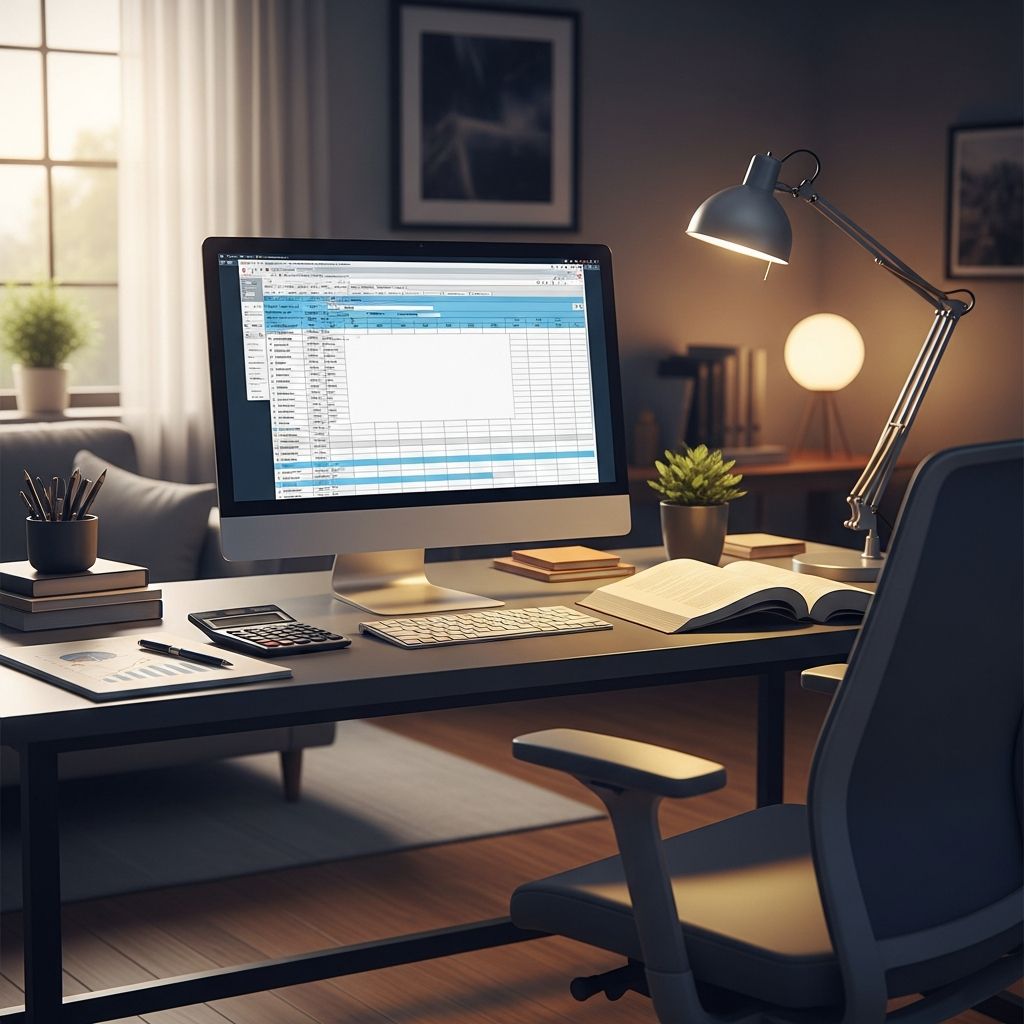
In 2026, the rules for deducting home office expenses remain strict, primarily benefiting self-employed individuals rather than traditional employees. This guide breaks down eligibility, calculation options, and practical steps to maximize your tax savings legally.
Current Landscape of Home Office Deductions
The Tax Cuts and Jobs Act (TCJA) of 2017 suspended unreimbursed employee business expense deductions, including home offices, through 2025, with extensions into 2026 under recent legislation like the One Big Beautiful Bill Act. As a result, W-2 employees cannot claim these costs on federal returns, shifting focus to self-employed workers, freelancers, and specific exceptions.
Remote work surged post-pandemic, increasing personal spending on setups like desks and internet upgrades, but tax relief is limited for employees. Self-employed taxpayers, however, can deduct a proportional share of home expenses if criteria are met, potentially lowering taxable income significantly.
Eligibility Criteria for Deducting Your Home Workspace
To qualify, your home office must satisfy IRS tests under Section 280A(c): regular and exclusive use, plus a business purpose. Here’s what that means:
- Exclusive Use: The space must be used only for business—no personal activities like family meals or hobbies. A dedicated room qualifies; a shared dining area does not.
- Regular Use: Consistent business activity, not occasional or sporadic.
- Principal Place of Business: It must be your main work site, where administrative tasks occur, or the only place you meet clients.
Exceptions bypass exclusive use: storage for inventory or daycare facilities. Employees rarely qualify unless in niche categories like certain government officials or disabled workers needing accommodations.
Who Cannot Claim: The Employee Reality
Most W-2 recipients are barred from home office deductions post-TCJA. Previously, employees could itemize if expenses exceeded 2% of AGI and met employer-convenience rules, but this ended. Seek reimbursements instead—tax-free if substantiated.
| Group | Deductible in 2026? | Reason |
|---|---|---|
| Standard Employees (W-2) | No | TCJA suspension through 2026 |
| Self-Employed/Freelancers | Yes | Schedule C eligible |
| Government Officials (Fee-Based) | Possibly | Partial fee compensation |
| Workers with Disabilities | Yes | Impairment-related expenses |
Qualified Expenses: What Counts and How to Allocate
Eligible costs include direct expenses (e.g., office painting) and indirect ones (rent, utilities, insurance) prorated by business percentage. Calculate via square footage: if your office is 200 sq ft in a 2,000 sq ft home, deduct 10% of indirect costs.
- Rent or mortgage interest
- Utilities (electricity, heat)
- Internet and phone (business portion)
- Property taxes and insurance
- Repairs and depreciation (regular method only)
- Supplies and equipment
Maintain records: receipts, bills, floor plans.
Two Methods to Calculate Your Deduction
Choose between simplified or regular methods based on records and potential savings.
| Aspect | Simplified Method | Regular Method |
|---|---|---|
| Calculation | $5/sq ft, max 300 sq ft ($1,500) | Actual expenses x business % |
| Recordkeeping | Minimal (size only) | Detailed (all bills) |
| Depreciation | None | Included, with recapture risk |
| Best For | Small offices, low expenses | Large spaces, high costs |
The simplified option, available since 2013, eases compliance without changing qualification rules.
Filing Process: Step-by-Step Guide
Self-employed file via Form 1040, Schedule C. Enter simplified deduction on line 30 or compute regular on Form 8829.
- Measure office square footage.
- Determine home total sq ft for percentage.
- Gather expense docs.
- Select method and calculate.
- Attach to return; depreciate if regular.
State rules may vary—check locally.
Audits and Recordkeeping Best Practices
IRS scrutinizes home offices; prove exclusivity with photos, logs, client statements. Keep records 3-7 years. Avoid pitfalls: no double-dipping itemized deductions.
Alternatives for Non-Eligible Taxpayers
Employees: Negotiate accountable reimbursements. All: Deduct self-employment supplies separately, contribute to retirement for credits.
Potential Legislative Changes Ahead
Rules could shift post-2026 if TCJA expires or new bills pass. Monitor IRS updates.
Frequently Asked Questions
What if my office is in a separate structure like a garage?
Yes, qualifies if exclusive/regular use and principal business place.
Can I deduct if I work from home occasionally?
No—must be regular.
Does renting affect deductions?
Yes, prorate rent; no depreciation.
What about internet bills?
Business portion only, e.g., 50% if half work use.
Is the simplified method always better?
No—compare to regular for max benefit.
Maximizing Savings: Pro Tips for 2026
Optimize space for higher %, buy supplies pre-year-end, consult pros for complex cases. Self-employed: track mileage separately for more deductions.
With remote work normalized, understanding these rules saves thousands. Employees, advocate for reimbursements; self-employed, claim fully with compliance.
References
- 2026 Work From Home Tax Deductions — SmartAsset. 2026. https://smartasset.com/taxes/work-from-home-tax-deductions
- Can You Deduct Your Home Office When You’re an Employee? — Nolo. 2025. https://www.nolo.com/legal-encyclopedia/can-you-deduct-your-home-office-when-youre-employee.html
- Tax Tips for Employees Who Work at Home — TurboTax/Intuit. 2026. https://turbotax.intuit.com/tax-tips/jobs-and-career/tax-tips-for-employees-who-work-at-home/L5AinJbgn
- Home Office — Legal Information Institute, Cornell Law School. 2025. https://www.law.cornell.edu/wex/home_office
- Simplified Option for Home Office Deduction — Internal Revenue Service. 2025-02-09. https://www.irs.gov/businesses/small-businesses-self-employed/simplified-option-for-home-office-deduction
- Don’t Overlook These Common Tax Deductions in 2026 — H&R Block. 2026. https://www.hrblock.com/tax-center/filing/adjustments-and-deductions/5-common-tax-deductions/
Similar Articles








Read full bio of Sneha Tete




