Home Office Deduction: 2 Methods To Maximize Savings In 2025
Unlock savings with the home office deduction: eligibility rules, calculation methods, and essential tips for self-employed professionals.
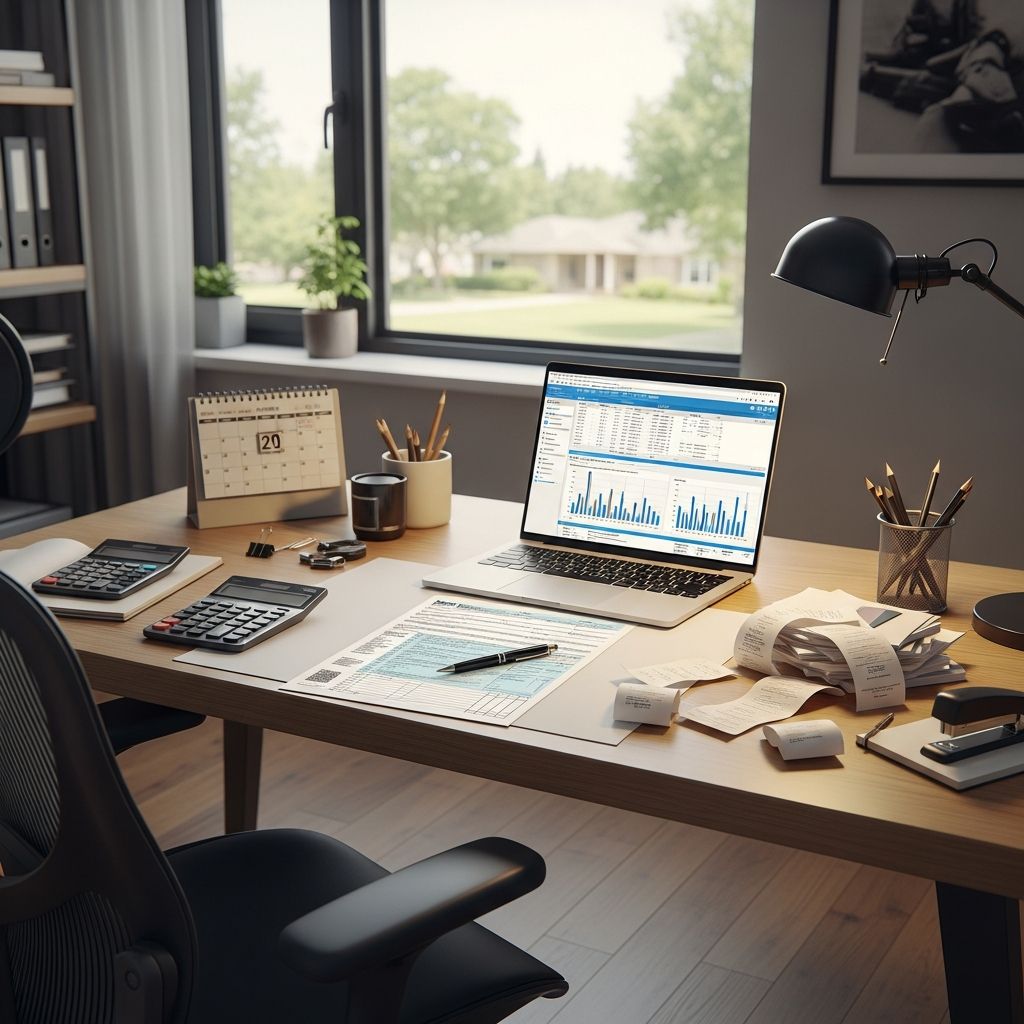
Home Office Tax Deduction Guide
Self-employed individuals and business owners who dedicate a portion of their residence to work can potentially reduce their taxable income through the home office deduction. This valuable tax benefit allows deduction of certain home-related expenses proportional to business use, helping offset the costs of maintaining a workspace at home.
Understanding Eligibility Criteria
To claim the home office deduction, specific IRS requirements must be met. Primarily, the designated area must be used regularly and exclusively for business activities. Regular use implies ongoing, consistent employment of the space for trade or business, not sporadic or incidental activities.
Exclusive use means the space cannot serve personal purposes, such as sleeping, family gatherings, or hobbies. Exceptions exist for inventory storage or daycare facilities under separate rules.
The space qualifies if it serves as:
- Principal place of business: Where substantial administrative or management tasks occur, and no other fixed location handles these substantially.
- Client meeting area: Regularly used to meet patients, clients, or customers.
- Separate structure: Like a detached garage or studio used exclusively for business.
Employees cannot claim this deduction following the Tax Cuts and Jobs Act; it is reserved for self-employed taxpayers.
Regular vs. Exclusive Use Explained
Regular use requires continuous business activity. For instance, using the space several days weekly for core business functions satisfies this.
Exclusive use prohibits any non-business activity. A guest room doubling as an office fails qualification. Daycare providers or inventory storers may bypass strict exclusivity.
| Criterion | Meets Requirement | Does Not Meet |
|---|---|---|
| Regular Use | Daily administrative work | Occasional weekend use |
| Exclusive Use | Dedicated office room | Dining table workspace |
| Principal Place | Primary admin location | Secondary to main office |
This table summarizes key distinctions for quick reference.
Two Primary Calculation Methods
The IRS provides two approaches: the simplified method and the actual expenses method. Choose based on record-keeping preference and potential savings.
Simplified Method
This streamlined option deducts $5 per square foot of qualifying space, up to 300 square feet, capping at $1,500 annually. No need to track individual expenses or depreciate the home.
- Ideal for small spaces or minimal records.
- Enter directly on Schedule C, Line 30.
- No depreciation recapture upon home sale.
Example: A 200 sq ft office yields $1,000 deduction ($5 × 200).
Actual Expenses Method
This detailed method allocates a percentage of home expenses based on office size relative to total home square footage. Suitable for larger spaces or high expenses.
Steps:
- Calculate business percentage (e.g., 10% if office is 200 sq ft in 2,000 sq ft home).
- Identify indirect expenses (utilities, insurance, taxes).
- Deduct direct expenses fully (office repairs).
- Include depreciation if owning the home.
Form 8829 computes and carries this to Schedule C.
| Method | Max Deduction | Records Needed | Depreciation |
|---|---|---|---|
| Simplified | $1,500 (300 sq ft) | Square footage only | No |
| Actual | Based on expenses | Detailed receipts, bills | Yes, with recapture |
Eligible Expenses Breakdown
Expenses divide into direct (100% deductible) and indirect (proportional).
- Direct: Repairs, painting solely in office space.
- Indirect: Mortgage interest, rent, utilities, insurance, property taxes, general maintenance.
- Depreciation: Portion of home’s cost basis (actual method only).
Homeowners may deduct real estate taxes and mortgage interest fully on Schedule A alongside business portion here.
Record-Keeping Essentials
Thorough documentation prevents audit issues. Maintain:
- Square footage diagrams/photos.
- Bills/receipts for expenses.
- Logs of business use (calendar entries).
- Client meeting records if applicable.
For simplified: Minimal, but photos advised. Switch methods yearly; no carryover for simplified excess.
Common Mistakes to Avoid
Avoid these pitfalls:
- Mixed use: Personal activities disqualify.
- No records: Leads to denial.
- Employees claiming: Post-2018 W-2 workers ineligible.
- Overestimating space: Measure accurately.
- Ignoring limits: Deduction cannot exceed business income.
Special Scenarios and Exceptions
Renters: Deduct portion of rent.
Home sales: Actual method depreciation recaptured as gain; simplified avoids.
Multiple businesses: Each must qualify independently.
Daycare/inventory: Relaxed exclusivity.
Step-by-Step Claiming Process
- Verify eligibility.
- Measure space.
- Select method.
- Gather docs.
- Complete Schedule C (simplified) or Form 8829 (actual).
- File with return.
Frequently Asked Questions
Can W-2 employees claim this deduction?
No, only self-employed individuals qualify.
What’s the simplified method cap?
$5 per sq ft, max 300 sq ft ($1,500).
Do I need separate phone/internet?
No, but business portion deductible under actual method.
How to handle multi-use homes?
Must be exclusive; no mixing.
Can I switch methods yearly?
Yes, choose per tax year.
Maximizing Your Deduction
Compare methods annually using prior data. Larger offices or high utilities favor actual; simplicity favors simplified. Consult tax pros for complex cases.
(Word count: 1678)
References
- Simplified option for home office deduction — Internal Revenue Service. 2024. https://www.irs.gov/businesses/small-businesses-self-employed/simplified-option-for-home-office-deduction
- Home office deduction: Who can take it, who can’t — H&R Block. 2025-01-15. https://www.hrblock.com/tax-center/filing/adjustments-and-deductions/home-office-deduction/
- The Home Office Deduction: A Comprehensive Guide — TaxAct Blog. 2025-02-01. https://blog.taxact.com/guide-to-home-office-deduction/
- Home-Based Business Tax Deductions Guide — U.S. Chamber of Commerce. 2025. https://www.uschamber.com/co/run/finance/home-based-business-tax-deductions
- Important IRS Rules for Deducting Home Office Expenses — JD Supra. 2024-11-20. https://www.jdsupra.com/legalnews/important-irs-rules-for-deducting-home-4408458/
- Home Office Deduction 2026: Simplified vs Regular Method — SDOCPA. 2026-01-05. https://www.sdocpa.com/home-office-deduction-guide/
- The Home Office Deduction — TurboTax Intuit. 2025. https://turbotax.intuit.com/tax-tips/small-business-taxes/the-home-office-deduction/L1RZyYxzv
Similar Articles







Read full bio of medha deb