
When Home Help Makes You an Employer in New York
Understand when hiring nannies, cleaners or home aides in New York legally turns you into an employer and what obligations follow.
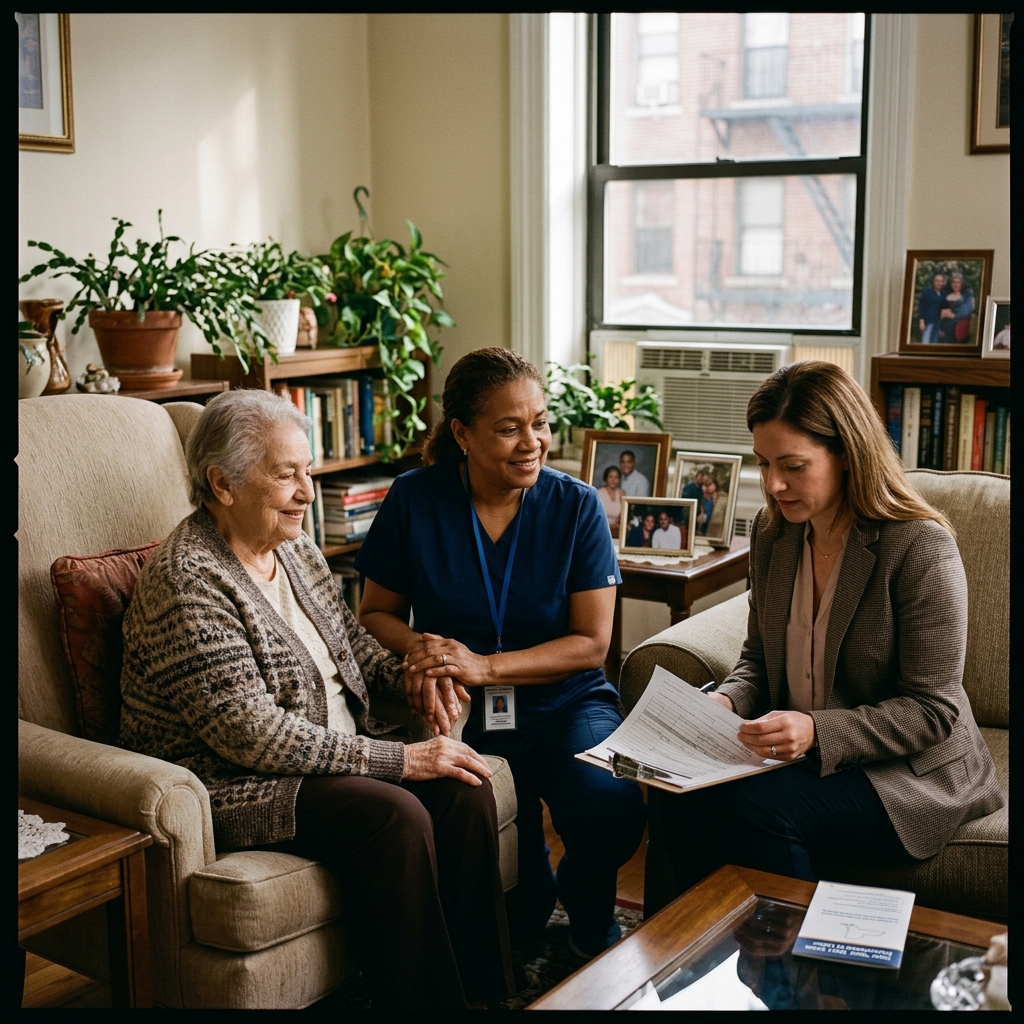
Hiring someone to work in your home in New York—whether a nanny, housekeeper, home health aide, gardener, or tutor—can turn your household into a legal employer. That shift brings real obligations: payroll taxes, wage and hour rules, anti-discrimination protections, and recordkeeping requirements governed by state and federal law.
This guide explains when that line is crossed, how to correctly classify household workers, and what you must do to stay compliant once you are considered an employer.
1. Why Household Employment Status Matters
Many people assume that hiring help for a few hours a week is a casual arrangement, but New York law treats ongoing paid work differently than neighborly favors or one-off jobs. Once someone performs regular, compensated work under your direction, they may gain the legal status of an employee rather than a casual helper.
- Legal obligations: Employees are generally entitled to lawful pay, safe working conditions, and protection from discrimination and retaliation.
- Government oversight: The New York State Department of Labor enforces minimum wage, hours of work, and other labor standards for covered workers, including domestic workers in many circumstances.
- Financial risk: Misclassifying a worker can trigger liabilities for back wages, taxes, benefits contributions, and possible penalties.
Understanding when you become an employer helps you plan arrangements lawfully, from short-term childcare to long-term live-in care.
2. Employee vs. Independent Contractor in the Home
A central question for any household hiring is whether the worker is your employee or an independent contractor. This classification affects payroll taxes, wage protections, and your level of responsibility.
2.1 Key factors that indicate an employee
Courts and agencies look at the degree of control and the nature of the relationship. While exact tests vary, common indicators of an employee include:
- You decide what work is done, how, and when.
- The person works regularly for you (e.g., set days each week).
- You provide tools or supplies (cleaning products, household equipment).
- The person cannot easily substitute another worker without your approval.
- You pay by the hour, week, or month, rather than by project.
2.2 Indicators of an independent contractor
A worker is more likely to be an independent contractor if they run an independent business and you are simply a client. Indicators include:
- The worker advertises services to multiple clients and sets their own rates.
- They bring their own specialized tools and equipment.
- They control how the work is performed, within general boundaries.
- You are billed per job or project (e.g., “deep clean” at a fixed price), not a regular salary.
- They bear business risks and may hire helpers themselves.
Even if both sides prefer the term “contractor,” agencies may still treat the worker as an employee if the facts support that classification. Labels in a contract do not override statutory definitions.
2.3 Typical household examples
| Household role | More likely employee | More likely independent contractor |
|---|---|---|
| Nanny / regular babysitter | Works set hours; follows your routine; paid weekly | Occasional sitter hired through an agency for specific evenings |
| House cleaner | Comes every week; you direct tasks; paid hourly | Owns a cleaning business; charges per job; brings all supplies |
| Home health aide | You or your family direct daily tasks and schedule | Assigned and paid by a licensed home-care agency |
| Gardener / landscaper | Performs miscellaneous tasks exactly as instructed | Professional service that designs, maintains, and bills per project |
3. New York’s Legal Framework for Household Employment
While federal law sets a baseline, New York adds significant protections for workers, including those in private homes. Several overlapping rules may apply when your household qualifies as an employer.
3.1 At-will employment and its limits
New York is generally an employment-at-will state, meaning an employer may end employment at any time for any lawful reason or no reason, as long as the decision is not discriminatory or retaliatory. However, this flexibility does not erase obligations to pay for all hours worked, comply with notice requirements, or avoid unlawful reasons for termination.
3.2 Anti-discrimination protections
New York’s Human Rights Law prohibits discrimination based on numerous protected characteristics, and applies broadly to employers across the state. Protected categories include:
- Age, race, creed, color, and religion
- Sex, sexual orientation, gender identity or expression
- National origin and citizenship status
- Marital and familial status, pregnancy
- Genetic characteristics, disability, prior arrest or conviction record (with limits)
Household employers must avoid discriminatory decisions in hiring, firing, pay, and day-to-day treatment of domestic workers.
3.3 Wage and hour standards
The New York Department of Labor enforces minimum wage, hours of work, employment of minors, payment of wages, and other standards. Domestic workers may be covered by minimum wage and overtime rules depending on their duties and schedule.
- Minimum wage: Most employees must receive at least the applicable minimum hourly rate set by state law.
- Overtime: In general, employees must receive 1.5 times their regular rate of pay for hours worked over 40 in a workweek, with some exceptions based on duties.
- Wage notices: Employers must provide written notice of key pay information to employees and maintain accurate payroll records.
Failing to meet wage and hour obligations—especially for live-in or full-time domestic workers—can lead to wage theft claims and enforcement actions.
4. Practical Triggers That Make You a Household Employer
You do not become an employer every time you hand someone cash for a simple favor. However, certain practical situations commonly trigger employer status.
4.1 Regular, scheduled work in your home
Patterns that often create an employment relationship include:
- Hiring a nanny five days a week to care for children after school.
- Paying a housekeeper to come every Monday and Thursday for standard tasks.
- Employing a caregiver for an elderly parent for set weekly shifts.
In these cases, you are directing the work, controlling the schedule, and relying on the worker as part of your household routine. Legally, that worker is likely your employee, even if you continue to pay in cash or treat the arrangement informally.
4.2 Paying beyond a casual threshold
Once total pay reaches certain thresholds over a year, federal and state agencies may expect you to treat the worker as a household employee for tax and reporting purposes. While this guide focuses on New York’s labor rules, tax obligations often arise alongside employment status and should be discussed with a tax professional or reviewed against IRS publications.
4.3 Providing a live-in arrangement
Live-in nannies, housekeepers, or caregivers are typically employees because the household exercises substantial control over daily work, and the worker’s housing is tied to their job. Additional rules about working time, rest periods, and live-in conditions may apply.
5. Core Obligations Once You Are an Employer
Once your household is an employer under New York law, several legal duties follow. These relate mainly to wages, working conditions, discrimination, and recordkeeping.
5.1 Pay, minimum wage, and overtime
Household employees must receive at least the applicable minimum wage for every hour worked. Many domestic workers are also entitled to overtime pay for hours worked beyond 40 in a week.
- Track hours: Keep accurate records of start and end times, including meal breaks.
- Calculate regular rate: Include hourly pay and some bonuses when computing overtime.
- Pay on time: Follow a regular payday and avoid unlawful deductions.
5.2 Written wage notices and pay stubs
Under New York’s wage notice requirements, employers must provide written information about pay rates, pay frequency, and other wage-related terms within a set timeframe after hiring. Employees are also entitled to detailed wage statements (pay stubs) each payday.
Even household employers benefit from written documentation: it clarifies expectations and provides evidence of compliance if disputes arise.
5.3 Safe and respectful working conditions
Employees are entitled to a safe work environment and non-discriminatory treatment. For household employers this means:
- Maintaining reasonably safe premises (e.g., avoiding known hazards).
- Providing appropriate tools and protective equipment where needed.
- Refraining from harassment or abusive behavior toward workers.
- Respecting boundaries, particularly for live-in workers whose personal space overlaps with work.
In New York City, worker protections include prohibitions against discrimination on many grounds and obligations to provide reasonable accommodations for disabilities and certain personal circumstances.
6. Hiring and Firing: Legal Considerations for Home Employers
Even small-scale household hiring must comply with New York’s rules on fair hiring and lawful termination.[10]
6.1 Fair hiring practices
When you interview or select domestic workers, you should:
- Avoid questions or decisions based on protected characteristics such as race, religion, gender, disability, or familial status.
- Be careful with criminal record information; New York restricts how prior convictions may be used in hiring decisions and requires evaluation of factors such as job-relatedness and risk.
- Refrain from seeking or relying on salary history to set pay for the role, in line with statewide restrictions and NYC rules.
Clear, lawful criteria—such as experience, schedule compatibility, and references—reduce legal risk and help you find the right fit.
6.2 Lawful termination
At-will employment allows you to end an employment relationship, but you must avoid unlawful reasons, including discrimination and retaliation for asserting rights (such as complaining about unpaid wages).
- Document performance and conduct issues that lead to termination.
- Pay all wages owed promptly, including overtime and unused earned pay.
- Consider providing written notice of separation, especially if hours are reduced or the position ends.
Employees who believe they were fired for discriminatory or retaliatory reasons may seek remedies through administrative agencies or courts, so maintaining lawful practices is essential.
7. Compliance Tips for New York Household Employers
If you determine that you are an employer, the next step is building a simple compliance system within your household.
7.1 Create a basic written agreement
Even if not legally required, a written agreement with your domestic worker can prevent misunderstandings. Include:
- Job duties (childcare, cleaning, cooking, errands).
- Work schedule and expected hours.
- Pay rate, overtime terms, and payday.
- Any benefits (paid time off, public holidays, lodging).
Make clear that the relationship is employment, not a casual arrangement, and reflect applicable legal protections and obligations.
7.2 Maintain records
New York law emphasizes documentation, including wage notices and records of pay and hours. Household employers should keep:
- Timesheets or hour logs signed by the worker.
- Copies of pay calculations and payment records.
- Any written terms, notices, or changes in wage or schedule.
These records can be critical in resolving future disputes or responding to inquiries from enforcement agencies.
7.3 Stay aware of location-specific rules
Households in New York City should be aware of additional worker protections under city law, including anti-discrimination provisions and notice requirements. When in doubt, consult city or state guidance before making significant changes to a worker’s role or pay.
8. Frequently Asked Questions
8.1 If I pay a babysitter in cash, am I automatically an employer?
Not necessarily. If the babysitter occasionally watches your children, sets their own schedule, and works for many families, they may be more like an independent contractor. However, if they provide regular, scheduled care under your direction, you may be treated as their employer and owe wage, tax, and notice obligations.
8.2 Do minimum wage laws apply to domestic workers in New York?
Most employees in New York are covered by minimum wage requirements, and domestic workers are included in many circumstances. The exact rules can depend on duties and whether the worker lives in your home, but paying below minimum wage is generally risky and may be unlawful.
8.3 Can I ask about prior criminal convictions when hiring a housekeeper?
New York permits consideration of certain conviction histories, but employers may not refuse to hire solely based on a conviction without analyzing its relation to the job and any unreasonable risk. Some local laws, including in New York City, impose additional restrictions and timing rules for such questions.
8.4 Are household workers protected from discrimination and harassment?
Yes. New York’s Human Rights Law and, in New York City, local rules prohibit discrimination based on protected characteristics and can apply to household workers. Domestic workers can seek remedies if they experience discriminatory treatment or harassment.
8.5 What should I do if I realize I have been misclassifying a domestic worker?
Consider consulting an employment law attorney or tax professional to review your situation. You may need to correct wage practices, issue proper wage notices, update tax filings, and adjust future payments to comply with New York’s requirements. Acting proactively can reduce the risk of penalties.
References
- LEGALease: Labor and Employment Law — New York State Bar Association. 2020-01-01. https://nysba.org/legalease-labor-and-employment-law/
- New York employment law overview — Brightmine (formerly LexisNexis). 2023-05-01. https://www.brightmine.com/us/resources/hr-compliance/new-york-employment-law/
- Labor Standards — New York State Department of Labor. 2023-09-15. https://dol.ny.gov/labor-standards-0
- New York State Employment Laws — Cornell University ILR School. 2022-03-10. https://www.ilr.cornell.edu/labor-and-employment-law-program/new-york-state-employment-laws
- Know Your Worker Rights — NYC Department of Consumer and Worker Protection. 2024-02-01. https://www.nyc.gov/site/dca/workers/workersrights/know-your-worker-rights.page
- New York employment and labor laws — Paylocity. 2024-01-01. https://www.paylocity.com/resources/tax-compliance/state-laws/new-york/
Similar Articles








Read full bio of Sneha Tete




