
Holiday Mishaps Your Home Insurance May Not Cover
Understand which festive-season accidents fall outside standard homeowners coverage so you can protect your home, guests, and wallet.
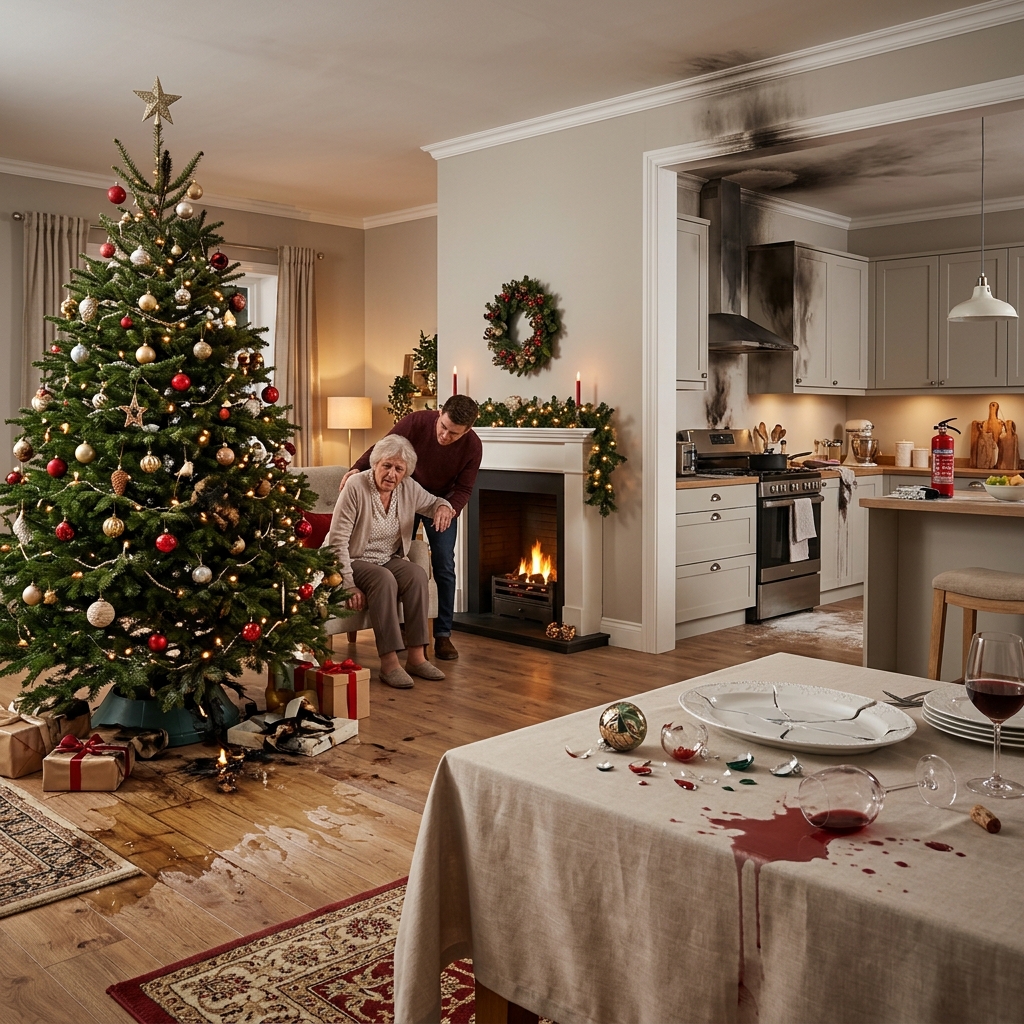
The holiday season brings gatherings, decorations, travel, and plenty of added risk to your home. Many homeowners assume that if anything goes wrong, their insurance policy will automatically step in. In reality, standard homeowners insurance has limits and exclusions that become especially important during the holidays.
This guide explains common holiday mishaps that may not be fully covered, why those gaps exist, and practical steps you can take to reduce your exposure. It is general information only and not a substitute for reading your own policy or speaking with a licensed insurance professional.
How Homeowners Insurance Interacts With Holiday Risks
Most standard homeowners policies are built around a few core protections that can come into play during the holidays:
- Dwelling coverage – pays to repair or rebuild your home if it is damaged by covered perils (like fire or vandalism).
- Personal property coverage – covers belongings such as gifts, electronics, and decorations, usually up to a percentage of the dwelling limit and subject to item caps.
- Personal liability coverage – helps if you are legally responsible for bodily injury or property damage to others, typically starting around $100,000 in many policies.
- Medical payments to others – small, no-fault coverage for minor injuries to guests.
While these protections can respond to many holiday disasters, they do not apply to every situation. Some incidents are excluded outright, while others may exceed the limits or conditions of your policy.
Common Holiday Disasters Typically Covered
Before diving into the gaps, it helps to understand which mishaps are usually covered by a standard homeowners policy, assuming no special exclusions and that you have adequate limits.
- Accidental house fires caused by kitchen mishaps, holiday lights, candles, or tipped-over decorations.
- Theft of gifts and decorations from inside your home or, subject to limits, from your porch or vehicle.
- Vandalism to holiday displays, such as damaged light installations or graffiti.
- Accidental guest injuries on your property that arise from your negligence, up to your liability limit.
Even for these events, your deductible, policy limits, item sub-limits (for jewelry, electronics, or collectibles), and any applicable endorsements will affect how much you actually receive.
Holiday Mishaps That May Not Be Covered
Many homeowners are surprised to learn that some of the most expensive holiday mishaps fall outside standard coverage. The list below focuses on scenarios that often involve exclusions, limited protection, or complex liability issues.
1. Damage From Poor Maintenance or Misuse
Homeowners insurance is designed for sudden, accidental events—not gradual damage or problems caused by lack of upkeep. During the holidays, that distinction becomes important.
Typical Maintenance-Related Problems
- Backing up sinks or toilets while cooking and entertaining large groups.
- Pouring cooking grease down the drain, leading to clogs and pipe damage.
- Overloading old electrical systems with lights and decorations.
Insurers often treat these problems as preventable maintenance issues. If a drain clogs because you misused your plumbing, or wiring fails due to long-term neglect, the resulting damage may be excluded as wear and tear or improper maintenance, even if it happens during a holiday party.
2. Intentional Acts and Reckless Behavior
Standard homeowners policies do not cover losses that you or a household member intentionally cause. This exclusion can apply to holiday incidents where behavior crosses from careless into deliberate.
Examples of Intentional or Reckless Conduct
- Deliberately lighting fireworks in an unsafe place, ignoring local bans.
- Starting a fire on purpose as a prank that gets out of control.
- Knowingly disabling smoke alarms or other safety devices.
Even if you did not intend the resulting damage, insurers generally will not cover losses caused by clearly intentional acts that violate policy terms or law.
3. Drunk Driving After a Holiday Party
Alcohol is part of many seasonal celebrations, but it also introduces serious liability exposure. Homeowners insurance typically does not cover criminal acts such as drunk driving. If a guest leaves your party intoxicated, drives, and injures someone, the situation may raise what is known as social host liability or liquor liability.
Whether you can be held financially responsible depends on your state’s laws:
- Some states limit liability for social hosts, especially when only adults are involved.
- Others impose liability if you serve alcohol to minors or visibly intoxicated guests who then cause harm.
In many cases, the guest’s auto insurance will be the primary coverage for the accident. Your homeowners policy may offer little or no protection, especially where criminal conduct is involved.
4. High-Value Gifts That Exceed Policy Limits
The holidays are a prime time for purchasing jewelry, electronics, art, and other costly items. Standard homeowners policies cover personal property but often impose sub-limits on categories like jewelry, furs, cash, or collectibles—sometimes as low as a few thousand dollars total.
Consider how this plays out:
- If you buy a luxury watch or engagement ring and do not schedule it separately, theft coverage may only reimburse up to the category sub-limit.
- If multiple expensive gifts are stolen at once, your overall personal property limit and category caps can leave you underinsured.
Without appraisals and specific endorsements, you may not be fully compensated for loss of high-value gifts.
5. Travel-Related Mishaps Far From Home
Holiday travel introduces another set of risks. Standard homeowners policies sometimes extend coverage to personal property temporarily away from your home, but with restrictions and reduced limits.
Potential gaps include:
- Theft of gifts from a hotel room or vehicle while traveling, capped at a smaller portion of your personal property limit.
- Loss of luggage or gifts in transit, which may fall under airline or carrier rules rather than homeowners coverage.
- Liability for injuries you cause at a rented vacation property, which can become complex if local law or the rental contract shifts responsibility.
Additionally, homeowners insurance does not function like travel insurance—it will not reimburse you for trip cancellations, delays, or nonrefundable holiday bookings.
6. Business Activities at Home During the Holidays
Many people run side businesses, such as selling baked goods or crafts, especially during the holiday season. Standard homeowners policies often exclude or severely limit business-related property and liability at your residence.
Risk areas include:
- Hosting a holiday sales event or pop-up shop at home.
- Storing large quantities of inventory in your house or garage.
- Injuries to customers or delivery workers on your property during business activities.
These exposures may require a separate business insurance policy or a specific endorsement to your homeowners policy.
7. Seasonal Hazards Outside Covered Perils
Not every holiday-season hazard is a covered peril. For instance:
- Flooding from heavy winter storms usually requires separate flood insurance through the National Flood Insurance Program or a private insurer.
- Earth movement such as landslides or earthquakes is generally excluded unless you have specific coverage.
- Pest damage (e.g., rodents attracted by stored holiday food) is almost always treated as a maintenance issue.
If your holiday mishap is triggered by an excluded peril, the resulting damage is likely not covered, regardless of the season.
Comparing Common Holiday Mishaps and Typical Coverage
The table below summarizes how several holiday scenarios are often treated by standard homeowners policies, recognizing that every policy is different and state law matters.
| Holiday Scenario | Typically Covered? | Key Caveats |
|---|---|---|
| Accidental kitchen fire while cooking holiday meal | Usually yes | Subject to dwelling and personal property limits and deductibles; intentional acts excluded. |
| Theft of wrapped gifts from inside home | Usually yes | Personal property limits and sub-limits apply; documentation of value is important. |
| Clogged pipes from pouring grease down the drain | Often no | Treated as maintenance or misuse rather than sudden accidental damage. |
| Guest injured driving home drunk from your party | Often limited or none | Criminal acts usually excluded; liability highly dependent on state law and facts. |
| Stolen high-value jewelry gift | Partially | Subject to low jewelry sub-limits unless separately scheduled or endorsed. |
| Water damage from regional flooding during holiday storm | No (typically) | Requires separate flood insurance policy in most cases. |
Practical Steps to Reduce Holiday Insurance Gaps
You cannot eliminate every risk, but you can dramatically reduce your chances of an uncovered loss with a combination of safety practices and smart coverage planning.
Review and Adjust Your Policy Before the Season
- Confirm your limits for dwelling, personal property, and liability; adjust if you have renovated your home or acquired more belongings.
- Ask about sub-limits on jewelry, artwork, and electronics, and consider scheduling high-value gifts.
- Discuss endorsements for water backup, business use of the home, or higher liability if you entertain frequently.
Strengthen Fire and Injury Prevention
According to data cited by insurers and fire safety organizations, residential fire claims increase around the holidays due to cooking, candles, and decorations. Basic precautions can prevent both injury and insurance disputes.
- Use only lights and electrical decorations certified by reputable testing laboratories.
- Inspect cords for fraying and avoid overloading outlets or power strips.
- Keep live trees well-watered and away from open flames and heat sources.
- Never leave cooking, candles, or fireplaces unattended.
- Clear walkways of snow, ice, and clutter before guests arrive to reduce slip-and-fall risks.
Manage Alcohol Responsibly
- Serve plenty of food and non-alcoholic options throughout the event.
- Cut off service to guests who appear visibly intoxicated.
- Offer rides, taxis, or rideshare options and encourage guests to stay over if necessary.
- Understand your state’s social host liability laws so you know when you could be held responsible.
Protect High-Value Gifts and Seasonal Purchases
- Save receipts and take photos of expensive items as soon as you purchase them.
- Store high-value gifts out of sight, especially if they are visible from windows or left in vehicles.
- Ask your agent how to schedule or specifically insure new jewelry, collectibles, or electronics.
Consider Complementary Policies
Depending on your situation, other types of insurance can fill holiday-related gaps:
- Umbrella liability insurance for higher personal liability limits beyond your homeowners policy.
- Flood insurance if you live in an area with elevated seasonal flood risk.
- Business insurance if you host sales events or manufacture goods at home for the holiday season.
- Travel insurance to cover trip cancellations and medical emergencies when traveling.
Holiday Insurance FAQs
Does homeowners insurance cover stolen gifts from my car?
Often, theft of personal belongings from a vehicle is covered under your homeowners or renters policy rather than your auto policy, but limits and deductibles apply. Check whether your personal property coverage extends to items off-premises and whether any special sub-limits apply.
If a guest slips on my icy steps, am I covered?
Many homeowners policies provide liability coverage for injuries to guests that arise from your negligence, such as failing to clear ice or snow. However, if you ignored obvious hazards or local safety requirements, your insurer may scrutinize the claim, and your liability limit may or may not be sufficient to cover a serious injury.
Are package thefts from my porch reimbursed?
Porch piracy is often treated as theft of personal property from your residence and may be covered, subject to your deductible and any sub-limits. If you frequently receive high-value deliveries during the holidays, consider additional security measures and higher personal property limits.
Does my policy pay if lights cause a fire?
Accidental fires from malfunctioning or misused decorations are generally covered as a standard peril under homeowners insurance. However, if the fire resulted from grossly negligent or intentional behavior, or from faulty wiring previously identified as a hazard and not repaired, coverage could be disputed.
What should I review with my insurance agent before the holidays?
Ask about your liability limits, personal property coverage, sub-limits for high-value items, and any exclusions related to water damage, business use, or alcohol-related incidents. Discuss whether endorsements, higher limits, or supplemental policies are appropriate given your holiday plans.
References
- Holiday Mishaps: Are You Properly Insured for This Holiday Season? — National Association of Insurance Commissioners (NAIC). 2023-11-15. https://content.naic.org/article/consumer-insight-holiday-mishaps-are-you-properly-insured-holiday-season
- Holiday Disasters: What Does Homeowners Insurance Cover? — Policygenius. 2023-12-01. https://www.policygenius.com/homeowners-insurance/holiday-disasters-what-does-homeowners-insurance-cover/
- Homeowners Insurance and Holiday Hazards: Are You Protected? — BayCoast Insurance. 2023-11-20. https://baycoastinsurance.com/en/insights/homeowners-insurance-and-holiday-hazards-are-you-protected/
- Importance of Home Insurance During the Holidays — Pronto Insurance. 2022-12-05. http://www.prontoinsurance.com/blog/importance-holiday-home-insurance/
- Does Homeowners Insurance Cover Holiday Disasters? — Hartgrove Insurance. 2023-12-10. https://www.hartgroveinsurance.com/m/blog/does-homeowners-insurance-cover-holiday-disasters.aspx
Similar Articles








Read full bio of medha deb




