
HMO Vs PPO: A Comprehensive Guide To Choosing The Right Plan
Learn how HMO and PPO plans differ in cost, access, referrals, and out-of-network coverage.
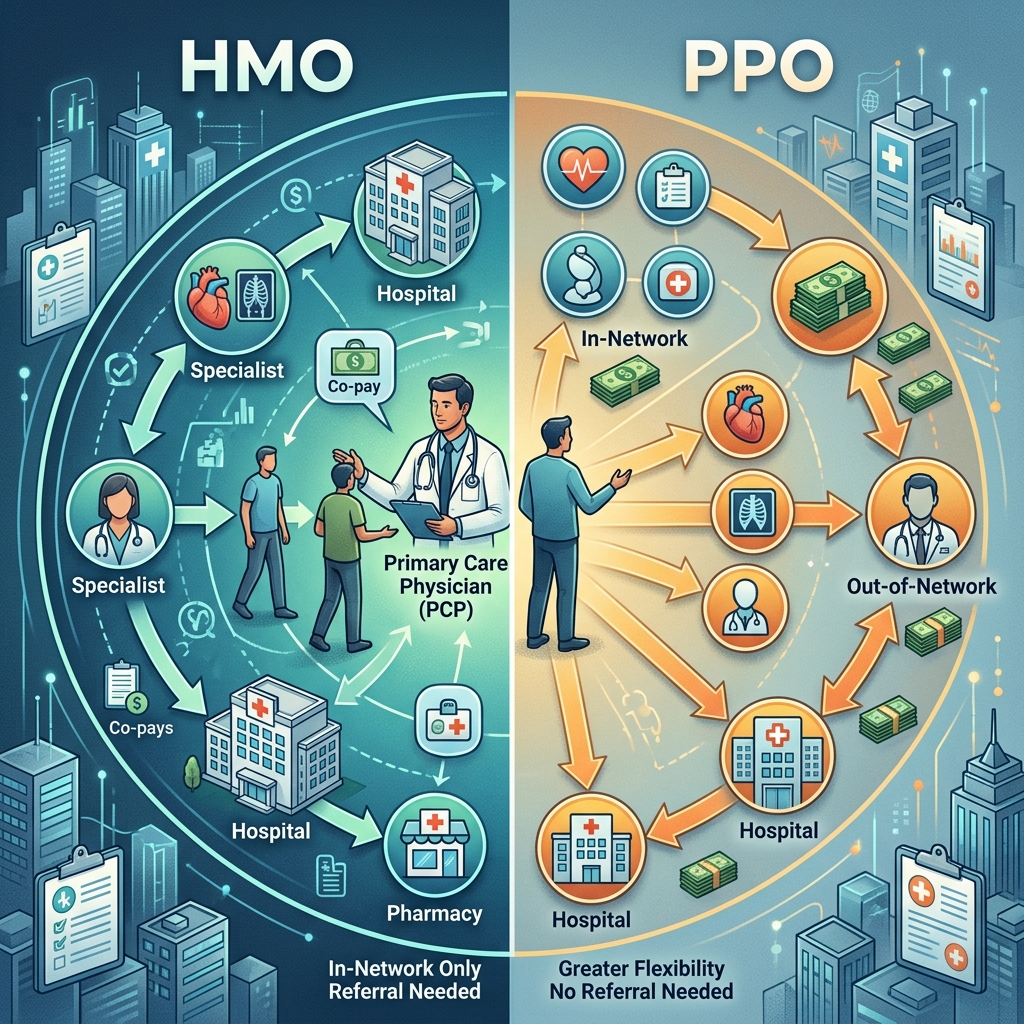
Choosing between an HMO and a PPO is often one of the most important decisions a health insurance shopper makes. The two plans can look similar at first glance, but they work differently in ways that affect how much you pay, which doctors you can see, and how easily you can get specialty care.
The best plan is not always the cheapest or the most flexible. Instead, the right choice depends on how often you use medical care, whether you want a primary care doctor to coordinate treatment, and how important it is to keep seeing doctors outside a plan’s network.
What these plan types mean
An HMO is a health plan built around a defined network of doctors, hospitals, and other providers. Care is usually coordinated through a primary care doctor, and that doctor often serves as the main point of contact for routine treatment and referrals.
A PPO is also network-based, but it gives members more room to choose. You can usually visit in-network providers at a lower cost, while still having some coverage for out-of-network care. That added freedom is one of the biggest reasons PPO plans typically cost more.
How the two plans differ in everyday use
The main differences between HMO and PPO coverage show up when you schedule an appointment, need a specialist, or seek care away from home. The chart below gives a quick comparison.
| Feature | HMO | PPO |
|---|---|---|
| Monthly premium | Usually lower | Usually higher |
| Primary care doctor | Often required | Usually optional |
| Specialist referral | Usually required | Usually not required |
| Out-of-network care | Very limited except emergencies | Often covered at a higher cost |
| Flexibility | More limited | Greater choice |
This table is a useful starting point, but the fine print of each plan matters. Two HMOs can differ from one another, and the same is true for PPOs. Deductibles, copays, and out-of-pocket maximums can change the real cost of coverage significantly.
Why HMOs usually cost less
HMOs are often attractive to people who want predictable expenses. Premiums are commonly lower, and the plan may also use lower copayments or a simpler cost structure. In many cases, the tradeoff for those savings is a narrower provider network and tighter control over how care is accessed.
Because care is coordinated through the network, HMOs can reduce unnecessary testing and duplicate visits. That structure can help keep spending down for both the insurer and the member. For people who mostly see a family doctor, need routine checkups, and do not expect a lot of specialist visits, this model can be a practical fit.
Why PPOs cost more
PPOs usually charge more because they allow more freedom. Members can often see specialists without a referral, choose from a broader provider list, and receive some reimbursement for care outside the network. That flexibility is valuable, but it also makes the plan more expensive to operate.
Many PPOs still reward members for staying in network. A provider who participates in the plan’s network will usually cost less than one who does not. In other words, a PPO is not a blank check to see any provider at the same price. It is a plan that gives you options, but the most affordable option is still usually to stay in network.
How referrals and specialist care work
One of the biggest practical differences involves referrals. In an HMO, a primary care doctor commonly acts as a gatekeeper for specialty care. If you want to see a dermatologist, cardiologist, or orthopedist, you may need an approved referral first.
That system can be helpful when care is complex because it keeps one doctor involved in the overall treatment plan. It can also be frustrating if you already know which specialist you want to see and prefer not to wait for approval. PPOs reduce that step by allowing many specialist visits without a referral, which can make access faster and simpler.
What happens outside the network
Out-of-network coverage is one of the clearest dividing lines between the two plan types. HMOs generally provide very limited out-of-network coverage, except for emergencies or other narrow exceptions. If you go outside the network for nonemergency care, you may be responsible for the full bill.
PPOs are more forgiving. They usually still pay something toward out-of-network treatment, although your share of the cost will be higher than if you stayed in network. This can matter if you travel frequently, live part-time in another area, or want the freedom to keep a trusted doctor who is not contracted with the plan.
Which plan fits which kind of person?
There is no universal winner. The better choice depends on your health needs and budget priorities. A simple way to think about it is this: HMOs often favor lower cost and more structure, while PPOs favor convenience and choice.
- Choose an HMO if you want lower premiums and do not mind using a smaller, managed network.
- Choose an HMO if you are comfortable having a primary care doctor coordinate most of your care.
- Choose a PPO if you want more provider choice and expect to see specialists more often.
- Choose a PPO if you travel frequently or want some coverage outside the network.
- Choose either plan only after checking whether your current doctors participate in the network.
Questions to ask before enrolling
Before you pick a plan, it helps to compare the real-life details instead of focusing only on the premium. A lower monthly payment may not save you money if you end up paying more for visits, tests, or prescriptions later.
- How often do you visit doctors in a typical year?
- Do you already have a specialist you want to keep seeing?
- Is your preferred doctor in the plan’s network?
- Will you need referrals for the kind of care you expect to use?
- How high is the deductible, and what services count toward it?
- What is the out-of-pocket maximum if you have a bad health year?
- How much would you pay for a routine office visit, urgent care visit, or specialist visit?
These questions can reveal whether a plan is truly affordable. Sometimes a plan with a higher premium ends up being cheaper overall because it covers the services you use most often.
Why the network matters more than many shoppers realize
A health plan’s provider network can affect not only cost but also convenience and continuity of care. If your doctor, hospital, or specialist is already in network, the plan may feel easy to use. If not, you may need to switch providers or pay more for the privilege of keeping them.
This is especially important for families and people with chronic conditions. Someone managing diabetes, asthma, heart disease, or another ongoing condition may need regular appointments, lab work, and specialist visits. In those situations, a broader network can outweigh a lower premium.
How to decide without getting overwhelmed
The easiest way to compare HMOs and PPOs is to start with your own health habits. If you mostly need routine care and value low monthly costs, an HMO may be enough. If you want more freedom and are willing to pay extra for it, a PPO may be a better match.
A useful decision process is to compare the total expected cost for the year, not just the monthly bill. Add the premium, likely copays, likely deductible spending, and any expected specialist visits. That gives you a more realistic picture of what the plan will actually cost.
Common misconceptions about HMOs and PPOs
Some people assume that a PPO is always better because it is more flexible. That is not necessarily true. If you rarely use care, the extra flexibility may not be worth the higher price.
Others assume that an HMO is always too restrictive. In reality, many members are satisfied with HMO coverage because it creates a clear path through the health system and often keeps routine care affordable. The key is matching the plan structure to your own needs, not chasing the plan with the most features.
Frequently asked questions
Can I see any doctor with a PPO?
Usually, yes, but your costs will typically be lower if you stay in network. Out-of-network care is often covered at a reduced level rather than at the same rate as in-network care.
Do HMOs cover emergencies?
Yes. Even HMO plans generally cover emergency care, and emergencies are treated differently from nonemergency out-of-network visits.
Do I always need a referral in an HMO?
Not always, but many HMOs require a referral for specialist care. The exact rule depends on the specific plan.
Is a PPO better for people who travel?
Often, yes. A PPO can be more convenient for travelers because it may offer some coverage outside the home network. That said, the amount of coverage and the cost sharing still depend on the plan.
Why would someone choose an HMO if a PPO gives more freedom?
Because the lower cost can matter more than the extra flexibility. For many people, an HMO offers enough access at a price that better fits the household budget.
References
- HMO vs. PPO Insurance Plans — Medical Mutual. 2026-07-09. https://www.medmutual.com/Individuals-and-Families/HMO-vs-PPO-Insurance-Plans
- HMO vs. PPO – Health Insurance and Medicare — WebMD. 2026-07-09. https://www.webmd.com/health-insurance/hmo-vs-ppo
- HMO vs. PPO: Which health insurance plan is right for you? — Independence Blue Cross. 2026-07-09. https://www.ibx.com/find-a-plan/individuals-and-families/health-insurance-basics/hmo-vs-ppo-basics.html
- HMO vs. PPO: Understanding the key differences — Kaiser Permanente. 2026-07-09. https://healthy.kaiserpermanente.org/hawaii/learn/hc.hmo-vs-ppo-advantages
- HMO vs. PPO: Understanding Plan Types — Maryland Health Connection. 2026-07-09. https://www.marylandhealthconnection.gov/hmo-vs-ppo/
Similar Articles








Read full bio of Sneha Tete




