
Hit-and-Run and Parked Cars: What the Law Really Requires
Learn when damage to a parked car becomes a hit-and-run, what the law expects you to do, and how to protect your legal and insurance rights.
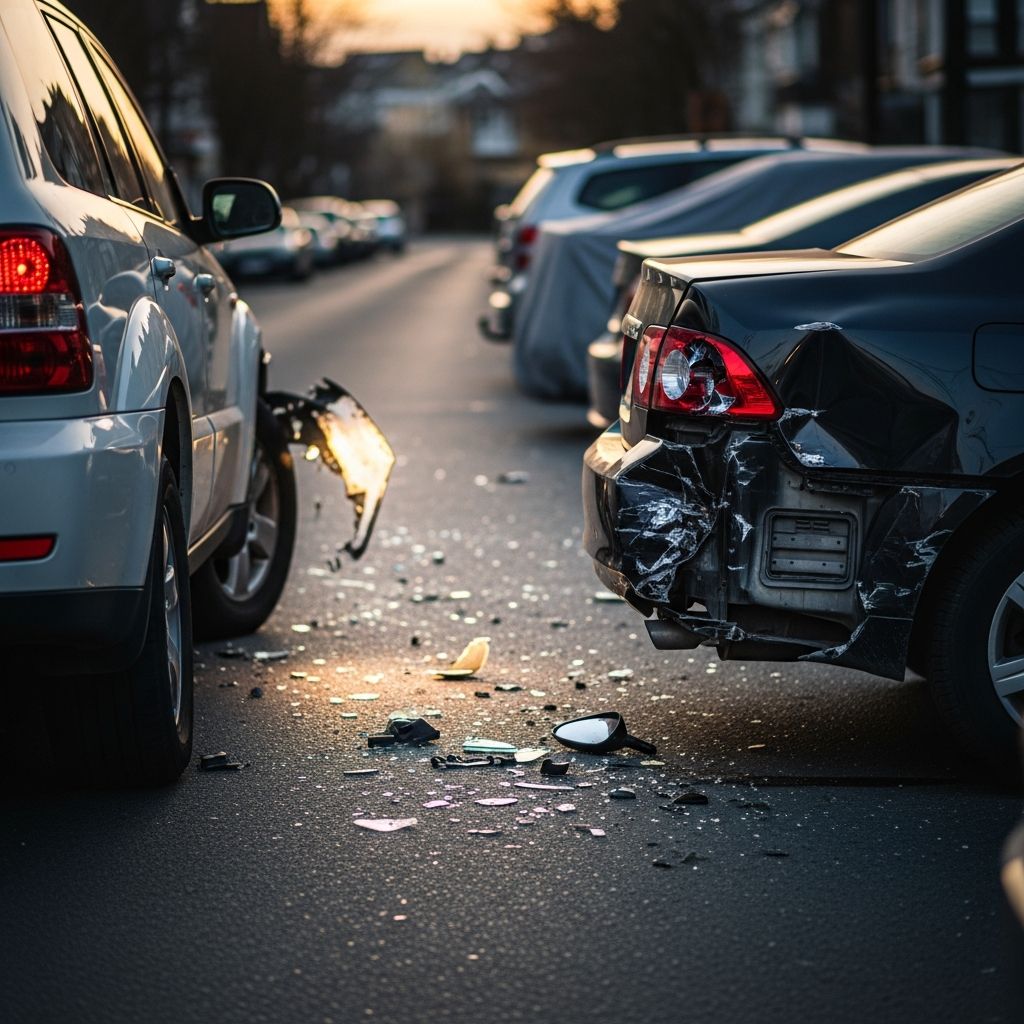
Damaging a parked vehicle and driving off is not a harmless mistake in the eyes of the law. In many situations, it is treated the same way as any other hit-and-run incident, with possible criminal charges, fines, and serious insurance consequences.
This guide explains when hitting a parked car becomes a hit-and-run, what your legal duties are at the scene, how different states treat these offenses, and what both drivers and vehicle owners can do next.
What Is a Hit-and-Run, Legally Speaking?
Across the United States, a hit-and-run is generally defined as being involved in a traffic collision and then failing to stop and fulfill legally required duties. These duties exist regardless of who caused the crash or how minor the damage appears.
According to the Legal Information Institute, hit-and-run statutes require motorists involved in an accident to remain at the scene and identify themselves to the other parties or to the police. The term “accident” includes collisions with vehicles, people, and property.
Core elements of a hit-and-run
- Involvement in a collision – You were driving a vehicle that struck a person, vehicle, animal, or property.
- Knowledge or reason to know – In most states, you knew or reasonably should have known that a collision occurred.
- Failure to stop – You did not stop as the law requires.
- Failure to provide information or assistance – You did not identify yourself, share required details, or, when needed, assist injured people or call for help.
Do Hit-and-Run Laws Apply to Parked Cars?
Yes. Hit-and-run laws generally apply to collisions with parked vehicles, not just moving cars. Leaving the scene after damaging a parked car without identifying yourself can be treated as a hit-and-run in many jurisdictions.
While specific statutes vary by state, a common theme is that the law covers collisions with vehicles and other property, regardless of whether the other vehicle was occupied at the time.
Typical scenarios involving parked cars
- Backing out of a parking space and scraping another car’s bumper.
- Clipping a side mirror while driving down a narrow street.
- Misjudging distance in a parking garage and denting a fender.
- Sliding on ice into a car parked along the curb.
If you drive away without leaving legally adequate information, many states can treat any of these as a hit-and-run, even if the damage looks minor.
Legal Duties After Hitting a Parked Vehicle
Hit-and-run statutes do more than simply say “do not leave.” They spell out several concrete steps you must take after any collision, including those involving parked cars.
1. Stop and remain at (or near) the scene
Most states require a driver involved in an accident to stop as close to the scene as safely possible and stay there long enough to fulfill all legal obligations.
- Pull over to a safe spot if you are blocking traffic.
- Do not chase another erratic driver if that endangers you or others.
- Remain long enough to make reasonable efforts to locate the owner or leave the required information.
2. Attempt to locate the vehicle owner
If the parked vehicle is in a private lot or near surrounding businesses or homes, you may be expected to make a reasonable effort to find the owner.
- Ask inside nearby businesses if someone owns or can page the owner of the damaged vehicle.
- Look for building or property managers who may be able to contact the owner.
3. Leave a written note if you cannot find the owner
Many jurisdictions require a driver who hits unattended property to leave identifying information in a conspicuous place if the owner cannot be located.
A proper note should generally include:
- Your full name.
- Current address and telephone number.
- Vehicle make, model, and license plate number.
- Insurance company name and policy number, if space allows.
- A brief statement acknowledging that your vehicle was involved in an incident with theirs.
Place the note in a secure and visible area, such as tucked under the windshield wiper, where it is unlikely to blow away or become unreadable.
4. Report the collision to law enforcement when required
Some states require you to contact the police after any collision, while others only require reports above a certain damage threshold or when someone is injured. When in doubt, many attorneys recommend erring on the side of reporting the incident to create an official record.
- Call the non-emergency number if there are no injuries.
- Follow any directions given by the dispatcher or responding officer.
- Obtain the report number for your records and for your insurer.
5. Notify your insurance company promptly
Regardless of fault, your auto insurance policy almost certainly requires you to report accidents promptly and cooperate in the investigation. Failing to do so can jeopardize coverage and later claims.
- Provide accurate details about the time, place, and nature of the damage.
- Share photos of both vehicles and the surrounding area, if available.
- Keep a record of names and badge numbers of any responding officers.
Criminal and Civil Consequences of Leaving the Scene
The legal consequences of a hit-and-run involving a parked car depend on a combination of state law, the extent of the damage, and whether anyone was hurt. While every jurisdiction is different, two broad categories are common: property damage only and injury or death cases.
| Type of Incident | Typical Classification | Possible Penalties (examples) |
|---|---|---|
| Damage to parked or moving vehicles only | Often a misdemeanor or traffic offense | Fines, probation, up to a year in jail in some states, license suspension, restitution to victims |
| Injury to another person | Often a felony | Higher fines, multi-year prison sentences, longer license revocations |
| Serious injury or death | Felony, sometimes with mandatory prison terms | Substantial incarceration, large fines, long-term or permanent loss of driving privileges |
Criminal exposure
Legal reference sites note that hit-and-run involving only vehicle damage is often treated as a misdemeanor, while hit-and-run causing injury or death is commonly a felony with significantly harsher penalties.
Even for property damage only, consequences can include:
- Criminal fines and court fees.
- Jail time in some jurisdictions.
- Mandatory community service or probation.
- Driver’s license suspension or revocation.
Civil and insurance consequences
Separate from criminal charges, drivers may face civil liability and increased costs.
- Property damage claims – The vehicle owner may seek compensation for repairs, diminished value, rental cars, and related costs.
- Subrogation and lawsuits – Your insurer may pay the claim and then pursue reimbursement from you if you violated policy conditions.
- Premium increases – Hit-and-run convictions and at-fault accidents often lead to higher insurance rates or non-renewals.
- Judgments – If uninsured or underinsured, you may personally owe any unpaid balance after insurance payments.
Did I Commit Hit-and-Run If I Did Not Notice the Impact?
Many drivers only discover a scrape or dent later and wonder whether they could be accused of hit-and-run. In many states, prosecutors must show that the driver knew or reasonably should have known that a collision occurred.
Factors that may affect knowledge
- Size and speed of impact – A substantial jolt is harder to overlook than a light brush.
- Noise and visibility – Heavy traffic, poor lighting, or loud music may make a minor scrape less noticeable.
- Vehicle type – A large truck may experience an impact differently than a small car.
- Driver’s reaction – Evidence of braking, swerving, or inspecting the vehicle can show awareness.
Because this analysis is highly fact-specific, anyone facing an accusation should consult a criminal defense or traffic attorney to evaluate potential defenses based on the law of their state.
What If a Medical Emergency Forces Me to Leave?
Courts sometimes recognize that extreme emergencies can justify leaving an accident scene under certain circumstances. For example, if a driver is experiencing a serious medical crisis and must get immediate help, this may be raised as a defense. But the burden is generally on the driver to prove that leaving was reasonable under the circumstances and that they reported the incident as soon as practical afterward.
Drivers considering such a defense should be prepared to show:
- Medical records supporting the claimed emergency.
- Evidence that leaving was necessary to obtain urgent care.
- Prompt contact with law enforcement once the emergency subsided.
Steps for the Owner of a Damaged Parked Car
If you return to your parked car and find damage, your response can influence both your ability to recover compensation and any future legal proceedings.
1. Document the scene thoroughly
- Photograph all visible damage from multiple angles.
- Take wide shots showing the entire vehicle and its surroundings.
- Look for paint transfers or debris that might identify the other vehicle.
- Check for any note left on your windshield or under the wiper.
2. Look for witnesses or cameras
- Ask nearby businesses or residents if anyone saw the incident.
- Note any security cameras, doorbell cameras, or parking lot surveillance that may have captured the collision.
- Record names and contact information of any witnesses.
3. File a police report if appropriate
- Call local police or use online reporting tools if available.
- Provide all photos, timelines, and any partial plate numbers or descriptions you have.
- Obtain a copy of the report or the reference number for insurance purposes.
4. Notify your insurer and explore coverage options
Depending on your policy and state law, several types of coverage may apply to a hit-and-run involving your parked car:
- Collision coverage – Often covers damage to your car from a collision with another vehicle, even if the other driver flees, subject to your deductible.
- Uninsured motorist property damage – In some states, this can apply to hit-and-run accidents if certain requirements are met.
- Comprehensive coverage – More likely to apply where damage is not from a collision, but policy language controls.
Practical Tips to Avoid Hit-and-Run Charges After a Parking-Lot Collision
Because many parking-lot incidents happen quickly and seem minor, it is easy to underestimate your legal duties. The following habits can help you stay within the law.
- Always stop immediately when you feel or suspect contact with another vehicle or property.
- Err on the side of leaving a note with complete information whenever you cannot personally contact the owner.
- Take photos of both vehicles and the location as proof of your efforts and the extent of damage.
- Consider calling the police even for seemingly minor damage if state law requires it or if you are unsure.
- Notify your insurer as soon as possible and follow up with any requested documentation.
Frequently Asked Questions (FAQs)
Q: Is it always a hit-and-run if I leave after hitting a parked car?
Not always, but in many states it becomes a hit-and-run if you fail to stop and either locate the owner or leave legally required identifying information and, when necessary, report the incident to authorities.
Q: What if I only caused a tiny scratch or dent?
The dollar amount of the damage does not eliminate your duty to stop, leave information, and, where required, file a report. Many statutes apply regardless of the severity of the accident, though penalties may be lighter when only minor property damage is involved.
Q: Can I be charged if I truly did not know I hit anything?
Prosecutors often must show that you knew or reasonably should have known a collision occurred. Whether that standard is met depends on specific facts such as the force of impact, your speed, and surrounding conditions. If you are accused, you should seek legal counsel familiar with your state’s law.
Q: Will my insurance go up if I report hitting a parked car?
A reported at-fault accident may increase premiums, but failing to report an incident can create larger problems, including denied coverage or policy cancellation. Insurers also may treat criminal hit-and-run much more harshly than a properly reported minor collision.
Q: Do I need a lawyer after a parked-car hit-and-run?
It is often wise to consult a lawyer if you are under investigation, receive a citation, or face criminal charges. Local attorneys can explain the potential penalties, identify defenses, and communicate with prosecutors or insurers on your behalf.
References
- hit and run statute — Legal Information Institute, Cornell Law School. 2023-01-01. https://www.law.cornell.edu/wex/hit_and_run_statute
- What Counts as a Hit and Run? Understanding Legal Definitions — CEO Lawyer Personal Injury Law Firm. 2023-06-15. https://ceolawyer.com/blog/what-counts-as-a-hit-and-run-understanding-legal-definitions/
- Hit and run — New Zealand Transport Agency and international criminal law examples summarized in Wikipedia (using cited statutes and agency materials). 2022-11-10. https://en.wikipedia.org/wiki/Hit_and_run
- Hit and Run Laws — Justia Criminal Law Center. 2022-03-01. https://www.justia.com/criminal/offenses/traffic-offenses/hit-and-run/
- Understanding Hit and Run Charges in North Carolina — Kurtz & Blum, PLLC. 2023-05-10. https://nclawtalk.com/understanding-hit-and-run-charges-in-nc/
Similar Articles








Read full bio of Sneha Tete


