Police responses to domestic violence have transformed dramatically over the past several decades. For much of the twentieth century, intimate partner abuse was treated as a private family matter, and officers often avoided arrest or investigation. Over time, however, social movements, research, court decisions, and legislative reforms have pushed law enforcement toward a more proactive, victim-centered approach that recognizes domestic violence as a serious crime and a human rights issue.
This article explains how police practices have changed, why those changes occurred, and what modern responses typically include. It uses historical context and best-practice guidance to help survivors, advocates, and the public understand where current policies came from and how they aim to protect victims.
Understanding Domestic Violence and Police Involvement
Domestic violence is commonly defined as a pattern of abusive behavior used by one intimate partner or family member to gain or maintain power and control over another. It can involve physical harm, sexual abuse, threats, stalking, financial control, emotional manipulation, and coercive tactics that isolate the victim and limit their autonomy.
Police become involved when:
- A victim, neighbor, family member, or bystander calls emergency services to report violence or threats.
- There is a suspected violation of a criminal law, such as assault, harassment, or stalking.
- A protective or restraining order has been violated.
- Other agencies (schools, medical providers, child protection services) alert law enforcement to potential danger.
Historically, the law enforcement response ranged from non-intervention to arrest and prosecution. Today, police are increasingly expected to treat domestic violence incidents with the same seriousness as other violent crimes, while also recognizing the particular risks and vulnerabilities involved.
Early Attitudes: Domestic Violence as a Private Matter
For much of the twentieth century in many jurisdictions, domestic violence was minimized by both law enforcement and courts. Abuse within the home was often considered a private dispute rather than a public safety issue. Police frequently focused on restoring peace and preserving family unity rather than protecting the victim or pursuing criminal charges.
Common features of early police responses included:
- Reluctance to arrest the abusive partner, especially for incidents perceived as minor or “mutual” conflict.
- Mediation at the scene, urging both parties to calm down or “work it out” rather than documenting injuries or collecting evidence.
- Lack of reporting, with officers failing to complete incident reports or to note patterns of abuse.
- Limited training on the dynamics of domestic violence, leading to myths that victims provoked abuse or could easily leave.
These practices often left victims unprotected and reinforced the idea that violence in intimate relationships was less serious than similar conduct against strangers. Over time, research and advocacy showed that these assumptions were dangerous and contributed to serious injury and homicide.
Social Movements and Legal Reform
Starting in the 1960s and 1970s, feminist and civil rights movements drew attention to violence against women, including domestic and sexual violence. Advocates documented widespread under-enforcement of laws protecting victims and argued that state failure to intervene amounted to discrimination.
Key developments included:
- Battered women’s shelters and crisis hotlines that created safe spaces and collected data on police responses.
- Impact litigation and law reform challenging police inaction and pressing for equal protection in domestic violence cases.
- Legislative changes that created specialized protective orders and clarified that intimate partner violence is a criminal offense, not just a civil matter.
- International norms recognizing violence against women as a human rights violation, influencing national laws and policing standards.
These efforts led many jurisdictions to reconsider laissez-faire approaches and to adopt policies requiring more structured and accountable responses when officers are called to domestic incidents.
Emergence of Pro- and Mandatory-Arrest Policies
One of the most significant shifts in police practice was the adoption of pro-arrestmandatory-arrest
Common elements of modern arrest policies include:
- Probable cause standard: Officers must arrest when they have reasonable grounds to believe a domestic violence offense or violation of a protection order has occurred, regardless of whether they witnessed it and regardless of victim preference in many jurisdictions.
- Primary aggressor determination: When both parties allege abuse, officers are trained to identify the main aggressor rather than arresting both, which can further endanger the victim.
- Mandatory arrest for order violations: Many laws require arrest if an existing protective order has been violated, reflecting recognition that breach of court orders signals heightened risk.
Policy makers aimed to reduce victim burden, deter repeat offenses, and ensure consistent enforcement. However, researchers and advocates also caution that mandatory arrest may have unintended consequences, such as discouraging some victims from calling police or increasing dual arrests if officers are not properly trained.
Professionalization: Training, Protocols, and Documentation
As domestic violence came to be understood as a complex crime with unique dynamics, police agencies developed more detailed protocols and training requirements. Modern guidance from organizations such as the United Nations Office on Drugs and Crime emphasizes the need for comprehensive, victim-centered responses.
Typical components of current protocols include:
- Specialized training on forms of abuse, risk factors for lethal violence, trauma responses, and cultural competence.
- Standardized incident reporting, requiring officers to complete domestic incident reports that capture the parties’ statements, visible injuries, prior history, and any children present.
- Evidence-based investigation, including photographs of injuries and damaged property, collection of weapons, and statements from neighbors or other witnesses.
- Coordination with prosecutors and courts to support criminal charges and protective orders when appropriate.
For example, some protocols require officers to separate the parties, obtain detailed accounts from each, and document physical and emotional indicators of fear or coercion. This helps counter the tendency to treat incidents as short-term conflicts rather than ongoing patterns of abuse.
Emergence of Specialized Units and Women’s Police Stations
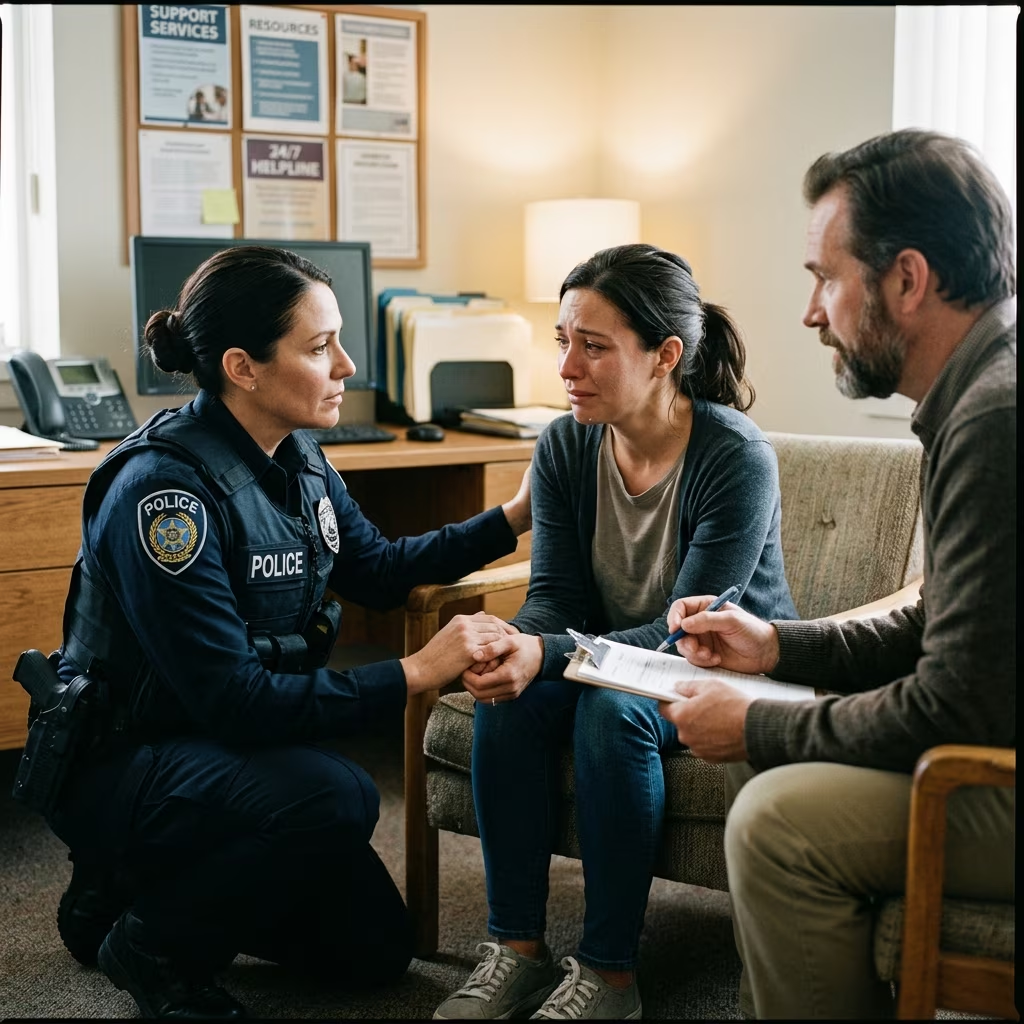
In some regions, particularly in Latin America, specialized units and women’s police stations have been created to handle violence against women, including domestic and sexual violence. These units are typically staffed by personnel who receive focused training and often include more women officers to make survivors feel safer disclosing abuse.
Key features of specialized units can include:
- Dedicated staff trained in gender-based violence and trauma.
- Private spaces for interviewing victims and children.
- Direct links to social services, shelters, and legal aid.
- In some models, jurisdiction limited to gender-based or family violence cases.
Such units illustrate how police organizations have tried to adapt to the specific needs of domestic violence victims, although their effectiveness depends on resources, coordination with other agencies, and broader legal frameworks.
Modern Scene Response: What Victims Can Expect
Although practices vary by jurisdiction, many contemporary protocols share core steps designed to protect victims, enforce the law, and document the incident.
| Response Element | Typical Police Actions |
|---|---|
| Safety and control | Separate the parties, secure weapons, and ensure immediate safety of victims and children. |
| Assessment | Interview each party and witnesses, assess risk of ongoing or lethal violence, and identify the primary aggressor. |
| Evidence collection | Take photographs, collect physical evidence, document injuries, and record statements in detail. |
| Arrest decision | Apply mandatory or pro-arrest policies based on probable cause and any protective order violations. |
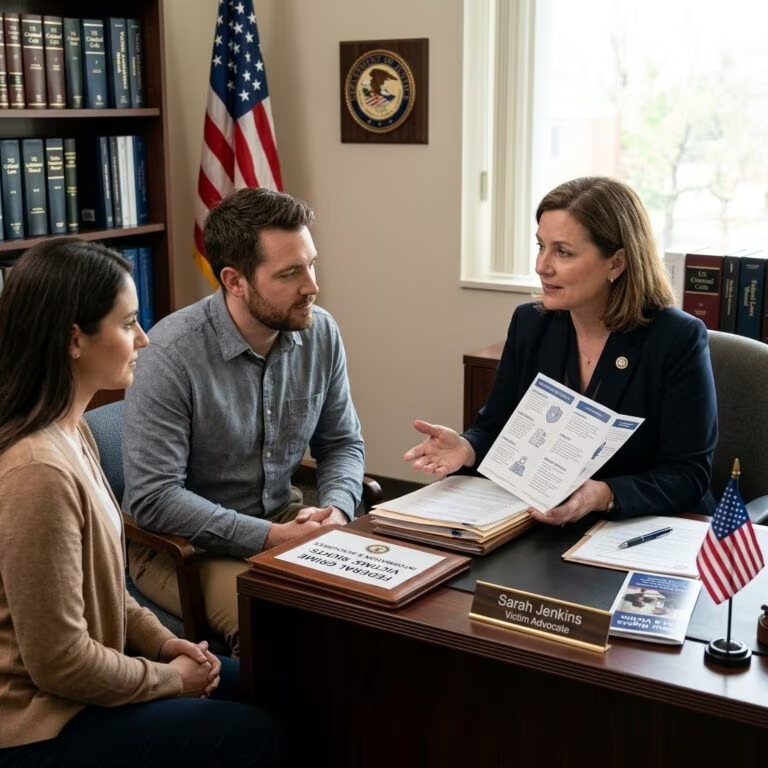
| Information for the victim | Explain rights, protective orders, shelters, and legal options; provide written information in some jurisdictions. |
In certain areas, police may also remove firearms from the scene when there is probable cause to believe domestic violence occurred, recognizing that firearms significantly increase the risk of homicide.
Protective Orders and Police Responsibilities
Protective orders (often called restraining orders or orders of protection) are court orders that can restrict an abuser’s contact with the victim, require them to leave the home, surrender weapons, or comply with other safety-focused conditions. Police play a critical role in both enforcing and supporting these orders.
Depending on local law, police responsibilities commonly include:
- Serving protective orders or assisting courts and sheriffs in notifying the respondent.
- Arresting alleged offenders when there is probable cause to believe an order has been violated.
- Documenting violations in incident reports and informing victims of their right to pursue criminal charges.
- Coordinating with prosecutors and victim advocates to pursue charges or request modification of orders.
Some legal frameworks also authorize or require police to remove firearms from the abuser when a protective order is in place or where there is a risk of serious harm. These measures reflect growing recognition of the lethal potential of domestic violence and the need for swift, enforceable preventive tools.
Challenges and Critiques of Modern Police Responses
Despite significant progress, modern police responses are not without criticism. Survivors, advocates, and researchers highlight several ongoing challenges.
- Uneven implementation: Policies may look robust on paper but are inconsistently applied, especially in under-resourced or rural areas.
- Dual arrests: Without adequate primary aggressor training, police may arrest both parties, which can deter victims from seeking help.
- Impact on marginalized communities: Survivors from communities that have historically experienced over-policing or discrimination may be reluctant to call police, fearing escalation or negative outcomes.
- Limited follow-up: Even when initial response is strong, lack of coordination with prosecutors, courts, and social services can undermine long-term protection.
International guidance emphasizes that effective police responses must be embedded within a broader, survivor-centered system involving health care, social services, legal aid, and community support organizations.
Working With Police: Practical Tips for Survivors
Understanding how police are expected to respond can help survivors prepare for contact with law enforcement. While specific procedures differ by jurisdiction, several practical steps are widely recommended.
- Explain what happened in detail: Describe the incident, prior abuse, threats, and any injuries or property damage.
- Ask for an incident report: Request the incident or domestic violence report number and a copy if available.
- Record officer information: Note the names and badge numbers of responding officers for future reference.
- Show protective orders: If you have a protective order, give officers a copy and explain any violations.
- Document your experience: As soon as you can, write down what happened, including threats, physical attacks, property damage, and police actions.
Survivors are also encouraged to connect with domestic violence advocates who can help develop safety plans, accompany them in interactions with law enforcement, and provide ongoing support.
Frequently Asked Questions About Police and Domestic Violence
Do police have to arrest an abuser in every domestic violence case?
Not in every case, but many jurisdictions have mandatory or pro-arrest policies when there is probable cause to believe a domestic violence crime has occurred or a protective order has been violated. The specific rules depend on local law.
Can I be arrested if I fought back against my abuser?
It is possible for police to arrest more than one person if they misinterpret the situation. To reduce this risk, many protocols require officers to identify the primary aggressor, considering injury patterns, history of abuse, and self-defense. Explaining the context and prior incidents can be important.
What happens if my abuser violates a protective order?
Violating a protective order is often a separate crime. Police are typically required or strongly encouraged to arrest when they have probable cause to believe a violation occurred. You should show officers a copy of the order and describe the violation clearly.
Will police help me get to safety after an incident?
Many protocols instruct officers to help victims access medical care, shelters, or safe locations and to provide information about rights, protective orders, and support services. Advocates and hotlines can also assist with safety planning.
What if the abusive partner is a police officer?
Domestic violence involving law enforcement complicates response, and some departments may be slow to investigate or discipline abusive officers. Survivors in this situation are often advised to contact domestic violence organizations, request supervisory presence at the scene, and carefully document incidents and police actions.
Key Takeaways on the Evolution of Police Responses
- Domestic violence was long treated as a private matter, leading to minimal intervention and inconsistent enforcement.
- Advocacy, legal reform, and international standards pushed police agencies toward recognizing domestic violence as a serious crime and human rights issue.
- Mandatory and pro-arrest policies, improved training, detailed documentation, and specialized units have become central features of modern responses.
- Protective orders and firearm restrictions are increasingly integrated into police practice to enhance victim safety.
- Despite progress, challenges remain, and effective responses require coordination with courts, social services, and community organizations.
References
- Handbook on Effective Police Responses to Violence against Women — United Nations Office on Drugs and Crime. 2010-12-01. https://www.unodc.org/documents/justice-and-prison-reform/crimeprevention/Handbook_on_Effective_Police_Responses_to_Violence_against_Women_Spanish.pdf
- Police Response to Domestic Violence — LawHelpNY. 2020-01-01. https://www.lawhelpny.org/es/resource/police-response-to-domestic-violence
- Protocolo Policial para la atención de casos de violencia doméstica — Gobierno de Costa Rica. 2015-01-01. https://pgrweb.go.cr/scij/Busqueda/Normativa/Normas/nrm_texto_completo.aspx?param1=NRTC&nValor1=1&nValor2=90682&nValor3=119570&strTipM=TC
- 42.4 Domestic Violence Policy — New Orleans Police Department. 2021-01-31. https://nola.gov/nola/media/NOPD/Policies/Chapter-42-4-Domestic-Violence-1-31-2021-CLEAN_ES(1).pdf
- Police Stations for Women: Lessons from Latin America — Ameli Journal (Violence against women). 2019-01-01. https://portal.amelica.org/ameli/journal/284/2845354011/html/
- What Is Domestic Violence? — Connecticut Coalition Against Domestic Violence (CTCADV). 2022-01-01. https://www.ctcadv.org/espanol/aprender
- The Abuser Is a Member of the Police — WomensLaw.org. 2021-01-01. https://www.womenslaw.org/es/sobre-el-maltrato/el-maltrato-en-comunidades-especificas/la-persona-agresora-es-parte-de-la-policia