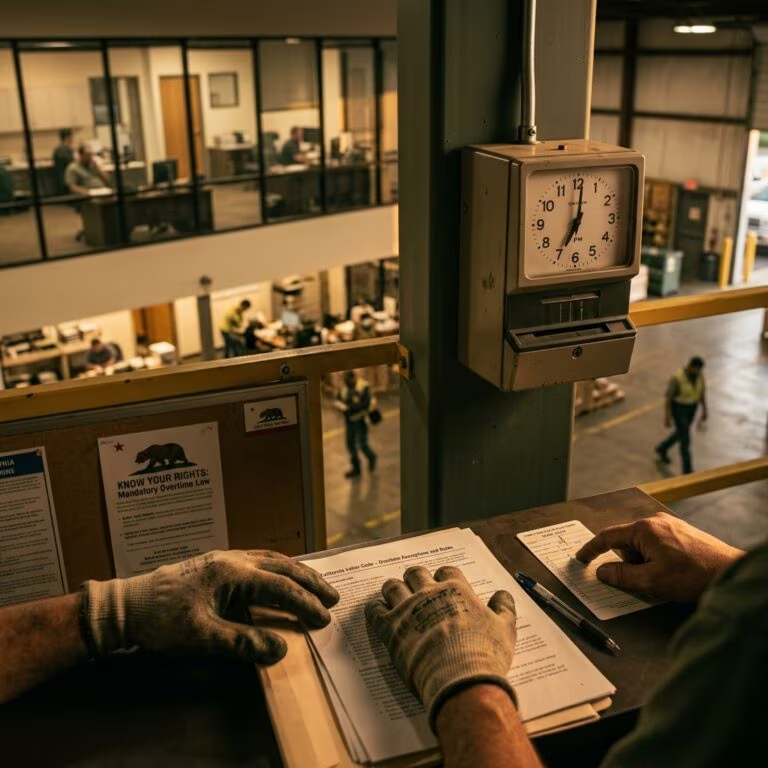
Many businesses experience a surge in demand during the summer months, from tourism and hospitality to landscaping, retail, camps, and recreation. Temporary summer workers can help you meet that demand without long-term payroll commitments. At the same time, these workers are still employees in the eyes of the law, which means you must follow the same core rules on wages, hours, safety, and eligibility that apply to year-round staff.
This guide walks through the key legal and HR considerations when hiring temporary summer workers in the United States, including wage and hour requirements, youth employment rules, foreign seasonal labor programs, and practical steps to recruit, train, manage, and offboard short-term staff.
Understanding Temporary Summer Employment
Temporary summer workers are employees hired for a limited period, typically to cover increased demand during the warm-weather season. They may work full-time or part-time and can be hourly or salaried, but what makes them seasonal is the duration and predictability of their employment period, not the number of hours they work each week.
| Aspect | Temporary Summer Worker | Year-Round Employee |
|---|---|---|
| Duration | Fixed, short-term (e.g., June–August) | Indefinite, ongoing employment |
| Purpose | Cover seasonal peaks or projects | Meet ongoing operational needs |
| Legal protections | Generally the same as other employees | Covered by the same core laws |
| Benefits | May be limited, but ACA and other rules can still apply | Often eligible for full benefits package |
Despite the short-term nature of seasonal work, federal, state, and local employment laws generally apply in the same way as they do for long-term staff, including wage and hour laws, anti-discrimination protections, and safety requirements.
Planning Your Summer Hiring Strategy
Hiring temporary workers effectively starts long before the summer season begins. A structured plan helps you avoid rushed decisions, staffing gaps, and non-compliance risks.
Define Your Seasonal Needs
Outline what the summer workload actually looks like. Consider:
- Projected demand: Estimate customer or client volume based on prior summers and current trends.
- Roles required: Identify which tasks increase in summer (e.g., front-of-house service, outdoor labor, lifeguarding, camp counseling).
- Skills and qualifications: Determine any required licenses or certifications, language skills, or physical abilities.
- Schedule patterns: Map peak hours, days of the week, and specific events or programs.
From this analysis, create specific temporary positions with clear start and end dates and well-defined responsibilities.
Prepare Job Descriptions and Postings
A targeted job description is particularly important for seasonal roles because applicants may be juggling school, other jobs, or travel plans. Include:
- Exact season dates and expected end date.
- Typical work schedule, including evenings, weekends, or holiday shifts.
- Core duties and performance expectations.
- Compensation details and whether overtime may be available.
- Any physical or safety requirements, such as lifting loads or outdoor heat exposure.
Being transparent about these elements reduces turnover and helps attract candidates who can commit for the entire period.
Legal Basics: Wage, Hour, and Eligibility Requirements
Even for short-term engagements, employers must comply with wage and hour rules and verify that everyone hired is legally authorized to work in the United States.
Minimum Wage and Overtime Obligations
Under the federal Fair Labor Standards Act (FLSA), most employees, including temporary summer workers, must be paid at least the federal minimum wage, with higher state or local minimums applying where they exist. Non-exempt workers are generally entitled to overtime pay of at least 1.5 times their regular rate for all hours over 40 in a workweek.
Key points to keep in mind:
- Always check whether state or local minimum wage is higher than the federal rate and pay the highest applicable amount.
- Track hours accurately for all hourly and non-exempt workers to avoid unpaid overtime issues.
- Do not reduce pay or ignore overtime simply because the job is seasonal; the rules apply regardless of duration.
Impact on Benefits and the Affordable Care Act
Under the Affordable Care Act (ACA), certain employers must offer health coverage to employees who work at least a threshold number of hours on average. Hiring large numbers of seasonal workers or assigning high weekly hours can affect whether you are considered a “large employer” and which employees must be offered coverage.
Monitor total hours worked by temporary staff and consult benefits or legal advisors to understand how seasonal hiring affects your ACA obligations.
Confirming Work Authorization
All employees, including temporary summer workers, must be verified as legally eligible to work in the U.S. before starting employment. Employers typically use Form I-9 to document identity and work authorization, and some participate in E-Verify where required or chosen.
Establish a consistent onboarding process that:
- Collects necessary identification and authorization documents.
- Completes verification within legally required timeframes.
- Applies the same standards to seasonal and year-round hires to avoid discrimination.
Hiring Young Workers: Child Labor Considerations
Summer jobs are often filled by teenagers, making knowledge of youth employment rules critical. Federal child labor provisions under the FLSA set minimum ages, limit work hours for younger minors, and restrict hazardous work.
Workers Aged 14–15
Younger teens may work in certain roles outside school hours, but their duties and hours are tightly controlled. For example:
- They generally cannot work in manufacturing, mining, or other hazardous occupations.
- Work hours are limited and may be restricted during school days and times.
- Jobs are usually confined to office work, retail, food service (with limits), or approved light work.
It is important to review current Department of Labor guidance and state-specific rules before hiring 14- or 15-year-olds to ensure the position fits within permitted categories.
Workers Aged 16–17
Employees who are 16 or 17 generally may work unlimited hours in non-hazardous jobs, but they still cannot perform tasks deemed particularly dangerous by the Department of Labor. Examples of prohibited hazardous work include certain types of heavy equipment operation, some roofing activities, and other high-risk duties identified in federal regulations.
When designing roles for older teens:
- Confirm that job tasks are not on the federal list of hazardous occupations.
- Train young workers thoroughly on safety and supervision expectations.
- Ensure at least one experienced adult is available to oversee work, especially in dynamic environments like pools, camps, or construction-adjacent settings.
Using Foreign Workers: H-2B and Seasonal Employment
Some businesses rely on foreign workers to fill seasonal jobs when they cannot find enough domestic workers. In the U.S., the H-2B temporary non-agricultural worker program allows employers to hire foreign nationals for seasonal or peak-load positions, subject to strict requirements.
Core Features of the H-2B Program
For an employer to use H-2B workers, the job must be:
- Temporary and tied to a specific season, project, or peak period.
- Non-agricultural, covering industries such as hospitality, landscaping, amusement, and seafood processing.
- Certified by the Department of Labor (DOL) as a position for which there are not sufficient U.S. workers who are able, willing, qualified, and available.
The employer must first advertise and recruit within the U.S., giving domestic workers a fair chance to apply. Only after this process can the employer petition to bring in foreign workers under the H-2B program.
Compliance Responsibilities
Employers using H-2B workers must:
- Offer at least the prevailing wage required by DOL for the occupation and location.
- Provide working conditions that do not adversely affect similarly employed U.S. workers.
- Maintain accurate documentation, including recruitment records and payroll information, for inspection.
Because H-2B rules are detailed and subject to change, businesses considering this option should review current DOL and Department of Homeland Security guidance or consult legal counsel.
Creating Fair Standards for Seasonal Hiring
In tight labor markets, the pressure to fill roles quickly may tempt businesses to lower standards or overlook evaluation steps. However, hiring temporary workers with the right skills and attitudes is just as important as choosing long-term staff, particularly in customer-facing and safety-sensitive roles.
Defining Minimum Qualifications
Set baseline requirements for every seasonal role, such as:
- Minimum education or literacy level needed for safe and effective performance.
- Relevant certifications (e.g., lifeguard training, food safety, driver’s license).
- Physical ability to meet job demands, such as lifting or working outdoors in heat.
- Availability for the full season or specific critical dates.
Document these qualifications in your recruiting materials and share them with any staffing agencies you use to ensure aligned expectations.
Evaluating Attitude and Reliability
Because seasonal jobs often require quick learning and consistent presence during peak periods, employers may prioritize attitude and reliability. This can include:
- Strong work ethic and willingness to learn.
- Comfort with following instructions and safety rules.
- Ability to interact courteously with customers and teammates.
Conduct short but structured interviews and reference checks wherever possible to gauge these qualities.
Onboarding and Training Temporary Workers
Effective onboarding is crucial for short-term staff because they must become productive quickly while still following safety and compliance rules. Seasonal workers should receive tailored training on both job-specific tasks and general workplace policies.
Core Onboarding Elements
For every temporary summer worker, cover at least:
- Workplace policies on attendance, conduct, anti-harassment, and use of company property.
- Safety procedures, including emergency protocols, equipment use, and reporting injuries.
- Wage and hour practices, such as timekeeping rules, meal and rest breaks where required, and how overtime is recorded.
- Who to contact with questions or concerns, both for HR issues and day-to-day supervision.
Job-Specific Training
Beyond generic orientation, provide practical instruction tailored to each role. That may involve:
- Demonstrating key tasks and allowing workers to practice under supervision.
- Explaining performance metrics and quality standards.
- Clarifying customer service expectations for public-facing roles.
- Assigning an experienced employee as a mentor for the first weeks.
Front-loading training reduces the risk of errors, accidents, and frustrated customers, even when workers are only with you for a few months.
Rights, Safety, and Workplace Protections
Temporary summer workers are entitled to a safe workplace and protection from discrimination, regardless of how long they are employed. Employers must comply with occupational safety and health standards and disability accommodation requirements, among others.
Safety and Health Requirements
Under occupational safety laws, employers must provide a workplace free from recognized serious hazards and follow specific rules for the industries in which they operate. Seasonal workers must be included in safety programs, not treated as expendable labor.
Best practices include:
- Conducting safety training before workers begin risky tasks.
- Providing necessary personal protective equipment (PPE).
- Offering extra guidance for young or inexperienced workers on recognizing hazards.
- Encouraging prompt reporting of unsafe conditions or injuries without fear of retaliation.
Disability Accommodation and Equal Treatment
Anti-discrimination laws and disability accommodation requirements apply to temporary workers in the same way they apply to permanent employees. Employers must avoid adverse actions based on protected characteristics and provide reasonable accommodations to qualified workers with disabilities, unless doing so would cause undue hardship.
Ensure your policies and practices on hiring, discipline, and scheduling do not treat seasonal workers as outside the scope of your equal employment obligations.
Workers’ Compensation and Injury Handling
Most states require employers to carry workers’ compensation insurance for employees, which usually includes temporary and seasonal staff. This coverage helps provide medical care and wage replacement when employees are injured on the job.
Confirm your state’s requirements before hiring summer workers, and make sure they know how to report injuries and seek treatment.
Contracts, Documentation, and End-of-Season Offboarding
Even if your temporary hires work only for a few months, clear documentation helps prevent disputes and confusion. Written agreements and thorough records support legal compliance and clarify expectations.
Written Terms of Employment
Consider using short, straightforward offer letters or employment agreements for seasonal workers that specify:
- Job title and core responsibilities.
- Start date and expected end date of employment.
- Rate of pay and overtime eligibility.
- Work schedule expectations and conditions for changes.
- Any confidentiality or non-disclosure obligations relevant to the role.
Contracts for workers hired through staffing agencies may be provided by the agency, but you should review them carefully to confirm how responsibilities for pay, benefits, and safety are divided.
Recordkeeping
Maintain standard employment records for seasonal workers, including applications, I-9 forms, time and pay records, and training documentation. Accurate records support compliance with wage and hour laws and provide evidence if disputes arise over pay or work conditions.
Ending Seasonal Employment
At the end of the summer period:
- Communicate the last day of work in advance.
- Issue final paychecks according to federal and state deadlines.
- Collect company property (e.g., uniforms, equipment, badges).
- Remind workers of any continuing obligations, such as confidentiality.
Some employers also use exit meetings to gather feedback and determine which seasonal workers may be invited back in future years.
Frequently Asked Questions About Temporary Summer Workers
Do seasonal workers have to be part-time?
No. Seasonal employment refers to the temporary nature of the job, not the number of hours worked each week. Temporary summer workers may be full-time or part-time, depending on business needs.
Can I pay temporary summer workers less than regular staff?
You may set different pay rates for seasonal and year-round employees, but you must still meet or exceed applicable federal, state, and local minimum wage requirements and pay overtime where required.
Are teenagers allowed to work in any summer job?
No. Federal child labor laws limit the types of jobs younger teens can perform and restrict hazardous occupations even for older minors. Employers must ensure that duties assigned to workers under 18 comply with current regulations.
Do I need health benefits for short-term hires?
Benefit obligations depend on factors such as employer size and average hours worked. Under the Affordable Care Act, hiring large numbers of seasonal workers or assigning many hours may affect whether certain employees must be considered full-time and offered health coverage. Employers should review ACA rules and seek professional guidance.
What if I use an agency to supply temporary workers?
Staffing agencies often handle recruitment and payroll, but host employers still have obligations related to workplace safety, equal treatment, and sometimes joint employment considerations. Review contracts carefully and ensure both parties understand their legal responsibilities.
References
- Guide to Hiring Temporary Summer Workers — Rocket Lawyer. 2023-09-01. https://www.rocketlawyer.com/business-and-contracts/employers-and-hr/recruiting-and-hiring/legal-guide/guide-to-hiring-temporary-summer-workers
- Seasonal Jobs: Benefits, Laws & Regulations — ADP. 2023-06-15. https://www.adp.com/resources/articles-and-insights/articles/s/seasonal-job.aspx
- Fair Labor Standards Act (FLSA) — Wage and Hour Division — U.S. Department of Labor. 2022-05-01. https://www.dol.gov/agencies/whd/flsa
- Youth & Labor — Child Labor — U.S. Department of Labor. 2023-04-10. https://www.dol.gov/agencies/whd/youthrules
- H-2B Temporary Non-Agricultural Workers — U.S. Citizenship and Immigration Services (USCIS). 2023-03-20. https://www.uscis.gov/working-in-the-united-states/temporary-workers/h-2b-non-agricultural-workers
- Best Practices for Hiring Temporary Workers — Dryden Group. 2021-11-05. https://www.drydengroup.com/blog/best-practices-for-hiring-temporary-workers