
Workers’ Compensation Lawyer: When To Hire And What To Expect
Learn when and how to hire a workers’ compensation lawyer, what they do, and how to choose the best one for your workplace injury claim.
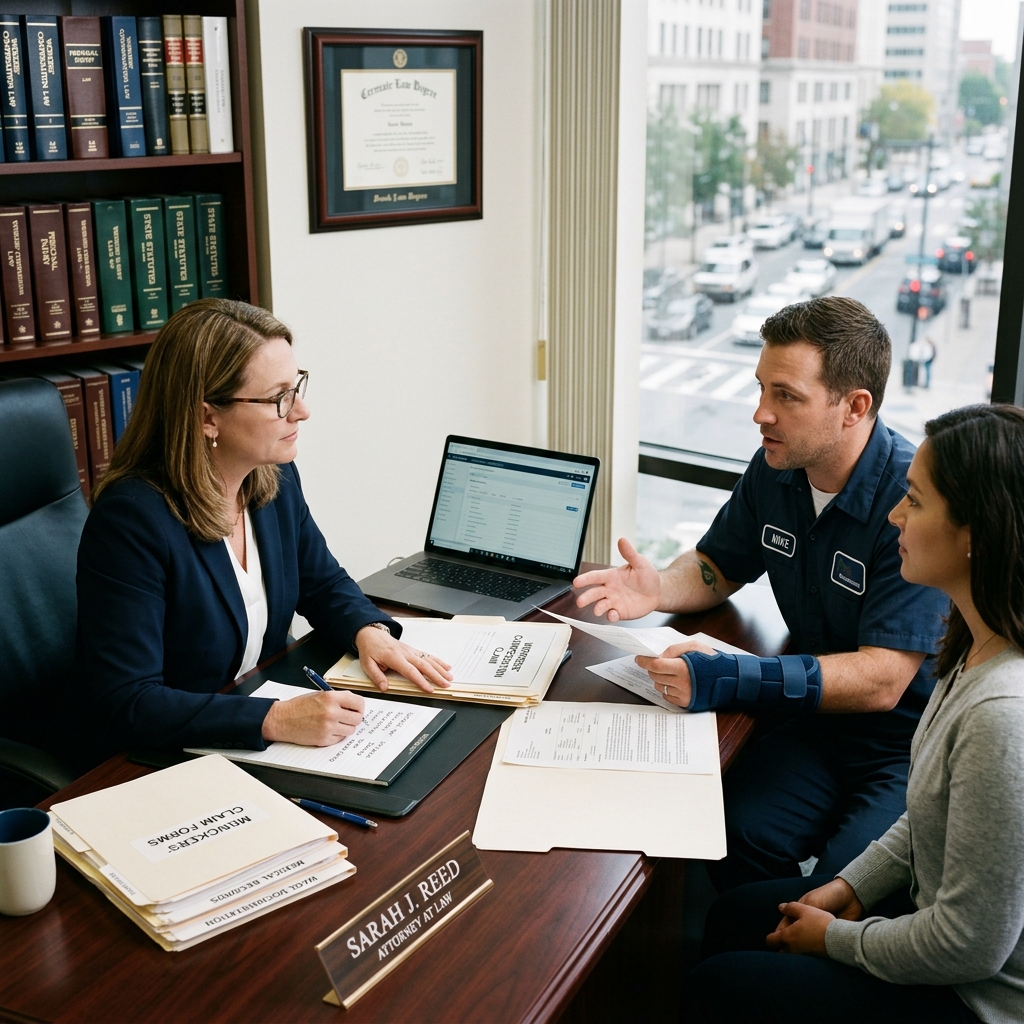
When you suffer an injury or illness because of your job, the workers’ compensation system is meant to provide medical care and wage replacement without long court battles. Yet, in practice, many workers run into confusing rules, strict deadlines, and disputes with employers or insurance companies. In those situations, a knowledgeable workers’ compensation attorney can be the difference between a denied claim and the benefits you are legally entitled to.
This guide explains what workers’ compensation is, when it makes sense to hire a lawyer, what a workers’ comp attorney actually does, and how to choose the right one for your case. It is written for employees, not lawyers, and focuses on clear, practical steps you can take after a work-related injury.
Understanding Workers’ Compensation Before You Call a Lawyer
Workers’ compensation is a system of insurance that provides benefits to employees who suffer job-related injuries or occupational diseases. Although details differ from state to state, the basic structure is similar across the United States.
Core Features of Workers’ Compensation
- No-fault coverage: Benefits are usually available regardless of who caused the accident, as long as the injury arose out of and in the course of employment.
- Exclusive remedy: In most cases, workers’ comp is the primary legal remedy against the employer; employees generally cannot sue their employer in civil court for work injuries, with limited exceptions.
- Statutory benefits: States set the types and amounts of benefits, such as medical care, wage replacement, and disability payments.
Typical Benefits Available Under Workers’ Comp
| Benefit Type | Purpose | Common Examples |
|---|---|---|
| Medical treatment | Pay for necessary care related to the work injury or illness. | Doctor visits, surgery, hospital stays, medications, physical therapy. |
| Wage replacement | Replace part of your income while you are unable to work. | Temporary total disability (TTD) payments, usually a percentage of your average weekly wage. |
| Permanent disability | Compensate long-term loss of function or earning ability. | Lump-sum or ongoing payments for permanent partial or total disability. |
| Vocational rehabilitation | Help you return to work if you cannot go back to your prior job. | Retraining programs, job placement assistance. |
| Death benefits | Support dependents when a worker dies due to a work injury. | Weekly benefits and funeral or burial expenses for surviving family. |
Because workers’ compensation is governed by state law, the specific rules about who is covered, how much is paid, and how long benefits last can vary substantially. That variation is one reason local legal advice is often crucial.
When You Should Consider Hiring a Workers’ Compensation Lawyer
Not every workplace injury requires an attorney. If your injury is minor, your employer promptly reports it, the insurer accepts the claim, and you return to work quickly, you may be able to navigate the process alone. However, certain situations strongly suggest you should consult a workers’ compensation lawyer as soon as possible.
Common Situations Where Legal Help Is Advisable
- Serious or long-term injuries
When an injury leads to surgery, extended time off work, permanent limitations, or chronic pain, the potential value of your claim increases and disputes become more likely. A lawyer can help protect your future earning capacity and long-term benefits. - Denied or delayed claims
If the insurer denies your claim, delays approval of treatment, or stops benefits unexpectedly, you may need an attorney to challenge the decision and present medical and legal evidence. - Disputes about whether the injury is work-related
Employers or insurers sometimes argue that an injury did not arise out of employment or happened outside the scope of work. A lawyer can gather witness statements, work records, and expert opinions to establish the connection to your job. - Pre-existing health conditions
Claims become more complex when you had a prior injury or illness affecting the same body part. Insurers may claim that the condition is not work-related. An attorney can show how work aggravated or worsened the condition. - Retaliation or workplace pressure
If you feel pressured not to file a claim, or you experience firing, demotion, or harassment after reporting your injury, legal counsel can advise you about your rights and possible remedies. - Settlement offers and lump-sum payments
Once an insurer offers a settlement, it is important to understand its long-term consequences before agreeing. A lawyer can estimate the value of your claim, explain future medical needs, and negotiate for better terms. - Complex legal issues
Cases involving multiple employers, third-party accidents (like car crashes involving another driver), or overlapping benefits (such as Social Security disability) are particularly complex and benefit from legal guidance.
Early Consultation vs. Waiting
Many attorneys offer free initial consultations for workers’ compensation cases. Speaking with a lawyer early can help you avoid missing deadlines and making statements to insurers that unintentionally harm your claim. In some states, starting the formal claim with the workers’ compensation commission or board requires specific forms and proof of service that a lawyer can prepare.
What a Workers’ Compensation Lawyer Does for You
A workers’ compensation lawyer represents you in dealing with your employer, the insurance company, and the state agency that oversees workers’ comp. Their job is both legal and practical: they interpret the law, track deadlines, organize evidence, and advocate for you during negotiations and hearings.
Key Responsibilities of a Workers’ Compensation Attorney
- Explaining your rights and options
The lawyer clarifies which benefits you may qualify for, the time limits for filing claims, and what to expect from the process in your state. - Managing claim filings and paperwork
States often require specific forms to start or appeal claims, such as applications for adjustment of claim or employee claim forms. Your attorney prepares and files these documents correctly and on time. - Communicating with insurers and employers
The lawyer handles phone calls, letters, and negotiation discussions with the insurance adjuster and employer, relieving you of that burden and reducing the risk of damaging your own claim. - Gathering medical and factual evidence
Strong claims rely on medical records, doctor opinions about work-relatedness, and documentation of job duties. Attorneys work with treating physicians and sometimes independent medical experts to build persuasive evidence. - Representing you at hearings and appeals
If disputes cannot be settled informally, your case may go before a workers’ compensation judge or commission. Lawyers present testimony, cross-examine witnesses, and argue legal points on your behalf. - Negotiating settlements
Most contested claims end in settlement rather than a full trial. Attorneys compare settlement offers to your projected future medical needs and earning capacity, aiming to secure fair compensation.
How Workers’ Compensation Lawyers Are Paid
Workers’ compensation attorneys typically work on a contingency fee basis, meaning they receive a percentage of the benefits or settlement they obtain for you rather than charging by the hour. Many states regulate these fees and require approval from a workers’ compensation judge or agency.
Because the fee is usually taken from the recovery rather than upfront, most injured workers can obtain legal representation without paying out-of-pocket at the beginning of the case. During your initial consultation, ask the lawyer to explain:
- The percentage they charge and whether it varies based on how far the case progresses.
- Whether you might owe costs such as filing fees, medical record charges, or expert witness fees.
- How fees are handled if your claim is only partially successful or if benefits are ongoing rather than paid as a lump sum.
How to Choose the Right Workers’ Compensation Lawyer
Selecting a lawyer is an important decision. You want someone experienced in workers’ comp, familiar with your state’s procedures, and responsive to your concerns. Below are practical criteria to guide your search.
Experience and Focus
- Specialization in workers’ compensation
Look for attorneys whose practice is heavily focused on workers’ comp or workplace injury claims rather than general legal work. These lawyers are more likely to know the nuances of local rules and agency practices. - Knowledge of local procedures
Workers’ compensation cases are often handled by specialized commissions or boards. A lawyer who regularly appears before these bodies will understand how they operate and what judges expect. - Track record with similar injuries
Ask whether the attorney has handled cases involving your type of injury or job, such as repetitive stress injuries, construction accidents, or occupational diseases.
Communication and Client Service
- Clear explanations
During your first meeting, pay attention to how clearly the lawyer explains the process. You should leave with a basic timeline and understanding of what will happen next. - Responsiveness
Ask how quickly calls or emails are typically returned and who will be your primary contact (the lawyer, a paralegal, or another staff member). - Comfort level
You may be working with this attorney for months or longer. Choose someone you feel comfortable sharing personal medical and work information with.
Questions to Ask in an Initial Consultation
- How long have you been handling workers’ compensation cases?
- What percentage of your practice is devoted to workers’ comp?
- Have you worked on cases like mine, and what were the outcomes?
- How do you charge fees and costs, and when would I owe them?
- How often will you update me on the status of my case?
- What are the biggest risks or challenges you see in my claim?
Steps to Take After a Workplace Injury
Regardless of whether you plan to hire a lawyer, the first actions you take after a workplace injury can significantly affect your rights. Many states impose strict deadlines for reporting injuries and filing claims. Following these steps will help protect your ability to receive benefits and give any future attorney a stronger foundation to work from.
1. Report the Injury Promptly
- Notify your employer as soon as possible, following company policy. Some states require notice within a set number of days, such as 10 days for certain claims.
- Provide basic details: date, time, location, how the injury occurred, and any witnesses.
- If your state allows or requires written notice, keep a copy of what you submit.
2. Seek Medical Care and Follow Instructions
- Get medical treatment promptly, even if the injury seems minor. Some conditions worsen over time.
- Tell the healthcare provider that your injury is work-related so it is documented appropriately.
- Follow prescribed treatment plans and attend follow-up appointments; gaps in care can be used to challenge your claim.
3. Document Everything
- Keep a written record of symptoms, work limitations, and missed days.
- Save pay stubs, medical bills, and correspondence from your employer or insurer.
- Maintain a list of everyone you speak with about the claim, including dates and what was discussed.
4. Learn Your State’s Filing Requirements
Initiating a formal workers’ compensation claim often involves filing specific forms with a state agency—such as a commission, board, or department of labor—and serving copies on your employer. Deadlines vary depending on whether the injury is accidental, work-related disease, or death. Checking your state’s official workers’ compensation website or talking to a local lawyer can help you avoid missing critical time limits.
Balancing Self-Representation and Legal Assistance
Many workers successfully manage straightforward claims on their own, especially when injuries are minor and employers cooperate. Yet self-representation has limits, and the cost of an error grows as the severity of the injury and the complexity of the case increase.
Situations Where You Might Not Need a Lawyer
- Your injury required minimal treatment and you missed little or no work.
- Your employer promptly reported the injury and the insurer accepted the claim.
- Benefits are being paid on time and you expect to fully recover quickly.
Signs It Is Time to Seek Legal Advice
- Your benefits stop or are reduced without a clear explanation.
- You receive complex forms or legal notices you do not understand.
- You worry that your job is at risk because you filed a claim.
- A settlement offer arrives and you are unsure whether it is fair.
Frequently Asked Questions About Workers’ Compensation Lawyers
Do I have to hire a lawyer for every workers’ compensation claim?
No. Many straightforward claims involving minor injuries are handled directly between the worker, the employer, and the insurer. However, if your injury is serious, your claim is denied, or you face retaliation or confusing paperwork, consulting a lawyer is strongly recommended.
Can I talk to a workers’ compensation lawyer just for advice?
Yes. Most workers’ compensation attorneys offer an initial consultation, often at no cost. You can use that meeting to ask questions about your situation, even if you ultimately decide not to hire the lawyer for ongoing representation.
What if I cannot afford to pay a lawyer upfront?
Workers’ compensation lawyers commonly work on a contingency fee basis, meaning they receive a percentage of any benefits or settlement they help you obtain. Because fees are usually drawn from your recovery and regulated by state law, you typically do not need to pay large amounts upfront.
Will hiring a lawyer make my employer angry or hurt my job?
Employers are not supposed to retaliate against workers for exercising their right to file a workers’ compensation claim, and many states provide additional protections against retaliation. While hiring a lawyer may signal that you are serious about your rights, it should not legally jeopardize your job. If you experience retaliation, a lawyer can advise you on possible responses.
How do I find a reputable workers’ compensation lawyer?
Consider asking trusted friends or coworkers for recommendations, checking state or local bar association directories, and reviewing attorneys’ experience with workers’ comp cases. During your first meeting, ask detailed questions about their practice, fees, and communication style before deciding.
References
- Workers’ Compensation Legal Basics for Employees — FindLaw. 2023-06-15. https://www.findlaw.com/injury/workers-compensation/workers-compensation-basics.html
- Workers’ Compensation — Maryland People’s Law Library. 2022-05-10. https://www.peoples-law.org/workers-compensation
- Workers’ Compensation Policy/Procedure Guide — State of Nebraska Department of Administrative Services. 2019-01-01. https://das.nebraska.gov/risk/docs/NE_DAS_Risk_Mgmt-Workers_Compensation_Policy_and_Procedure_Manual.pdf
- Illinois Workers’ Compensation Handbook — Illinois Workers’ Compensation Commission. 2021-01-01. https://iwcc.illinois.gov/content/dam/soi/en/web/iwcc/about/handbook/documents/handbook.pdf
- Injured Workers Guidebook — California Department of Industrial Relations. 2022-08-01. https://www.dir.ca.gov/injuredworkerguidebook/injuredworkerguidebook.html
- Guide for Injured Workers — Oklahoma Workers’ Compensation Commission / OKLaw.org. 2017-01-01. https://oklaw.org/resource/guide-for-injured-workers/download/1D683F37-D3A1-2981-9184-7FE3597B8866
- Workers’ Compensation Insurance Guide — Texas Department of Insurance. 2023-02-10. https://www.tdi.texas.gov/pubs/consumer/cb030.html
Similar Articles








Read full bio of medha deb




