
Hidden Home Defects After Closing: Your Legal and Practical Guide
Understand your rights and options when serious home defects surface after you’ve already closed on the property.
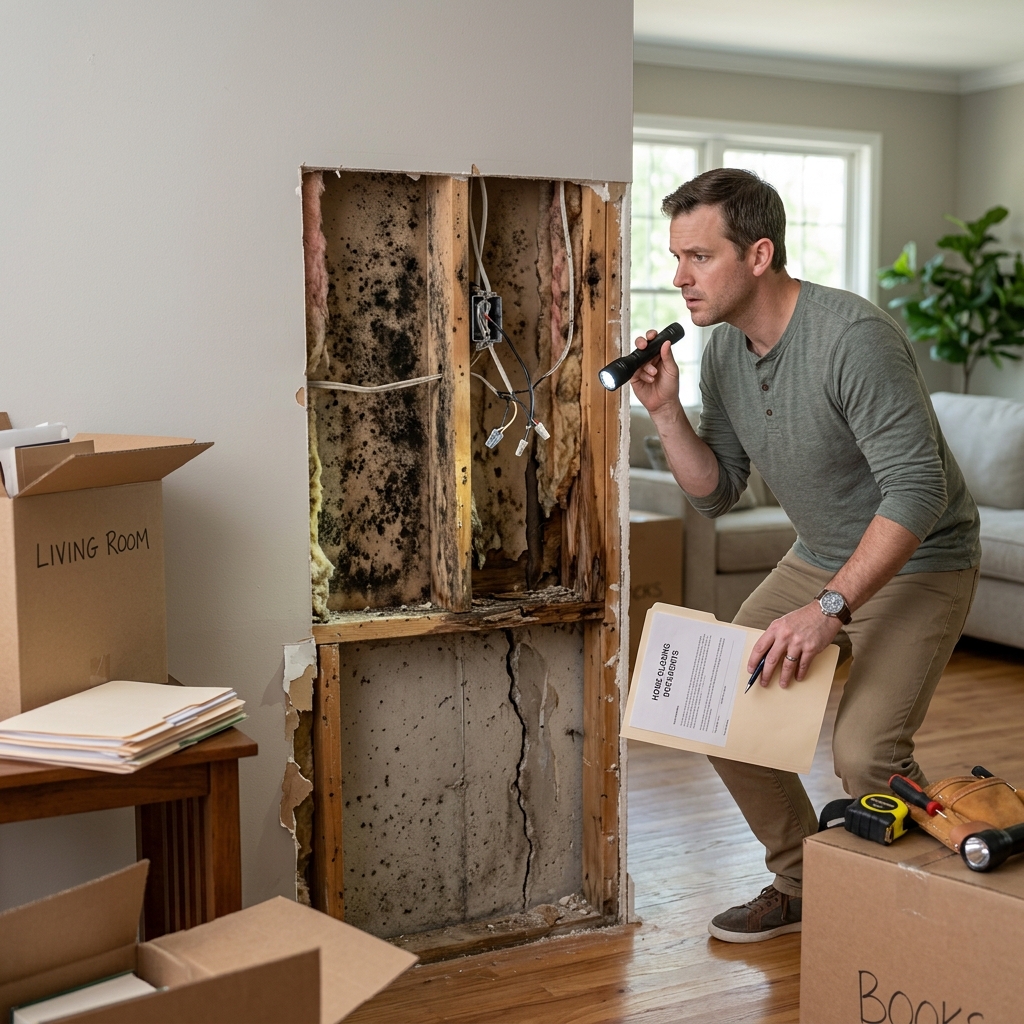
Few things are more stressful for a new homeowner than discovering serious problems in the property right after closing. Cracked foundations, chronic leaks, dangerous wiring, or mold issues can turn what should be an exciting milestone into a costly and confusing ordeal. This guide explains what typically happens when you uncover hidden defects after buying a home, how disclosure laws work, and what practical and legal options you may have.
Understanding Home Defects: Patent vs. Latent Problems
Not all defects are treated the same under the law. The distinction between what you could reasonably see and what was hidden often shapes your rights and remedies.
- Patent defects: Issues that are obvious upon a reasonable visual inspection, such as a broken window, missing shingles, or visible wall damage.
- Latent defects: Problems that are concealed or not reasonably discoverable during a typical pre-purchase inspection, such as hidden structural damage, underground plumbing failures, or intermittent leaks masked by fresh paint.
Most states place more responsibility on buyers for patent defects, while latent defects are more likely to raise questions about disclosure obligations and potential misrepresentation by the seller or other parties.
Seller Disclosure Obligations: What Must Be Revealed?
Residential real estate transactions in the United States are heavily influenced by state disclosure laws. While details vary, the underlying principle is that sellers cannot hide major problems they know about.
Common features of disclosure rules include:
- Duty to disclose known material defects: In many states, sellers must disclose significant known issues that would affect the property’s value or the buyer’s ability to safely use and enjoy the home.
- Written disclosure forms: Sellers typically complete a standardized form identifying structural problems, water intrusion, pest damage, mechanical system issues, and other known defects.
- No obligation for unknown issues: Generally, sellers are not liable for defects they genuinely did not know existed.
- Good faith standard: Disclosure must be made honestly and based on the seller’s best knowledge at the time, not on overly optimistic assumptions.
Failure to comply with these obligations can open the door to claims for breach of contract, misrepresentation, or violations of consumer protection statutes, depending on the jurisdiction.
When You Discover Defects After Closing: Initial Assessment
If you’ve already closed on the home and subsequently discover serious problems, your first goal is to understand what you’re dealing with before rushing into repairs or confrontations.
Step 1: Document the Problems Thoroughly
Detailed documentation will be critical whether you pursue insurance claims, negotiations with the seller, or litigation.
- Take clear photos and videos from multiple angles.
- Record dates when issues were discovered and any changes over time.
- Obtain written repair estimates from licensed contractors.
- Keep copies of all emails, texts, and letters involving the seller, real estate agents, and inspectors.
Step 2: Compare Defects to the Disclosure Form and Inspection Report
Next, determine whether the newly discovered issues are:
- Explicitly mentioned in the seller’s disclosure form.
- Addressed or flagged in the home inspection report.
- Entirely absent from both documents despite being substantial and long-standing.
Evidence that the defect existed before closing, was significant, and was not disclosed or was misrepresented is often central to establishing legal responsibility.
Who Might Be Responsible for Undisclosed Defects?
Responsibility does not always fall solely on the seller. Depending on the facts and local law, several parties may share potential liability.
| Possible Party | Potential Basis of Responsibility |
|---|---|
| Seller | Failure to disclose known defects, fraudulent concealment, or misrepresentation in the disclosure form or contract. |
| Buyer’s real estate agent | Negligent misrepresentation, failure to communicate known issues, or misleading assurances about condition (varies by state). |
| Seller’s agent | Knowledge of defects not communicated to the buyer, potential violation of professional or ethical duties. |
| Home inspector | Negligence in failing to identify defects that should have been discovered during a reasonably competent inspection. |
| Contractor or builder | Substandard work leading to defects, potentially covered by construction warranties or consumer protection law. |
Identifying all potentially responsible parties helps you and your attorney evaluate the strongest path to compensation.
Legal Theories Commonly Used in Hidden Defect Cases
If informal negotiations fail, buyers sometimes pursue formal legal remedies. Common civil claims related to undisclosed home defects include:
- Breach of contract: Alleging that the seller violated terms of the purchase agreement or related representations about property condition.
- Breach of warranty: Invoking express warranties in the contract, builder warranties, or home warranty agreements if defect types are covered.
- Failure to disclose / nondisclosure: Claiming the seller did not meet statutory or contractual disclosure obligations regarding known material defects.
- Fraud or fraudulent concealment: Alleging intentional hiding of issues, such as covering damage with cosmetic repairs or providing false information about prior problems.
- Negligence or negligent misrepresentation: Asserting that agents or inspectors failed to exercise reasonable care, resulting in you relying on incomplete or inaccurate information.
- Consumer protection or unfair trade practices: In some states, deceptive conduct in real estate transactions can trigger enhanced remedies, including multiple damages and attorney’s fees.
The viability of these claims depends heavily on state law, the language of your purchase contract, and the quality of your evidence. Statutes of limitations — often ranging from two to ten years depending on the type of claim — set strict filing deadlines, so timely legal advice is important.
Practical Options Before Filing a Lawsuit
Many buyers prefer to explore lower-conflict avenues before committing to litigation. Depending on your circumstances, you might consider the following strategies:
- Direct negotiation: Contact the seller to explain the defects, share documentation, and request partial reimbursement or assistance with repairs.
- Demand letter: Have a real estate attorney draft a formal letter outlining the issues, your legal position, and a proposed resolution. This can prompt serious negotiations.
- Mediation: Engage a neutral mediator to help facilitate a settlement between you, the seller, and potentially other involved parties.
- Ethics or regulatory complaints: In some jurisdictions, you may file complaints against real estate agents with local boards or consumer protection agencies.
- Small claims court: For modest repair costs within the local small claims limit, you might pursue a streamlined court process without full-scale litigation.
These options can sometimes resolve disputes more quickly and at lower cost than a traditional lawsuit, particularly when evidence is strong and parties are motivated to avoid prolonged conflict.
Insurance and Warranty Avenues
Before assuming all repair costs, review whether existing insurance or warranty arrangements offer any coverage.
Homeowner’s Insurance
Standard homeowner’s policies generally cover sudden and accidental damage, such as burst pipes or fire, but not long-standing defects or routine wear and tear.
- Check whether a particular event (e.g., a recent leak or collapse) falls under covered perils.
- Review exclusions related to pre-existing damage or maintenance issues.
- Discuss the situation with your insurer to clarify potential coverage and claims filing procedures.
Home Warranties and Builder Guarantees
If you purchased a separate home warranty or bought a newly built home, additional protections may apply.
- Home warranty plans may cover systems and major appliances for a set period, although they often exclude underlying structural problems.
- Builder warranties in new construction can cover specific defects for different durations, such as one year for workmanship and longer periods for structural issues, depending on the contract and local rules.
Understanding the scope and limitations of these protections helps you decide whether to pursue contractual remedies in addition to or instead of claims against the seller.
Working with a Real Estate Attorney
Because undisclosed defect cases often mix contract law, statutory disclosure rules, and consumer protections, consulting a lawyer familiar with real estate disputes can be invaluable.
- They can interpret your state’s disclosure statutes and statute of limitations timelines.
- They will help assess the strength of your evidence regarding what the seller and other parties knew, should have known, or represented.
- They can draft demand letters, negotiate settlements, and represent you in mediation or court if necessary.
Early legal guidance is especially important before you make major repairs or sign any agreements that might unintentionally waive rights.
Preventive Lessons for Future Buyers
Experiencing hidden defects can be painful, but it also offers insight into how to approach future purchases more defensively.
- Insist on a detailed, independent inspection by a licensed professional, and consider specialized inspections for sewer lines, structural components, or environmental hazards if the property or location suggests higher risk.
- Read disclosure forms carefully and follow up with targeted questions about prior leaks, repairs, pest treatments, and history of structural or mechanical issues.
- Document pre-closing conditions with your own photos and notes, especially if you notice anything that appears recently repaired or cosmetically refreshed.
- Discuss legal protections upfront with your agent and, where appropriate, a lawyer, including contract clauses that address known defects, repairs, and post-closing responsibilities.
While no process can guarantee a defect-free home, careful due diligence and clear contractual terms reduce the likelihood of unpleasant surprises and improve your position if disputes arise later.
Frequently Asked Questions (FAQ)
1. Am I stuck with all repair costs if defects appear after closing?
Not necessarily. Your options depend on whether the seller or other parties knew about the defect, whether it was disclosed, and what your state’s laws provide. If you can show that a known material defect was concealed or misrepresented and you suffered financial harm, you may have claims such as breach of contract, failure to disclose, or fraud.
2. What if the seller claims they did not know about the problem?
Sellers are generally liable only for issues they actually knew about or reasonably should have known. Proving knowledge may involve repair records, prior contractor invoices, or evidence of long-standing damage. If you cannot show knowledge or concealment, liability may be harder to establish, and you may need to focus on other parties such as inspectors or builders.
3. Can I cancel the sale and give the house back?
Rescission — legally unwinding the sale — is sometimes available but is typically reserved for serious cases involving fraud or major misrepresentation. Even where allowed, courts often prefer to award monetary damages rather than undo the entire transaction, especially after significant time has passed.
4. How long do I have to take legal action?
Time limits vary by state and by type of claim. Fraud claims often have shorter periods that begin when the problem is discovered, while contract-based claims may have longer windows. In some states, buyers might have two years for certain disclosure-related claims, and up to eight or more years for some contract claims. Consulting a local attorney promptly is important so you do not miss critical deadlines.
5. Should I start repairs right away?
Urgent safety issues should be addressed as needed, but for non-emergency repairs, it is wise to speak with a lawyer first. Extensive repairs can alter the condition of the evidence and may complicate claims if the seller or other parties dispute the nature or extent of the original defects.
References
- Discovering Home Defects Post-Sale — FindLaw. 2023-05-01. https://www.findlaw.com/realestate/buying-a-home/home-defects-discovered-after-the-sale.html
- What to Do When You Bought a Home With Problems Not Disclosed — U.S. News & World Report Real Estate. 2019-10-18. https://realestate.usnews.com/real-estate/articles/what-to-do-when-you-bought-a-home-with-problems-not-disclosed
- Discovery of Hidden Defects in Your Newly Purchased Home — Barna, Guzy & Steffen, Ltd. 2021-11-09. https://www.bgs.com/blog/2021/11/09/discovery-of-hidden-defects-in-your-newly-purchased-home/
- Defects Found After Closing Your Home — Silverman Law Office, PLLC. 2022-03-15. https://mttaxlaw.com/defects-found-after-closing-your-home/
- The House We Bought Has Undisclosed Defects – Now What? — Norris McLaughlin, P.A. 2018-04-30. https://norrismclaughlin.com/articles/the-house-we-bought-has-undisclosed-defects-now-what/
- Latent Defect Discovery After Home Purchase — Silverman Thompson. 2020-07-10. https://www.silvermanthompson.com/blog/latent-defect-discovery-after-home-purchase
Similar Articles








Read full bio of Sneha Tete


