
Hidden Cameras In The Home: Legal Risks, Rights, And Next Steps
How secret recordings inside the home can trigger privacy claims, criminal exposure, and fallout in a troubled marriage.
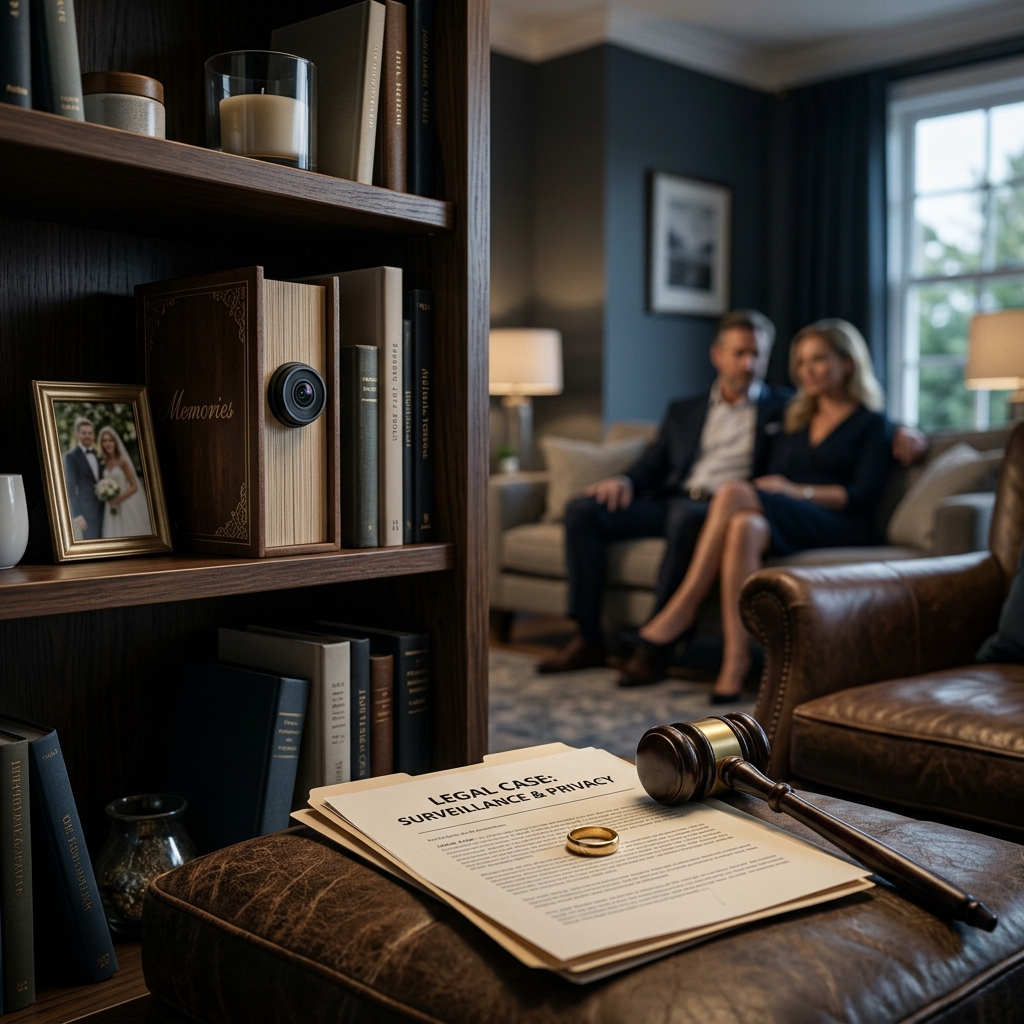
Secretly recording a spouse inside the home sits at the uneasy intersection of technology, privacy, and family conflict. While many people install cameras for security or to watch children, a hidden device aimed at tracking a partner’s private life can quickly cross legal and ethical lines. Understanding the difference between legitimate monitoring and unlawful surveillance is critical for anyone navigating a troubled relationship.
Why Spousal Surveillance Has Become a Legal Flashpoint
Affordable cameras, home security systems, and smartphone apps have made it easier than ever to record video and audio in private spaces. At the same time, courts and legislatures recognize a reasonable expectation of privacy in certain locations, even inside a shared home. When one spouse covertly records the other in those protected spaces, the situation may trigger:
- Potential criminal charges under anti-eavesdropping or secret recording statutes.
- Civil claims for intrusion upon seclusion, a core invasion of privacy tort recognized in many states.
- Serious consequences in divorce proceedings, including effects on property division and support.
- Deep breaches of trust that can permanently alter the relationship, even if no law was technically violated.
Because state laws differ and the facts in each marriage are unique, spousal surveillance cases are rarely straightforward. Yet some common principles help distinguish worrisome behavior from outright unlawful conduct.
Expectation of Privacy: The Central Legal Concept
Most privacy and camera laws revolve around where a person has a reasonable expectation of privacy. In simple terms, this means a place where an ordinary person would assume they are not being watched, recorded, or listened to without consent.
| Location | Typical Privacy Expectation | Implications for Hidden Cameras |
|---|---|---|
| Public street or sidewalk | Low – people expect to be seen | Video recording usually lawful, unless used to harass or stalk |
| Living room in shared home | Moderate – some privacy, but shared space | Cameras may be lawful, though secret recording can raise ethical and, in some states, legal issues |
| Bedroom | High – strong expectation of privacy | Hidden cameras often unlawful; may support criminal charges or civil invasion of privacy claims. |
| Bathroom or changing area | Very high – maximum privacy | Secret recording is frequently a crime under state peeping or secret recording laws. |
Courts often ask whether the recorded spouse was entitled to privacy in the specific room or situation. For example, some states treat bedrooms and bathrooms as “private places” in which hidden cameras without consent are explicitly prohibited.
Video vs. Audio: Different Legal Rules
Another critical distinction is between video-only recording and recording audio conversations. Federal law and many state statutes treat audio interception as wiretapping or eavesdropping, subject to strict consent rules.
- Video recording: Generally allowed on private property if it does not occur in places with heightened privacy expectations and does not violate specific state “private place” statutes.
- Audio recording: Often governed by one-party or two-party consent rules. In a one-party consent state, one person involved in the conversation must agree to the recording; in a two-party state, all participants must consent.
Secretly capturing audio from a spouse’s phone calls or conversations in the home can therefore trigger criminal liability, even when the same camera’s video function might be lawful.
Hidden Cameras Inside the Marital Home
From a legal perspective, the marital home presents a complicated canvas. On one hand, spouses typically have equal rights to be in shared spaces and to install security systems. On the other, each person retains privacy interests in certain private locations and activities. Several trends emerge from case law and commentary:
- Many states allow visible security cameras in common areas (kitchens, entryways, living rooms) if they do not record audio and are not used to stalk or harass.
- Covert cameras in private places—especially bedrooms, bathrooms, and changing areas—are frequently treated as unlawful intrusions upon seclusion, and can support civil claims and criminal charges.
- Some legal analyses suggest that a spouse may face obstacles suing for invasion of privacy in a wholly shared residence, but that changes when recording targets intimate spaces where privacy expectations are strongest.
- Evidence of secret recording can become highly relevant in divorce proceedings, influencing judges’ views of credibility, misconduct, and entitlement to financial support.
Even when a spouse technically has the right to be in a room, using that access to install hidden recording equipment aimed at the other’s private behavior can shift their conduct from mere “monitoring” to actionable surveillance.
Civil Liability: Invasion of Privacy Claims
In many jurisdictions, hidden spousal surveillance is analyzed under the doctrine of intrusion upon seclusion. This tort protects individuals from intentional intrusions into their private affairs that would be highly offensive to a reasonable person.
Typical elements courts examine include:
- Intentional intrusion: Installing a hidden camera, activating a secret recording app, or accessing private accounts.
- Private space or private activity: Recording in a bedroom, bathroom, or other location where privacy is clearly expected.
- Highly offensive conduct: Acts that a reasonable person would find shocking or deeply disturbing, such as recording intimate activities.
- Resulting harm: Emotional distress, humiliation, damage to reputation, or other injuries.
Some states also recognize related claims, such as intentional or negligent infliction of emotional distress, particularly when the surveillance causes severe psychological trauma.
Criminal Exposure: When Hidden Recording Becomes a Crime
Beyond civil lawsuits, spouses who secretly tape their partners may face criminal charges under state privacy and eavesdropping laws. Examples include:
- Secret recording in private places: Laws in states like Michigan and California make it a crime to install or use devices to observe or record individuals in private settings without consent.
- Audio interception: Violations of wiretapping and audio recording statutes, especially in two-party consent states.
- Peeping and voyeurism offenses: Criminal provisions targeting hidden observation of intimate activities, often including cameras in bathrooms, bedrooms, or changing rooms.
Convictions can carry fines, jail time, protective orders, and long-term consequences for employment and reputation. Even if prosecutors decline charges, the existence of a police report or investigation may surface in later civil or family court proceedings.
Security vs. Surveillance: Drawing Practical Boundaries at Home
Not every camera in a home is unlawful or problematic. Many families rely on visible devices to deter intruders or check on children. To reduce legal risk and relationship damage, several practical boundaries can help:
- Keep cameras out of intimate areas: Avoid placing devices in bathrooms, bedrooms, or any space where nudity or sexual activity is reasonably expected.
- Use visible rather than hidden devices in common spaces: Clearly displayed cameras are less likely to be construed as deceptive or invasive.
- Minimize audio recording: Disable microphones in home cameras where audio consent requirements are unclear or strict.
- Inform household members: Transparency with spouses, partners, and guests reduces surprises and potential claims of secret surveillance.
Even when the law allows certain recording practices, trust and communication within the relationship often matter more. Covert monitoring is rarely a healthy solution to broader marital problems.
Hidden Cameras and Divorce: How Evidence Can Backfire
Some spouses install cameras hoping to gather proof of infidelity, substance abuse, or poor parenting ahead of separation or divorce. While courts sometimes admit such evidence, it can also backfire:
- Admissibility concerns: Evidence obtained through illegal secret recording may be excluded or create separate legal liabilities.
- Impact on marital fault: Judges may treat invasive surveillance itself as marital misconduct, affecting alimony, property division, or custody assessments.
- Psychological fallout: Discovering hidden cameras can intensify conflict, reduce willingness to negotiate, and escalate litigation.
Family law practitioners often advise clients to seek legal guidance before resorting to self-help surveillance strategies. One ill-considered recording can reshape an entire case.
If You Discover a Hidden Camera: Practical Steps
Finding a concealed camera in a bedroom, bathroom, or other private area can be deeply upsetting. While every situation is different, common steps include:
- Ensure immediate safety: If you feel threatened or fear ongoing monitoring, consider leaving the location and contacting law enforcement.
- Document the device: Take photos, note the location, and record serial numbers or brand information without destroying evidence.
- Avoid tampering: While it may be legal to unplug or cover a device, damaging it could complicate later proceedings. Ask an attorney how best to preserve evidence.
- Consult a lawyer promptly: A privacy or family law attorney can explain local statutes, potential civil claims, and protective measures.
Handling the discovery carefully helps protect both legal options and personal safety.
Balancing Privacy Rights and Shared Property Interests
Spousal surveillance disputes often turn on a subtle tension: both individuals share the residence, yet each retains personal privacy rights. Courts weigh several factors when resolving these conflicts:
- Whether the recorded spouse had exclusive or primary use of the space (for example, a personal bedroom or dressing area).
- Whether the recording spouse had legitimate security concerns, such as prior break-ins, that could reasonably justify cameras in common areas.
- How secretive the surveillance was, including efforts to conceal devices and deny their existence.
- Whether recordings were used or threatened for purposes of coercion, harassment, or humiliation.
Legal outcomes therefore depend not only on where and how a camera was installed, but also on why and what happened afterward.
Key Takeaways for Spouses and Partners
- Hidden cameras in private places such as bedrooms and bathrooms are often illegal and can support both criminal charges and civil lawsuits.
- Audio recording carries stricter rules than video-only; secret interception of conversations may violate wiretapping laws, especially in two-party consent states.
- Sharing a home does not erase a spouse’s privacy rights in intimate spaces or activities.
- Using surveillance to gain advantage in divorce can backfire, harming credibility and legal standing.
- Open communication and professional legal advice are safer paths than covert monitoring in most marital conflicts.
Frequently Asked Questions
Is it always illegal to record my spouse inside our home?
No. In many states, visible cameras in common areas of a shared home are lawful, especially if they do not capture audio and are used for legitimate security purposes. Problems arise when recording occurs secretly in bedrooms, bathrooms, or other private places, or when audio is intercepted without required consent.
Can I sue my spouse for invasion of privacy if they used a hidden camera?
In some circumstances, yes. If your spouse intentionally recorded you in a private space where you had a reasonable expectation of privacy and the conduct would be highly offensive, you may have a claim for intrusion upon seclusion or related privacy torts. The strength of the case depends on state law and the exact facts.
What if my spouse says the camera was only for security?
Courts examine the placement, concealment, and use of the device. A visible camera facing a doorway is more likely to be treated as legitimate security, while a hidden camera aimed at a bed or shower may be viewed as voyeuristic, regardless of stated motives.
Are there different rules for audio recording during arguments at home?
Yes. Audio recording is subject to consent requirements under federal and state wiretapping laws. In one-party consent states, a person who participates in the conversation can often record it legally; in two-party consent jurisdictions, all participants must agree. Recording a spouse’s conversations with others without being present or without consent is particularly risky.
What should I do before installing any camera at home?
Consider where you plan to place the device, whether it captures audio, and who will be recorded. Review your state’s privacy and recording laws, and discuss the camera openly with household members. When in doubt, seek legal advice rather than relying on assumptions or online anecdotes.
References
- Understanding Spousal Surveillance Laws in Texas — Bryan Fagan, J.D. (LinkedIn summary of Texas law). 2023-06-01. https://www.linkedin.com/pulse/navigating-legal-maze-understanding-spousal-laws-texas-bryan-fagan-bz93c
- Hidden Spy Camera Lawsuit Lawyer — Buckfire Law Firm. 2024-01-10. https://buckfirelaw.com/case-types/sexual-abuse/hidden-camera/
- Legality of Security Camera Usage & Placement in 2026 — Security.org. 2026-02-15. https://www.security.org/security-cameras/legality/
- Invasion of Privacy Lawyer | Protect Your Rights — The Simon Law Group. 2023-09-20. https://www.thesimonlawgroup.com/invasion-of-privacy-lawyer/
- Can I sue my husband for using hidden cameras in my bedroom? — Avvo Legal Q&A (Attorney response). 2015-08-12. https://www.avvo.com/legal-answers/can-i-sue-my-husband-for-using-hidden-cameras-in-m-976067.html
- Hidden Camera Found During Divorce? Privacy Invasion Help — JustAnswer (Attorney advice). 2019-11-03. https://www.justanswer.com/criminal-law/r6f0r-divorce-found-hidden-camera-changing-area.html
Similar Articles








Read full bio of Sneha Tete


