
The Battle Over HHS Nondiscrimination Rules in Child Welfare
How federal rules and religious exemptions impact LGBTQ+ foster families.
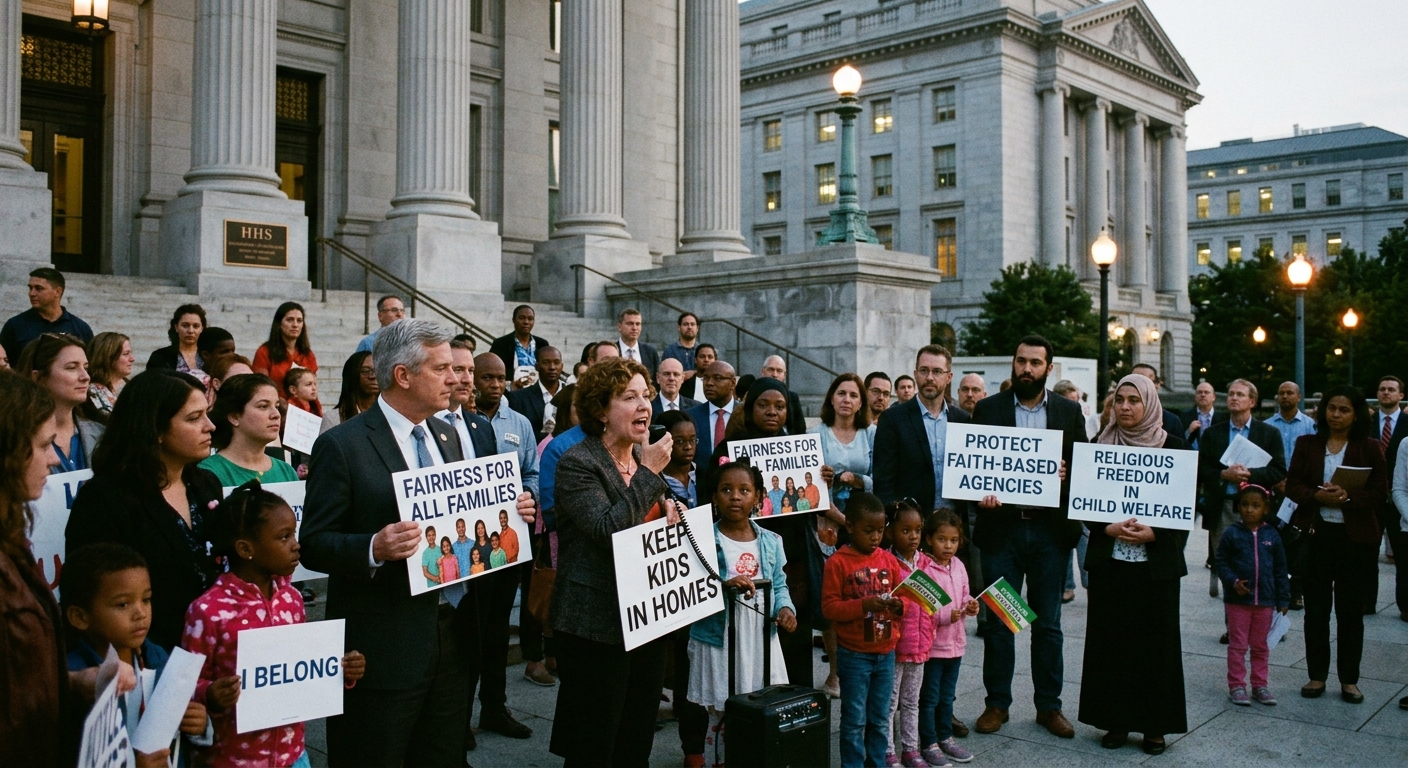
The Shifting Landscape of Federal Child Welfare Protections
The child welfare system in the United States serves as a critical safety net for hundreds of thousands of vulnerable children who have been removed from their homes due to abuse, neglect, or family crises. Backed by roughly $7 billion in federal grants distributed annually by the Department of Health and Human Services (HHS), this system relies heavily on a vast network of state agencies, private organizations, and faith-based groups to provide foster care, adoption services, and essential community support. However, an ongoing ideological and legal battle over federal nondiscrimination rules has cast a long, polarizing shadow over the administration of these taxpayer funds.
At the very heart of this debate is the question of whether federally funded child welfare agencies should be permitted to claim religious exemptions to bypass critical nondiscrimination policies. These policies are designed to protect LGBTQ+ youth and prospective foster and adoptive families from bias. When public funds intersect with private and faith-based administration, establishing clear baselines for equitable treatment is paramount. Stripping nondiscrimination requirements from federal grant conditions effectively enables organizations to deny placements, services, and support to marginalized groups. Understanding this dynamic requires a deep dive into the complex history of HHS rulemaking, the controversial deployment of religious exemptions, the demographic realities of foster care, and the widespread ramifications for systemic equity in child welfare.
Unpacking the Regulatory Whiplash in Health and Human Services
To grasp the current state of nondiscrimination policies within the child welfare system, one must trace the volatile recent history of HHS rulemaking. During the Obama administration, comprehensive guidelines were established to guarantee that no individual participating in or seeking benefits from federally funded programs could be discriminated against on the basis of sexual orientation, gender identity, religion, or sex. These rules were viewed as a monumental and necessary victory for civil rights advocates, ensuring a uniform baseline of protection across an array of public services, including the sprawling foster care network.
However, subsequent political shifts introduced starkly different priorities. The Trump administration pursued a highly deregulatory approach, introducing a Notice of Proposed Rulemaking that sought to essentially rescind these specific LGBTQ+ protections. Proponents of the rollback argued that enforcing strict nondiscrimination mandates violated the religious liberties of faith-based adoption and foster agencies. The finalized policies effectively allowed these entities to access taxpayer dollars without having to comply with sexual orientation and gender identity protections, citing the Religious Freedom Restoration Act (RFRA) as legal justification. This policy pivot created a massive loophole where organizations could refuse to work with same-sex couples, LGBTQ+ individuals, or even families of different faith traditions based entirely on the agency’s internal religious doctrines.
Civil rights organizations, legal scholars, and child advocacy groups sharply condemned these rollbacks. Their argument remains clear: federal taxpayer funds should not be utilized to subsidize discrimination, especially when the primary statutory objective of the program is the welfare of children. While recent administrations, including the Biden administration, have undertaken efforts to restore and strengthen these protections by emphasizing Section 504 of the Rehabilitation Act and proposing new affirming rules, the continuous back-and-forth has created systemic instability. For agencies, social workers, and prospective families, the lack of an enduring, codified federal protection has left the system deeply vulnerable to the ideological whims of executive branch transitions.
Religious Exemptions: A License to Discriminate?
A central pillar of this ongoing public policy conflict is the intense debate over religious exemptions. Faith-based organizations have historically played an undeniable and deeply entrenched role in American child welfare. Long before the establishment of modern public social services, religious groups were organizing orphanages and facilitating adoptions. Today, many of these same agencies argue that their religious beliefs dictate a traditional view of marriage, gender, and family structure, thereby preventing them from placing children with same-sex couples or transgender individuals.
Supporters of broad religious exemptions argue that without these legislative and regulatory carve-outs, many faith-based agencies would be forced out of the sector, thereby reducing the total number of child placement resources available to the state. They assert that compelling an organization to act in violation of its deeply held convictions is an unconstitutional infringement. In their view, the diverse landscape of child welfare providers means that prospective parents turned away by one agency can simply seek services elsewhere without significant hardship.
Conversely, civil rights advocates and child welfare experts categorize these religious exemptions as a state-sanctioned license to discriminate. They emphasize that when an organization voluntarily accepts federal taxpayer money to execute a state function—such as caring for children in government custody—it must adhere strictly to public standards of equality and fairness. The notion that a government-contracted agency can impose a religious litmus test on foster families is fundamentally at odds with the inclusive mandate of federal civil rights laws. Furthermore, advocates point out that the “go elsewhere” argument places an undue, deeply stigmatizing burden on marginalized families, effectively treating them as second-class citizens within a system designed to serve the public interest.
The Disproportionate Toll on LGBTQ+ Youth
The impact of these discriminatory policies extends far beyond prospective parents; the most direct and tragic victims are the children currently languishing in the system. Statistical data from national health organizations paints a sobering picture of the demographics of the foster care system. Research consistently demonstrates that LGBTQ+ youth are significantly overrepresented in out-of-home placements compared to the general population. A myriad of factors contributes to this reality, the most prominent being severe family rejection based on the child’s sexual orientation or gender identity, which frequently leads to homelessness or immediate state intervention.
When federal regulations permit child welfare agencies to bypass non-discrimination protections, these highly vulnerable youth are subjected to further institutional trauma. In care environments that do not affirm their identities, LGBTQ+ youth face drastically elevated risks of verbal abuse, placement instability, and institutional neglect. An agency utilizing a religious exemption might refuse to respect a transgender youth’s pronouns, actively block access to culturally competent mental health and medical resources, or intentionally place youth in hostile environments that attempt to suppress or “cure” their innate identities.
The consequences of placement in unsupportive or openly hostile foster homes are incredibly dire. LGBTQ+ youth in the child welfare system report significantly higher rates of clinical depression, severe anxiety, substance abuse, and suicidal ideation compared to their heterosexual and cisgender peers in care. Moreover, they are vastly more likely to experience multiple disruptions in their placements and are frequently funneled into restrictive, institutional group homes rather than nurturing family environments. By removing or weakening comprehensive anti-discrimination safeguards, federal policy directly jeopardizes the psychological, emotional, and physical well-being of the very youth it is legally obligated to protect.
Sidelining Qualified Foster and Adoptive Parents
The United States is currently facing a chronic, escalating shortage of qualified foster and adoptive homes. With hundreds of thousands of children in the foster care system and over 100,000 legally cleared and awaiting permanent adoption, the need for safe, loving, and stable environments has never been more acute. Each year, nearly 20,000 young adults age out of the foster care system without ever finding a permanent family, drastically increasing their lifelong vulnerability to poverty, incarceration, and chronic homelessness.
Against this backdrop of urgent, systemic need, permitting child placement agencies to categorically reject capable and willing families defies all logical child welfare practice. Studies show that same-sex couples are statistically far more likely to foster and adopt children than their different-sex counterparts. Furthermore, LGBTQ+ individuals are often significantly more willing to adopt older teenagers, sibling groups, and children with special medical or behavioral needs—demographics that are notoriously difficult to place and frequently languish in the system the longest.
When an HHS rule or a state policy allows an agency to turn away a prospective parent purely because they are gay, transgender, or belong to a minority faith tradition, it arbitrarily and unnecessarily shrinks the pool of available homes. This exclusionary practice artificially prolongs the time children spend in temporary, often unstable, state care. The absolute primary objective of the child welfare system must always be the “best interests of the child.” Denying a child a permanent, loving home simply because the prospective parents do not align with an agency’s theological views fundamentally betrays this core objective. In these instances, the focus tragically shifts from what the child desperately needs to what the private, federally funded contractor ideological desires.
State-Level Disparities and the Patchwork of Protections
The absence of a robust, permanent federal nondiscrimination mandate has resulted in a highly fragmented, state-by-state patchwork of protections. In states with progressive legislative frameworks, explicit laws exist to actively shield LGBTQ+ individuals and religious minorities from discrimination in both foster care and adoption. These states ensure that all licensed agencies, regardless of their private religious affiliation, adhere to equitable, evidence-based standards of care.
However, a growing number of states have enacted targeted religious exemption laws. These statutes expressly permit child welfare agencies to refuse to provide services that conflict with their religious beliefs without risking the loss of their state licenses or their influx of taxpayer funding. This geographic lottery means that a child’s or a family’s fundamental civil rights are entirely dependent on their zip code. For example, a same-sex couple in one state may be welcomed as a vital resource for youth in need, while a highly qualified couple in a neighboring state might be legally turned away at the door by an agency funded by their own tax dollars.
This chaotic and deeply unequal regulatory environment underscores the absolute necessity for comprehensive, unyielding federal intervention. Guidelines and reports issued by the Government Accountability Office (GAO) have repeatedly highlighted that a unified federal standard is required to provide necessary predictability and stability in federally funded services. The Department of Health and Human Services holds both the financial leverage and the administrative authority to demand equitable treatment across the board. Implementing and strictly enforcing inclusive rules is the only reliable method to eliminate the systemic biases currently entrenched in various state jurisdictions and ensure that all children receive the care they deserve.
Frequently Asked Questions (FAQs)
- What is the role of HHS in the U.S. child welfare system?
The Department of Health and Human Services (HHS) is responsible for administering billions of dollars in federal grants to state and local child welfare programs. These funds support foster care, adoption services, and abuse prevention initiatives. By attaching strict nondiscrimination conditions to these grants, HHS can regulate how state and private agencies operate to ensure marginalized groups are treated fairly and equitably.
- How do religious exemptions impact adoption and foster care?
Religious exemptions legally allow faith-based child welfare agencies to refuse services to certain individuals—such as LGBTQ+ prospective parents or those of differing religious beliefs—if serving them contradicts the agency’s internal religious tenets. Critics argue this amounts to state-sanctioned, taxpayer-funded discrimination that severely limits the number of available homes for children in need.
- Why are LGBTQ+ youth disproportionately affected by these rules?
LGBTQ+ youth are vastly overrepresented in the foster care system, often entering care due to family rejection over their identities. When federal non-discrimination rules are removed or broad religious exemptions are granted, these youth may be placed in environments that do not support them or hold active hostility toward their identities, leading to severe mental health consequences, trauma, and placement instability.
- Are faith-based organizations forced to shut down if religious exemptions are removed?
No. Removing religious exemptions does not force any organization to close its doors. It simply requires them to comply with standard federal nondiscrimination baseline policies if they voluntarily choose to accept federal taxpayer funds to perform government services like foster care and adoption placement.
- Does turning away LGBTQ+ parents actually harm children in foster care?
Yes. There is a critical, ongoing shortage of foster and adoptive homes in the United States. Since same-sex couples are statistically more likely to foster and adopt—including older children and those with special needs—turning them away arbitrarily reduces the number of loving homes available. This forces children to wait longer for permanent families or age out of the system without support.
References
- Protection from Discrimination in Child Welfare Activities — U.S. Department of Health and Human Services (HHS). 2023-08-08. https://www.hhs.gov/civil-rights/for-individuals/special-topics/child-welfare/index.html
- Foster Care: Further Assistance from HHS Would be Helpful in Supporting Youth’s LGBTQ+ Identities and Religious Beliefs — Government Accountability Office (GAO). 2022-04-20. https://www.gao.gov/products/gao-22-104688
- Fostering Discrimination: Religious Exemption Laws in Child Welfare and the LGBTQ Community — NYU Law Review. 2021-04-28. https://www.nyulawreview.org/issues/volume-96-number-1/fostering-discrimination-religious-exemption-laws-in-child-welfare-and-the-lgbtq-community/
- Are Sexual Minority Youth Overrepresented in Foster Care, Child Welfare, and Out-of-Home Placement? Findings from Nationally Representative Data — National Institutes of Health / PubMed. 2019-02-01. https://www.ncbi.nlm.nih.gov/pmc/articles/PMC6410408/
Similar Articles








Read full bio of Sneha Tete


