Heat Of Passion Defense: Key Principles And Legal Applications
Explore the heat of passion defense: how intense emotions can reduce murder charges to manslaughter in criminal cases.
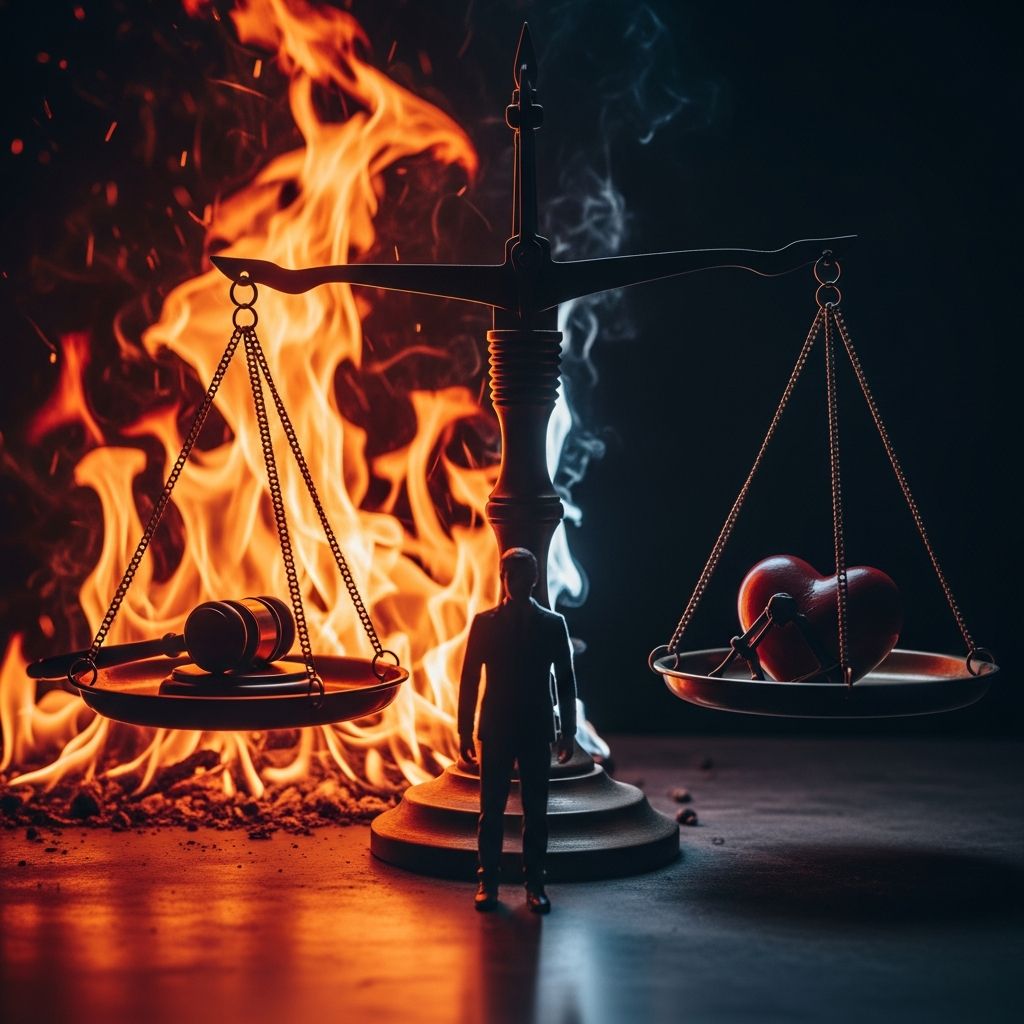
Understanding the Heat of Passion Defense: Key Principles and Applications
The heat of passion defense serves as a partial justification in criminal cases, particularly those involving homicide, where intense emotional states provoked by specific events can reduce a charge from murder to voluntary manslaughter. This doctrine acknowledges human vulnerability to sudden emotional surges without excusing the act entirely.
Core Elements of the Heat of Passion Doctrine
To successfully invoke this defense, defendants must satisfy both subjective and objective criteria. Subjectively, they must prove they acted while under an actual state of extreme emotional disturbance, such as rage or terror, impairing rational judgment. Objectively, the provocation must be deemed adequate, meaning a reasonable person would likely react similarly without time to cool off.
- Actual Passion State: The defendant experiences genuine, overwhelming emotion at the moment of the act.
- Adequate Provocation: The triggering event must meet societal standards of reasonableness.
- No Cooling Period: The response follows immediately, without opportunity for reflection.
- Causation Link: The provocation directly incites the fatal action.
These elements ensure the defense applies only to impulsive acts, not premeditated ones.
Historical Development and Legal Foundations
Rooted in common law, the provocation doctrine evolved to temper strict murder liability with considerations of moral culpability. Early English courts recognized that certain provocations diminished intent, influencing U.S. jurisdictions. Modern formulations appear in statutes like Alaska’s, defining heat of passion manslaughter explicitly. Federal law similarly describes voluntary manslaughter as killing “upon a sudden quarrel or heat of passion”.
Scholars emphasize the doctrine’s dual nature: subjective proof of the defendant’s emotional state paired with objective evaluation of provocation adequacy. This balances individual psychology against communal norms, preventing abuse while providing mercy.
Types of Provocation Recognized by Courts
Not all emotional triggers qualify. Courts assess provocation severity using precedents.
| Provocation Type | Typically Adequate? | Examples | Legal Rationale |
|---|---|---|---|
| Sexual Infidelity | Yes, if discovered suddenly | Spouse caught in adultery | Causes profound betrayal shock |
| Serious Assault | Yes | Violent battery or shooting attempt | Imminent threat to life |
| Mutual Combat | Sometimes | Fair fight escalating fatally | Depends on fairness and intensity |
| Insulting Words | No | Verbal abuse alone | Insufficient to arouse reasonable rage |
| Minor Battery | No | Slight physical contact | Lacks severity for objective standard |
Such distinctions prevent trivial excuses while validating profound human reactions.
Subjective vs. Objective Standards in Practice
The subjective prong requires evidence like witness testimony or expert psychological analysis confirming the defendant’s emotional turmoil. Objectively, juries evaluate if the provocation would enrage an ordinary person of similar background, incorporating evolving societal views on issues like intimate partner violence.
Blameworthy reasons undermine claims; for instance, anger rooted in prejudice (e.g., ‘gay panic’) fails objective scrutiny, as courts deem such responses unreasonable. This normative filter upholds justice by rejecting morally culpable passions.
Distinctions from Related Homicide Categories
Heat of passion differs sharply from other killings:
- First-Degree Murder: Requires premeditation and deliberation, absent in passion cases.
- Second-Degree Murder: Involves malice without planning; passion negates this if provocation suffices.
- Involuntary Manslaughter: Unintentional, criminally negligent deaths, unlike intentional passion acts.
- Excusable Homicide: In some states like California, accidental deaths in passion without intent or dangerous weapons may fully excuse liability.
This framework positions voluntary manslaughter as an intermediate offense, typically carrying 5-15 years imprisonment versus life for murder.
Strategic Use in Criminal Defense
Attorneys leverage this defense by gathering evidence of provocation immediacy and emotional impact. Witness accounts, forensic timelines, and mental health evaluations bolster claims. Prosecutors counter by highlighting cooling periods or inadequate triggers.
Jury instructions emphasize reasonableness, often citing model penal code standards for uniformity. Successful invocation dramatically alters outcomes, underscoring skilled advocacy’s role.
State Variations and Modern Reforms
While uniform in principle, applications vary. Some states adopt ‘extreme emotional disturbance’ broadening subjective scope beyond traditional passion. Others retain strict common law limits.
Reforms address gender biases, critiquing leniency for male-perpetrated intimate killings while scrutinizing female responses. Progressive views advocate expanded triggers like prolonged abuse, aligning with battered person syndrome. Federal consistency aids interstate cases.
Challenges and Criticisms of the Doctrine
Critics argue the objective standard imposes cultural biases, disadvantaging marginalized groups. Empirical studies question consistent application, noting racial and gender disparities. Proponents defend it as essential culpability calibration.
Evidentiary hurdles persist: proving subjective states retrospectively challenges defendants. Appellate courts refine standards, ensuring provocation excludes blameworthy motives.
Real-World Case Illustrations
Consider a defendant walking into spousal infidelity: immediate rage leading to fatal struggle often mitigates to manslaughter. Contrastingly, retrieving a weapon after provocation indicates cooling, preserving murder charges.
In assault scenarios, severe mutual violence may qualify if neither sought unfair advantage. These hypotheticals mirror judicial precedents shaping doctrine evolution.
Frequently Asked Questions About Heat of Passion
Can verbal insults alone trigger this defense?
No, courts consistently hold words insufficient without accompanying physical acts.
What is ‘adequate provocation’ legally?
It means conduct that would provoke extreme emotion in a reasonable person, judged objectively.
Does a time delay defeat the defense?
Yes, any cooling-off period allowing rational reflection negates the claim.
Is this defense available federally?
Yes, under 18 U.S.C. § 1112 for voluntary manslaughter via sudden quarrel or passion.
Can prejudice-based anger qualify?
No, courts reject blameworthy reasons like bias-driven rage.
Implications for Defendants and Policy
This defense humanizes criminal law, recognizing emotion’s role in culpability without absolving responsibility. It prompts nuanced jury deliberations, balancing retribution and mercy. Ongoing scholarship refines its contours for equity.
Defendants facing homicide charges should consult experienced counsel early, as timing affects evidence preservation. Understanding these nuances empowers informed legal strategies.
References
- Heat of Passion: Understanding Its Legal Definition — US Legal Forms. Accessed 2026. https://legal-resources.uslegalforms.com/h/heat-of-passion
- Heat of Passion Definition, Meaning & Usage — Justia Legal Dictionary. Accessed 2026. https://dictionary.justia.com/heat-of-passion
- The Heat of Passion and Blameworthy Reasons to be Angry — Georgetown Law American Criminal Law Review. 2018-04. https://www.law.georgetown.edu/american-criminal-law-review/wp-content/uploads/sites/15/2018/04/55-2-The-Heat-of-Passion-and-Blameworthy-Reasons-to-Be-Angry.pdf
- What is Excusable Homicide, or a Killing in the Heat of Passion? — Lawyers in Lafayette. 2025-05. https://www.lawyersinlafayette.com/blog/2025/may/what-is-excusable-homicide-or-a-killing-in-the-h/
- Voluntary Manslaughter — LawInfo. Accessed 2026. https://www.lawinfo.com/resources/criminal-defense/voluntary-manslaughter/
Similar Articles








Read full bio of Sneha Tete