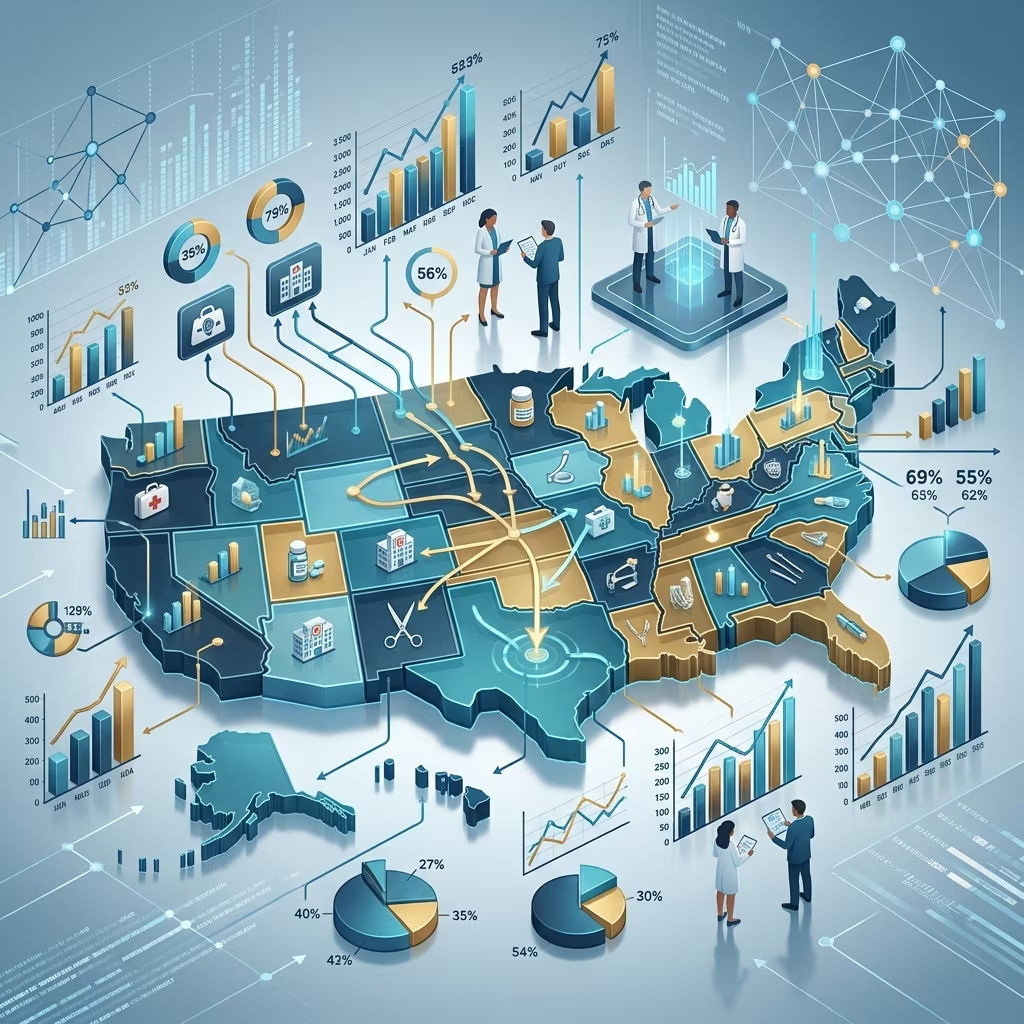
Health insurance claims might look similar on the surface—diagnosis codes, treatment charges, coverage decisions—but the types of claims filed most often can vary dramatically from one state to another. These differences reflect geography, climate, demographics, local industries, and the broader design of state health systems. Understanding these patterns is useful for patients trying to anticipate medical costs, lawyers handling personal injury cases, and policymakers working to improve access to care.
This article examines how health insurance claim trends differ between states, why those variations exist, and what they mean for people navigating medical treatment and injury-related claims. It is inspired by state-level observations but provides a broader, original analysis grounded in national data and legal considerations.
Why State-Level Claim Patterns Matter
Although most Americans have some form of health insurance—about 92% of people in the United States had coverage for at least part of 2023—what they use that coverage for often depends on where they live. A state’s most common claims can reveal:
- Prevalent health risks, such as chronic disease, workplace injuries, or environmental exposures.
- Gaps in preventive care, where treatable conditions escalate into emergency visits and hospital stays.
- Pressure points for insurers and providers, including specialties that see higher claim volumes and potential disputes over medical necessity.
- Patterns relevant to personal injury cases, where typical injuries and their costs can shape settlement values and litigation strategy.
Insurers track these trends closely. Industry reports show that health carriers regularly analyze claims data to monitor costs, utilization, and emerging risks. For individuals, the key is not mastering every statistic but recognizing that where you live can influence the medical problems you are most likely to encounter and the way your insurer responds.
Big Picture: Coverage and Health System Performance by State
Before looking at specific kinds of claims, it helps to understand how coverage and system performance differ between states. These factors shape both how often people seek care and what ultimately gets billed.
Coverage Rates Across States
States vary in how many residents have health insurance, whether through employer plans, individual coverage, Medicaid, Medicare, or other programs. National data show:
- In 2023, private insurance covered about 65.4% of people in the United States.
- Public coverage (such as Medicaid and Medicare) reached roughly 36.3% of the population.
- Coverage rates by state range from the high 70% range to the low 90% range when looking at insured adults, reflecting differences in economic conditions and policy choices.[10]
States that expanded Medicaid generally have higher coverage rates, which can lead to more preventive care visits and chronic disease management claims. States with lower coverage rates may see a greater share of emergency and high-acuity claims when uninsured or underinsured residents delay care until conditions become severe.
State Health System Performance
Performance rankings also help explain claim patterns. Some states have stronger primary care networks and hospital quality, while others struggle with avoidable hospitalizations or limited access in rural areas. A recent scorecard identified Massachusetts, Hawaii, New Hampshire, Rhode Island, and the District of Columbia as top performers, reflecting better access, quality, and outcomes compared to other states.
In high-performing states:
- Claims often involve ongoing management of chronic conditions, such as diabetes or heart disease, through regular outpatient care.
- Preventive services—vaccinations, screenings, and annual checkups—may appear frequently in claim data.
In lower-performing states:
- Insurers may see more emergency department claims for conditions that could have been managed earlier.
- Complications from untreated chronic disease may drive higher-cost inpatient claims.
Common Categories of Health Insurance Claims
Across the country, certain categories of claims appear consistently, even though their frequency and cost can vary by state. Understanding these categories helps explain how regional conditions shape overall patterns.
Acute Injury and Accident Claims
Injury-related claims often stem from:
- Motor vehicle crashes.
- Workplace incidents, especially in construction, manufacturing, agriculture, and transportation.
- Falls at home, in public spaces, or at work.
- Sports and recreational accidents.
States with high levels of driving, outdoor work, or adventure tourism may see more claims for fractures, head injuries, and soft-tissue damage. These claims are especially important in personal injury law, where medical bills and insurer decisions affect liability assessments, settlement negotiations, and trial strategy.
Chronic Disease Management
Claims related to chronic conditions cut across every region but can concentrate in states with greater burdens of cardiovascular disease, diabetes, and respiratory illnesses. Typical claims include:
- Regular visits to primary care physicians and specialists.
- Lab tests and imaging to monitor disease progression.
- Prescription drug claims for long-term medications.
- Hospitalizations when conditions worsen or complications arise.
States with older populations or higher rates of obesity and smoking often generate more of these claims. Insurers respond with disease management programs that aim to reduce hospitalizations and encourage medication adherence.
Environmental and Regional Health Risks
Geography can produce claim patterns that look unusual at the national level but entirely predictable locally. For example:
- States with hot climates may see more claims for heat-related illness and dehydration.
- Forested or rural regions can generate more claims for tick and insect bites, some leading to complications such as Lyme disease.
- Coastal areas may see more recreational injury claims related to water sports and boating.
Even seemingly minor environmental injuries can escalate into significant claims when infections, allergic reactions, or chronic conditions develop.
How Insurer Market Dynamics Shape Claims Handling
Claim patterns do not exist in isolation; they interact with how competitive the insurance market is in each state. Competition can affect premiums, network breadth, and claims practices.
States with More Competitive Insurance Markets
In some states, multiple insurers vie for commercial business, which can encourage broader provider networks and more responsive customer service. A study of market concentration found that states such as Oregon and Wisconsin had relatively competitive markets, while others were dominated by a small number of carriers.
In more competitive environments:
- Insurers may be more cautious about aggressive denials that could drive customers to competitors.
- Patients may have access to a wider choice of doctors and hospitals, influencing where and how claims arise.
States with Concentrated Insurance Markets
In states where a few insurers control most of the market, consumers may face:
- Limited plan options and narrower networks.
- Stronger negotiating leverage by insurers over reimbursement rates.
- Potentially more disputes over out-of-network billing or medical necessity.
This landscape can influence personal injury matters, as the dominant insurer’s policies on prior authorization, treatment length, and specialist referrals shape victims’ care pathways and claim costs.
Illustrative State-Level Differences in Claim Types
While every state has its own detailed claims profile, broad patterns can be grouped into themes that often appear in regional analyses of medical utilization and risk.
| Region Type | Typical Claim Emphasis | Underlying Drivers |
|---|---|---|
| Sunbelt states | Heat illness, dehydration, seasonal respiratory issues | High temperatures, outdoor work, urban air quality challenges |
| Rural and agricultural states | Farm and machinery injuries, insect and animal exposures | Agricultural labor, wildlife contact, limited trauma centers nearby |
| Industrial and manufacturing states | Orthopedic injuries, repetitive strain, chemical exposures | Factory and warehouse work, heavy equipment use |
| Coastal recreation hubs | Water sports injuries, boating accidents, tourism-related claims | High visitor volumes, recreational risk-taking, seasonal employment |
| States with high chronic disease burden | Cardiac, diabetic, and pulmonary management claims | Lifestyle patterns, socioeconomic factors, aging population |
These examples do not capture every nuance but highlight how environment and economy shape what residents are most likely to claim.
Legal Dimensions: Claims, Coverage, and Personal Injury Disputes
Health insurance claims are not just a matter of medical billing; they often intersect with personal injury law, contract rights, and state insurance regulations. When someone is injured by another party’s negligence, health insurance typically pays early medical bills, and liability carriers or defendants may later reimburse those costs through settlements or judgments.
Interaction Between Health Insurance and Personal Injury Claims
In many cases:
- The injured person’s health insurer pays initial treatment costs.
- A personal injury claim is filed against the responsible party or their insurer.
- The health insurer may assert a lien or subrogation right to recover what it spent if the injured person receives compensation later.
State-specific claim patterns matter because they influence the typical cost profile of an injury case. For instance, states with higher rates of severe trauma or specialized care may see larger medical bills that become central to settlement negotiations.
State Regulation and Claims Handling
Insurance departments in each state oversee carriers’ claims practices, including timeliness, accuracy, and appeals processes. Some states publish detailed reports on claim receipt, payment, and denial patterns by provider category, helping regulators and consumers see how insurers operate in practice.
Common regulatory concerns include:
- Unreasonable delays or denials in paying legitimate claims.
- Failure to follow state-mandated coverage rules, such as mental health parity or preventive service requirements.
- Opaque explanations of benefits that make it hard for patients to contest errors.
Because regulations vary, the same type of medical episode may be processed differently in different states—from prior authorization requirements to appeal timelines—affecting both patients and injury lawyers who must navigate those rules.
Practical Tips for Patients Navigating State-Specific Claim Patterns
Individuals cannot change the climate or economic base of their state, but they can take steps to manage health risks and claims more effectively.
Know Your Coverage and Local Risks
- Review your policy for emergency care, specialist visits, and out-of-network rules, especially if you live in an area where specialized care may require travel.
- Discuss local health risks with your doctor, such as heat exposure, insect-borne disease, or occupational hazards common in your region.
- Ask about preventive measures that insurers usually cover, including vaccines, screenings, and health education programs.
Document Care Carefully After an Injury
- Keep all medical records and bills related to the incident.
- Track communication with insurers, including explanations of benefits and denial notices.
- If a third party may be responsible, consider contacting a personal injury attorney to understand how your health insurance claims will interact with any potential liability claim.
Use Appeals and Consumer Protection Tools
- If a claim is denied, review the stated reason and the appeal process outlined in your plan documents.
- Many states require insurers to provide internal and external review options for disputed medical necessity decisions.
- State insurance departments often provide complaint forms and consumer guides to help residents challenge improper claim handling.
Frequently Asked Questions (FAQs)
1. Why do health insurance claim types differ so much from one state to another?
Claim types vary because states differ in climate, industries, demographics, coverage levels, and health system performance. A state with heavy agriculture will see more farm injuries, while a tourist-heavy coastal state may see more recreational accident claims. Policy choices, such as Medicaid expansion and network regulation, also influence which services residents use most.
2. Does living in a state with higher coverage rates mean I will have fewer out-of-pocket medical costs?
Higher coverage rates often correlate with better access to care and fewer uninsured medical bills, but individual costs still depend on your specific plan, deductibles, and network. States with broad coverage may have more options for affordable preventive care, which can reduce long-term expenses, but you should still evaluate your own policy’s terms.
3. How do state insurance regulators affect my claims experience?
Regulators set standards for claims handling, such as timelines for payment, rules against unfair denials, and requirements for clear explanations of benefits. Some states publish data on insurer claim practices and provide tools for consumers to file complaints or seek help when disputes arise. This oversight can improve fairness and transparency in how claims are processed.
4. What should I do if my health insurer denies a claim related to a personal injury?
First, review the denial letter to understand the reason—such as lack of medical necessity, coding issues, or network status. Check your plan’s appeal procedures and consider submitting additional medical documentation. If a third party is responsible for your injury, consult a personal injury lawyer, who can help coordinate health insurance appeals with liability claims and protect your right to compensation.
5. Are state differences in claim patterns taken into account when insurers set premiums?
Yes. Insurers use state-level data on claim frequency, severity, and overall health system performance to set premiums and design benefit structures. Regions with higher costs or more severe claims may face higher average premiums, though regulatory frameworks and competition can moderate these effects.
References
- U.S. Health Insurance Industry Analysis Report, Mid-Year 2024 — National Association of Insurance Commissioners (NAIC). 2024-07-01. https://content.naic.org/sites/default/files/health-2024mid-year-industry-report.pdf
- 10 Top States Where Health Insurers Dominate: New Study — American Medical Association. 2023-06-22. https://www.ama-assn.org/health-care-advocacy/access-care/10-top-states-where-health-insurers-dominate-new-study
- Health Insurance Coverage in the United States: 2023 (P60-284) — U.S. Census Bureau. 2024-09-12. https://www.census.gov/library/publications/2024/demo/p60-284.html
- Insurance Table for U.S. by State — National Institute on Minority Health and Health Disparities (NIH HDPulse Data Portal). 2024-01-15. https://hdpulse.nimhd.nih.gov/data-portal/_healthcare/insurance/table
- Health Care Claims Reports — New York State Department of Financial Services. 2023-12-31. https://www.dfs.ny.gov/reports_and_publications/health_care_claim_reports
- 2025 Scorecard on State Health System Performance — The Commonwealth Fund. 2025-06-12. https://www.commonwealthfund.org/publications/scorecard/2025/jun/2025-scorecard-state-health-system-performance