Hawaii Motor Vehicle Accident Legal Framework
Comprehensive guide to Hawaii's car accident laws, insurance requirements, and legal remedies.
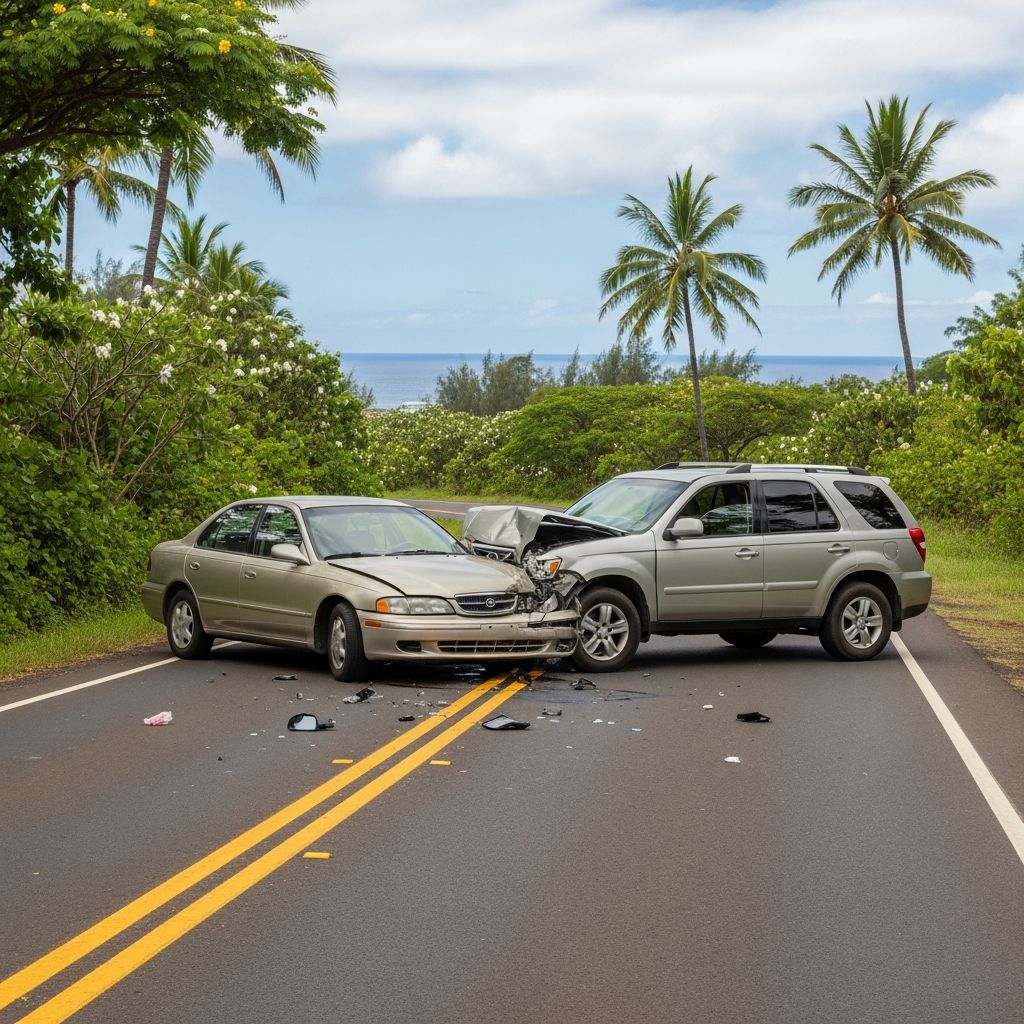
Navigating Hawaii’s Motor Vehicle Accident Regulations
When a motor vehicle collision occurs in Hawaii, understanding the state’s legal framework becomes essential for protecting your rights and pursuing appropriate compensation. Hawaii operates under a distinctive insurance system that differs significantly from many other states, establishing specific procedures and limitations for accident victims. The legal landscape governing vehicle accidents in Hawaii encompasses insurance requirements, liability standards, damage recovery limits, and filing deadlines that directly impact how victims can seek remedies for their losses.
The No-Fault Insurance Foundation
Hawaii operates under a partial no-fault insurance system, which fundamentally shapes how accident victims pursue compensation for their injuries. This system requires all drivers to maintain personal injury protection (PIP) insurance coverage, which serves as the first line of defense for medical expenses and certain economic losses following a collision. The no-fault structure means that regardless of who caused the accident, an injured person files a claim against their own insurance policy first, rather than immediately pursuing the at-fault driver’s insurance.
The minimum PIP coverage requirement in Hawaii mandates that all drivers carry at least $10,000 per person in personal injury protection insurance. This coverage applies to the policyholder and all passengers in the vehicle at the time of the accident. However, it is important to recognize that this no-fault benefit covers only specific types of losses. PIP insurance reimburses medical expenses necessary to treat accident-related injuries and can provide wage replacement for lost income due to recovery. Importantly, PIP coverage does not extend to vehicle damage, pain and suffering, emotional distress, or other non-economic losses that accident victims may experience.
Mandatory Liability Coverage Standards
Beyond the personal injury protection requirements, Hawaii law mandates that all drivers carry liability insurance to address damages they cause to other parties. The state establishes minimum liability coverage limits that every vehicle owner must maintain. These minimum requirements specify that drivers must carry at least $20,000 per person and $40,000 per accident in bodily injury liability coverage, as well as $10,000 in property damage liability coverage.
It is worth noting that Hawaii has implemented increases to these minimum liability coverage requirements, with new limits taking effect on January 1, 2026. The updated bodily injury liability coverage will increase to $40,000 per person and $80,000 per accident, while property damage liability coverage will increase to $20,000. These enhancements reflect the state’s effort to ensure that accident victims have adequate coverage available to recover damages from at-fault drivers.
Understanding When You Can Pursue a Lawsuit
The no-fault system in Hawaii does not prevent accident victims from filing civil lawsuits in certain circumstances. Hawaii law provides what is known as a “lawsuit threshold,” which defines the situations where injured parties can pursue legal action against the at-fault driver beyond what their no-fault coverage provides. This threshold applies when an accident results in specific categories of injury severity.
Accident victims in Hawaii may file a personal injury lawsuit against the responsible driver when the collision causes death, severe and permanent injury, serious and permanent disfigurement, or injuries that result in $5,000 or more in no-fault medical payments. These thresholds ensure that victims experiencing substantial harm can access the full range of damages available through the civil system, including compensation for pain and suffering and emotional distress. Additionally, certain circumstances such as accidents involving criminal conduct, driving under the influence, vehicle manufacturing defects, or faulty vehicle repairs may permit lawsuits regardless of injury severity.
The Comparative Negligence Doctrine
Hawaii recognizes comparative negligence as a fundamental principle in determining liability and calculating damages in accident cases. This legal doctrine acknowledges that accidents often result from contributions by multiple parties rather than a single at-fault driver. Under Hawaii’s comparative negligence system, if an accident victim bears some responsibility for the collision, their damage recovery becomes proportionally reduced by their percentage of fault.
The mathematical application of comparative negligence operates straightforwardly. If a jury determines that an injured plaintiff was 30 percent at fault for an accident while their damages totaled $100,000, they would receive only 70 percent of that amount, or $70,000, with their recovery reduced by their proportional responsibility. This principle ensures that victims receive fair compensation aligned with their degree of culpability in the accident.
However, Hawaii maintains what is termed a “modified comparative negligence” standard that imposes an absolute bar on recovery in certain situations. Under this rule, if a plaintiff’s own negligence exceeds 50 percent—meaning they bear more responsibility for the accident than the at-fault party—they cannot recover any damages whatsoever. This threshold creates a bright-line rule where plaintiffs found to be more than 50 percent responsible lose their entire right to pursue compensation, regardless of the severity of their injuries or economic losses.
Establishing Liability Against Multiple Defendants
Motor vehicle accident cases in Hawaii may involve multiple responsible parties beyond the other driver. The legal system recognizes that various entities can bear liability for injuries sustained in collisions. Potential defendants in vehicle accident lawsuits include the following categories:
- Vehicle manufacturers and dealers responsible for design defects, manufacturing defects, or failure to warn of known hazards
- Repair facilities that performed faulty repairs or failed to properly service vehicles, contributing to mechanical failure
- Bars, restaurants, and hotels that served alcohol to patrons who were intoxicated or underage and subsequently caused accidents
- Employers whose workers caused accidents while performing job duties or whose businesses provided alcohol at company events without preventing intoxicated driving
- Insurance companies liable for damages under policy coverage for accidents caused by insured drivers
- Property owners responsible for dangerous road conditions on their land that caused vehicle collisions
Documentation and Reporting Requirements
Proper procedures immediately following a vehicle accident significantly impact the strength of any subsequent insurance claim or lawsuit. Hawaii accident victims should understand the important steps required to protect their legal interests and establish clear evidence of fault.
The first priority after any accident should be contacting law enforcement to have officers document the incident at the scene. While other drivers may attempt to convince accident victims to settle matters privately without police involvement, this approach creates serious risks. Insurance companies rely heavily on police reports when evaluating claims, and the absence of an official report can negatively impact your ability to recover compensation. A police report creates an independent, objective record of the accident circumstances, driver statements, and initial fault determination.
At the accident scene, injured parties should exchange complete information with all other drivers involved, including full names, addresses, telephone numbers, email addresses, insurance company names, policy numbers, and driver’s license numbers. This information exchange ensures that you have direct contact details and insurance information necessary to file claims promptly. Additionally, obtaining the names and contact information of any witnesses who observed the accident provides independent corroboration of how the collision occurred.
Statutory Time Limits for Filing Claims
Hawaii law establishes strict deadlines for filing claims related to motor vehicle accidents, which significantly impact an accident victim’s ability to pursue compensation. These time limitations, known as statutes of limitations, create absolute bars to legal action once the deadline passes.
For most motor vehicle accident claims in Hawaii, accident victims have two years from either the date of the accident or the date of the last personal injury protection payment to file a civil lawsuit for their injuries. This two-year window represents the outer limit for pursuing legal remedies through the civil court system. Once this deadline expires, injured parties may lose their entire legal right to seek compensation for their losses, regardless of the merit of their claim or the severity of their injuries.
The importance of understanding and adhering to this filing deadline cannot be overstated. Accident victims should consult with legal counsel well before this deadline to ensure proper filing if they intend to pursue a lawsuit. Failure to file within the two-year period results in dismissal of any subsequent lawsuit and complete loss of the legal right to recover damages.
Types of Compensable Damages
Accident victims in Hawaii can pursue recovery for multiple categories of damages through both no-fault insurance and civil lawsuits, depending on the circumstances of their specific case. Understanding the distinction between these damage categories helps victims maximize their recovery.
Personal injury protection insurance covers medical expenses incurred to treat accident-related injuries, up to the policy limit, as well as wage replacement for income lost due to recovery period. For more severe injuries, Hawaii law permits victims to pursue additional compensation through civil lawsuits beyond what PIP covers. These additional damages include reimbursement for medical bills exceeding PIP limits, compensation for continued medical care and rehabilitation, payment for permanent disability or functional limitations, recovery of future lost income if injuries prevent return to previous employment, and damages for pain and suffering and emotional distress resulting from the accident.
Special Considerations for Vulnerable Road Users
Hawaii’s legal framework recognizes that certain categories of road users face heightened vulnerability in motor vehicle accidents. The state has implemented protections recognizing that pedestrians, cyclists, motorcyclists, and moped riders face disproportionate injury risks in collisions with larger vehicles. These vulnerable road users may have specific legal protections and remedies available under Hawaii law, and their accident claims often warrant particular attention to establishing liability and pursuing maximum available compensation.
Recent Legislative Developments
Hawaii has recently undertaken efforts to enhance traffic safety and modify legal requirements related to vehicle operations. The state has considered expanded “move over” laws requiring drivers to change lanes and slow down when approaching emergency vehicles or persons stopped on roadside. Additionally, legislative proposals have examined whether driver’s license renewals should include written knowledge tests to address rising traffic fatalities. These evolving legal requirements underscore the importance of staying informed about current Hawaii motor vehicle regulations.
Frequently Asked Questions
Q: What is the difference between no-fault insurance and liability insurance in Hawaii?
A: No-fault insurance (PIP) covers your own medical expenses and lost wages regardless of fault, while liability insurance covers damages you cause to others when you are at fault for an accident.
Q: Can I sue the other driver even though Hawaii has no-fault insurance?
A: Yes, you can sue the at-fault driver if your injuries meet the lawsuit threshold, including severe or permanent injury, serious disfigurement, or medical expenses exceeding $5,000.
Q: What happens if I am partially at fault for an accident?
A: Your damages recovery is reduced by your percentage of fault, but you cannot recover anything if you are found more than 50 percent responsible for the accident.
Q: How long do I have to file a claim after a Hawaii car accident?
A: You generally have two years from the accident date or last PIP payment to file a lawsuit for injury damages.
Q: Does my PIP insurance cover vehicle damage?
A: No, PIP covers only medical expenses and lost wages, not vehicle damage or property damage.
Q: What minimum insurance coverage must I carry in Hawaii?
A: You must carry at least $10,000 PIP, $20,000/$40,000 bodily injury liability, and $10,000 property damage liability, with increases effective January 1, 2026.
References
- Motor Vehicle Accidents — Cronin Fried Law Group. 2024. https://www.croninfried.com/motor-vehicle-accidents/
- Hawaii lawmakers to consider expanding ‘move over’ law — Hawaii News Now. 2025. https://www.youtube.com/watch?v=nfTtabIMmVc
- Gov. Green Signs Executive Order to Address Rising Traffic Fatalities — Office of the Governor, State of Hawaii. 2026. https://governor.hawaii.gov/newsroom/office-of-the-governor-news-release-gov-green-signs-executive-order-to-address-rising-traffic-fatalities/
- Hawaiʻi May Add A Test To Driver’s License Renewals As Traffic Deaths Climb — Civil Beat. 2026. https://www.civilbeat.org/2026/01/hawaii-may-add-test-drivers-license-renewals-traffic-deaths/
Similar Articles








Read full bio of Sneha Tete