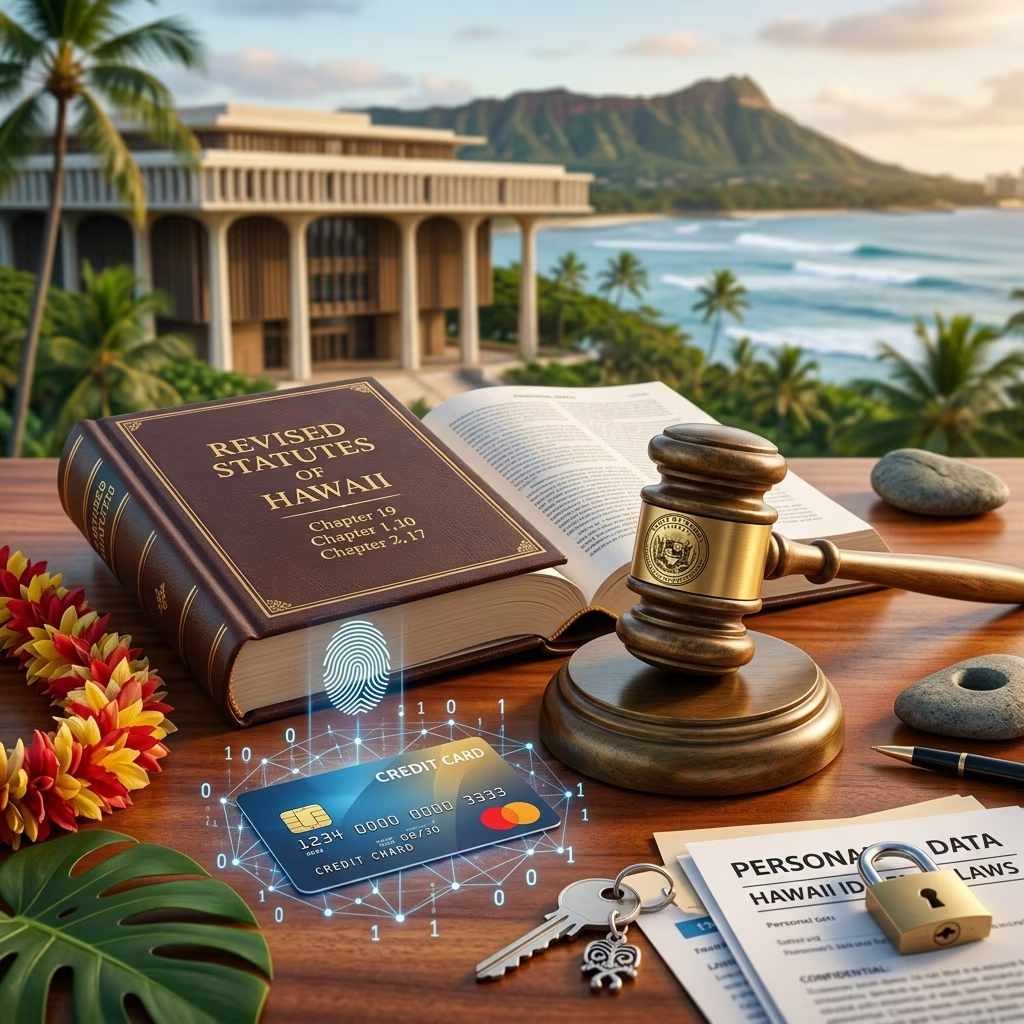
Identity theft is one of the fastest-growing financial crimes in the United States, and Hawaii has enacted specific laws in its penal code to address this problem and protect residents from misuse of their personal information. This guide explains how identity theft is defined under Hawaii law, the different degrees of the offense, potential penalties, and practical steps you can take to prevent and respond to identity theft.
What Counts as Identity Theft in Hawaii?
Under Hawaii law, identity theft centers on the transmission or use of another person’s personal information with the intent to commit theft or other serious crimes. Personal information typically includes data that can identify or financially impersonate someone, such as:
- Social Security numbers
- Dates of birth
- Bank account and credit card numbers
- Driver’s license numbers
- Usernames and passwords linked to financial accounts
Hawaii’s identity theft statutes focus on situations where a person:
- Transmits another person’s personal information orally, in writing, or electronically
- Uses that information without authorization
- Acts with the intent to commit theft or other specified crimes using that information
Importantly, the law requires the use or transmission of information associated with a real person, not a purely fictitious identity, for an identity theft conviction.
Degrees of Identity Theft and Felony Classifications
Hawaii divides identity theft into three primary degrees, each tied to the seriousness of the underlying crime and the level of financial harm. All three degrees are felony offenses, meaning they can carry significant prison time and fines.
| Degree of Identity Theft | Underlying Intent | Felony Class | General Severity |
|---|---|---|---|
| First Degree | Intent to commit a Class A felony (e.g., kidnapping, extortion, certain types of murder) | Class A felony | Most serious; highest penalties |
| Second Degree | Intent to commit theft in the second degree (typically involving higher-value property or more significant loss) | Class B felony | Serious felony; substantial penalties |
| Third Degree | Intent to commit theft in the third or fourth degree (lower-value property or less severe financial harm) | Class C felony | Felony offense; lower but still significant penalties |
Identity Theft in the First Degree (Most Serious)
First-degree identity theft applies when a person transmits another individual’s personal information with the intent to commit a Class A felony, such as kidnapping, extortion, or murder. In practice, this could involve using someone’s identity to facilitate serious violent or organized criminal activity.
Because it is a Class A felony, first-degree identity theft carries the toughest sentencing range under Hawaii law, which may include long-term imprisonment and substantial fines. Exact penalty ranges are set by the Hawaii Penal Code and depend on the specific facts and the defendant’s history.
Identity Theft in the Second Degree
Second-degree identity theft occurs when a person transmits another person’s personal information—by oral, written, or electronic means—with the intent to commit theft in the second degree. Theft in the second degree typically involves more significant property values or circumstances that elevate the seriousness of the theft under the penal code.
Key elements for second-degree identity theft include:
- Transmission of personal information belonging to a real individual
- Transmission may be direct or indirect
- Use of any communication channel (spoken, written, or electronic)
- Specific intent to commit second-degree theft using that information
This offense is classified as a Class B felony, which still carries substantial potential prison time and fines. Courts also consider case-specific factors, such as the amount of money involved and any prior convictions.
Identity Theft in the Third Degree
Third-degree identity theft applies when the transmission of another person’s personal information is done with the intent to commit theft in the third or fourth degree. These lower theft degrees are often tied to smaller property values or less severe harms.
Elements include:
- Transmission of personal information of another person
- Transmission via oral, written, or electronic means
- Intent to commit theft in the third or fourth degree
Third-degree identity theft is a Class C felony, reflecting that even relatively lower-dollar identity-related fraud is treated seriously under Hawaii law.
Who Prosecutes Identity Theft in Hawaii?
Identity theft cases in Hawaii may be prosecuted by any authorized prosecuting attorney within the state’s criminal justice system. Depending on the circumstances, cases may originate from:
- County prosecutors (e.g., Honolulu, Maui, Kauai, Hawaii County)
- State-level agencies working with local law enforcement
Because identity theft often crosses county or even state lines, investigations may involve coordination with federal agencies or multi-jurisdictional task forces, especially where large-scale or organized schemes are involved.
Criminal Penalties and Possible Consequences
The precise sentence for any identity theft conviction depends on the degree of the offense, prior criminal history, and specific facts of the case. However, people convicted of identity theft in Hawaii typically face a combination of:
- Incarceration (prison terms consistent with Class A, B, or C felony ranges)
- Fines, which may be substantial for higher-degree felonies
- Restitution orders requiring repayment to victims or institutions for financial losses
- Long-term criminal record impacts affecting employment, housing, and licensing
Because identity theft often involves multiple victims, financial institutions, and cross-border transactions, courts may also consider aggravating factors, such as sophistication of the scheme, number of victims, and total loss amount.
How Hawaii Law Protects Identity Theft Victims
In addition to criminal prosecution, Hawaii residents have access to federal and state-level resources designed to help victims detect, respond to, and recover from identity theft. These resources focus on correcting credit records, stopping ongoing fraud, and assisting law enforcement.
Federal Trade Commission (FTC) Resources
The Federal Trade Commission operates the main U.S. government identity theft information hub. Its identity theft services include:
- Guides such as “Take Charge: Fighting Back Against Identity Theft” explaining step-by-step recovery actions
- An online reporting mechanism to create an identity theft report
- An identity theft case database used by law enforcement agencies
- Dedicated hotline: 877-438-4338 (877-ID-THEFT)
Social Security Administration Assistance
If your Social Security number has been misused, the Social Security Administration (SSA) provides information on how to report fraudulent use and correct your earnings record. The SSA’s fraud hotline is:
- 800-269-0271
Credit Bureaus and Fraud Alerts
Major credit reporting agencies can place fraud alerts or security freezes on your credit files, making it harder for identity thieves to open new accounts in your name. The three nationwide bureaus are:
- Equifax – Fraud Division: 1-888-766-0008
- Experian – Credit Fraud Center: 888-397-3742
- TransUnion – Fraud Victim Assistance Department: 800-680-7289
In addition, many states, including Hawaii, have enacted laws allowing consumers to place a security freeze on their credit reports, which prevents new creditors from accessing the report without authorization. This can significantly reduce the risk of new fraudulent accounts being opened.
Practical Steps to Prevent Identity Theft
While Hawaii’s criminal laws aim to punish offenders, prevention starts with everyday decisions about how you handle your personal information. Government and law enforcement agencies recommend a mix of physical, financial, and digital security measures.
Protecting Physical Documents
- Store sensitive documents (Social Security card, birth certificate, passports) in a secure location at home.
- Carry only essential cards and identification in your wallet; leave Social Security cards at home.
- Shred bank statements, bills, and other financial records before discarding them.
- Promptly review new deliveries of credit cards and checks to confirm they arrived and were not intercepted.
Safe Use of Financial Accounts
- Never give your ATM PIN or online banking password to anyone.
- Do not share personal financial information over the phone unless you initiated the call and are sure of the recipient’s identity.
- Immediately report lost or stolen checks and credit or debit cards.
- Regularly review monthly statements and question any unfamiliar or suspicious charges.
- If a regular bill fails to arrive, contact the company promptly to see if your mailing address was changed without authorization.
Online and Computer Security
- Use strong, unique passwords for financial and email accounts, and do not reuse them across services.
- Before entering financial information on a website, look for https:// and a padlock symbol in the browser address bar, indicating a secure connection.
- Be cautious with unsolicited emails requesting personal data; do not click suspicious links or attachments.
- Keep your operating system and browser updated with the latest legitimate security patches.
- Install and routinely update firewall, anti-virus, anti-spyware, and anti-spam software.
- Consider enabling parental controls if children use the household computer, to reduce risky online behavior.
What to Do If You Suspect Identity Theft
If you believe you are a victim of identity theft in Hawaii, prompt action can limit the damage and improve the chances of successful recovery and prosecution.
Immediate Actions
- Contact the credit bureaus to place a fraud alert or security freeze on your credit file.
- Notify affected financial institutions (banks, credit card issuers, credit unions) and ask them to close or flag compromised accounts.
- File a police report with local law enforcement, documenting the suspected identity theft.
- Report the incident to the FTC via its identity theft website or hotline (877-438-4338).
- Consider contacting the SSA if your Social Security number has been misused.
Longer-Term Recovery Steps
- Request and review credit reports from Equifax, Experian, and TransUnion to identify unauthorized accounts or inquiries.
- Dispute fraudulent charges or accounts with creditors and the credit bureaus in writing.
- Keep copies of all correspondence and records, including police reports and case numbers.
- Monitor your mail and email for notices of accounts you did not open or changes you did not authorize.
- Update passwords and security questions where appropriate.
Consumer Rights and Legal Assistance
Victims of identity theft in Hawaii may have additional rights under federal and state consumer protection laws, including rights to:
- Obtain free copies of their credit reports in certain circumstances
- Place fraud alerts or security freezes on credit files
- Dispute inaccurate information on their credit reports
- Seek legal representation to pursue civil remedies, where available
Because identity theft cases can be complex, involving overlapping federal and state statutes, many victims consult attorneys experienced in consumer law or criminal defense to better understand their options and potential civil claims.
Frequently Asked Questions (FAQs)
Is identity theft always a felony in Hawaii?
Yes. Hawaii’s identity theft statutes classify first, second, and third-degree identity theft as Class A, B, and C felonies, respectively. While the severity varies by degree, all are felony-level crimes.
Does Hawaii law cover online identity theft?
Yes. Hawaii’s statutes explicitly include transmission of personal information by electronic means, which covers online and digital channels, such as email, websites, and other internet-based communication.
What is the difference between fraud alerts and security freezes?
A fraud alert is a notice on your credit file telling creditors to take extra steps to verify your identity before issuing credit, while a security freeze more thoroughly restricts new creditors from accessing your credit report, preventing most new accounts from being opened.
Do I need a lawyer if I’m a victim of identity theft?
Not every victim needs an attorney, but legal advice can be helpful if you face significant financial losses, disputed debts, or complex situations involving multiple creditors or potential civil claims. An attorney can also help you navigate interactions with law enforcement and financial institutions.
How can I tell if an email about my account is a scam?
Be wary of emails that:
- Request personal or financial information urgently
- Contain spelling or grammatical errors
- Use generic greetings instead of your name
- Ask you to click links to “verify” or “unlock” an account
Instead of clicking links, go directly to the institution’s official website or call its verified phone number. Government and law enforcement agencies emphasize not responding directly to suspicious messages or providing data in response to them.
References
- Hawaii Revised Statutes §708-839.7, Identity theft in the second degree — State of Hawaii. 2009-01-01. https://law.justia.com/codes/hawaii/title-37/chapter-708/section-708-839-7/
- 708-839.8 Identity theft in the third degree — WomensLaw.org. 2023-01-01. https://www.womenslaw.org/laws/hi/statutes/708-8398-identity-theft-third-degree
- Honolulu Identity Theft Lawyer – Identity theft crimes are a felony in Hawaii — Myles S. Breiner, Attorney at Law. 2022-06-01. https://www.hawaiicriminaldefense.net/criminal-defense/identity-theft/
- ID Theft Related Resources — Hawaii Department of the Attorney General. 2021-05-01. https://ag.hawaii.gov/quick-links/id-theft/id-theft-related-resources/
- ID Theft Prevention — Hawaii Law Enforcement Federal Credit Union. 2020-09-01. https://www.hlefcu.com/resources/id-theft-prevention.html
- New Identity Theft Laws to Protect Hawaii’s Consumers — Government Technology. 2007-08-01. https://www.govtech.com/security/New-Identity-Theft-Laws-to-Protect.html