
Hawaii Child Custody: 10 Key Factors Judges Use Parents’ Guide
A clear guide to custody rules, parenting plans, and court factors in Hawaii.
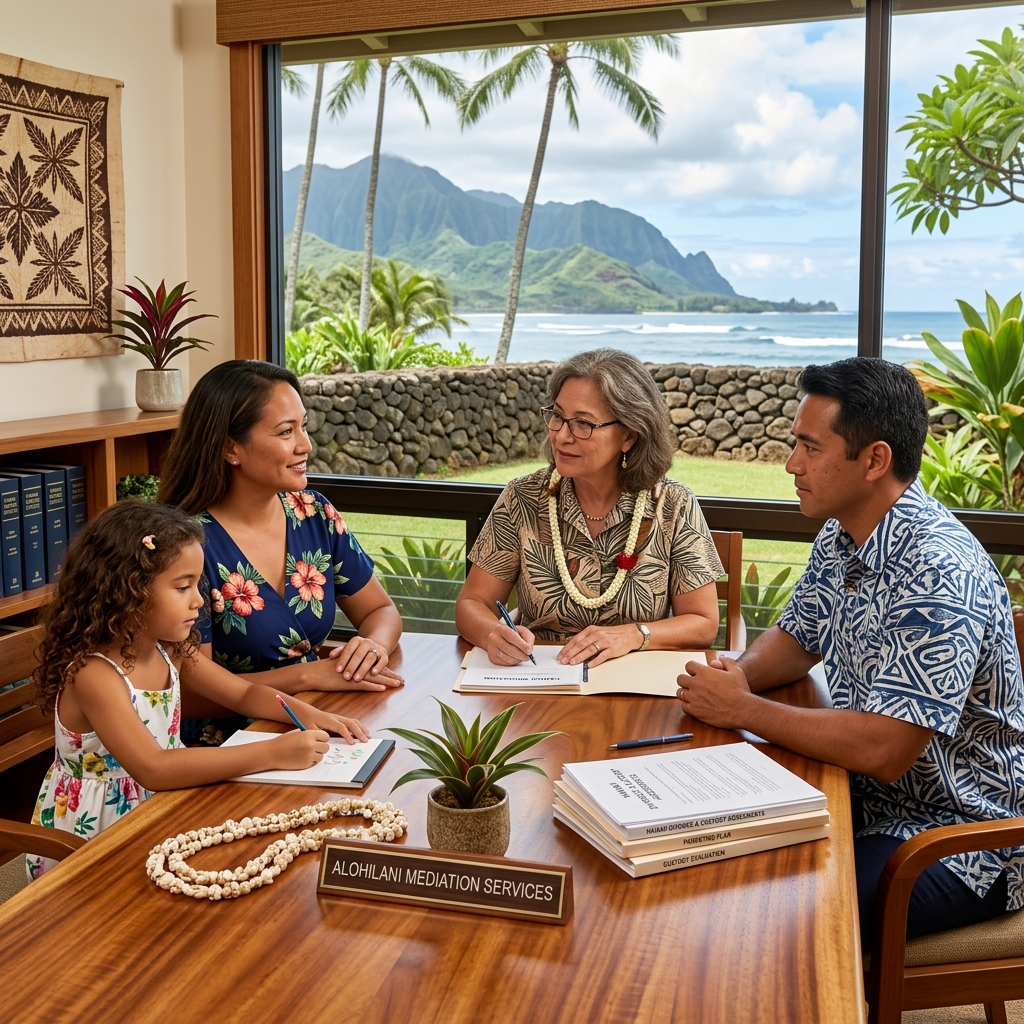
Child custody disputes in Hawaii are decided with one central goal in mind: protecting the child’s best interests. Courts can assign custody to one parent, both parents, or in some cases another fit adult if that arrangement better supports the child’s safety, stability, and development.
This guide explains the main custody concepts used in Hawaii, how judges evaluate parents, why parenting plans matter, and what happens when parents cannot agree. It also covers custody issues involving unmarried parents, changes to existing orders, and practical points that often shape family court outcomes.
How Hawaii Defines Custody
Hawaii family courts separate custody into two main categories: legal custody and physical custody. These terms are related, but they address different parts of a child’s life.
- Legal custody is the power to make important decisions about the child’s welfare.
- Physical custody concerns where the child lives and who provides daily care.
Either type of custody may be awarded solely to one parent or shared by both parents. A court may also combine different arrangements, such as joint legal custody with primary physical custody to one parent.
The Core Standard: Best Interests of the Child
Hawaii custody law requires courts to focus on what serves the child’s best interests. That principle is broad on purpose, because no single formula fits every family. Judges look at the overall picture, including the child’s emotional security, physical safety, and the quality of each parent’s relationship with the child.
Courts are also encouraged to support frequent, continuing, and meaningful contact with both parents when that contact is appropriate and consistent with the child’s welfare. However, that goal does not override safety concerns, abuse history, or other facts showing that a parent cannot act in the child’s best interests.
What Judges Consider in a Custody Case
Hawaii law provides a detailed list of factors that guide custody decisions. The court is not limited to those points, but they form the backbone of the analysis.
| Factor | Why it matters |
|---|---|
| Abuse or neglect history | Protects the child from physical, sexual, or emotional harm. |
| Parent-child relationship | Shows the strength, consistency, and quality of the bond. |
| Past caregiving roles | Looks at who handled day-to-day parenting before and after separation. |
| Cooperation between parents | Evaluates whether each parent can help create and follow a workable plan. |
| Child’s needs | Includes physical, emotional, educational, and safety needs. |
| Sibling relationships | Supports keeping important family ties intact when possible. |
| Family connections | Considers whether each parent helps the child stay connected to relatives and activities. |
| Substance abuse and mental health | Assesses whether a parent’s condition affects safe and stable caregiving. |
| Conflict level in the family | Helps the court determine whether a shared arrangement can work. |
| Misuse of abuse protection orders | Prevents tactical misuse of domestic violence process to gain custody leverage. |
These factors help the court move beyond labels and focus on day-to-day realities. A parent with a stronger legal argument may still lose primary custody if the facts show that the child’s well-being would be better served elsewhere.
Joint Custody and Sole Custody
Joint custody means both parents share responsibilities, but the phrase can mean different things depending on whether the court is discussing legal or physical custody. Joint legal custody usually means both parents share decision-making authority. Joint physical custody means the child spends meaningful time with each parent under a schedule that promotes regular contact.
Sole custody gives one parent the primary authority or primary residence arrangement. That does not automatically eliminate the other parent’s role. In many cases, the noncustodial parent still receives visitation or parenting time unless the court finds that contact would be harmful.
Hawaii courts generally support arrangements that allow children to maintain stable relationships with both parents when that can be done safely and consistently. The practical question is not whether both parents are equally involved in theory, but whether the schedule and decision-making structure actually works for the child.
Parenting Plans in Hawaii
Parenting plans are a major part of custody cases because they turn broad custody rules into workable daily schedules. A good plan reduces conflict by spelling out how the parents will handle school time, holidays, transportation, communication, and other recurring issues.
- Residential schedule and regular weekly time
- Holiday, birthday, and vacation arrangements
- Decision-making responsibilities
- Information sharing and access to records
- Rules for communication between parents and child
- Relocation notice and travel expectations
- Transportation responsibilities
- Methods for resolving disputes
Courts tend to favor plans that are detailed, realistic, and child-centered. The more clearly a plan addresses likely problems, the less room there is for future conflict.
Custody Rights of Unmarried Parents
Hawaii does not limit custody rights to married parents. Unmarried mothers and fathers can both seek custody, but paternity often becomes an important threshold issue before the court can order shared rights and responsibilities.
When parents were not married, the father may need to establish legal parentage before custody or visitation orders are put in place. That can happen through voluntary acknowledgment, later marriage in some situations, or a court action to determine paternity. Once legal parentage is established, the father may seek custody on the same general best-interests standard that applies in other cases.
If parentage is disputed, the case may involve additional paperwork, evidence, or genetic testing. The custody question itself usually follows after the court resolves who the legal parents are.
Can Someone Other Than a Parent Get Custody?
In some situations, Hawaii law allows custody to be awarded to someone other than a child’s mother or father. This happens only when that outcome better serves the child’s interests. A nonparent may have a stronger claim if they have already been acting as the child’s caregiver in a stable home and are fit to care for the child.
This type of arrangement is not routine, but it can matter in cases involving long-term caregiving by relatives, guardians, or other trusted adults. Courts do not displace parental rights lightly, so the evidence must show why the nonparent arrangement is necessary and beneficial.
How Custody and Visitation Disputes Are Resolved
Many parents resolve custody issues without a trial. Negotiated agreements, mediation, and written parenting plans often save time, reduce stress, and help parents maintain more control over the final outcome. Courts generally prefer solutions that parents design themselves, as long as the agreement protects the child.
If parents cannot agree, the court may hold hearings and decide the matter after reviewing testimony, documents, and other evidence. In contested cases, each parent should be prepared to show how their proposed arrangement supports the child’s needs and why the other proposal does not.
- School and medical records may show the child’s routine and care needs.
- Texts, emails, or parenting schedules may show cooperation or conflict.
- Police reports or protective order records may be relevant in safety disputes.
- Witnesses may help explain caregiving patterns and household stability.
The court’s role is not to reward one parent’s style over the other’s. It is to decide which arrangement best protects and supports the child going forward.
When Custody Orders Can Be Changed
Custody orders are not permanent in the sense that they can never be adjusted. If circumstances change significantly, either parent may ask the court to modify custody or visitation. The parent requesting the change must generally show that the modification would better serve the child’s interests.
Common reasons for modification include a parent’s relocation, a major shift in the child’s schooling or health needs, repeated noncompliance with the existing order, or safety concerns that were not present before. The court will compare the current arrangement with the proposed one and decide whether the change improves the child’s situation.
Modifications are not granted simply because one parent wants a different schedule. The request must be supported by facts showing a real need for change.
Relocation and Long-Distance Parenting Issues
Moves can create serious custody problems, especially in an island state where relocation may mean a child is separated from the other parent by substantial distance. If a parent wants to move in a way that affects the parenting schedule, the issue may need court approval depending on the terms of the existing order and the impact on the child’s relationship with the other parent.
Relocation disputes often require the court to balance the moving parent’s reasons against the child’s need for continuity, school stability, and ongoing contact with both parents. When distance makes regular visitation difficult, the court may need to redesign the parenting plan rather than simply extend the old one.
Practical Tips for Parents in a Hawaii Custody Case
Parents who approach custody disputes with preparation usually present stronger cases and often reduce unnecessary conflict. A custody case is not only about legal arguments; it is also about showing a stable parenting pattern.
- Keep records of school pick-ups, medical appointments, and daily caregiving tasks.
- Focus written communication on the child’s needs rather than past disagreements.
- Propose a parenting plan that is specific and realistic.
- Avoid behavior that could be seen as interfering with the child’s relationship with the other parent.
- Bring forward evidence of safety concerns early, especially in abuse or substance-related cases.
Parents should also remember that consistency matters. Courts often pay close attention to which parent has actually provided dependable care, not just which parent claims a better future plan.
Frequently Asked Questions
What is the main standard for custody in Hawaii? The controlling standard is the best interests of the child, which includes safety, stability, parental relationships, and other practical needs.
Does joint custody mean the child spends equal time with each parent? Not necessarily. Joint custody can refer to shared decision-making, shared physical time, or both, depending on the order.
Can a nonparent ever receive custody? Yes. In limited cases, a person other than a parent may receive custody if that is what best serves the child.
Do unmarried fathers have custody rights? Yes, but they may first need to establish legal paternity before custody or visitation can be ordered.
Can custody be changed later? Yes. A court may modify custody or visitation if a significant change in circumstances shows that a new arrangement better serves the child.
References
- Hawaii Revised Statutes § 571-46: Criteria and procedure in awarding custody and visitation; best interest of the child — Justia. 2025. https://law.justia.com/codes/hawaii/title-31/chapter-571/section-571-46/
- Family Courts — Hawaii State Judiciary. 2026. https://www.courts.state.hi.us/courts/family/family_courts
- The Rights of Unmarried Parents – Hawaii — Child Welfare Information Gateway. 2024. https://www.childwelfare.gov/resources/rights-unmarried-parents-hawaii/
- Hawai’i Custody — WomensLaw.org. 2026. https://www.womenslaw.org/laws/hi/custody/all
- Understanding Custody and Visitation in Hawaii: A Guide for Parents — Hawaii Divorce Lawyer Jackie Kong. 2025. https://www.hawaiidivorcelawyerjackiekong.com/blog/understanding-custody-and-visitation-in-hawaii-a-guide-for-parents/
- Deciding custody in Hawaii (16 factors used by the courts) — Diehl & Weger. 2022. https://www.diehlandweger.com/deciding-custody/
Similar Articles








Read full bio of Sneha Tete


