
Haunted Homes and the Law: What Sellers Must Reveal
An in-depth guide to how U.S. real estate law treats haunted houses, stigmatized properties, and disclosure duties for sellers and agents.
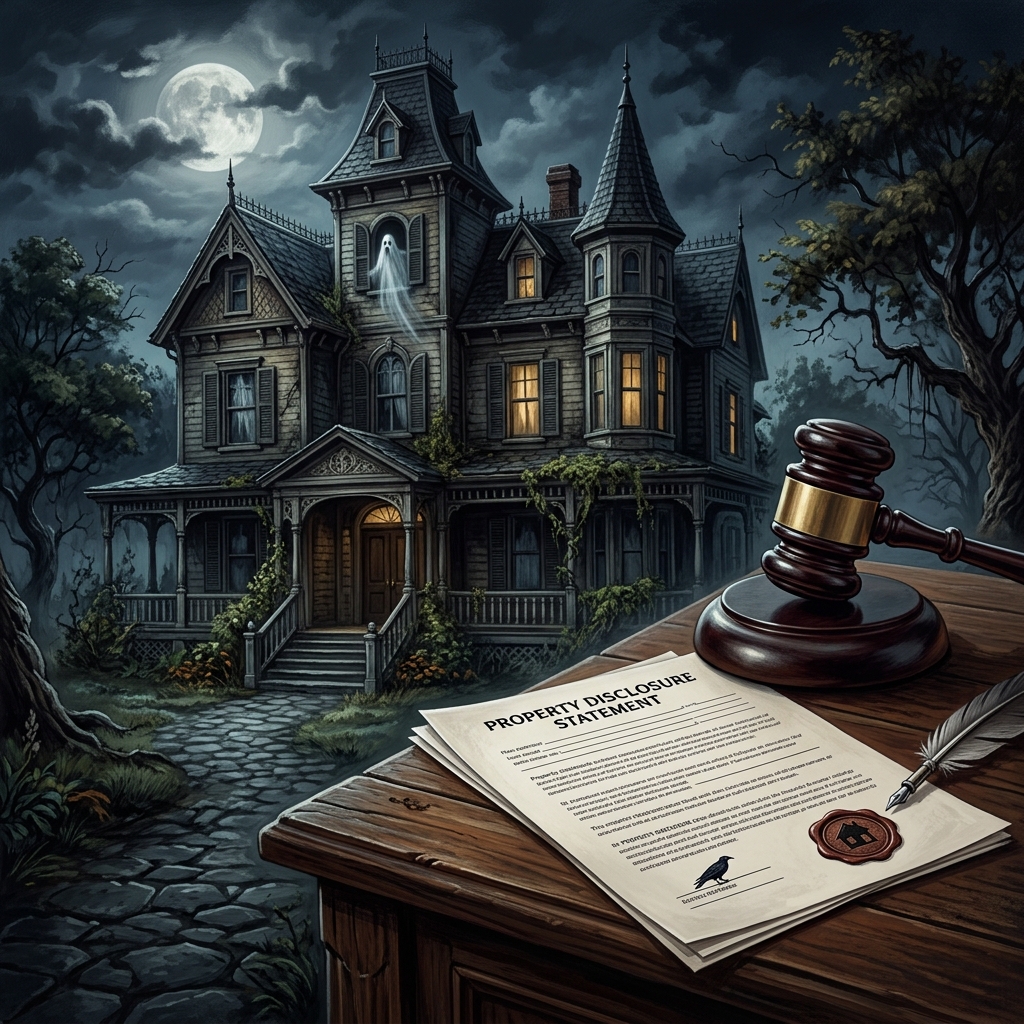
Stories of creaking floors, flickering lights, and unexplained whispers can be entertaining around a campfire, but they take on a very different tone when attached to a home you are trying to buy or sell. The law does not treat ghosts the way it treats cracked foundations, yet rumors of hauntings and tragic events can strongly influence a property’s value and a buyer’s willingness to complete the deal. This article explores how U.S. real estate law approaches haunted houses and other stigmatized properties, when sellers must disclose unsettling history, and practical steps for buyers and agents navigating these situations.
Understanding Stigmatized and “Haunted” Property
Most real estate statutes focus on physical defects: structural problems, environmental hazards, or code violations. A stigmatized property is different. It is a property that carries a negative reputation or psychological impact due to events or perceptions rather than physical conditions.
Common sources of stigma include:
- Homicides, suicides, or other deaths on the premises
- Criminal activity such as drug manufacturing or trafficking
- Widely known rumors of paranormal or supernatural activity
- Publicized incidents that draw media attention and community gossip
In many jurisdictions, the law explicitly treats these as non-material facts that generally do not require disclosure, even though they may significantly affect how buyers feel about the home.
Material Defects vs. Psychological Impact
To understand why laws treat hauntings differently, it helps to distinguish between material defects and psychological impacts.
- Material defects are physical conditions that affect safety, habitability, or value, such as mold, faulty wiring, foundation cracks, or roof leaks.
- Psychological impacts are intangible factors that may disturb or repel potential buyers, such as a notorious crime, suspected paranormal activity, or a prior owner’s controversial reputation.
Most state disclosure statutes require sellers to reveal material defects but either exempt or explicitly exclude psychological impacts from mandatory disclosure. This means ghost stories and gossip are often treated differently from radon or termite damage.
Key State Approaches to Haunted House Disclosure
U.S. law on haunted and stigmatized property is largely state-specific. A seller’s obligations vary dramatically depending on where the property is located. Below is a simplified comparison of how some states handle these issues.
| State | Paranormal Activity Disclosure | Death on Property Disclosure | Notable Rule |
|---|---|---|---|
| New Jersey | No automatic duty; must answer truthfully if asked about hauntings. | Buyer must inquire; psychological stigmas generally not material defects. | |
| New York | Case law has addressed haunted houses; certain circumstances may allow rescission if haunting status was publicized yet undisclosed. | Death disclosure tied to case-specific facts; stigma can matter if widely known and promoted. | Famous case involving a “legally haunted” house; publicity can affect obligations. |
| Massachusetts | Paranormal activity explicitly treated as a psychological impact that need not be disclosed. | Suicide, accidental, or natural death generally exempt from mandatory disclosure. | Statutes clarify that psychological impacts are outside standard disclosure duties. |
| Minnesota | Perceived paranormal activity explicitly excluded from mandatory disclosure. | Suicide, accidental, or natural death not required to be disclosed under the general disclosure duty. | Law separates physical issues from psychological or reputational concerns. |
| California | No specific haunting statute, but sellers must answer truthfully if asked about paranormal claims. | Must disclose any death on the property that occurred within three years of the sale date. | Statutory three-year window for death disclosure; HIV/AIDS-related deaths are exempt. |
| Connecticut | No automatic duty; must answer truthfully if asked about rumored haunting or stigmas. | Deaths and stigmas are not material defects, but misrepresentation when asked can affect legality of sale. | Advises sellers to consider disclosure if haunting rumors are widely known in the community. |
This table reflects general principles; specific cases can turn on unique facts, such as how widely the alleged haunting was publicized or whether the seller made prior public statements about it.
When Sellers Must Answer Questions About Hauntings
Even when states do not require proactive disclosure of hauntings, many impose a duty of honesty when buyers ask direct questions. Failing to answer truthfully can expose sellers and agents to claims of misrepresentation or fraud.
Common legal patterns include:
- Ask-and-answer rule: In states like New Jersey and Connecticut, sellers are typically not required to volunteer information about paranormal activity, but they must answer accurately if a buyer inquires about hauntings, deaths, or other stigmas.
- Specific death disclosure statutes: California law requires sellers to disclose any death that occurred on the property within three years of the sale date, regardless of whether the buyer asks.
- Statutory exclusions: States such as Massachusetts and Minnesota explicitly state that perceived paranormal activity or certain types of deaths are not material facts that create a duty to disclose.
As a practical matter, if a buyer looks the seller in the eye and asks, “Has anyone ever died here? Is this house rumored to be haunted?” most jurisdictions treat an intentionally misleading answer as legally risky.
Buyer Beware: Caveat Emptor and Haunted Houses
Historically, property law embraced the principle of caveat emptor—”let the buyer beware.” Under that rule, buyers bore most of the responsibility for investigating a property’s condition. Modern disclosure laws have softened this approach for physical defects, but the older philosophy still influences how courts treat psychological stigmas.
For allegedly haunted homes, the buyer-beware principle often plays out in two ways:
- Buyers are expected to perform due diligence: search public records, talk to neighbors, browse local news reports, and raise questions during inspections.
- Sellers must avoid active deceit but may not be obligated to volunteer troubling rumors, unless statute or case law creates a specific duty to do so.
Because haunted reputations tend to spread through informal channels—neighbors, social media, local history groups—they may fall outside formal disclosure forms, making buyer initiative crucial.
Practical Guidance for Sellers of Stigmatized Property
Sellers whose homes carry ghost stories or tragic histories often face a practical, not just legal, dilemma. Even when the law does not require disclosure, failing to discuss openly known stigmas can damage trust and lead to disputes after closing.
Key Considerations for Sellers
- Assess community awareness: If the property is widely known locally as “that haunted house” or the site of a notorious event, buyers are likely to hear about it from neighbors. Voluntary disclosure may prevent anger and litigation later.
- Review prior public statements: If you have publicly described the home as haunted—on social media, in interviews, or marketing materials—those statements may affect legal expectations and buyer reliance.
- Coordinate with your agent and attorney: Because rules vary by state, consult a local real estate attorney or broker to determine whether the stigma is considered material and how best to address it in disclosure documents.
- Distinguish facts from folklore: Stick to verifiable events (e.g., a documented death) rather than speculative explanations. Buyers can decide for themselves what those facts mean.
Thoughtful disclosure can turn a potential liability into a selling point. Some buyers seek homes with unusual histories, while others appreciate transparency even if they are skeptical of paranormal claims.
How Buyers Can Investigate Haunted House Claims
For buyers concerned about a property’s history or alleged haunting, the law offers tools, but they must be used proactively. Relying solely on standard disclosure forms may not reveal psychological stigmas, especially in states that exempt them.
Steps Buyers Should Take
- Ask specific, written questions: Direct questions about deaths, crimes, or paranormal claims should be submitted in writing to the seller or listing agent. Written inquiries create a clear record and often trigger duties to answer honestly.
- Talk to neighbors: Informal conversations frequently uncover stories that do not appear in official documents. Neighbors may know about past owners, unusual events, or long-standing rumors.
- Search news and public records: Local news archives and court records can reveal homicides, major crimes, or lawsuits connected to the property. These sources may be more objective than folklore.
- Evaluate your own tolerance: Some buyers are unbothered by a home’s past; others feel strongly that they cannot live in a property linked to tragedy. Clarify your preferences before you begin your search.
If a buyer later discovers that the seller gave misleading answers about important stigmas, legal remedies may include rescission of the sale or damages, depending on state law and the severity of the misrepresentation.
Real Estate Agents and Haunted House Ethics
Real estate agents operate at the intersection of law, ethics, and client expectations. Even when statutes do not require disclosure of hauntings, professional standards often emphasize honesty, fairness, and avoidance of deceptive practices.
Agents typically should:
- Know local statutes and case law: Because legal obligations differ by state, agents need to understand whether their jurisdiction treats hauntings or deaths as material facts or psychological impacts under disclosure statutes.
- Advise clients to seek legal counsel: When a property carries a controversial history, agents should encourage sellers and buyers to consult attorneys before deciding what to disclose or how to respond to inquiries.
- Document conversations: Keeping records of questions asked and answers given helps protect both the agent and clients if disputes later arise.
- Balance marketing with transparency: Promoting the home’s features while acknowledging any widely known stigmas can build trust and reduce surprises after closing.
Frequently Asked Questions About Haunted Real Estate
Do most states require sellers to disclose that a house is haunted?
No. Analyses of state laws show that most U.S. states do not require sellers to disclose alleged paranormal activity. Many states explicitly treat perceived hauntings as psychological impacts rather than material defects, meaning they fall outside standard disclosure obligations.
If a buyer asks whether the house is haunted, must the seller answer?
In many jurisdictions, yes. States such as New Jersey and Connecticut require sellers to answer truthfully when buyers directly ask about stigmas, including hauntings or deaths, even though the seller might not have had a duty to volunteer that information initially. Providing false or intentionally misleading answers can lead to claims of misrepresentation or fraud.
Are deaths in a home always required to be disclosed?
Not always. For example, California law requires disclosure of any death that occurred on the property within three years of the sale date, but explicitly exempts disclosure of deaths related to HIV or AIDS. Other states, such as Minnesota, specify that suicide, accidental death, or natural death do not create a disclosure duty under their general statutes.
Can a buyer cancel a purchase if they later discover the home is rumored to be haunted?
It depends on the jurisdiction and facts. In some New York cases, courts have allowed buyers to rescind where the seller had publicly promoted the home as haunted yet failed to disclose that reputation during the sale. In other states, rescission may be more difficult unless the buyer can show intentional misrepresentation or fraud related to a material fact.
Is a haunted reputation ever considered a material defect?
Generally, stigma alone is not treated as a material defect under most statutes. However, if the haunting reputation is widely known and substantially affects market value—or if the seller has capitalized on that reputation publicly—courts may view the failure to disclose differently. The specifics depend heavily on state law and case circumstances.
Summary: Law, Lore, and Informed Decisions
Haunted houses sit at the boundary between law and folklore. While statutes focus on tangible conditions, buyers and communities often care deeply about intangible histories. Across the United States, disclosure rules range from explicit exclusions of paranormal activity to three-year death disclosure requirements and rare cases recognizing a house as “haunted” as a matter of law.
For sellers, the safest approach is to respect both legal obligations and the practical reality that concealment of widely known stigmas can backfire. For buyers, the best protection is informed, proactive questioning and research. And for agents, careful adherence to local law combined with professional ethics helps ensure that even the spookiest listings are handled with clarity rather than mystery.
References
- Haunted Houses & Real Estate: NJ’s Unique Disclosure Laws — Zager Fuchs, PC. 2021-10-01. https://zagerfuchs.com/haunted-houses-nj-real-estate-new-jerseys-disclosure-laws/
- Selling a Haunted House: Do You Need to Disclose That It’s Haunted? — WA Haunted Houses. 2019-10-15. https://www.wahauntedhouses.com/blog/selling-haunted-house-disclosure-law.html
- Does CA home seller have to disclose if house is haunted? — The Sacramento Bee. 2023-10-31. https://www.sacbee.com/news/california/article293493674.html
- Can You Sell a House Rumored to Be Haunted in Connecticut? — David P. Weiner, Esq. 2022-10-20. https://www.dpweinerlaw.com/stamford-criminal-law-blog/can-you-sell-a-house-rumored-to-be-haunted-in-connecticut
- Here’s What to Know About Selling a Haunted House — Zillow Research. 2023-10-24. https://www.zillow.com/news/selling-a-haunted-house/
- Haunted as a Matter of Law: Do Home Sellers Have to Disclose the Presence of Paranormal Activity? — Fredrikson & Byron, P.A. 2017-10-26. https://www.fredlaw.com/alert-haunted-as-a-matter-of-law-do-home-sellers-have-to-disclose-the-presence-of-paranormal-activity
Similar Articles








Read full bio of medha deb


