
Navigating the Boundaries: Hate Crimes and Free Speech
Exploring the critical distinction between protected free expression and prosecutable bias-motivated violence in the U.S. legal system.
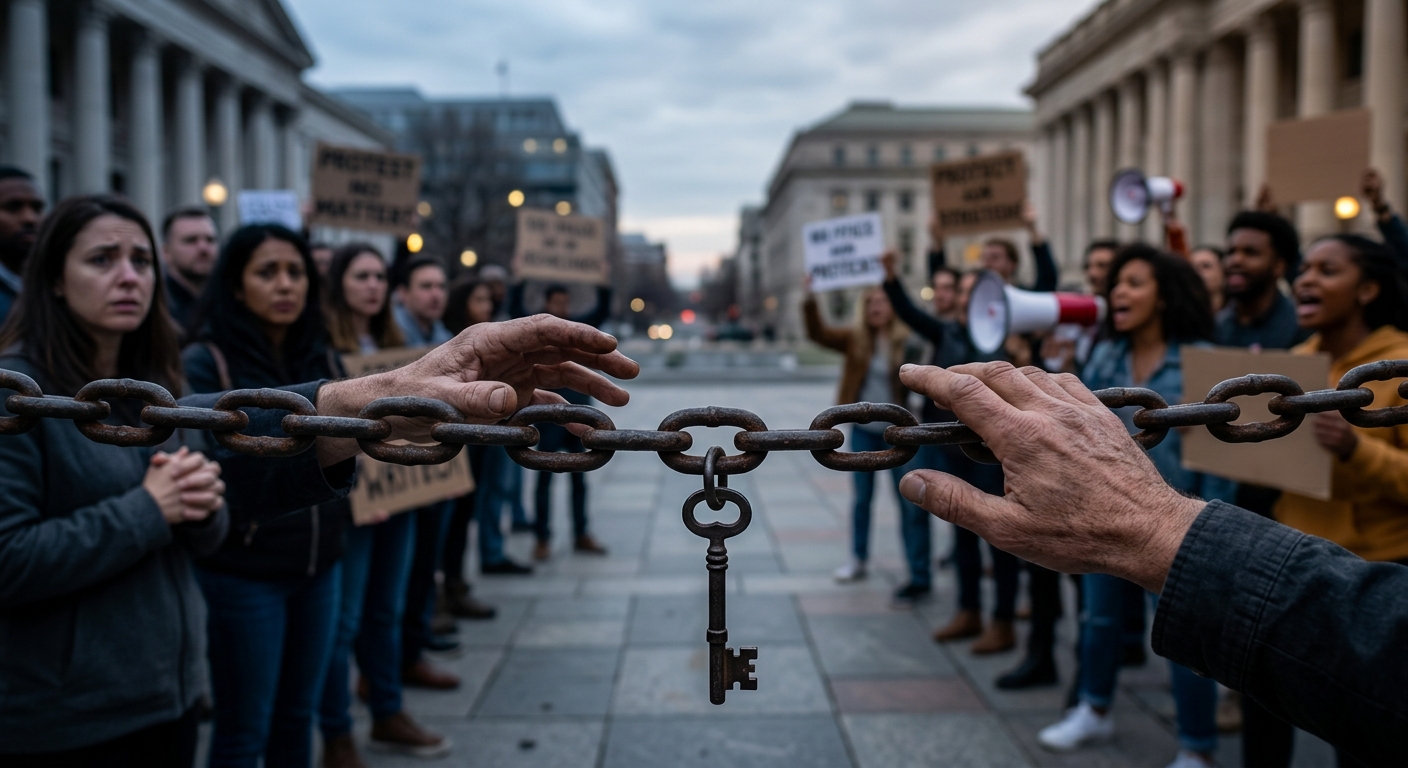
In the complex landscape of American civil liberties, few topics generate as much passionate debate as the intersection of hate crime legislation and the First Amendment. Civil rights advocates argue that bias-motivated violence inflicts unique, compounded harm on communities, justifying enhanced penalties. Conversely, free speech purists express concern that such laws might inadvertently criminalize offensive rhetoric or controversial opinions. Striking the precise balance between protecting marginalized groups from targeted violence and preserving the bedrock American principle of free expression is a formidable legal challenge.
This balance is not merely a theoretical ideal but a practical necessity in a diverse, democratic society where freedom of expression and the right to physical safety are both highly prized. Understanding how lawmakers and courts navigate this terrain requires looking past sensational headlines and examining the intricate mechanics of criminal statutes and constitutional safeguards. A close examination of judicial precedents reveals a carefully constructed framework designed to do exactly that. The American justice system relies on an unyielding distinction between what individuals think or say and what they physically do. By focusing prosecutorial power exclusively on violent actions rather than ideological viewpoints, hate crime laws serve as a shield against discriminatory violence without becoming a sword against free speech. This ensures the First Amendment remains fiercely protected.
Decoding the Core Debate: Conduct Versus Ideology
The primary source of anxiety surrounding hate crime legislation stems from a misunderstanding of the term “hate crime” itself. The phrase colloquially suggests that the emotion of hate or the ideology of bigotry is what the state seeks to outlaw. In legal reality, the legislation does not target the abstract concepts of prejudice or intolerance. Instead, the focus is entirely on physical conduct—specifically, violent acts or credible threats of violence that result in bodily injury or significant property damage.
To understand this dynamic, one must recognize that holding discriminatory views, no matter how repugnant or contrary to the values of a pluralistic society, is protected by the First Amendment. A citizen can legally harbor deep-seated prejudices, publish hateful manifestos, deliver bigoted sermons, or march in the streets carrying offensive symbols. While society may forcefully condemn these expressions through public discourse, the government cannot impose criminal sanctions on the speakers merely for their ideology. The First Amendment was explicitly designed to protect speech that is unpopular, offensive, or deeply controversial, ensuring that the government cannot dictate the boundaries of acceptable thought.
The critical line is crossed only when an individual acts upon those bigoted beliefs by committing an underlying criminal offense, such as assault, battery, arson, or murder. When a person moves from expressing an odious opinion to physically attacking someone because of their race, religion, sexual orientation, or gender identity, they have transitioned from protected expression to illegal conduct. Hate crime legislation serves as a penalty enhancement for the criminal act itself, not as a punishment for the ideology that inspired it. The law recognizes that the physical act of violence was chosen specifically to terrorize a demographic group, thereby justifying a more severe societal response.
The Essential Role of Motive in Criminal Jurisprudence
Critics argue that assessing a perpetrator’s bias equates to punishing a “thought crime.” However, examining a defendant’s psychological state and motive is a standard practice woven deeply into criminal jurisprudence. Consider the distinction between different degrees of homicide. If an individual kills someone in a sudden fit of rage, it is typically classified as second-degree murder. If they meticulously plan the killing over time, they face first-degree murder charges. The physical outcome—a loss of human life—is identical in both scenarios; the differing legal consequences are dictated entirely by intent.
Similarly, hate crime laws evaluate the motive behind a violent assault. If an assailant attacks a victim specifically because the victim is Jewish, Black, or transgender, the motive involves a deliberate selection based on group identity. Courts hold that bias-motivated crimes inflict distinct societal damage, intentionally sending a message of terror to entire communities. It is important to remember that intent is the linchpin of the American penal code. The criminal justice apparatus does not function in a vacuum; it contextualizes the physical act by asking what drove the perpetrator.
By doing so in the context of bias-motivated offenses, the state is not policing ideology, but rather adequately addressing the disproportionate harm inflicted by acts of terror meant to subjugate specific groups. Adjusting punishment based on motive is an established tradition, aligning perfectly with how the law handles other aggravating factors like terrorism or crimes committed for financial gain.
Landmark Legal Precedents: The Supreme Court’s View
The constitutional validity of distinguishing between bigoted speech and bias-motivated violence was definitively settled by the United States Supreme Court in the landmark 1993 case, Wisconsin v. Mitchell. The case centered on a defendant whose sentence for aggravated battery was significantly increased because he intentionally selected his victim based on race. His legal team vehemently argued the penalty enhancement violated his First Amendment rights.
In a unanimous decision, the Supreme Court rejected this argument. The Court noted the statute did not criminalize abstract beliefs, but rather targeted specific violent conduct and its “predicted ramifications.” The Justices emphasized that bias-motivated crimes produce unique harms, including community unrest, justifying a heightened response from the state. Chief Justice Rehnquist’s reasoning drew a clear boundary between regulating conduct and suppressing speech. The Court highlighted that the First Amendment does not prohibit the evidentiary use of speech to establish the elements of a crime or to prove motive or intent.
Thus, while a defendant’s racist remarks cannot be the crime itself, they can serve as crucial evidence to demonstrate why a violent battery occurred. The decision affirmed that while the government may not prohibit offensive expression, it possesses a compelling interest in penalizing conduct that inflicts direct physical harm. The Court ultimately dismissed the notion that such laws would create a “chilling effect” on free speech.
The Matthew Shepard and James Byrd, Jr. Hate Crimes Prevention Act
The modern federal framework is anchored by the Matthew Shepard and James Byrd, Jr., Hate Crimes Prevention Act of 2009. Named after two victims of horrific murders, the legislation expanded the federal government’s ability to prosecute discriminatory violence. Prior to its passage, federal jurisdiction over hate crimes was largely limited to incidents motivated by race or religion, requiring the victim to be engaged in a federally protected activity, such as attending school.
The passage of this law was the culmination of decades of advocacy by civil rights groups, legal scholars, and impacted communities who recognized the glaring gaps in the preceding federal framework. Before 2009, local authorities frequently lacked the financial and technical resources to thoroughly investigate complex bias-motivated crimes, allowing perpetrators to evade appropriate justice. By authorizing federal intervention, the Act ensured a more uniform application of civil rights protections across the nation.
The 2009 Act eliminated the protected-activity requirement and expanded protections to include crimes motivated by actual or perceived sexual orientation, gender identity, or disability. This empowered the Department of Justice to assist state and local law enforcement in investigating a broader spectrum of violent hate crimes. Recognizing the need to maintain civil liberties, the architects embedded robust First Amendment protections into the statutory text.
- The law categorically states it does not prohibit constitutionally protected speech or expressive activities.
- It explicitly preserves the free exercise of religion, meaning sermons or religious teachings cannot be prosecuted.
- The statute demands definitive proof of a willful act of violence inextricably linked to the victim’s protected characteristic.
When Does Expression Lose First Amendment Protection?
While hate crime legislation strictly targets conduct, narrow categories of expression lack First Amendment protection, even without a physical assault. The legal bar for prosecuting these is exceptionally high. One category is “true threats.” If an individual communicates a serious expression of an intent to commit unlawful violence to a particular individual or group, they can be prosecuted. The criminality lies in the intentional communication of the threat itself.
Another category is “incitement to imminent lawless action.” Established in the landmark ruling Brandenburg v. Ohio (1969), this doctrine dictates the government cannot punish inflammatory speech unless it is specifically directed to inciting imminent lawless action and is highly likely to produce such action. Simply advocating for violence in the abstract is protected; actively urging a mob to immediately attack a specific building is not. These exceptions underscore the justice system’s ongoing commitment to maximizing free expression while preventing immediate, tangible harm.
Quick Comparison: Protected Expression vs. Criminal Conduct
| Scenario | Legal Classification | Rationale |
|---|---|---|
| Publishing an online manifesto claiming racial superiority. | Protected Free Speech | Constitutes the expression of an ideology, regardless of how offensive it is to society. |
| Assaulting an individual on the street while yelling racial slurs. | Prosecutable Hate Crime | Involves an underlying violent crime (assault) explicitly motivated by the victim’s protected characteristic. |
| A religious leader preaching that certain sexual orientations are sinful. | Protected Religious Liberty | Protected under the First Amendment’s free exercise and free speech clauses. |
| Vandalizing a synagogue with antisemitic graffiti. | Prosecutable Hate Crime | Involves criminal property damage intentionally targeted based on religious animus. |
Conclusion: The Balance of Liberty and Justice
The discourse surrounding hate crime legislation frequently relies on a false dichotomy: the assertion that one must choose between protecting marginalized communities and upholding the First Amendment. In reality, the American legal framework is sophisticated enough to accomplish both simultaneously. By drawing a bright, definitive line between ideological expression and physical violence, the justice system ensures that citizens remain free to think, speak, and debate without fear of state retribution. Simultaneously, it acknowledges the devastating, far-reaching impact of discriminatory violence, providing law enforcement with the tools necessary to prosecute crimes that seek to terrorize communities. Ultimately, hate crime laws do not penalize what a person believes; they penalize what a person does. This vital distinction is the cornerstone of a free society that values both fundamental civil liberties and the right of every individual to live free from targeted, bias-motivated violence.
Frequently Asked Questions (FAQs)
Do hate crime laws punish people for their thoughts?
No. Hate crime laws do not penalize individuals for their thoughts, beliefs, or prejudices. A person can hold and express highly bigoted views without facing criminal prosecution. Hate crime enhancements only apply when an individual commits an underlying criminal act, such as assault or arson, and the prosecution can prove that the specific motive for the violent act was the victim’s protected characteristic (e.g., race, religion, sexual orientation).
Does the First Amendment protect hate speech?
Generally, yes. The Supreme Court has repeatedly affirmed that speech cannot be banned simply because it is hateful, offensive, or deeply repugnant. The First Amendment protects the expression of unpopular ideas. However, speech loses its protection if it crosses the line into a “true threat” of violence or constitutes an “incitement to imminent lawless action.”
Why are hate crimes punished more severely than regular crimes?
The legal system often considers the motive behind a crime when determining the severity of the punishment (e.g., premeditated murder vs. involuntary manslaughter). Courts and legislatures have determined that bias-motivated crimes inflict a broader societal harm. They are designed to intimidate and terrorize entire communities, increasing the risk of retaliation and widespread psychological trauma, which justifies a penalty enhancement.
What is the Matthew Shepard and James Byrd, Jr. Hate Crimes Prevention Act?
Enacted in 2009, this federal law significantly expanded the government’s ability to investigate and prosecute hate crimes. It removed restrictions requiring victims to be engaged in federally protected activities and expanded protections to include violent crimes motivated by a victim’s actual or perceived gender, sexual orientation, gender identity, or disability. The Act explicitly includes language protecting First Amendment rights.
References
- Wisconsin v. Mitchell — Oyez, Chicago-Kent College of Law. 1993-06-11. https://www.oyez.org/cases/1992/92-515
- United States Department of Justice | Hate Crimes | Laws and Policies — U.S. Department of Justice. 2025-01-24. https://www.justice.gov/hatecrimes/laws-and-policies
Similar Articles








Read full bio of Sneha Tete


