
Halloween DUI Checkpoints: Essential Legal Guide
Navigate Halloween DUI checkpoints safely: Know your rights, stay compliant, and avoid impaired driving risks this holiday season.
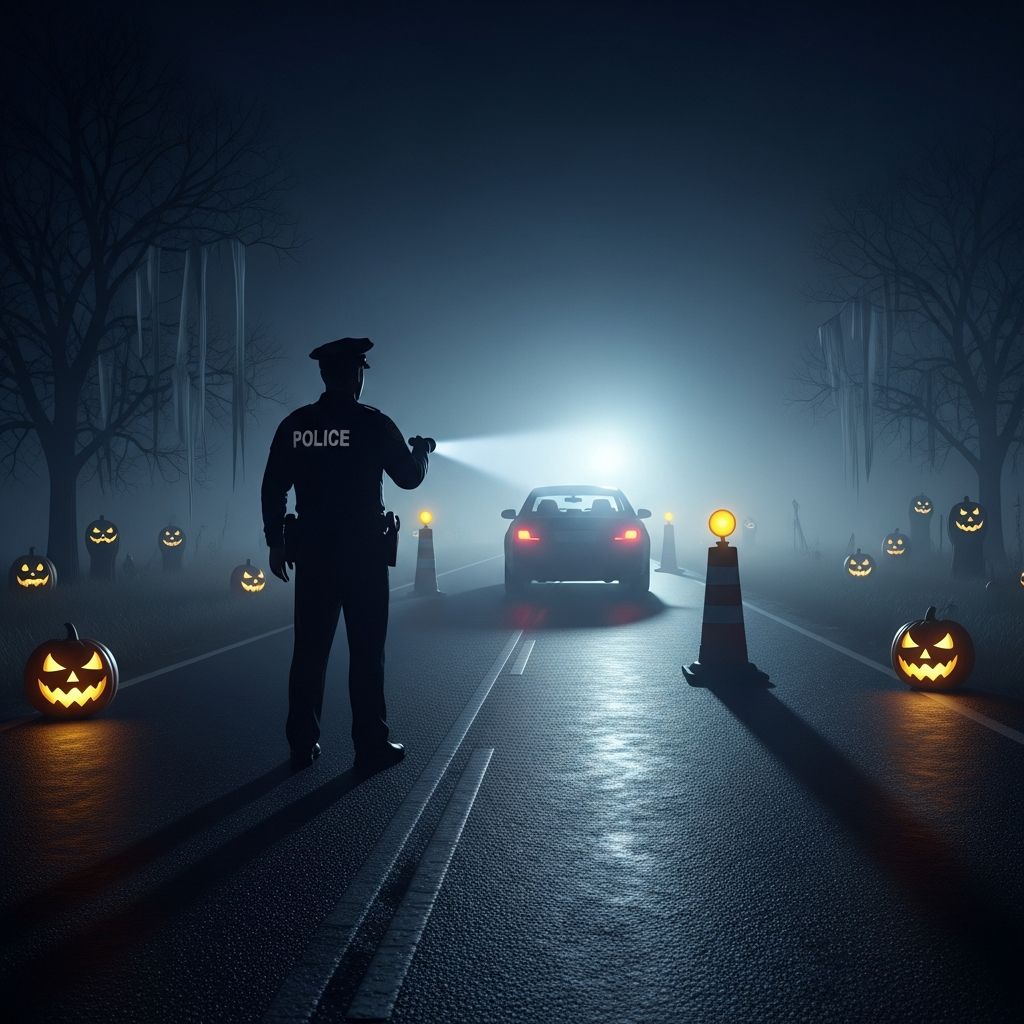
Halloween brings festive celebrations, but it also heightens risks of impaired driving due to increased alcohol consumption at parties. Law enforcement ramps up DUI checkpoints to curb drunk driving, especially when children are trick-or-treating. Understanding checkpoint procedures, your rights, and safety protocols can help you avoid legal troubles and ensure a secure night.
Why DUI Checkpoints Surge on Halloween
Police intensify sobriety checks during Halloween because alcohol-related incidents spike. Nationwide data shows a significant rise in impaired driving crashes around this holiday. For instance, in Tennessee during the 2024 Halloween period, 18 fatal motor vehicle crashes occurred, with four involving drunk drivers, according to state traffic analysis. Nationally, 31% of Halloween crash fatalities in 2023 involved alcohol, per the National Highway Traffic Safety Administration (NHTSA).
Checkpoints involve stopping vehicles systematically to detect signs of intoxication. Officers look for slurred speech, alcohol odor, or erratic behavior. These operations aim to deter driving under the influence (DUI) and protect pedestrians, particularly children darting across streets in costumes.
- Increased pedestrian traffic raises accident risks.
- Parties often lead to poor judgment behind the wheel.
- Enforcement visibility promotes safer roads.
Legal Framework for Sobriety Checkpoints
DUI checkpoints must adhere to constitutional standards established by the U.S. Supreme Court in Michigan Dept. of State Police v. Sitz (1990), which upheld them if conducted with neutral criteria, minimal intrusion, and proper supervision. States like Florida and Tennessee deploy them frequently on high-risk nights. In Florida, portable breath tests at checkpoints can justify arrests but are inadmissible in court; only certified station tests count legally.
Drivers cannot refuse basic stops, but rights vary by state:
| State | Field Sobriety Tests | Breath Test Refusal Penalty |
|---|---|---|
| Florida | Voluntary | 1-year license suspension |
| Tennessee | Voluntary (recommended compliance) | Implied consent suspension |
| General U.S. | Often voluntary | Varies; automatic suspension common |
This table summarizes key variations; always check local statutes for precision.
Your Rights During a Checkpoint Stop
When approaching a checkpoint, slow down and follow directions. Officers typically request license, registration, and proof of insurance. You must provide these without issue. They may ask about your origin or destination to gauge speech clarity—politely answer or say little if not required.
Key rights include:
- Right to remain silent beyond basic identification.
- No obligation for field sobriety tests (FSTs) in most states, though refusal may raise suspicion.
- Refusal of preliminary breath tests (PBTs) often without immediate arrest, but chemical tests post-arrest carry penalties.
- Request for a lawyer if detained.
Stay calm, keep hands visible, and instruct passengers to remain quiet. In Florida, FSTs like walk-and-turn or one-leg stand are optional, but breath refusals trigger suspensions regardless of guilt.
How Checkpoints Operate Step-by-Step
Checkpoints funnel traffic into lanes with clear signage. Here’s the typical flow:
- Initial Screening: Officer shines light, asks basic questions, checks documents.
- Observation: Notes odor, eyes, speech. No signs? Wave through.
- Secondary Stop: Suspicion leads to roadside pull-over for FSTs.
- Testing: Horizontal gaze nystagmus, balancing tasks. Poor performance prompts PBT.
- Arrest Decision: Probable cause leads to station for evidentiary breath/blood test.
Even one or two drinks can impair judgment; factors like body weight, food intake, and fatigue influence blood alcohol concentration (BAC). Legal limit is 0.08% in all states, lower for commercial drivers.
Safety Measures for a Worry-Free Halloween
Prevention beats checkpoints. Plan ahead:
- Designate a sober driver before festivities.
- Use rideshares or public transit.
- Host parties at home to control transport.
For motorists:
- Slow in neighborhoods; watch for costumed kids.
- Avoid passing stopped cars—trick-or-treaters may emerge.
- Enter/exit driveways cautiously.
Parents and pedestrians:
- Accompany children; use flashlights and reflective gear.
- Teach ‘stop, look, listen’ at curbs.
- Stick to sidewalks; cross at lights.
These tips from the Tennessee Highway Patrol reduced pedestrian risks in past years.
Consequences of DUI Arrests
A Halloween DUI conviction brings steep penalties:
| Offense Level | Fines | Jail Time | License Suspension |
|---|---|---|---|
| First | $500–$2,000 | Up to 6 months | 6–12 months |
| Second | $1,000–$4,000 | Up to 1 year | 2 years |
| Felony (High BAC) | $5,000+ | Years | Permanent revocation possible |
Additional costs include higher insurance, ignition interlocks, and criminal records impacting jobs. Drunk driving causes daily fatalities; holidays amplify dangers.
State Variations in Enforcement
Laws differ:
- Florida: Strict implied consent; breath refusals suspend licenses automatically.
- Tennessee: Heightened patrols target impaired and reckless drivers.
- Other States: Some require checkpoints publicized in advance; others allow sobriety roadblocks anytime.
Consult local DUI attorneys for specifics, especially if arrested.
Common Myths About Checkpoints
- Myth: You can turn around legally. Fact: Evading may prompt pursuit.
- Myth: One drink is safe. Fact: BAC rises quickly; zero tolerance for minors.
- Myth: FSTs are mandatory. Fact: Often voluntary, but refusal has repercussions.
Frequently Asked Questions
What should I do if stopped at a DUI checkpoint?
Provide license and registration, stay polite, comply with lawful orders, but know your rights on tests.
Can I refuse a breathalyzer at a checkpoint?
Preliminary tests often yes, but post-arrest chemical tests trigger suspensions in most states.
Are checkpoints legal everywhere?
Yes, per Supreme Court, if properly operated; a few states limit them.
How to avoid DUI on Halloween?
Use sober transport, limit intake, plan routes away from high-party areas.
What if arrested unjustly?
Contact a DUI specialist immediately; evidence like improper tests can lead to dismissals.
Preparing for Post-Halloween Legal Issues
If charged, act fast. Hire experienced counsel to challenge probable cause, test validity, or checkpoint setup. Many cases get reduced or dropped with proper defense. Free consultations are common; don’t plead without advice.
Halloween safety hinges on responsibility. By knowing laws and prioritizing sobriety, you protect yourself, loved ones, and communities. Drive sober, celebrate wisely.
References
- DUI Checkpoints on Halloween: Advice from a DUI Lawyer in West Palm Beach — McKamey Defense Law. 2023. https://www.mckameydefenselaw.com/dui-checkpoints-on-halloween-advice-from-a-dui-lawyer-west-palm-beach/
- Halloween and DUI Checkpoints — Absolute Bail Bonds. 2023. https://www.absolutebailbonds.com/halloween-and-dui-checkpoints/
- Tennessee Highway Patrol Shares Halloween Enforcement and Safety Tips — Tennessee Department of Safety and Homeland Security (tn.gov). 2025-10-30. https://www.tn.gov/safety/news/2025/10/30/thp-shares-halloween-enforcement-and-safety-tips.html
- DUI Checkpoints This Halloween – Mark S. Rubinstein, P.C. — Rubinstein Law Offices. 2023. https://rubinsteinlawoffices.com/checkpoints-halloween-your-rights/
Similar Articles








Read full bio of Sneha Tete




