
Hague Adoption: A Practical Guide for U.S. Families
A clear, step-by-step guide to the Hague adoption process for U.S. citizens adopting from Convention countries.
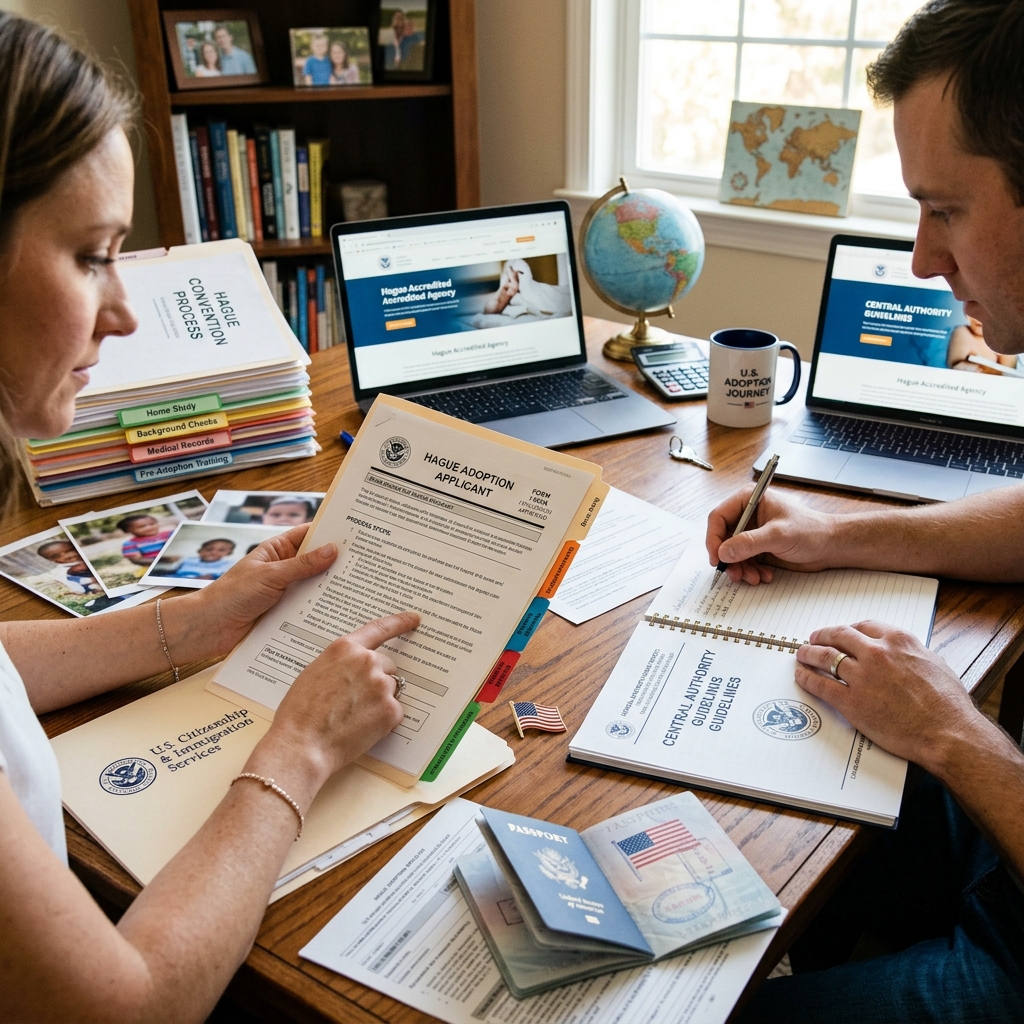
For U.S. citizens who want to adopt a child from another country, the Hague Adoption Convention creates a structured legal path designed to protect children, birth families, and adoptive parents. The process is not the same as a domestic adoption or a non-Hague international adoption. It includes specific eligibility checks, government filings, agency oversight, and immigration steps that must happen in order.
This guide explains the Hague adoption process in plain language. It covers who must use the Hague route, what forms are usually required, how the child’s immigration eligibility is determined, and why following the correct sequence matters so much.
When the Hague process applies
The Hague Convention generally governs intercountry adoptions when a U.S. citizen living in the United States seeks to adopt a child who is habitually resident in another Convention country. U.S. authorities treat the Convention as the controlling framework for those adoptions, and the steps must be completed in the proper order.
That matters because not every international adoption uses the same rules. Some cases fall outside the Hague system, but if the child is from a Convention country and the legal requirements are met, the Hague process is the one that applies.
The basic sequence of a Hague adoption
The Department of State describes the Hague adoption process as a set of central steps that usually unfold in the same general order. While details vary by country and family situation, the typical path includes the following:
- Choose a U.S. accredited or approved adoption service provider.
- Complete a home study and apply to USCIS to be found suitable and eligible.
- Be matched with a child through the foreign country’s adoption authorities.
- Ask USCIS to determine the child’s eligibility to immigrate to the United States.
- Finalize the adoption or obtain legal custody under the foreign country’s law.
- Obtain the child’s immigrant visa and travel home.
Although this may sound simple when written as a list, each step contains legal and procedural requirements that can affect the entire case.
Choosing the right adoption service provider
The first practical step is selecting an adoption service provider that is accredited or approved to work on Hague cases. This provider plays a central role in coordinating services, guiding the family through the process, and making sure the adoption complies with Convention rules.
The provider also must be authorized to work in the child’s country of origin. That is important because an agency that can help with one country may not be allowed to handle placements in another.
Families often work with an immigration attorney as well, but the provider remains a key part of the Hague structure. The goal is to make sure the adoption is ethically managed and properly documented from the beginning.
Home study and suitability review
Before a child can be matched, prospective adoptive parents must complete a home study. For Hague cases, the home study must be prepared by an authorized provider and usually includes a detailed review of the family’s background, health, finances, living situation, and readiness to adopt.
USCIS uses this information to decide whether the applicants are suitable and eligible to adopt from a Convention country. The relevant filing is Form I-800A, Application for Determination of Suitability to Adopt a Child from a Convention Country.
In practice, this means the government is reviewing the adults, not a particular child yet. The approval says the applicants are qualified to move forward in a Hague case, but it does not mean they have been matched with a child.
Matching with a child and country-specific review
Once a family is approved, the foreign country’s authorities may identify a child for a possible placement. The Hague system places major responsibility on the child’s country of origin to determine whether the proposed adoption is appropriate under that country’s rules.
This stage can involve extensive review of consents, background information, and the child’s circumstances. It is not simply a matter of selecting a child and moving ahead. The process is meant to ensure that the child is legally available and that the placement serves the child’s best interests.
| Stage | What it addresses | Main purpose |
|---|---|---|
| Home study | Prospective parents | Confirms suitability and readiness |
| Matching | Possible child placement | Identifies a child through official channels |
| Child eligibility review | Specific child | Confirms the child may immigrate to the U.S. |
Filing Form I-800 for the child
After a child has been proposed for adoption and before the adoption or legal custody is completed, the next major immigration step is Form I-800, Petition to Classify Convention Adoptee as an Immediate Relative.
USCIS uses this filing to determine whether the child qualifies as a Hague Convention adoptee for U.S. immigration purposes. The key point is timing: the child’s eligibility must be addressed before the adoption is finalized or custody is legally obtained for the purpose of adoption.
USCIS specifically warns families not to adopt or take legal custody too early. Doing so can conflict with the Convention and may cause significant delays or make the child ineligible for an immigrant visa.
Why order matters so much
The Hague process is highly sequence-dependent. Filing the wrong form at the wrong time, finalizing an adoption too soon, or skipping a required approval can create serious immigration problems.
That is one reason families should avoid treating Hague adoption like a domestic court process. The adoption may involve a foreign decree, but the child still needs to qualify under U.S. immigration law. If the process is out of order, the family may need extra evidence, amended orders, or additional agency review before the child can travel to the United States.
Careful planning also reduces the chance of a case being questioned later by the U.S. government or the foreign central authority.
Final adoption, custody, and visa issuance
After USCIS provisionally approves the child’s eligibility, the family can usually proceed with the foreign country’s final adoption or custody step. Once that legal step is completed, the child may become eligible for an immigrant visa to enter the United States.
The U.S. embassy or consulate then reviews the completed case and issues the documents needed for travel. In Hague cases, that review may include a Hague Adoption Certificate or Hague Custody Certificate, depending on the circumstances.
Only after the visa is issued can the child travel to the United States as part of the completed adoption process.
Understanding habitual residence and Convention coverage
One of the most important concepts in Hague adoption is “habitual residence.” The Convention usually applies when the child is habitually resident in another Convention country and the adoptive parent is a U.S. citizen habitually resident in the United States.
That legal concept helps determine whether the Hague framework governs the case. In some situations, the parties may later need to show that the child was not habitually resident in the country from which the adoption began, or they may need a formal statement from the foreign Central Authority.
This issue can be especially important if a case is later reviewed for immigration purposes. The correct documentation helps prove that the adoption complied with the Convention and that the child is eligible to enter the United States.
Documents families often need to prepare
Every country has its own paperwork, but Hague cases commonly involve a combination of personal records, home study materials, immigration filings, and foreign-country documents.
- Home study report and related supporting documents.
- Form I-800A approval for the prospective parents.
- Referral or child match materials from the foreign authority.
- Form I-800 for the specific child.
- Foreign adoption or custody order.
- Passport and birth documentation for the child.
- Immigrant visa paperwork issued by the U.S. consulate.
Keeping these records organized can save significant time later, especially if USCIS or the consulate requests clarification.
Common pitfalls to avoid
Several issues repeatedly create problems in Hague cases. The most serious is completing the adoption or obtaining custody before USCIS has approved the necessary filings. Another common issue is using a provider that is not properly authorized for Hague services in the relevant country.
Families can also run into trouble if the home study is incomplete or fails to address the receiving country’s requirements. Because the Hague process is designed to protect children and prevent improper placements, missing information can slow the case or trigger extra scrutiny.
Another practical risk is assuming that a foreign adoption decree automatically guarantees U.S. immigration entry. It does not. The child must still be found eligible under U.S. law and must receive the proper visa before traveling.
After the child arrives in the United States
Once the child enters the United States, families may still need to complete additional legal steps depending on the state and the nature of the foreign decree. In some cases, parents choose to finalize or “readopt” the child in a U.S. court to create a domestic order or to make later recordkeeping easier.
Families should also preserve all immigration and adoption records carefully. Those documents can matter later for citizenship, school records, inheritance, and proof of legal parentage.
Frequently asked questions
Do all international adoptions follow the Hague process? No. The Hague rules apply when the adoption involves a Convention country and the other legal conditions are met.
What is Form I-800A? It is the USCIS application used to determine whether prospective adoptive parents are suitable and eligible to adopt from a Convention country.
What is Form I-800? It is the petition USCIS uses to decide whether a specific child qualifies as a Hague Convention adoptee for immigration purposes.
Can a family adopt first and handle immigration later? Not in a Hague case. USCIS warns against adopting or obtaining legal custody before the required approvals are in place.
Why is an accredited provider required? Hague adoptions rely on accredited or approved service providers to help ensure legal compliance and ethical handling of the case.
What families should remember
Hague adoption is built around protection, documentation, and strict timing. Families who approach the process with patience and good guidance are better positioned to avoid delays and complete the adoption lawfully.
The most important takeaway is that Hague adoption is not just about getting an adoption decree. It is also about making sure the child is eligible to immigrate and that every step occurs in the legally required order.
References
- Convention Adoption Process — U.S. Department of State. 2025-01-01. https://travel.state.gov/content/travel/en/Intercountry-Adoption/Adoption-Process/how-to-adopt/hague-adoption-process.html
- Hague Process — U.S. Citizenship and Immigration Services. 2025-01-01. https://www.uscis.gov/adoption/immigration-through-adoption/hague-process
- USCIS Updates Policy Manual Regarding Hague Adoption Convention Process — EIG Law. 2025-01-01. https://eiglaw.com/uscis-policy-manual-hague-adoption-convention-process/
- Adoption in U.S. Courts of Children from Hague Adoption Convention Countries — National Immigration Law Center / NIWAP Library. 2024-10-01. https://niwaplibrary.wcl.american.edu/wp-content/uploads/Fact-Sheet_Adoption-in-U.S.-Courts-of-Children-from-Hague-Adoption-Convention-Contries.pdf
- What Is a Hague Adoption? — LawInfo. 2025-01-01. https://www.lawinfo.com/resources/adoption/hague-adoption/
Similar Articles








Read full bio of medha deb


