
Gym Recording Laws: Legal Boundaries Explained
Unravel the legal complexities of filming at gyms: public rights, privacy expectations, and state-specific rules for fitness enthusiasts.
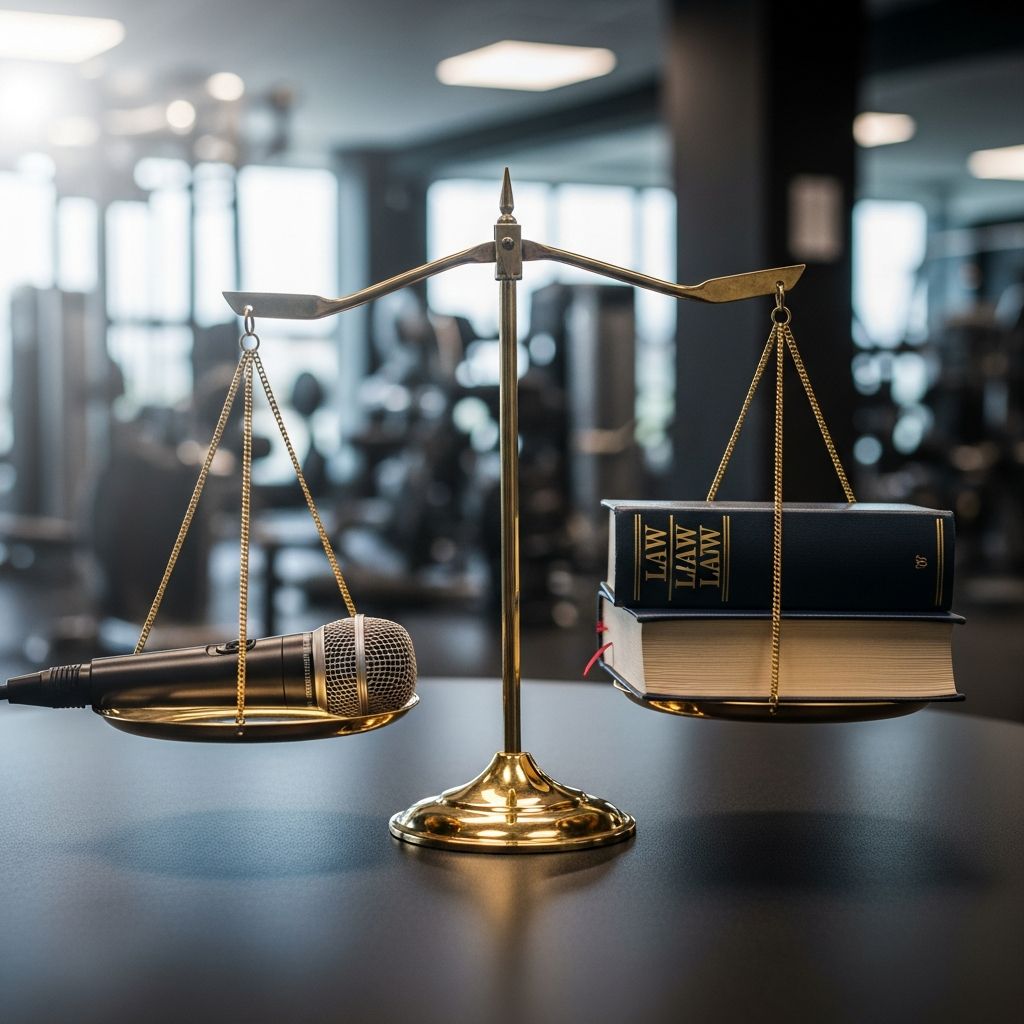
Recording videos or audio at gyms raises complex legal questions balancing First Amendment rights with individual privacy. While public spaces generally permit filming, gyms often blur lines between public access and private expectations, varying by state laws and facility rules.
Understanding Privacy Expectations in Fitness Environments
In fitness centers, individuals engage in physical activities while clad in workout attire, prompting questions about reasonable expectation of privacy. Courts assess whether a person would reasonably anticipate being recorded in that setting. Gyms, though open to members, are private businesses where patrons may assume a degree of seclusion, unlike streets or parks.
This distinction matters because visible areas like main workout floors differ from locker rooms or showers, where privacy is absolute. Filming into changing areas from adjacent spaces can violate laws against voyeurism.
- Open gym floors: Lower privacy expectation due to public visibility.
- Private zones (lockers, restrooms): High privacy; recording prohibited.
- Shared spaces: Depends on gym signage and state consent rules.
State Variations in Consent for Audio and Video
U.S. states divide into one-party consent and two-party consent jurisdictions for audio recordings. In one-party states, you can record if you’re part of the conversation; two-party requires all parties’ agreement.
| State Type | Examples | Audio Recording Rule | Video Implication for Gyms |
|---|---|---|---|
| One-Party | New York, Texas | Consent from one participant suffices | Video often allowed if no audio or privacy intrusion |
| Two-Party (All-Party) | California, Florida | All parties must consent | Strict limits; gym audio capture risky without permission |
Video without audio faces fewer hurdles but still hinges on privacy. California, a two-party state, prohibits secret recordings expecting privacy, impacting gym vlogs.
Gym Policies and Property Rights
Gyms enforce no-recording policies as private entities, banning cameras even in open areas. Violators risk trespassing charges if asked to stop and refusing.
Common policies include:
- Prohibiting tripods or professional setups.
- Requiring consent for member features in promotional content.
- Banning filming in group classes without instructor approval.
These rules supersede general public recording rights since gyms control access via membership agreements.
Special Scenarios: What Crosses the Line?
Filming Workouts of Others
Capturing someone mid-squat for personal use might seem harmless, but posting online without consent can lead to right-of-publicity claims or harassment suits, especially if mocking the subject.
Self-Recording vs. Others
Filming your own routine is typically fine, but framing others prominently shifts risks. Use mirrors or angles avoiding bystanders to minimize issues.
Social Media and Commercial Use
Uploading gym footage to TikTok or YouTube introduces defamation or emotional distress liabilities if content harms reputations. Commercial intent (sponsorships) may require model releases.
Police Interactions and Gym Security
If confronted by staff or police, recording public-facing interactions is protected if non-interfering. However, gyms may call authorities for policy breaches, leading to ejection.
Key advice: Comply with directives to avoid escalation, preserving First Amendment claims later.
Legal Consequences of Unauthorized Recording
Violations range from civil lawsuits (invasion of privacy) to criminal charges (voyeurism in private areas). Penalties include fines up to $2,500 and jail time in severe cases.
- Civil: Damages for emotional distress, injunctions against sharing.
- Criminal: Misdemeanors for upskirt-style filming or audio in two-party states.
Best Practices for Lawful Gym Filming
To stay legal:
- Review gym rules upon entry.
- Ask permission before including others.
- Avoid private areas entirely.
- Disable audio if in two-party states.
- Blur faces in posts featuring bystanders.
Content creators should consult local attorneys for state-specific guidance.
Frequently Asked Questions (FAQs)
Can I film my own workout at a gym without issues?
Yes, self-filming is generally allowed if it doesn’t capture others prominently or violate gym policy. Stick to personal angles.
Is a gym considered a public place for recording?
No, gyms are private property with restricted access, allowing owners to set no-filming rules despite public-like openness.
What if I record police in a gym incident?
Protected if in public view and non-interfering, but gym staff may still enforce policies.
Do I need consent to post gym videos online?
Not always for public areas, but recommended to avoid lawsuits, especially in two-party states or if identifiable individuals appear.
What happens if gym staff delete my footage?
They generally cannot without warrant; seizure requires cause. Seek legal recourse if tampered.
Recent Trends and Evolving Laws
With social media rise, states like California strengthen anti-deepfake and non-consensual porn laws, indirectly affecting gym content. Federal proposals target harassment via recordings.
Gyms increasingly use AI surveillance, flipping dynamics—members have no recourse against facility cameras in common areas.
(Word count: 1678)
References
- Recording in Public: Is It Illegal to Record Without Permission? — Freedom Forum. 2023. https://www.freedomforum.org/recording-in-public/
- Legality of recording by civilians — Wikipedia. Accessed 2026. https://en.wikipedia.org/wiki/Legality_of_recording_by_civilians
- Is it illegal to video record someone without their permission? — Bluedot HQ. 2023. https://www.bluedothq.com/blog/is-it-illegal-to-video-record-someone-without-their-permission
- RECORDING CONVERSATIONS IN ALL 50 STATES CHART — McGuireWoods LLP. 2018-02. https://www.mwl-law.com/wp-content/uploads/2018/02/RECORDING-CONVERSATIONS-CHART.pdf
- What to Know Before Recording Someone Without Their Consent — Sparks Law Practice. 2023. https://sparkslawpractice.com/blog/what-to-know-before-recording-someone-without-their-consent/
- Am I allowed to record conversations in California without the other persons consent? — J&Y Law. 2023. https://jnylaw.com/blog/am-i-allowed-to-record-conversations-in-california-without-the-other-persons-consent/
Similar Articles








Read full bio of Sneha Tete


