
Gun Storage Mistakes That Can Lead to Jail
How unsafe firearm storage can trigger criminal penalties and what lawful owners should know.
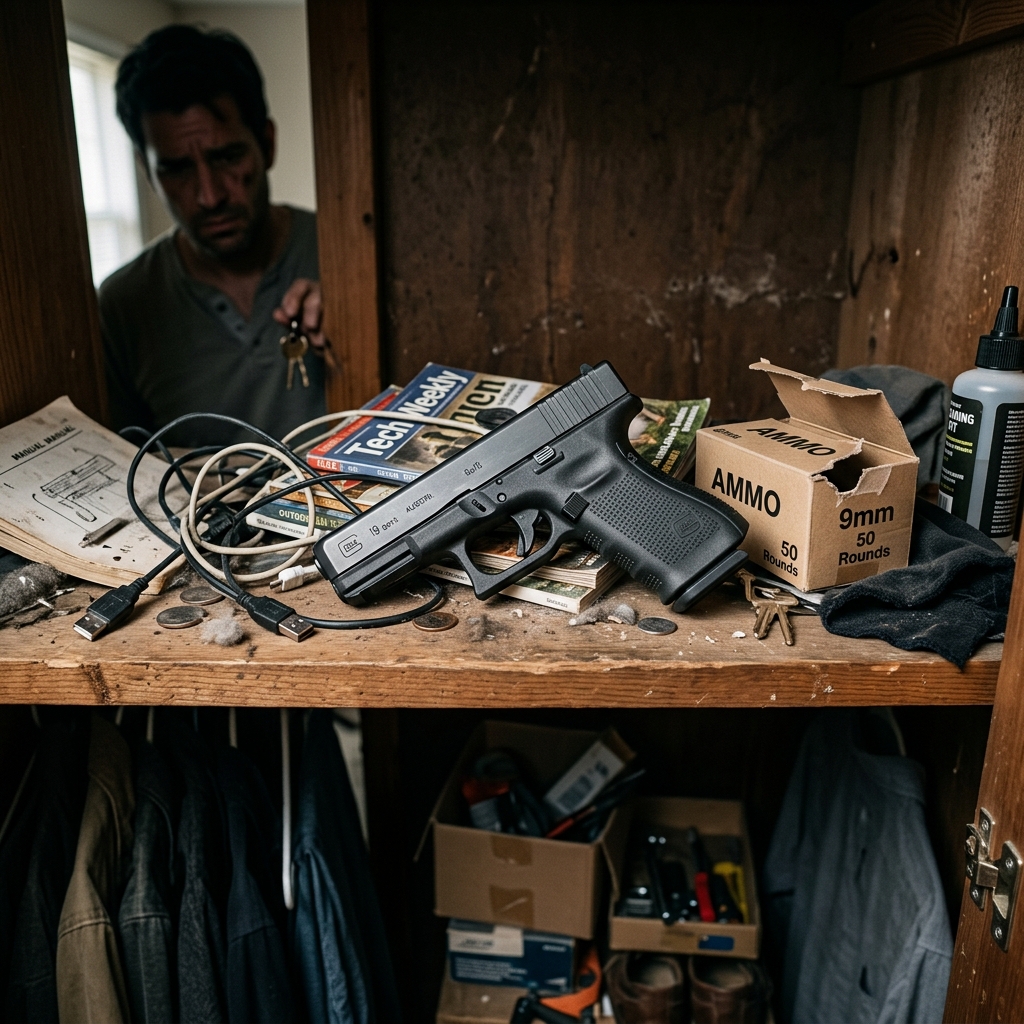
Keeping a firearm in the home can carry legal duties that go beyond common-sense safety. In many states, failing to secure a gun properly can expose the owner to criminal charges if a child or another unauthorized person gets access to it. Federal guidance and state laws both emphasize that firearms should be unloaded, locked, and stored separately from ammunition when not in immediate use.
The legal risk is not limited to theft or accidents. Depending on the state, a gun owner may face misdemeanor or felony penalties if an unsecured firearm is discovered by a minor, used carelessly, or accessed by someone legally barred from possessing it. That makes storage decisions a criminal-defense issue as much as a safety issue.
Why firearm storage has become a legal issue
Firearm storage laws are designed to reduce preventable harm. Public-health and firearms-safety organizations describe secure storage as keeping a gun unloaded, locked, and separate from ammunition so that unauthorized users cannot easily gain access. Those principles now appear in many state laws, especially laws aimed at child access prevention.
Not every jurisdiction uses the same approach. Some states require storage only when a child or prohibited person is likely to be present. Others impose broader duties on gun owners to secure firearms whenever they are unattended. The result is a patchwork of rules, which means a lawful owner in one state may still violate the law by following habits that would be acceptable elsewhere.
When unsafe storage can trigger criminal charges
Criminal liability often begins when an unsecured firearm is actually accessed by a person who should not have it. Michigan’s secure-storage law, for example, imposes penalties when a minor obtains a firearm and then exhibits, discharges, or uses it in a harmful way. In that system, the seriousness of the charge rises with the seriousness of the resulting conduct.
Other states frame the offense more broadly. Giffords reports that several states require locked storage when firearms are left unattended and some specify that a gun must be secured in a way that prevents access by unauthorized people. These laws may apply even before any injury occurs if the gun was stored in a way that violated the statutory standard.
That distinction matters. In some places, the prosecution does not need to prove a shooting or injury to bring charges. Proof that the firearm was left unsecured in a prohibited manner may be enough, especially if a minor, a prohibited person, or an unsecured environment was involved.
The most common storage errors
Unsafe storage usually involves a few recurring mistakes. Federal safety guidance recommends avoiding these practices:
- Leaving a firearm loaded when it is not being carried or actively supervised.
- Storing a gun in a place that children or other unauthorized people can reach.
- Keeping ammunition with the firearm instead of separately locked away.
- Relying on a vehicle’s glove compartment or console as a secure storage solution.
- Assuming a locked door alone is enough to make a firearm inaccessible.
The Department of Justice guidance also recommends layered safeguards such as a gun safe, lock box, trigger lock, cable lock, or disassembly with parts stored separately. Those steps are not just practical advice; they can also help show that the owner took reasonable precautions if a legal dispute arises.
How state laws differ on secure storage
Although the overall policy goal is similar across jurisdictions, the actual legal requirements vary significantly. Giffords notes that some states have child access prevention laws focused on minors, while others also extend protection to adults who are prohibited from firearm possession. The Institute for Firearm Injury Prevention likewise explains that there is no federal secure-storage or child-access-prevention law, so state law controls most of the legal consequences.
Some states require firearms to be stored in a locked container or with a tamper-resistant locking device when not in use. Others require secure storage only when a gun owner knows, or reasonably should know, that a prohibited person or minor is present in the home. The practical result is that the same behavior may be legal in one state and criminal in another.
| Storage scenario | Possible legal risk |
|---|---|
| Loaded handgun left on a nightstand in a home with children | May violate child-access prevention or secure-storage laws |
| Unloaded gun kept in a locked safe with ammunition stored separately | Generally closer to recommended best practices |
| Firearm stored in a car’s console or glove box | May not qualify as secure storage under federal safety guidance |
| Gun accessible to a prohibited person in the home | May create criminal exposure under state law |
What prosecutors may look at
When a firearm-storage case becomes criminal, prosecutors often focus on how the gun was stored, who could reach it, and whether the owner had reason to foresee the risk. State rules frequently ask whether the gun was left unattended, whether a child was likely to be present, and whether the firearm was rendered inaccessible through a lock or secure container.
Investigators may also consider whether the gun was unloaded, whether ammunition was nearby, and whether the storage setup made unauthorized access easy. Federal safety materials specifically recommend keeping ammunition separate and using multiple layers of protection, such as a safe plus a trigger or cable lock. Those details can become important when evaluating negligence or statutory violations.
Why child access cases are treated so seriously
Laws aimed at child access reflect the view that firearm storage problems are preventable. The American Academy of Pediatrics describes safe-storage laws as requiring guns to be locked and unloaded when someone prohibited from possessing a firearm is present in the home. Public-health organizations similarly treat secure storage as a basic measure to reduce unauthorized access and injury.
Because these cases often involve children, lawmakers tend to impose escalating penalties when a child actually gains access and then uses or displays the firearm. Michigan’s law is a clear example: the consequences become more severe if the minor carries the weapon in public, discharges it, injures someone, or causes death. In other states, similar statutes may attach liability even if the incident is interrupted before a shooting occurs.
Practical steps that reduce both danger and legal exposure
Lawful owners who want to reduce risk should think in terms of layers, not single devices. The Department of Justice recommends unloading firearms before storage, locking them in a cabinet, safe, or lock box, and using trigger or cable locks as an added barrier. It also suggests securing portable storage devices to the wall or floor when possible.
Other common safety measures include:
- Storing firearms and ammunition separately.
- Keeping keys, combinations, and access codes away from children and unauthorized adults.
- Using a safe that resists tampering.
- Considering temporary off-site storage during emotional crises or household instability.
- Reviewing state and local rules before traveling with a firearm or changing storage habits.
These measures are important because they are both protective and evidentiary. If a firearm is ever involved in a police investigation, a documented pattern of careful storage may help show that the owner acted responsibly rather than recklessly.
Special concerns for vehicles and temporary storage
Vehicle storage deserves special caution. Federal guidance warns that locked car doors do not amount to secure firearm storage, and it specifically advises against leaving a gun in a glove compartment or console as the sole protection. Those compartments can often be pried open, and they are not designed to function as firearm safes.
If a firearm must remain in a vehicle, the safest approach is to use a secure lock box attached to the vehicle when possible and to keep the gun unloaded. Even then, owners should check local laws because some jurisdictions regulate transportation and vehicle storage separately from home storage.
How a criminal-defense lawyer may analyze a case
If unsafe storage leads to an arrest or investigation, a defense lawyer will usually examine whether the statute was actually violated, whether the required mental state was present, and whether the facts match the specific language of the law. Because secure-storage laws differ by state, a defense may turn on details such as whether the firearm was truly unattended, whether a minor was “likely to be present,” or whether the device used qualifies as a lawful locking method.
A lawyer may also challenge proof that the defendant knew or should have known about the risk. In some statutes, a prosecutor must show more than simple ownership; the state may need to prove foreseeability, access, or a specific statutory condition. Those issues can significantly affect charging decisions, plea negotiations, and possible sentencing outcomes.
Frequently asked questions
Are there federal gun-storage laws?
There is no general federal secure-storage or child-access-prevention law, so state law usually controls criminal liability for unsafe storage.
Is a locked car enough to store a gun safely?
No. Federal safety guidance says locking the vehicle doors is not the same as secure firearm storage, and it warns that glove compartments and consoles should not be treated as secure containers.
Can you go to jail if a child finds an unsecured gun?
Yes. In some states, if a child gains access and certain harmful conduct follows, the owner may face misdemeanor or felony charges. In other states, the violation can occur earlier, based on improper storage alone.
What is the safest way to store a firearm?
Public guidance generally recommends unloading the gun, locking it in a safe or lock box, and keeping ammunition separate.
Do all states have the same storage rules?
No. State laws vary widely, and some states have no secure-storage requirement at all.
Why responsible owners should know the law before trouble starts
Firearm owners often think of storage as a private household choice, but the law increasingly treats it as a public-safety obligation. Secure storage rules are meant to prevent unauthorized access by children and prohibited persons, and many states now enforce those duties with criminal penalties. The combination of household risk, state-specific statutes, and potential criminal charges makes storage planning an essential part of lawful gun ownership.
In practical terms, the safest path is also the most legally defensible one: unload the firearm, lock it in a tamper-resistant container, separate ammunition, control who can access the key or code, and verify the rules in your jurisdiction before assuming your setup is lawful.
References
- Child Access & Safe Storage — Giffords Law Center. 2026-07-10. https://giffords.org/lawcenter/gun-laws/policy-areas/child-consumer-safety/child-access-prevention-and-safe-storage/
- Safe Storage of Firearms – Unload It, Lock It, Store It — U.S. Department of Justice. 2026-07-10. https://www.justice.gov/media/1337981/dl?inline
- What is Secure Storage? — University of Michigan, Institute for Firearm Injury Prevention. 2026-07-10. https://firearminjury.umich.edu/what-is-safe-storage/
- Safe Storage of Firearms — American Academy of Pediatrics. 2026-07-10. https://www.aap.org/en/advocacy/state-advocacy/safe-storage-of-firearms/
- New gun safety laws to protect families go into effect February 13 — Michigan Department of Health and Human Services. 2024-02-08. https://www.michigan.gov/mdhhs/inside-mdhhs/newsroom/2024/02/08/firearms-laws
- Secure Storage/Child Access Prevention Required — Everytown Research & Policy. 2026-07-10. https://everytownresearch.org/rankings/law/secure-storage-or-child-access-prevention-required/
Similar Articles








Read full bio of medha deb




