
Wage And Hour Rights: A Practical Guide For Workers
Understand minimum wage, overtime rules, breaks, and protections under U.S. labor laws to ensure fair employee compensation.
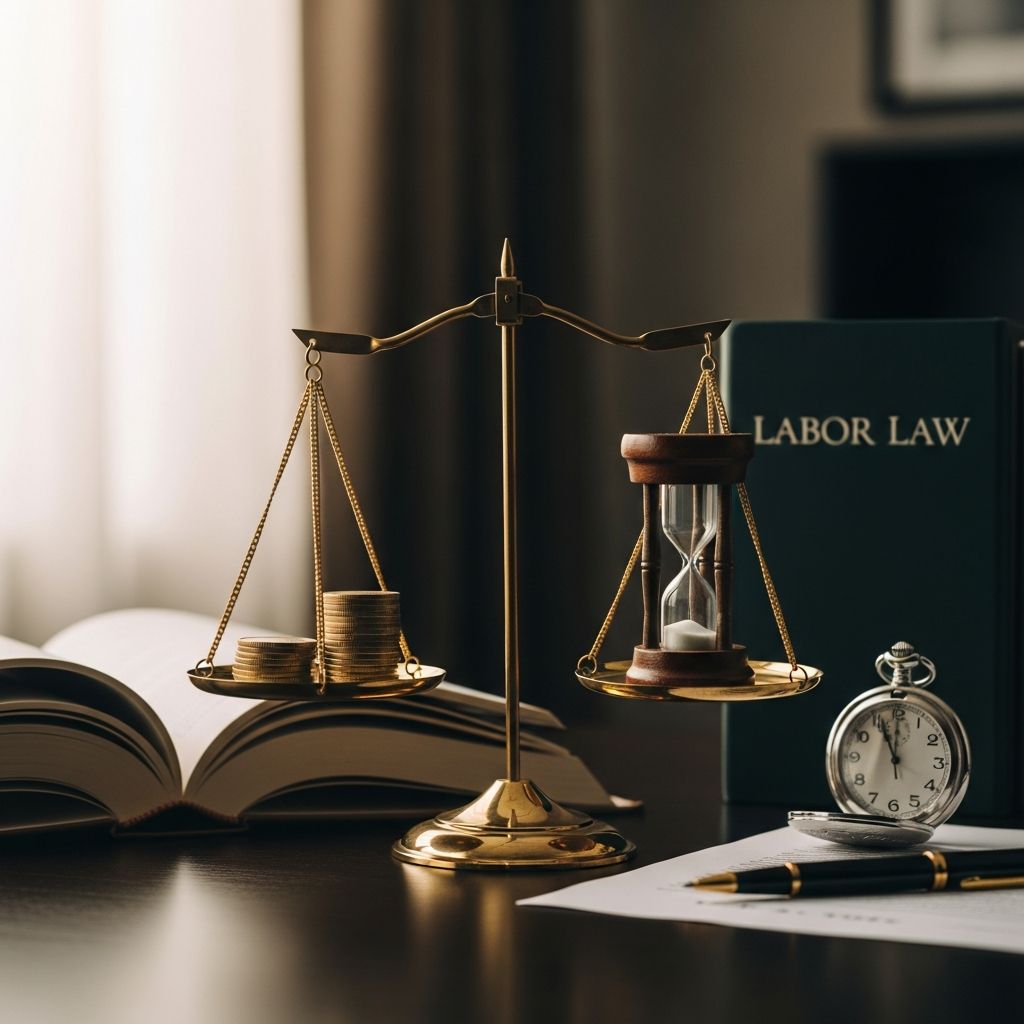
Navigating workplace compensation requires knowledge of federal and state regulations that protect workers from unfair pay practices. These rules ensure employees receive proper wages for time spent working, including premiums for extra hours and safeguards for breaks. Core protections stem from longstanding legislation, primarily enforced by federal agencies, with states often adding stricter standards.
Foundational Federal Legislation: The FLSA Explained
The
Fair Labor Standards Act (FLSA)
forms the backbone of U.S. wage and hour protections, enacted in 1938 and administered by theU.S. Department of Labor’s Wage and Hour Division (WHD)
. It mandates a federalminimum wage
of $7.25 per hour for covered nonexempt workers, effective since July 24, 2009, and requiresovertime pay
at 1.5 times the regular rate for hours exceeding 40 in a workweek. Employers must also maintain accurate records of hours and wages, while restrictions limit hazardous work for minors aged under 18.FLSA coverage extends to most private sector employees, public agencies, and some federal workers, though exemptions apply to certain roles. States cannot undercut federal minimums but frequently exceed them; for instance, Florida’s rate stands at $6.15 hourly currently, with scheduled increases toward $15 by late 2026. The WHD investigates complaints, conducts audits, and imposes penalties for violations, promoting compliance to safeguard worker welfare.
Defining Compensable Work Time
Not all time at the workplace counts as paid hours, but courts and regulators broadly interpret “hours worked” to include activities under employer control. Principal activities integral to the job, plus preliminary or postliminary tasks like donning gear or security checks, qualify for pay.
- Waiting periods: “Engaged to wait” time, such as a receptionist on duty, is compensable; “waiting to be engaged,” like a driver between distant deliveries, generally is not.
- On-call duty: If restricted to premises or unable to use time effectively for personal pursuits, payment is required; flexible off-site availability often exempts it.
- Travel time: Normal home-to-work commutes are unpaid, but special one-day assignments or required travel during work hours count.
Employers must pay for all controlled time to avoid “off-the-clock” violations, a common issue in complaints filed with the WHD.
Overtime Eligibility and Calculations
**Overtime** kicks in after 40 hours weekly, at time-and-a-half the regular rate, computed on total remuneration excluding certain statutory exclusions like gifts or reimbursements. The “regular rate” factors in nondiscretionary bonuses, commissions, and shift differentials divided by total hours.
| Scenario | Overtime Trigger | Pay Rate Example |
|---|---|---|
| Standard week | Over 40 hours | $10/hr regular → $15/hr OT |
| With bonus | Same, rate adjusted | $500 bonus / 40 hrs = impacts rate |
| Daily OT state | Over 8/day + weekly | Varies by state law |
Some states mandate daily overtime after 8 hours or premium pay on holidays, surpassing FLSA baselines. Nationwide updates for 2026 include minimum wage hikes in 19 states, potentially affecting business budgeting.
Employee Classifications: Exempt or Nonexempt?
FLSA divides workers into
nonexempt
(entitled to minimum wage and overtime) andexempt
categories, where salary levels and duties determine status. Common exemptions include:- Executive: Managers supervising 2+ employees, primary duty management, salaried at least specified thresholds.
- Administrative: Office roles with discretion on significant matters.
- Professional: Learned professions requiring advanced knowledge (e.g., lawyers, doctors).
- Outside sales: Primary duty sales away from employer’s premises.
Misclassification plagues industries like tech and healthcare; salaried workers improperly denied OT can recover back pay. Salary thresholds rise periodically, with 2026 updates impacting eligibility. Consult state-specific rules, as some narrow exemptions further.
Meal and Rest Break Mandates
Federal law does not require breaks, but if provided, short rest periods (5-20 minutes) must be paid, while bona fide meal breaks (30+ minutes, fully relieved of duties) are unpaid. States diverge sharply:
- California: 10-minute paid rests every 4 hours, 30-minute unpaid meals.
- Florida: No state mandates, defaults to employer policy.
Interruptions like work calls during meals invalidate unpaid status, triggering full compensation. Unions may negotiate superior terms via collective bargaining.
Protections for Vulnerable Groups
**Child labor** rules prohibit hazardous occupations for under-18s and limit hours for 14-15-year-olds (e.g., no more than 3 hours/school day). Tipped workers receive a lower cash wage (federal $2.13/hr) if tips reach $7.25 total, with employers covering shortfalls. Retaliation against complainers—firings, demotions—is illegal, with remedies including reinstatement and damages.
State Variations and Higher Standards
While FLSA sets floors, states like New York and California impose elevated minimums ($15+), daily OT, and mandatory paid sick leave. Florida’s phased increases aim for $15 by 2026, outpacing stagnant federal rates. Employers follow the most protective rule; multi-state operations demand compliance mapping.
Addressing Violations: Filing Claims
Suspected underpayment prompts free WHD consultations or formal complaints, triggering investigations without cost to workers. Options include:
- Federal FLSA suits for back wages (2-3 year statute).
- State agency filings.
- Class actions for widespread issues.
Penalties escalate for willful violations, including liquidated damages doubling awards. Recordkeeping proves pivotal; employees should track hours meticulously.
Frequently Asked Questions
Does my employer have to pay for commute time?
No, ordinary home-to-work travel is not compensable under FLSA, but required travel between sites during the workday is.
Am I exempt from overtime if salaried?
Not automatically; exemptions hinge on salary level, duties tests (e.g., EAP criteria), not pay method alone.
What if my meal break is interrupted by work?
It must be paid if duties prevent full relief; states like California strictly enforce this.
Can states require more than federal overtime?
Yes, many do—e.g., daily after 8 hours—taking precedence over FLSA.
How do I report unpaid wages?
Contact WHD online, by phone, or mail; anonymity protected, no retaliation allowed.
Best Practices for Compliance
Employers mitigate risks via accurate timekeeping (e.g., apps over manual logs), regular audits, training on classifications, and prompt violation corrections. Workers benefit from reviewing paystubs, knowing rights, and seeking counsel for disputes. As 2026 brings wage hikes, proactive updates ensure equity.
References
- Wage and Hour Laws: HR Terms Explained — Pelago Health. 2023. https://www.pelagohealth.com/resources/hr-glossary/wage-and-hour-laws/
- What is Wage and Hour Law? — Super Lawyers. 2023. https://www.superlawyers.com/resources/wage-and-hour-laws/
- Wages and the Fair Labor Standards Act — U.S. Department of Labor. 2025-01-17. https://www.dol.gov/agencies/whd/flsa
- The 2025 Florida Statutes — Florida Legislature. 2025. https://www.leg.state.fl.us/statutes/index.cfm?App_mode=Display_Statute&URL=0400-0499%2F0448%2F0448.html
- Handy Reference Guide to the Fair Labor Standards Act — U.S. Department of Labor. 2024. https://www.dol.gov/agencies/whd/compliance-assistance/handy-reference-guide-flsa
- Florida Wage and Hour Laws 2025 — Cohen Levy Legal. 2025. https://www.cohenlevylegal.com/blog/florida-wage-and-hour-laws/
- 2026 Wage and Hour Nationwide Update — BakerHostetler. 2026-01-01. https://www.bakerlaw.com/insights/2026-wage-and-hour-nationwide-update-key-changes-that-could-affect-your-business/
- Worker Rights — U.S. Department of Labor. 2025-01-17. https://www.dol.gov/agencies/whd/workers
Similar Articles








Read full bio of Sneha Tete




