
Guide to Utah Workers’ Compensation Benefits
Understand who is covered, how to file a claim, and what benefits Utah’s no-fault workers’ compensation system provides.
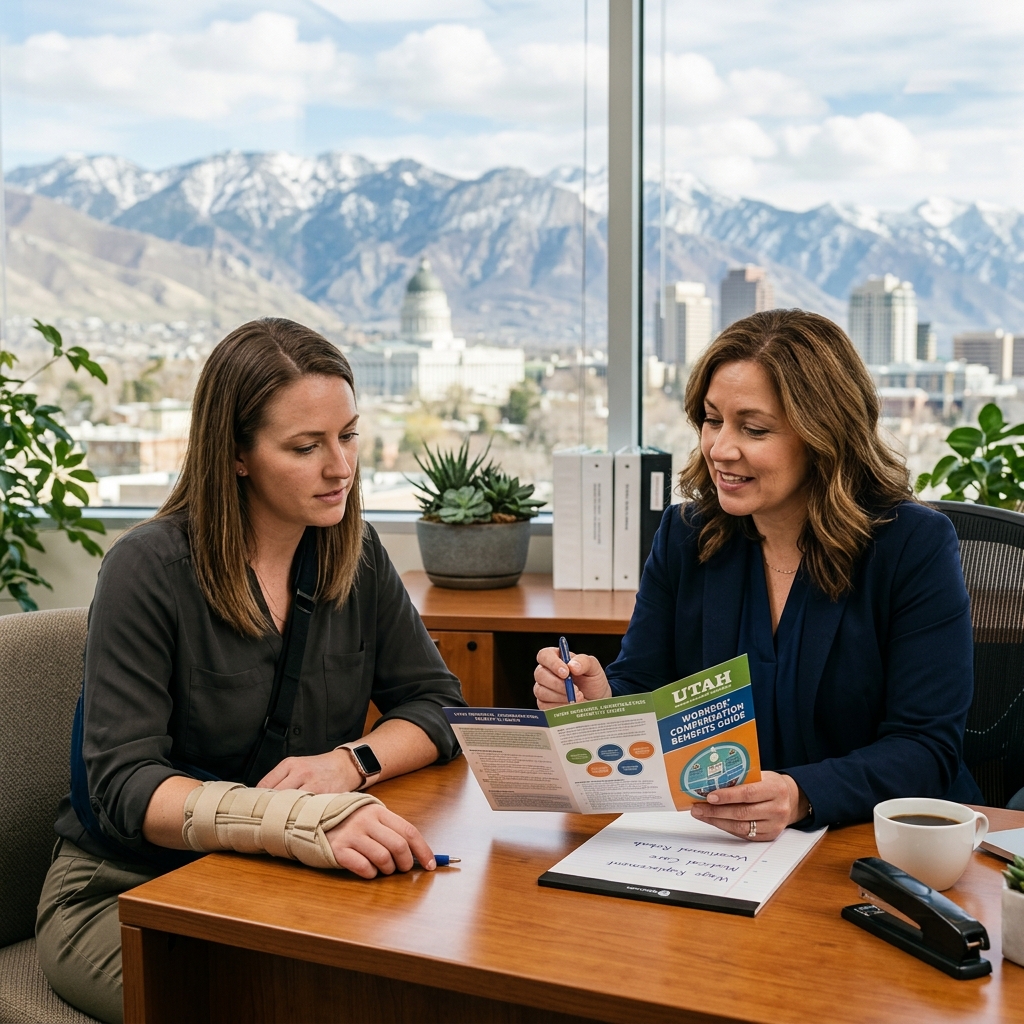
Utah’s workers’ compensation system is designed to protect employees and employers when work-related injuries or illnesses occur. It functions as a no-fault insurance program, meaning most injured workers can receive medical and disability benefits without having to prove their employer was negligent.
This guide explains who must be covered, how to report and file a claim, what benefits are available, and the key deadlines and responsibilities for both employees and employers under Utah law.
Core Features of Utah’s Workers’ Compensation System
Utah’s Workers’ Compensation Act, found in Title 34A, Chapter 2 of the Utah Code, establishes a mandatory insurance scheme for most employers in the state. The system is administered by the Utah Labor Commission, primarily through the Industrial Accidents Division.
What “No-Fault” Means in Utah
Under the no-fault structure, an eligible work-related injury or illness is covered regardless of who caused it, as long as it arises out of and in the course of employment. An employee generally does not need to show that the employer did anything wrong to be entitled to benefits.
- Covered events: Injuries and occupational illnesses caused or worsened by job duties or conditions.
- Typical exceptions: Intentional self-harm, injuries unrelated to work, or situations specifically excluded by statute or case law.
- Trade-off: In exchange for guaranteed benefits, workers usually cannot sue their employer in civil court for damages related to the injury (the “exclusive remedy” principle).
Who Must Carry Workers’ Compensation Insurance
With limited exceptions, every employer in Utah must secure workers’ compensation coverage for all employees. Coverage may be provided through a licensed insurance carrier, the state’s Workers’ Compensation Fund, or approved self-insurance arrangements.
Categories that are often exempt or optionally covered include:
- Sole proprietors without any employees
- Partners in a partnership
- Members of many limited liability companies (LLCs)
- Certain agricultural workers
- Casual or domestic workers in private homes
- Some real estate agents and insurance brokers
Even when coverage is not strictly mandatory, many owners elect to purchase workers’ compensation insurance to protect themselves and their business.
Which Workers and Injuries Are Covered
Most individuals working under a contract of hire—whether written or verbal—are treated as employees for workers’ compensation purposes. This can include full-time, part-time, seasonal, and minor workers, and coverage does not depend on immigration status.
Examples of Employees Generally Covered
- Office staff, manufacturing and warehouse workers
- Retail employees, hospitality workers, and food service staff
- Healthcare personnel, construction workers, and public employees
- University employees and most workers in higher education institutions
Types of Injuries and Illnesses
To be compensable, the injury or illness must have a sufficient connection to the job. Common examples include:
- Accidental trauma: Slips, falls, machinery accidents, vehicle collisions while on work duties.
- Repetitive stress: Carpal tunnel syndrome, back strain from lifting, joint injuries from repetitive tasks.
- Occupational disease: Lung problems from exposure to harmful substances, hearing loss from noise, certain chemical-related illnesses.
Utah law also details categories of injuries typically excluded, such as purely personal conditions that are not caused or aggravated by employment.
Reporting a Workplace Injury in Utah
The first step after any workplace injury or suspected work-related illness is to notify your employer and seek appropriate medical care. Prompt reporting is critical for protecting your rights and ensuring a timely claim.
Employee’s Duty to Report
Utah law requires employees to give notice of a work injury or occupational illness to their employer within 180 days of the incident or of discovering the condition. Failing to notify within this period can jeopardize eligibility for benefits.
- Tell a supervisor or designated safety officer as soon as possible.
- Explain that the injury or symptoms are related to your job.
- Write down the date, time, and circumstances of the event.
Employer’s Duty to Report to the Insurer and State
When an injury is reported, Utah employers must complete an Employer’s First Report of Injury or Illness (often referred to as Form 122E) and submit it to their insurance carrier within about seven days.
- The form documents basic information about the employee, the accident, and the medical provider.
- The insurance carrier then transmits the initial claim report electronically to the Utah Industrial Accidents Division.
- Employers are generally required to provide a copy of the report to the injured worker.
Filing and Processing a Workers’ Compensation Claim
Reporting an injury triggers the claim process, but a worker must also cooperate with medical evaluation and provide information to the insurer. Understanding timelines and what to expect can reduce confusion.
Key Claim Deadlines
| Step | Responsible Party | Typical Deadline | Legal Basis / Notes |
|---|---|---|---|
| Notify employer of injury | Employee | Within 180 days | Late notice can bar benefits. |
| Employer’s first report to insurer | Employer | About 7 days | Form 122E is submitted to the carrier. |
| Insurer’s initial decision or investigation notice | Insurance carrier | Generally within 21 days | Carrier accepts, denies, or requests more investigation. |
| Claim filing deadline | Employee | About 1 year from injury or discovery | Utah law sets a one-year limit to file a workers’ comp claim. |
Role of Medical Providers
Medical documentation plays a central role in Utah workers’ compensation claims. In many cases, the employer’s insurance plan may designate a preferred provider organization (PPO) for the initial visit.
- Tell the doctor the injury occurred at work and describe how it happened.
- The physician completes a Physician’s First Report of Injury or Illness within about seven days, which becomes part of the official claim file.
- Workers are usually entitled to copies of medical reports and may later change providers in accordance with Utah rules and the insurer’s policies.
Types of Workers’ Compensation Benefits in Utah
When a claim is accepted, Utah workers’ compensation can provide several categories of benefits, depending on the nature and severity of the injury.
Medical Benefits
Reasonable and necessary medical care for the work-related condition is typically covered, including:
- Doctor visits, emergency care, hospitalization, and surgery
- Diagnostic tests, physical therapy, and rehabilitation services
- Prescription medications and medical supplies
- Assistive devices or prosthetics when required
- Reimbursement for mileage to and from medical appointments
Temporary Disability (Wage Replacement)
Workers who cannot perform their job while recovering may receive wage-loss benefits at a percentage of their average weekly wages. Utah generally uses a fraction of the worker’s pre-injury earnings, subject to minimums and maximums tied to the statewide average weekly wage.
- Benefits are usually calculated at about two-thirds of the worker’s average weekly wage, up to statutory caps.
- Payments continue while the worker is temporarily unable to work or limited to restricted duty, subject to medical assessment and statutory limits.
- Additional amounts may be provided for dependents in certain situations.
Permanent Disability and Impairment Benefits
If an injury results in lasting impairment after maximum medical improvement, the worker may be entitled to permanent partial or permanent total disability benefits. These are based on medical ratings, vocational impact, and statutory schedules.
- Permanent partial disability: Compensation for specific loss of function or body parts, often calculated through statutory tables and the worker’s wage.
- Permanent total disability: Benefits for workers who are unable to return to gainful employment due to their work-related condition, typically at a percentage of prior earnings.
- Rehabilitation: Workers who can no longer perform their former job may be eligible for vocational rehabilitation services through state programs.
Death and Survivor Benefits
When a work-related injury or illness results in death, Utah workers’ compensation provides:
- Payments toward funeral and burial expenses
- Weekly compensation to dependents based on a percentage of the deceased worker’s wages
- Continuation or adjustment of benefits in accordance with dependency and marital status rules
Employer Responsibilities and Penalties
Utah law imposes specific obligations on employers and provides enforcement mechanisms when they fail to comply. These requirements are intended to ensure that injured workers can access benefits promptly and reliably.
Mandatory Coverage and Claims Handling
- Maintain valid coverage: Employers must secure workers’ compensation insurance or be approved to self-insure, unless they qualify for a statutory exemption.
- Report injuries: Employers must promptly report workplace injuries to their insurance carrier and cooperate with the insurer’s investigation.
- Provide claim information: Employers should give employees claim forms, copies of reports, and information on designated medical providers.
Consequences for Failing to Carry Insurance
Employers who operate without required workers’ compensation coverage may face serious consequences, including:
- Administrative fines starting around a specified minimum (often at least $1,000)
- Injunctions or orders prohibiting the business from operating until coverage is secured
- Loss of the exclusive remedy protection, exposing the employer to potential civil lawsuits by injured employees
Employee Rights and Practical Tips
While each case is unique, injured workers in Utah share certain common rights under the workers’ compensation framework. Understanding these rights helps workers make informed decisions during the claim process.
Key Rights for Injured Workers
- Right to medical care: To receive reasonably necessary treatment for covered work-related injuries.
- Right to wage replacement: To receive temporary disability benefits when unable to work as certified by a medical provider.
- Right to dispute decisions: To challenge claim denials, benefit reductions, or medical determinations through administrative processes at the Utah Labor Commission.
- Right to information: To receive explanations of benefits, copies of medical reports, and notice of any changes in claim status.
Practical Steps After a Work Injury
Consider the following actions if you experience a workplace injury or illness in Utah:
- Seek immediate medical attention for serious injuries or emergencies.
- Notify your employer as soon as possible and document who you told and when.
- Follow medical advice and attend scheduled appointments.
- Keep copies of all letters, emails, and forms related to your claim, including reports from your employer and physician.
- Contact the Utah Labor Commission or consult a qualified attorney if your claim is denied or if you believe benefits are incorrect.
Frequently Asked Questions About Utah Workers’ Compensation
Do I have to prove my employer was at fault to get benefits?
No. Utah uses a no-fault system, which generally provides benefits for covered work-related injuries regardless of who caused the accident, subject to certain exceptions.
How long do I have to report my injury?
You must notify your employer of the injury or occupational illness within 180 days from the date of the incident or from when you discovered the condition. However, reporting as soon as possible is strongly recommended.
Can I choose my own doctor?
For the initial visit, your employer or its insurer may require you to see a doctor within a designated provider network if they have properly notified you of this arrangement. After that, you may have options to change providers under Utah rules and your insurance policy.
What happens if my employer doesn’t have workers’ compensation insurance?
Operating without required coverage can expose employers to fines, injunctions, and loss of exclusive remedy protection. Injured workers in such situations should contact the Utah Labor Commission for guidance.
Can I be fired for filing a workers’ compensation claim?
Utah law does not guarantee that an injured worker’s job will be preserved indefinitely. Employers may lawfully terminate employment if the worker cannot perform essential job duties. However, retaliation solely for exercising workers’ compensation rights may raise separate legal issues, so workers should seek legal advice if they believe they were fired because they filed a claim.
Where can I get more information or help?
The Utah Labor Commission’s Industrial Accidents Division provides educational materials and can answer questions about coverage, claim procedures, and dispute resolution. Many workers also consult private attorneys experienced in Utah workers’ compensation law for case-specific advice.
References
- Employers’ Guide to Workers’ Compensation — Utah Labor Commission, Industrial Accidents Division. 2023-06-01. https://laborcommission.utah.gov/divisions/industrial-accidents/employers/employers-guide-to-workers-compensation/
- Utah Code Title 34A, Chapter 2 – Workers’ Compensation Act — Utah Legislature. 2025-01-01. https://law.justia.com/codes/utah/title-34a/chapter-2/
- Workers Compensation Insurance Policy & Law in Utah — Cerity Insurance. 2022-09-15. https://cerity.com/utah-workers-comp/
- Utah’s Workers’ Compensation Insurance Requirements — OnPay. 2023-03-10. https://onpay.com/insights/workers-comp-requirements-by-state/utah/
- Workers’ Compensation Claims In Utah: Eligibility & Filing — Siegfried & Jensen. 2022-05-20. https://siegfriedandjensen.com/faqs/workers-compensation-claims-in-utah-eligibility-and-filing/
- Utah Workers’ Compensation in Brief — ALFA International (Utah Chapter). 2021-08-01. https://www.alfainternational.com/compendium/workers-compensation/utah/
- Workers Compensation – University of Utah Benefits — University of Utah. 2023-01-15. https://benefits.utah.edu/workers-compensation/
Similar Articles








Read full bio of medha deb




