South Dakota offers wide-open highways, scenic drives, and rural roads, but driving safely in the state requires understanding its specific traffic laws. This guide explains the most important rules that apply to residents and visitors, with a focus on everyday situations like speeding, passing stopped vehicles, reporting crashes, and avoiding impaired driving. While this article is not legal advice, it provides a practical overview based on official South Dakota statutes and guidance so you can travel with confidence.
1. How South Dakota Traffic Laws Are Organized
Most driving and vehicle rules in South Dakota are contained in Title 32 of the South Dakota Codified Laws, which covers motor vehicles, traffic regulation, licensing, and safety provisions. These statutes apply broadly to people driving passenger cars, trucks, motorcycles, and, in many situations, off-road vehicles when they are on public streets or highways.
Key areas addressed in state law include:
- General rules of the road (such as turning, lane use, and right-of-way)[10]
- Speed limits and local authority to set them
- Licensing requirements for drivers and special classes of vehicles
- Driving under the influence (DUI) and related offenses
- Equipment and safety requirements, including seat belts and helmets
- Accident reporting obligations
- Rules for interacting with emergency and hazard vehicles, including the move over law
2. Speed Limits and Safe Speed Rules
South Dakota combines specific posted speed limits with a general requirement to drive at a speed that is reasonable and prudent for conditions. Driving faster than is reasonable, even if below the posted limit, can result in a violation.
2.1 Typical Maximum Speed Limits
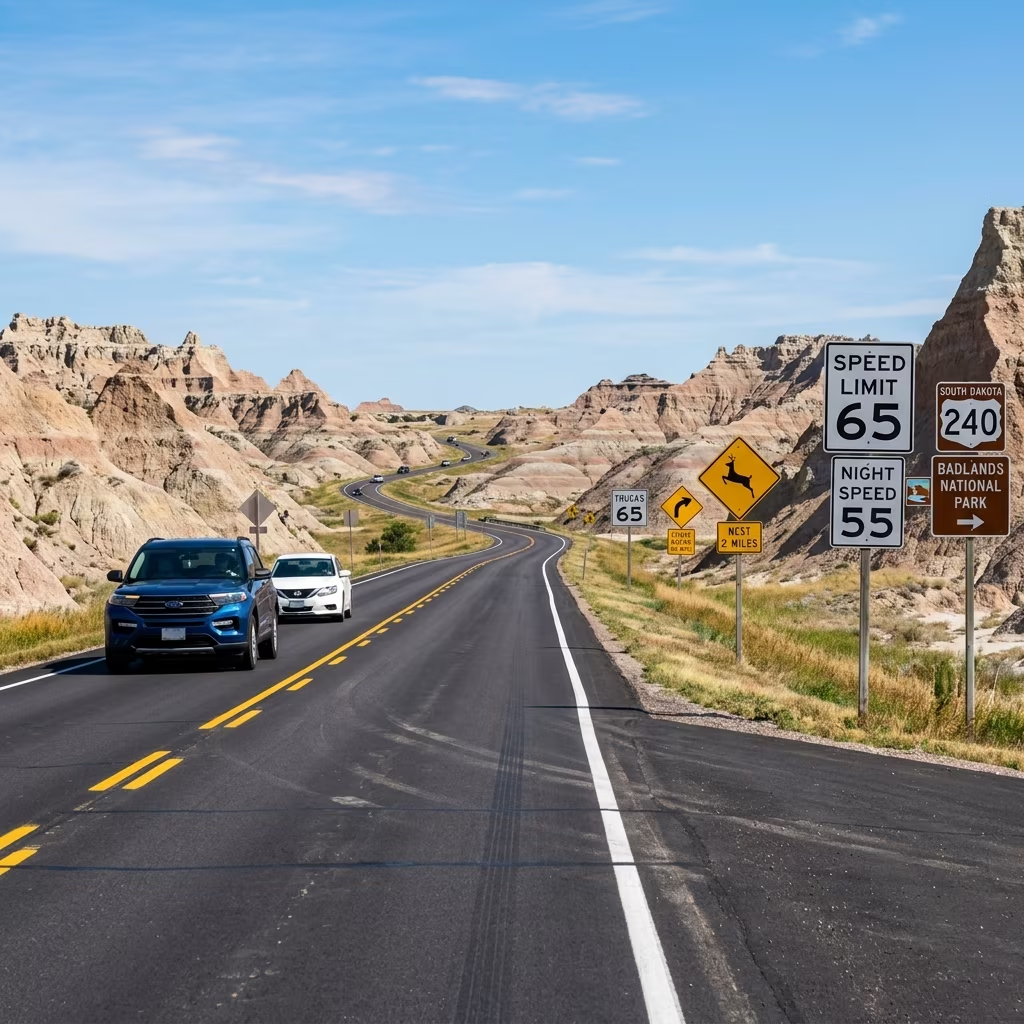
Although exact limits can vary by road segment, common maximum speeds include:
- Interstate highways: Up to 80 mph in many rural sections, with lower limits in urban areas.
- Other divided four-lane rural highways: Often up to 70 mph when established by the Transportation Commission.
- Other highways: Generally between 55 mph and 70 mph.
- Township roads: Typically capped at 55 mph unless otherwise posted.
- Urban areas not specifically zoned or posted: Default limit of 25 mph.
2.2 Special Low-Speed Areas
South Dakota law provides lower limits in certain high-risk situations. For example, when approaching an intersection where your view is obstructed (you cannot see cross traffic for 200 feet), the maximum lawful speed may be as low as 15 mph. This reflects a broader principle: drivers must adjust their speed when visibility, traffic, or road conditions make normal speeds unsafe.
2.3 Penalties for Speeding
Driving above the lawful limit is generally treated as a Class 2 misdemeanor in South Dakota. That classification can carry fines and other consequences, and repeated or aggravated violations may lead to license-related issues. More serious charges can arise if reckless behavior, racing, or speed contests occur on public roads.
| Situation | Typical Rule | Legal Note |
|---|---|---|
| Rural interstate | Up to 80 mph, unless posted lower | Must still be reasonable and prudent for conditions |
| Urban streets not otherwise posted | 25 mph maximum | Violation is a Class 2 misdemeanor |
| Township roads | Generally 55 mph maximum | May be modified by local authority within legal limits |
| Obstructed-view intersections | 15 mph maximum | Designed to address limited sight distance |
3. Licensing Requirements and Off-Road Vehicles
South Dakota law requires most drivers on public highways to hold a valid operator’s license. With limited statutory exceptions, no person may drive a motor vehicle on a highway without a valid license issued under the applicable chapter.
Off-road vehicles, such as certain recreational machines, are subject to special restrictions on where and how they may operate. When they are driven on public streets or highways outside those limited allowances, the driver becomes subject to the same licensing and revocation rules that apply to ordinary motor vehicles. This means operating an off-road vehicle in prohibited areas without a license can still lead to charges for driving without a license or driving while suspended.
4. Rules of the Road: Turning, Passing, and Lane Use
South Dakota’s traffic code also sets out detailed requirements for how drivers move and position their vehicles on the road. These rules help prevent crashes caused by sudden maneuvers or confusion at intersections.[10]
4.1 Proper Turning at Intersections
Drivers must place their vehicles in the correct lane before making a turn and must use appropriate signals.[10] The statutes governing turns require, among other things:
- Being in the proper lane before turning left or right.[10]
- Signaling continuously for a legally required distance before the turn.[10]
- Ensuring the turn can be made safely, without cutting across lanes or endangering other traffic.[10]
4.2 Passing and Lane Discipline
While South Dakota allows passing when safe and lawful, it is illegal to participate in races, speed contests, or exhibitions of speed on public highways. Passing is also restricted near places such as intersections and other entrances where vehicles may cross or enter the roadway.
Drivers are encouraged to maintain steady speeds, avoid unnecessary lane changes, and keep to the right except when passing. On multi-lane roads, slower traffic should normally use the rightmost travel lane.
4.3 Interstates and Medians
On interstate highways, drivers must not cross the median, and backing up on an interstate is prohibited under any circumstances. If you miss an exit, you must continue to the next exit rather than stopping or reversing. These rules are intended to reduce high-speed conflicts and rear-end collisions on limited-access roads.
5. Seat Belts, Child Restraints, and Motorcycle Helmets
South Dakota law recognizes occupant protection as a key safety measure. State statutes require seat belt use for specific occupants and impose special rules for children and young motorcyclists.
5.1 Seat Belt Requirements
Drivers and front-seat passengers in passenger vehicles must use seat belts, and appropriate child restraint systems are required for infants and young children. These provisions aim to reduce injuries and deaths in crashes and support broader national safety standards.
5.2 Child Passenger Safety
For children under a certain age, South Dakota law requires the use of a passenger restraint system meeting applicable safety standards. While specific technical details are contained in statute and administrative guidance, the key principle is that younger passengers must be secured in age- and size-appropriate restraints.
5.3 Motorcycle Helmet Rules
In South Dakota, it is unlawful for a person under 18 years of age to operate or ride on a motorcycle unless that person wears an approved safety helmet. Adults are strongly encouraged to wear helmets, but the legal mandate is focused on minors. This requirement is based on evidence that helmet use significantly reduces brain and head injuries in motorcycle crashes.
6. The Updated Move Over Law and Hazard Vehicles
South Dakota has strengthened its protections for people working or stopped on the roadside by expanding its move over law. Originally targeting authorized emergency vehicles using red signals, the law now extends to many vehicles displaying amber, yellow, or blue warning lights on the shoulder.
6.1 When the Move Over Law Applies
Drivers must take specific actions when approaching from any direction a vehicle that is stopped or occupying the shoulder and using amber, yellow, or blue warning lights. Covered vehicles include:
- Law enforcement vehicles and other emergency responders using appropriate lights
- Tow trucks and roadside assistance vehicles
- Highway maintenance and utility vehicles
- Private vehicles properly using hazard lighting while stopped on the shoulder
6.2 Required Driver Actions
The law distinguishes between multi-lane highways and two-lane highways:
- On interstates or other multi-lane roads: Drivers must merge into the lane farthest from the stopped or shoulder vehicle at least 300 feet before passing, when it is safe to do so, and then proceed with caution.
- On two-lane highways: At least 300 feet before reaching the vehicle, drivers must slow to a speed at least 20 mph below the posted limit (or to 5 mph when the posted limit is 20 mph or less) and proceed with caution.
Similar requirements exist in the state driver handbook for authorized emergency vehicles using red signals, where motorists must stop and then proceed carefully once it is safe and permitted.
6.3 Penalties for Violations
Failing to follow the move over law is a Class 2 misdemeanor and carries a minimum fine of $270. If a crash occurs because of the violation, the offense can be elevated to a Class 1 misdemeanor, which carries steeper penalties. These penalties underscore the serious risk to workers and stranded motorists on the shoulder.
7. Driving Under the Influence (DUI) and Zero Tolerance
South Dakota’s DUI laws prohibit operating or having physical control of a vehicle while under the influence of alcohol, drugs, or other intoxicants, or with certain concentrations of alcohol in the blood. The state also follows the national trend of applying stricter rules to drivers under 21.
7.1 Core DUI Prohibitions
Under codified law, a person may not drive or be in control of a vehicle if they are under the influence of alcohol, drugs, or intoxicants, or if their blood alcohol concentration meets or exceeds statutory thresholds. Arrests may occur without a warrant in specified circumstances, reflecting the public safety importance of removing impaired drivers from the road.
7.2 Young Drivers and Zero Tolerance
South Dakota follows “zero tolerance” principles for drivers under 21, similar to other states. The state driver handbook notes that all states have laws allowing penalties when any measurable alcohol is present in the circulatory system of drivers under 21. These policies aim to deter underage drinking and driving and are backed by both state and federal safety initiatives.
8. Accident Reporting Obligations
After a crash, South Dakota law may require drivers to report the incident to law enforcement. Reporting is mandatory when there is a death, personal injury, or certain levels of property damage.
8.1 When You Must Report a Crash
The operator of a motor vehicle involved in an accident must immediately report the matter to the nearest available peace officer with jurisdiction when:
- There is a fatality.
- There is personal injury to any person.
- There is damage to one person’s property of at least $1,000, or combined property damage of at least $2,000.
Prompt reporting ensures that law enforcement can document the crash, manage traffic, and coordinate medical assistance where needed.
9. Cannabis, Alcohol, and Special Local Rules
Traffic laws intersect with controlled substance rules, and South Dakota has unique provisions related to alcohol and medical cannabis that affect drivers.
9.1 Alcohol Availability and Local Restrictions
South Dakota sets a legal drinking age of 21 and regulates the hours and locations where alcohol may be sold. Some Native American reservations maintain alcohol-free environments, meaning possession and consumption may be prohibited locally even if allowed elsewhere in the state. Regardless of where alcohol is obtained, impaired driving is unlawful under state DUI statutes.
9.2 Medical Cannabis and Driving
Medical cannabis is legal in South Dakota for residents and visitors who hold official, state-issued registration cards, allowing possession of specified amounts of cannabis and cannabis products. Recreational cannabis remains illegal under state law, and all cannabis possession is illegal under federal law. Even authorized medical use does not permit impaired driving; operating a vehicle under the influence of cannabis can fall under DUI provisions.
10. Practical Safety Tips for South Dakota Drivers
In addition to following formal rules, adopting practical safety habits helps drivers comply with the law and protect themselves and others.
- Plan for rural visibility: On lightly traveled rural roads, watch for slow-moving farm equipment and maintenance vehicles, and adjust speed early.
- Respect work zones and shoulders: Whenever you see workers or hazard lights on the shoulder, move over or slow down in line with the move over law.
- Use restraints consistently: Buckle up every trip, secure children in appropriate seats, and ensure teens use helmets on motorcycles.
- Stay sober and alert: Avoid any alcohol or drugs before driving, and be especially cautious on long rural stretches where fatigue can set in.
- Know when to report: After a serious crash, contact law enforcement immediately to meet legal reporting duties and assist responders.
11. Frequently Asked Questions (FAQs)
Q1: What is the maximum speed limit on South Dakota interstates?
Many interstate segments in South Dakota have a maximum speed limit of 80 mph, especially in rural areas, but urban sections and certain corridors may post lower limits. Drivers must always follow posted signs and adjust speed to road and weather conditions.
Q2: Do I have to move over for tow trucks and maintenance vehicles?
Yes. Under the updated move over law, you must move into the lane farthest from the vehicle or slow down, depending on the type of road, when approaching any vehicle on the shoulder using amber, yellow, or blue warning lights. This includes tow trucks, highway maintenance equipment, utility vehicles, and appropriately lit private vehicles.
Q3: Are seat belts required for back-seat passengers?
South Dakota specifically requires drivers and front-seat passengers to use seat belts, and child restraint rules apply to young passengers. Even when not legally mandated, wearing seat belts in all seating positions is strongly recommended to reduce the risk of injury in a crash.
Q4: Can medical cannabis cardholders drive after using cannabis?
Cardholders may legally possess limited amounts of medical cannabis under state law, but they cannot drive while impaired. DUI laws apply to any driver who operates a vehicle under the influence of cannabis or other intoxicants, regardless of medical authorization.
Q5: When must an accident be reported to law enforcement?
Accidents must be reported promptly to the nearest peace officer when they involve death, personal injury, or property damage that meets or exceeds the statutory thresholds (for example, damage of $1,000 to one person’s property or $2,000 in combined damage).
References
- Codified Law 32 — South Dakota Legislature. 2025-01-01. https://sdlegislature.gov/Statutes/32
- South Dakota Driver’s Handbook — South Dakota Department of Public Safety. 2024-01-01. https://nationaldrivertraining.com/media/documents/handbooks/South-Dakota/South-Dakota-Drivers-Handbook.pdf
- Updated Move Over Law in South Dakota — South Dakota Department of Transportation. 2025-07-01. https://dot.sd.gov/inside-sddot/media/sddot-blog/move-over-law-july-1-2025/
- South Dakota Laws (Travel Information) — Travel South Dakota. 2023-06-01. https://www.travelsouthdakota.com/trip-ideas/south-dakota-laws
- South Dakota Codified Laws Title 32, Chapter 14 — Justia / South Dakota Legislature. 2025-01-01. https://law.justia.com/codes/south-dakota/title-32/chapter-14/
- South Dakota Attorney General Official Opinion — Office of the South Dakota Attorney General. 1980-01-01. https://atg.sd.gov/OurOffice/OfficialOpinions/opinionhtml.aspx?id=254