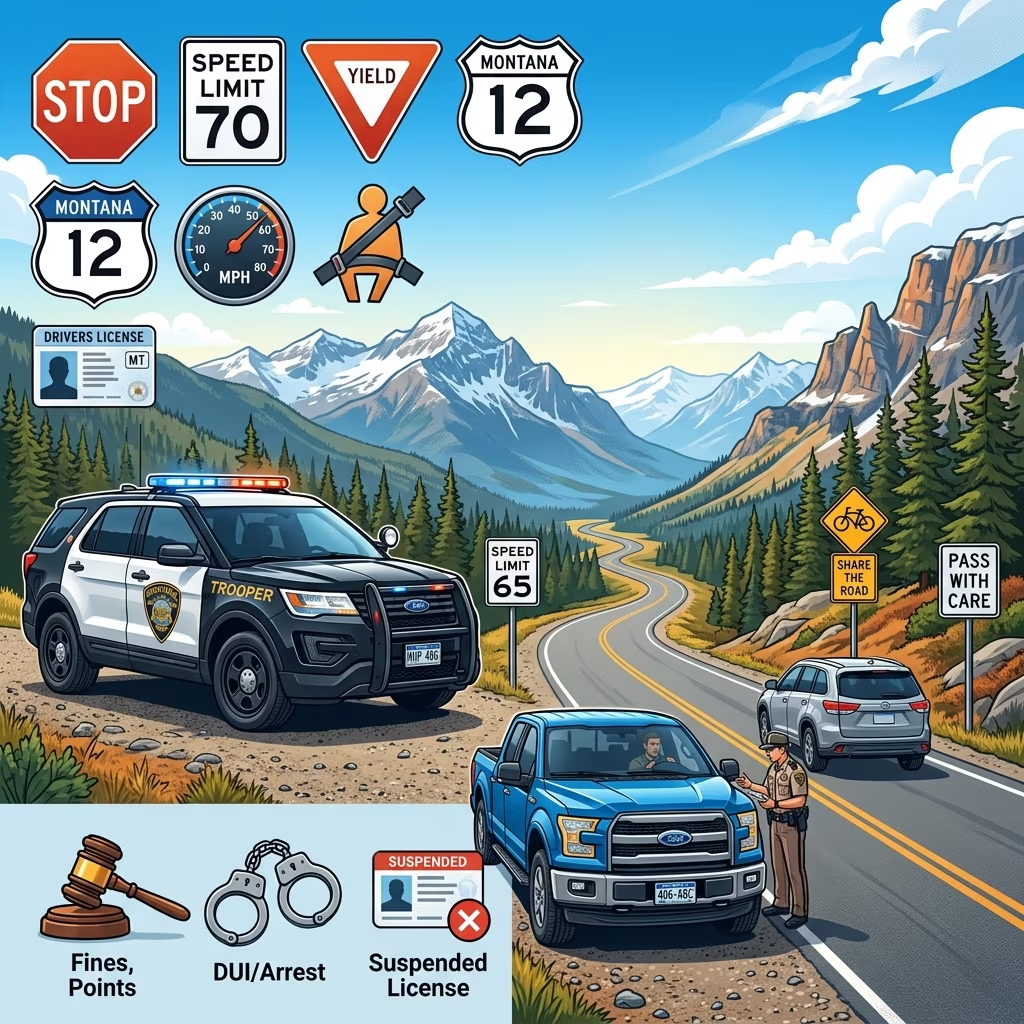
Montana’s wide-open highways and rural roads can encourage fast driving, but the state’s traffic laws are strict and can quickly affect your license, insurance costs, and even your freedom. Understanding how violations are defined, how points are assessed, and what penalties you may face is essential for any driver in Montana, whether you are a resident or just passing through.
Overview of Montana Traffic Regulation
Montana’s traffic rules are primarily codified in Title 61 of the Montana Code Annotated, which governs motor vehicles, licensing, traffic regulation, and impaired driving. These statutes give law enforcement and the courts clear authority to stop unsafe drivers, issue citations, and suspend or revoke licenses when necessary. Most on-the-road enforcement focuses on provisions related to driver licensing, vehicle operating requirements, and driving under the influence.
Although statutes can be technical, the underlying goals are straightforward:
- Prevent crashes by requiring safe speeds, attentive driving, and proper vehicle control.
- Protect vulnerable road users, including pedestrians and children in vehicles.
- Reduce impaired driving through strict DUI penalties and implied consent rules.
- Promote consistent behavior at intersections, crosswalks, and on multi-lane highways.
Traffic officers monitor compliance with these laws on routine patrols and special enforcement campaigns, especially in high-crash corridors.
Montana’s Driver License Point System
Montana uses a point system to track driver behavior and identify those at higher risk of future violations. Each qualifying traffic conviction adds points to your record, and accumulating too many points within a set period can trigger license sanctions.
How Points Work
While specific point values depend on the type of violation, the general structure is:
- More serious offenses (such as DUI or reckless driving) carry higher point totals.
- Minor infractions (like lower-level speeding) add fewer points.
- Points remain on your record for a limited period and are tracked by the Motor Vehicle Division.
| Points Accumulated | Time Frame | Potential Consequence |
|---|---|---|
| 6 points | Within 2 years | Shorter license suspension or restriction. |
| 15 points | Within 3 years | Longer license suspension; possible requirement for reinstatement conditions. |
A record with several moderate violations can be just as damaging as a single serious offense. Reaching or exceeding these thresholds often results in a suspension notice and may require you to complete driver improvement or other court-ordered programs before your license is restored.
Typical Consequences of Point Accumulation
- Administrative suspension of your driver license once point limits are reached.
- Higher insurance premiums due to the increased risk profile.
- Possible employment impacts if you drive for work or hold a commercial license.
- Mandatory courses or evaluations ordered by the court or licensing authority.
Because points can compound quickly, especially after multiple speeding tickets or a combination of violations, keeping your record clean is one of the best ways to protect your driving privileges.
Key Moving Violations in Montana
Not all traffic violations are treated equally. Some infractions are minor, while others can lead to criminal charges, significant fines, and heavy points. The following categories represent common and important offenses under Montana law.
Reckless and Careless Driving
Montana distinguishes between reckless driving and less serious forms of unsafe driving. Reckless driving generally involves operating a vehicle with willful or wanton disregard for the safety of persons or property. This can include excessive speeding in hazardous conditions, racing, or aggressive maneuvers that put others in imminent danger. Violations under vehicle operating requirements laws are specifically addressed in Title 61, Chapter 8.
Consequences for reckless driving can include:
- Significant fines and possible jail time, especially if injuries or property damage occur.
- Higher point assessment compared to ordinary speeding or minor rules infractions.
- Potential civil liability if your actions contribute to a crash.
Speeding and Minimum Speed Rules
Montana establishes both maximum and minimum speed requirements. Speed limits vary depending on road type and time of day, with distinct limits for daytime (one-half hour before sunrise to one-half hour after sunset) and nighttime. In addition to posted limits, drivers must always travel at speeds that are reasonable and prudent for conditions, such as weather, traffic, and road surface.
Montana also regulates driving too slowly. Under minimum speed regulations, a driver may not operate at a speed so slow that it impedes the normal and reasonable movement of traffic, unless a reduced speed is necessary for safety or required by law. On undivided two-lane highways, special rules apply when a slow-moving vehicle has four or more vehicles lined up behind it.
- The driver must pull off at the nearest safe turnout or drive on a suitable shoulder to allow following traffic to pass.
- Transportation authorities may designate and sign turnouts and can set minimum speed limits for specific segments where slow speeds are a proven hazard.
These rules are designed to reduce risky passing maneuvers and prevent long queues behind slow vehicles on rural highways and mountain roads.
Seatbelt and Child Restraint Requirements
Montana law requires drivers and passengers to use seatbelts when they are present in the vehicle. The state also mandates appropriate child safety restraint systems for young passengers under a certain age and weight. Specifically:
- Drivers and each occupant must wear a seatbelt in vehicles equipped with them.
- Children under age 6 and weighing less than 60 pounds must be in a proper child safety restraint system.
Montana’s seatbelt law is not a primary law, meaning officers generally do not stop vehicles solely for seatbelt nonuse. However, failing to buckle up can result in citations when combined with other violations. Penalties include:
- Approximately $20 fine for failing to wear a seatbelt, which is not treated as a misdemeanor, not considered a moving violation, and not counted against the driver’s record for license suspension purposes.
- Up to $100 fine for failing to use required child restraints.
Certain vehicles that are not required under federal law to have seatbelts are exempt. Despite the comparatively low fines, safety agencies emphasize consistent seatbelt use as one of the simplest ways to reduce serious injuries and fatalities.
Driving Under the Influence (DUI)
Montana treats impaired driving offenses especially seriously. Under the state’s implied consent law, drivers are considered to have agreed to chemical testing of blood or breath to determine alcohol or drug presence when they operate a vehicle on public roads. Refusal can lead to administrative penalties independent of any criminal case.
DUI penalties increase with each offense:
- First offense: Up to six months in jail and a fine up to $1,000, with possible suspension of part of the jail term if the driver completes a court-ordered chemical dependency program.
- Second or subsequent offenses: Potential forfeiture of the vehicle used in the offense.
- Fourth or subsequent DUI: Classified as a felony, with much more severe penalties, including longer incarceration and extended license consequences.
DUI convictions also typically result in significant point assessments, extended license suspensions, ignition interlock requirements in some cases, and substantial increases in insurance premiums.
Right-of-Way and Intersection Rules
Many collisions occur at intersections and crosswalks, often because drivers misunderstand or ignore right-of-way rules. Montana law and local codes set detailed requirements for who must yield in various situations to keep traffic predictable and protect pedestrians.
General Right-of-Way Principles
- Pedestrians in crosswalks: Motorists must yield to pedestrians at marked crosswalks and, in many situations, at unmarked crosswalks at intersections.
- Emerging from alleys, driveways, or parking lots: Drivers exiting private property must yield to pedestrians on the sidewalk and to vehicles already on the roadway.
- Blocking intersections: Even with a green light, drivers should not enter an intersection unless they can fully clear it without stopping and obstructing cross traffic.
Uncontrolled Intersections and Four-Way Stops
At intersections without stop signs or signals, drivers must exercise heightened caution:
- Vehicles approaching uncontrolled intersections generally must yield to traffic coming from the right.
- Slowing down allows drivers to observe other vehicles and avoid conflicts.
At four-way stop intersections:
- The first vehicle to arrive and come to a complete stop usually has the right-of-way.
- If two vehicles stop at the same time, local rules and general safe practices often favor yielding to the vehicle on the right.
Roundabouts and Special Situations
Roundabouts are designed to improve traffic flow and reduce severe crashes, but they require strict attention to right-of-way:
- Drivers entering a roundabout must yield to traffic already circulating within it.
- Once inside, drivers maintain their path until they exit, avoiding sudden stops that may cause rear-end collisions.
Emergency and funeral processions receive special priority:
- Emergency vehicles with lights and sirens require drivers to yield by pulling to the side of the road or otherwise moving out of the vehicle’s path.
- At intersections, you should proceed through if an emergency vehicle is behind you and the light allows movement, then pull over to clear a path afterward.
- Funeral processions led by a designated lead or escort vehicle may have priority over normal right-of-way rules at intersections; drivers should yield even if they have a green light.
Enforcement and Safety Initiatives
Montana’s Department of Transportation and law enforcement agencies work together to reduce crash rates through enforcement and education. Traffic patrols focus heavily on Title 61 provisions such as driver licensing, operating requirements, and impaired driving laws. Targeted campaigns may emphasize seatbelt use, speed compliance, or DUI prevention in areas with high collision rates.
Safety programs encourage drivers to:
- Consistently wear seatbelts and secure children in approved restraints.
- Observe posted speed limits and adjust for conditions.
- Avoid driving after consuming alcohol or drugs; plan for designated drivers or alternative transportation.
- Stay alert to pedestrians, bicyclists, and wildlife on rural roads.
Practical Tips to Avoid Violations in Montana
Staying in compliance with Montana traffic laws is not just about avoiding fines; it’s about protecting lives and keeping your record clean. The following practical steps can significantly reduce your risk of citations and crashes:
- Know the limits: Pay attention to posted speed signs, especially where daytime and nighttime limits differ.
- Use turnouts: If you are driving slowly on a two-lane rural road and traffic builds behind you, use designated turnouts or safe shoulders to let faster vehicles pass.
- Buckle up every trip: Even though seatbelt enforcement is not primary, consistent seatbelt use dramatically improves survivability in crashes.
- Plan ahead for alcohol: Arrange sober transportation before drinking; Montana’s DUI penalties and implied consent rules are strict and far-reaching.
- Respect crosswalks and intersections: Yield to pedestrians and avoid blocking intersections, even when you have a green light.
- Watch for emergency vehicles: Listen and look for sirens and lights, and move out of the way promptly when they approach.
Frequently Asked Questions About Montana Traffic Laws
How many points can I have before my Montana license is suspended?
Montana may suspend your driver license if you accumulate 15 points within three years. Collecting 6 points within two years can also lead to a shorter suspension or restriction. Points result from qualifying traffic convictions, and the exact outcome can depend on your overall driving history.
Can I be stopped in Montana solely for not wearing a seatbelt?
Montana does not currently enforce seatbelt use as a primary law, so officers generally do not stop vehicles solely because the driver or passengers are unbelted. However, if you are stopped for another violation, you can still receive a seatbelt citation.
What is the penalty for failing to use a child safety seat?
Failing to properly restrain a child under age 6 and under 60 pounds can result in a fine of up to $100. While such violations may not automatically count as moving offenses for license suspension purposes, they are taken seriously due to the heightened risk to children.
What happens if I refuse a DUI test in Montana?
Because Montana operates under implied consent, refusing a blood or breath test when lawfully requested can trigger administrative penalties, including license suspension, even if you are not convicted of DUI in criminal court. Refusal may also be used as evidence in certain proceedings.
Do I have to yield to a funeral procession?
Yes. When a funeral procession is led by a recognized lead or escort vehicle, Montana law requires drivers to yield, even if they believe they have the normal right-of-way through the intersection. This may mean waiting at a green light while the procession continues.
References
- Montana Code Annotated, Title 61, Chapter 8: Traffic Regulation — Montana Legislature. 2025-01-01. https://mca.legmt.gov/bills/mca/title_0610/chapter_0080/parts_index.html
- 61-8-311 Minimum speed regulations — Montana Legislature. 2025-01-01. https://mca.legmt.gov/bills/mca/title_0610/chapter_0080/part_0030/section_0110/0610-0080-0030-0110.html
- Montana Motor Vehicle Division: Driving Safety — Montana Department of Justice, Motor Vehicle Division. 2023-05-01. https://mvdmt.gov/driving-safety/
- Traffic Enforcement — Montana Department of Transportation. 2022-08-15. https://www.mdt.mt.gov/visionzero/plans/traffic-enforcement.shtml
- Montana Code Annotated Title 61, Chapter 8, Part 3: Vehicle Operating Requirements — Justia. 2025-01-01. https://law.justia.com/codes/montana/title-61/chapter-8/part-3/
- Driving Right of Way in Montana — Cok Kinzler Law Firm. 2021-09-10. https://cokkinzlerlaw.com/blog/understanding-right-of-way-laws-in-montana
- Town of Valier Municipal Code, Chapter 1: Motor Vehicles and Traffic — Town of Valier. 2020-01-01. https://codelibrary.amlegal.com/codes/valiermt/latest/valier_mt/0-0-0-765