Massachusetts Divorce Filing: 8-Step Guide For 2025
Complete step-by-step process for filing divorce in Massachusetts, covering residency, forms, no-fault vs. fault options, and child-related requirements.
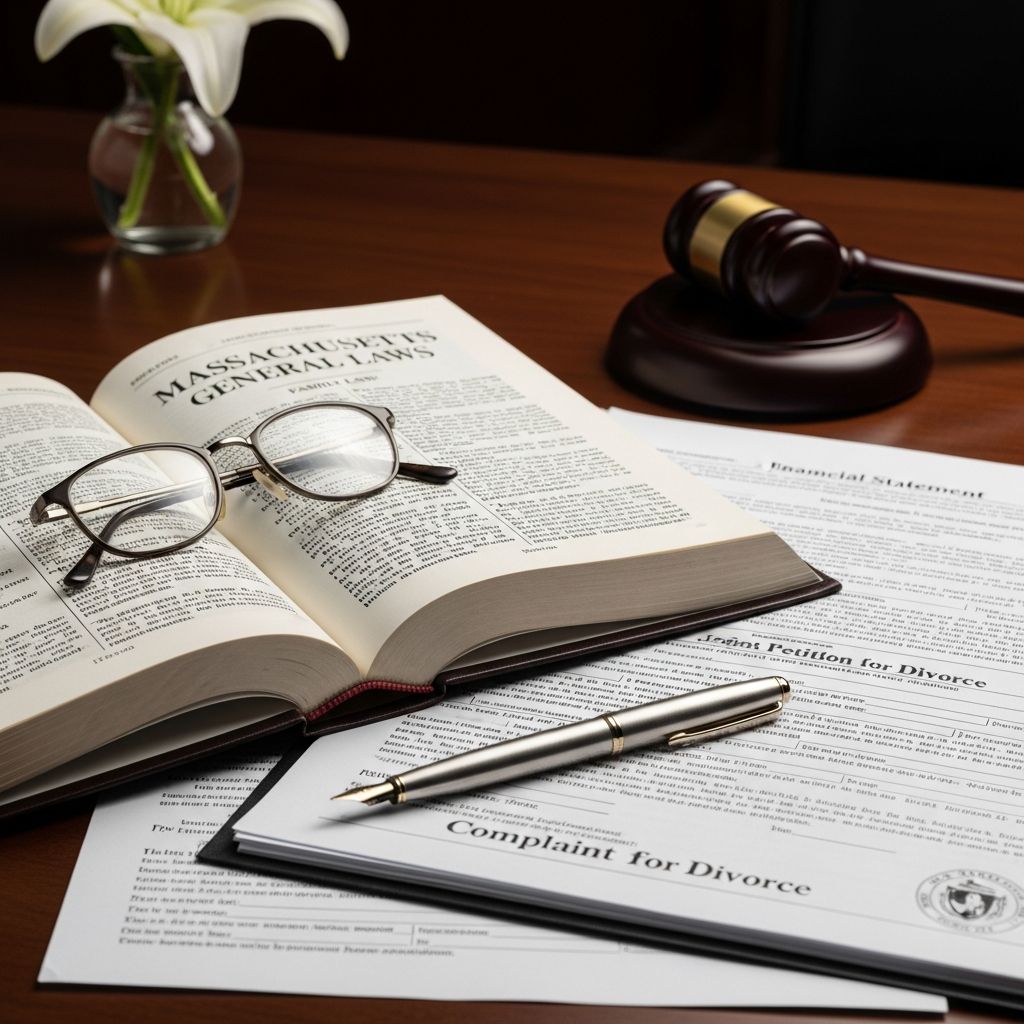
Guide to Massachusetts Divorce Filing
Massachusetts offers streamlined options for ending marriages through no-fault and fault-based processes. Understanding residency rules, document requirements, and court procedures is essential for a smooth filing.
Eligibility and Residency Rules for Divorce
To initiate divorce proceedings in Massachusetts, specific residency criteria must be met. If the grounds for divorce occurred within the state, at least one spouse needs to reside in Massachusetts at the time of filing. For grounds arising outside the state, one spouse must have lived in Massachusetts for a minimum of one year prior to filing.
These rules ensure the Probate and Family Court in the appropriate county has jurisdiction. Cases are typically heard in the county where one spouse resides, or where both previously lived together if one still does.
Types of Divorce Available in Massachusetts
Massachusetts recognizes three primary divorce categories: no-fault 1A (joint petition), no-fault 1B (complaint with statement), and fault-based divorces. No-fault options cite an irretrievable breakdown without assigning blame, while fault divorces require proof of misconduct.
- No-Fault 1A: Ideal for mutual agreement on all terms; both spouses file jointly.
- No-Fault 1B: Used when spouses agree the marriage is broken but disagree on details; starts with a complaint.
- Fault-Based: Involves proving grounds like adultery, cruelty, desertion, imprisonment, or non-support; more contentious.
No mandatory separation period exists before filing, unlike some states.
Essential Documents for Every Divorce Filing
All divorce types require core paperwork to establish the marriage and financial status. Key universal documents include:
| Document | Purpose | All Types? |
|---|---|---|
| Certified Marriage Certificate | Proves legal marriage | Yes |
| Financial Statements | Details income, assets, expenses | Yes |
| Record of Absolute Divorce (R-408) | Statistical reporting | Yes |
Additional forms vary by type and family situation.
Paperwork Specific to No-Fault 1A Divorces
For uncontested joint petitions, spouses submit Form CJD 101A alongside a notarized separation agreement covering property, debts, alimony, and custody. Include an Affidavit of Irretrievable Breakdown signed by both. If children are involved, add Child Custody form OCAJ-1, Child Support Guidelines Worksheet CJD304, and Parent Education Program certificates.
This process allows for quick resolution, often finalized in weeks after a hearing.
Requirements for No-Fault 1B and Fault Divorces
No-fault 1B begins with Form CJD 101 (Complaint for Divorce). Fault cases use the same complaint but specify grounds. Serve the spouse within strict timelines, followed by financial disclosures within 45 days.
Separation agreements are drafted post-filing after negotiations. Contested matters proceed to discovery, including interrogatories, document requests, and possibly depositions.
Handling Divorce When Children Are Involved
Parents must prioritize child welfare. Mandatory forms include custody plans and support calculations per state guidelines. Both attend a 6-hour Parent Education Program, with certificates filed.
- Custody: Joint or sole, based on child’s best interests.
- Support: Follows Massachusetts Child Support Guidelines.
- Visitation: Detailed parenting plans required.
Courts may deviate from guidelines via Findings and Determinations form if justified.
Step-by-Step Guide to Filing Your Divorce
Follow these steps for compliance:
- Confirm Eligibility: Meet residency; decide divorce type.
- Gather Documents: Obtain marriage certificate; prepare financials and agreements.
- Complete Forms: Use official Probate Court packets; notarize where needed.
- File Petition: Submit to Probate and Family Court in correct county; eFileMA for 1A/1B or mail/in-person.
- Pay Fees or Waive: $215 standard; file Affidavit of Indigency if low-income.
- Serve Spouse (1B/Fault): Via sheriff or constable; 14-day response window.
- Attend Hearing: 1A within 30-60 days; 1B/fault after 6 months minimum.
- Finalize: Judge approves; divorce effective 90 days post-judgment unless waived.
Court Fees, Waivers, and Cost Management
Filing fees total around $215, plus service costs. Indigent parties file an Affidavit of Indigency for waiver. Temporary orders on support or custody require additional motions and fees.
| Fee Type | Amount | Waivable? |
|---|---|---|
| Filing | $215 | Yes |
| Motion | $30-50 | Yes |
| Service | $50+ | No |
Timelines: From Filing to Final Judgment
1A divorces resolve in 1-3 months. 1B and fault cases take 6+ months due to mandatory waiting periods, discovery, and trials. Delays occur in contested property or custody disputes.
Financial Discovery and Property Division
Rule 410 mandates automatic disclosures: last 3 years tax returns, bank statements, paystubs, etc. These inform equitable distribution—no 50/50 split, but fair based on factors like marriage length and contributions.
Common Pitfalls and Best Practices
- Do: Consult forms on mass.gov; consider mediation for agreements.
- Don’t: Hide assets; miss deadlines for service or financials.
- Seek legal aid via Massachusetts Legal Assistance if low-income.
Frequently Asked Questions
Can I file for divorce online in Massachusetts?
Yes, eFileMA supports 1A and 1B filings; fault requires in-person or mail.
What if my spouse won’t sign a joint petition?
File a 1B complaint; serve them to start the contested process.
Is there a waiting period after filing?
No separation required upfront; 6 months for 1B/fault hearings.
How is child support calculated?
Using Child Support Guidelines Worksheet; courts consider income shares.
Can I get a fee waiver?
Yes, via Affidavit of Indigency proving inability to pay.
Seeking Professional Help
While DIY is possible for simple 1A cases, attorneys aid complex matters. Free resources: Mass Legal Services, court self-help centers.
References
- Divorce Filing Requirements — Miller Law Group, P.C. 2022. https://www.apmillerlawgroup.com/common-questions/divorce-faq/filing-requirements-in-ma-
- A Guide to Filing for Divorce in Massachusetts — LaFountain Wollman. 2023. https://lafountainwollman.com/a-guide-to-filing-for-divorce-in-massachusetts/
- How Do I File for Divorce in Massachusetts? — DivorceNet. 2022. https://www.divorcenet.com/resources/filing-for-divorce/massachusetts.htm
- The Divorce Process In Massachusetts — InfinLaw. 2024. https://www.infinlaw.com/divorce-process/
- Divorce Law in Massachusetts in 2026 — YouTube (Worcester Divorce Firm). 2025. https://www.youtube.com/watch?v=_wu7c7BaWMk
- How to File for a Massachusetts Divorce — Worcester Divorce Firm. 2023. https://www.worcesterdivorcefirm.com/family-law/divorce/
- Divorce — Mass.gov. 2026. https://www.mass.gov/divorce
Similar Articles








Read full bio of Sneha Tete