Your Guide to Legal Protesting
Understand your constitutional rights to protest safely and effectively while navigating laws and police interactions.
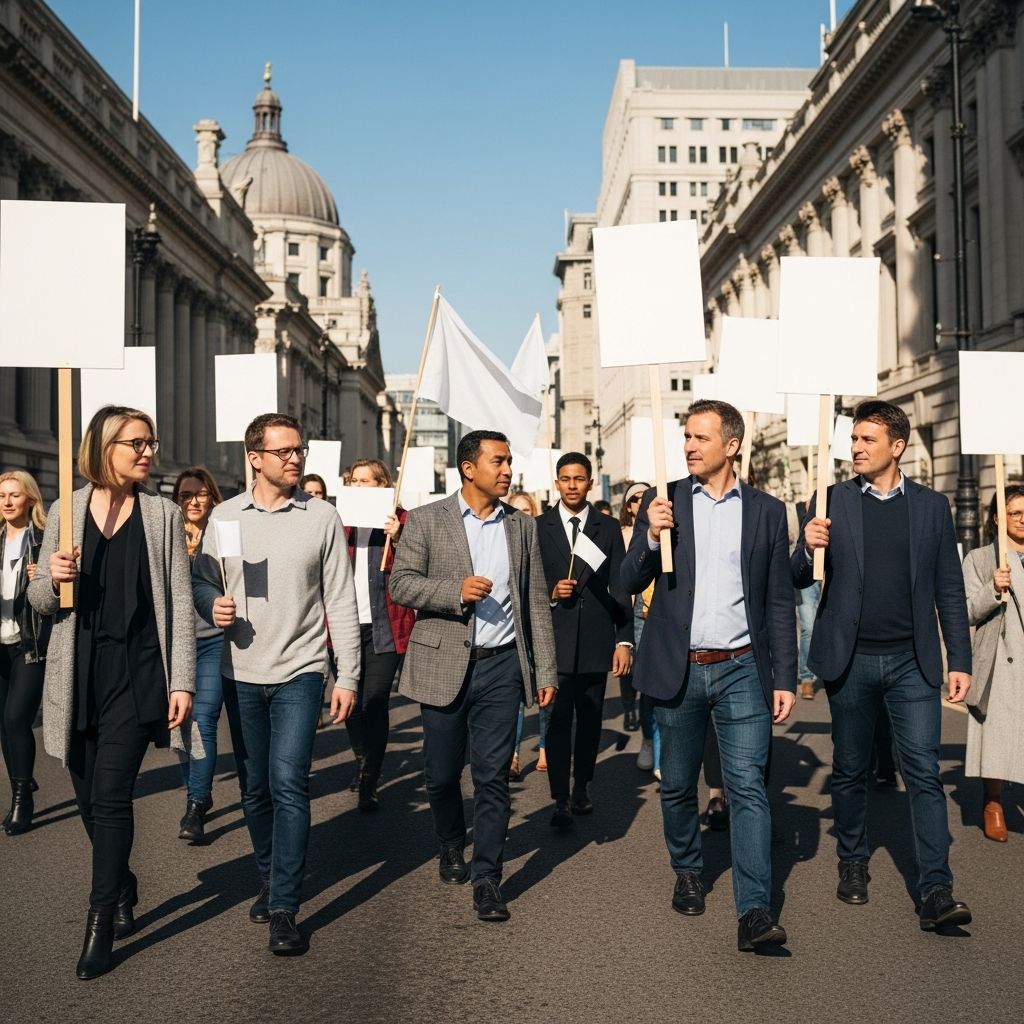
The First Amendment safeguards the right to peaceful assembly and free expression through protests in public spaces like streets, sidewalks, and parks. Governments may apply reasonable time, place, and manner restrictions to balance public safety and order, but these cannot target the content of your message.
Core Constitutional Protections for Demonstrations
Peaceful protests are a cornerstone of democracy, allowing citizens to voice grievances without fear of reprisal. This protection extends to activities such as holding signs, distributing flyers, chanting, and performing expressive acts like singing or dancing, provided they do not infringe on others’ rights or violate laws.
In traditional public forums, no permit is typically needed for small gatherings that stay on sidewalks and follow traffic rules. Larger events crossing streets or using amplification often require advance permits to manage logistics, but denials based on viewpoint are unconstitutional.
- Distributing literature or petitions on sidewalks, without blocking paths.
- Setting up informational tables for donations, if walkways remain clear.
- Expressive performances subject to local noise rules.
International human rights standards reinforce that states must facilitate peaceful protests and only intervene proportionally if safety is at risk.
When Permits Are Required and How to Obtain Them
Permits ensure coordinated use of public spaces for events like marches or rallies. Applications should be filed weeks ahead, but spontaneous protests responding to breaking news cannot be denied due to timing. Fees or insurance demands must include waivers for low-resource groups to avoid burdening free speech.
Local rules vary: check city ordinances for application offices and requirements. For instance, events blocking traffic or using sound equipment necessitate approvals.
| Event Type | Permit Likely Needed? | Key Considerations |
|---|---|---|
| Sidewalk vigil (small group) | No | Obey pedestrian signals; no blocking. |
| Street march | Yes | Route planning, traffic control. |
| Rally with speakers/amplifiers | Yes | Noise waivers if applicable. |
| Park gathering | Sometimes | Check designated areas. |
Counter-protesters share equal rights; police must protect all sides without favoring one.
Boundaries of Protected Speech and Actions
Not all expressions are shielded. Speech inciting imminent lawless action, true threats, or obscenity lacks protection. Civil disobedience, while symbolically powerful, is unlawful and may lead to arrest without First Amendment defense.
- Blocking traffic or entrances without permits is illegal.
- Physical harassment or trespassing voids protections.
- False statements defaming officials are unprotected.
Private property, including malls, follows owner rules; leave if asked or face trespass charges. Schools limit student speech for discipline, excluding vulgarity, drug promotion, or disruptions.
Interactions with Law Enforcement During Protests
Remain calm and assertive. You have the right to observe and record police in public, but do not interfere. If ordered to disperse, comply to avoid escalation, then challenge legally if rights were violated.
Do not resist arrest physically; state “I am exercising my rights” and request a lawyer immediately. Police cannot search phones or bags without consent or probable cause, though they may temporarily detain items.
- Carry ID if practical, but not required for mere presence.
- Ask “Am I free to leave?” to clarify status.
- Memorize contacts for legal aid.
For immigrants, arrests—even for protected acts—can impact status; know attorney numbers.
Planning for Safety and Risk Mitigation
Preparation minimizes dangers. Scout locations, monitor weather, and designate marshals for de-escalation. Share plans with trusted contacts and have medical info ready.
Police use of force must be necessary and proportional; demand care if injured. Avoid engaging provocateurs who may incite violence, forfeiting protections.
- Buddy system: Stay with groups.
- Legal observers: Document events.
- First aid kits and water on hand.
Special Considerations for Vulnerable Groups
Students: Off-campus or non-disruptive protests are broadly protected; schools regulate for order.
Immigrants: Rights apply universally, but criminal charges risk deportation—consult counsel.
Journalists/Media: Enhanced protections for newsgathering; do not delete footage.
Frequently Asked Questions
Do I need a permit for every protest?
No, small sidewalk activities often don’t require one, but street closures or large rallies do.
Can police arrest me for filming them?
No, recording public police activity is a First Amendment right, absent interference.
What if I’m on private property protesting?
Owners dictate rules; leave if told or risk trespass.
Are spontaneous protests allowed?
Yes, time limits cannot block responses to recent events.
Do children have protest rights at school?
Limited; non-disruptive expression is protected, but order prevails.
Post-Protest: If Arrested or Detained
Invoke rights silently: “I want a lawyer.” Do not discuss case without one. Bail processes vary; organizations like ACLU offer support. Courts scrutinize if arrests violated speech rights.
Document injuries or property damage for claims. Collective legal action strengthens challenges to unlawful restrictions.
References
- Rights of Protesters — ACLU of Arizona. Accessed 2026. https://www.acluaz.org/rights-protesters/
- Know Your Rights: Demonstrations and Protests — ACLU. Accessed 2026. https://www.aclu.org/sites/default/files/field_pdf_file/kyr_protests.pdf
- Right to Protest — Amnesty International. Accessed 2026. https://www.amnesty.org/en/what-we-do/freedom-of-expression/protest/
- Protest Rights in Texas — State Law Library of Texas. Accessed 2026. https://guides.sll.texas.gov/protest-rights
- Protesters’ Rights — American Civil Liberties Union. 2025-10-22. https://www.aclu.org/know-your-rights/protesters-rights
Similar Articles





Read full bio of Sneha Tete