
Guide to Hawaii Employment Laws and Worker Rights
Understand key Hawaii employment rules on wages, hours, leave, benefits, and protections to stay compliant and protect workplace rights.
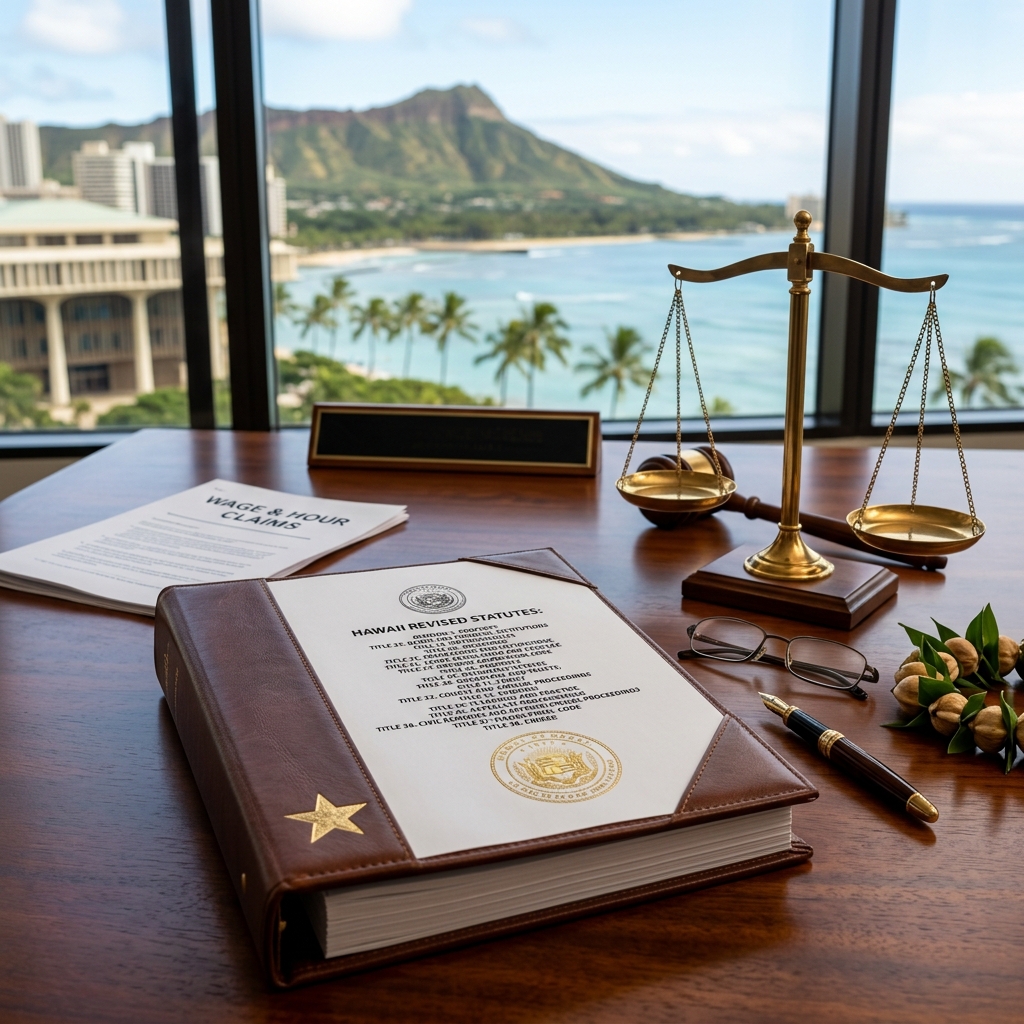
Hawaii’s employment laws form a distinctive framework that combines federal protections with state-specific rules on wages, hours, benefits, discrimination, and family leave. Employers operating in Hawaii and workers employed in the state need to understand how these rules intersect to prevent violations and protect workplace rights.[10]
This guide explains the major areas of Hawaii employment law in plain language, focusing on practical obligations for employers and core protections for employees. It is not legal advice, but an educational overview designed to help you spot issues and know when to seek professional counsel.
1. Core Features of Hawaii Employment Law
Like most U.S. states, Hawaii relies heavily on federal employment law, but it also adds important state-level protections and requirements.[10] Several themes define Hawaii’s approach:
- Worker-focused framework with higher minimum wage and broad civil rights protections.
- Combination of federal and state rules on wage and hour, discrimination, and workplace safety.[10]
- Unique laws such as mandatory health coverage and a separate family leave statute for certain employers.
- Active enforcement by the Department of Labor and Industrial Relations (DLIR) and the Hawaii Civil Rights Commission.[10]
2. Employment Relationship and At-Will Status
In Hawaii, the employment relationship is generally considered at-will, meaning either the employer or the employee may end the relationship at any time, with or without cause, and with or without notice, unless a specific contract or collective bargaining agreement states otherwise. At-will status, however, is limited by other laws:
- Employers cannot terminate employees for illegal reasons, such as discrimination based on protected categories.
- Retaliation for asserting rights (for example, filing a wage claim or discrimination complaint) is prohibited.
- Written contracts and union agreements may require cause for termination or particular procedures.
Understanding at-will employment is important: it gives flexibility, but it does not override civil rights protections, wage laws, or other statutory requirements.
3. Wage Standards and Pay Transparency
Hawaii’s wage rules aim to ensure that employees receive fair pay and clear information about their compensation.
3.1 Minimum Wage and Tipped Employees
Hawaii sets its own state minimum wage, which is higher than the federal minimum. Recent guidance indicates a statewide minimum wage of $16.00 per hour, with a separate minimum for tipped employees. Employers must monitor current statutory rates, because they can change over time.
Key points for minimum wage compliance include:
- Non-exempt employees must receive at least the state minimum wage for every hour worked.
- Tipped workers may be paid a lower cash wage, but tips plus cash pay must reach at least the full minimum wage.
- Local or industry-specific agreements cannot legally reduce the required minimum wage level.
3.2 Pay Frequency and Wage Statements
Hawaii law requires employers to pay employees on regular, pre-designated paydays and to provide written pay records each pay period. Typical features include:
- Wages must be paid at least twice per month or on another legally acceptable schedule.
- Payment must generally occur within a short period after the end of a payroll cycle (often within seven days).
- Employers must issue pay statements reflecting hours worked, pay rate, gross wages, deductions, and net pay.
3.3 Equal Pay and Wage Discrimination
Hawaii bans discrimination in the payment of wages and aims to prevent unequal pay for substantially similar work. Employers may not set pay rates based on protected categories such as race, sex, sexual orientation, age, religion, ancestry, disability, marital status, or other protected traits.
Equal pay concepts in Hawaii typically involve:
- Evaluating substantially similar work in terms of skill, effort, responsibility, and working conditions.
- Ensuring that differences in pay are based on legitimate factors, such as seniority, merit, or production, rather than protected status.
- Applying policies consistently across employees performing comparable duties.
3.4 Pay Transparency and Salary History Restrictions
Hawaii has adopted pay transparency rules and limits employers’ ability to seek salary history information.
- Employers with 50 or more employees must include a realistic salary range or hourly rate in job postings.
- Employers and their agents generally may not ask applicants about current or past wages, benefits, or other compensation, nor may they search public records to obtain this information.
- The goal is to reduce pay inequities and allow applicants to evaluate opportunities based on transparent compensation information.
| Topic | Hawaii Requirement (Summary) | Primary Legal Basis / Source |
|---|---|---|
| Minimum Wage | State minimum wage set above federal level; recent guidance cites $16.00 per hour. | State law; DLIR and compliance guides. |
| Pay Frequency | Wages generally paid at least twice monthly; paydays designated in advance. | Hawaii wage payment statutes; DLIR guidance. |
| Overtime | Time-and-a-half for hours worked over 40 in a workweek. | Hawaii wage and hour law; DLIR Wage & Hour FAQs. |
| Pay Transparency | Large employers must disclose pay range in job postings. | State pay transparency statute; compliance resources. |
| Equal Pay | No wage discrimination based on protected categories; equal pay for substantially similar work. | Hawaii civil rights law; Hawaii Civil Rights Commission guidance. |
4. Hours of Work, Breaks, and Overtime
Hawaii’s rules on hours and overtime largely follow federal law, but employers must pay close attention to state guidance on breaks for minors and recordkeeping.
4.1 Overtime Obligations
Under Hawaii wage and hour law, overtime is generally due when a covered employee works more than 40 hours in a workweek
- Overtime rate is usually 1.5 times the employee’s regular rate of pay.
- Extra hours beyond eight per day do not automatically constitute overtime under state law; the focus is on total weekly hours.
- Some employees may be exempt from overtime under federal or state standards, such as certain executive, administrative, or professional roles.
4.2 Meal and Rest Breaks
Hawaii does not broadly mandate meal or rest breaks for adult workers under state law, but there are specific requirements for young workers.
- For minors aged 14–15, employers must provide at least a 30-minute rest or meal period after five consecutive hours of work.
- For adults, breaks are often governed by employer policy, union contracts, or federal standards; state law does not guarantee paid breaks.
- Employers are still required to pay for all hours actually worked, including short breaks if they are treated as working time.
4.3 Recordkeeping
Employers must maintain accurate records showing hours worked and wages paid. Hawaii guidance indicates that these records must be kept for at least six years. Careful recordkeeping helps demonstrate compliance in case of audits or disputes.
5. Child Labor and Youth Employment Rules
Hawaii strictly regulates the employment of minors to protect their safety, health, and education. Child labor rules are enforced under Hawaii Revised Statutes and DLIR guidance.
5.1 Age Thresholds and Work Permits
In most cases, minors must be at least 14 years old to work, with limited exceptions for certain activities such as theatrical work or coffee harvesting. Additional requirements include:
- Minors aged 14–15 must obtain a Certificate of Employment before starting work.
- Minors aged 16–17 must obtain a Certificate of Age; once issued, it remains valid for multiple employers until the minor becomes 18.
- Employers are expected to verify age and keep certificate information in their records.
5.2 Hours and Scheduling Limits
Hawaii sets detailed limits on the hours that younger minors may work, especially when school is in session.
- During school sessions, 14–15-year-olds typically may work a limited number of hours per day and per week, often capped at around 3 hours per school day and 18 hours weekly.
- When school is not in session, limits are higher, up to 8 hours per day and 40 hours per week for these minors.
- Work must occur only within approved time windows, and minors must receive the required 30-minute break after 5 consecutive hours of work.
5.3 Hazardous Work Restrictions
Minors are barred from employment in hazardous occupations or in roles linked to adult entertainment. The state provides lists of prohibited job categories, and employers must ensure that minors do not perform dangerous tasks, even if other rules are met.
6. Family Leave and Time Off Protections
Hawaii combines federal leave protections with additional state rules on family-related absences. Employers must determine whether both federal and state laws apply to their workforce.
6.1 Hawaii Family Leave Law (HFLL)
The Hawaii Family Leave Law (HFLL) applies to employers with 100 or more employees and offers eligible workers up to four weeks of job-protected leave per calendar year. Covered reasons include:
- Birth or adoption of a child.
- Caring for a covered family member with a serious health condition.
- Certain military-related exigencies connected to a qualifying family member’s active duty service.
HFLL leave is typically unpaid, but employees may be able to use accrued paid leave (such as vacation or sick time) in coordination with the statute, depending on employer policy.
6.2 Interaction with Federal FMLA
Many Hawaii employers are also covered by the federal Family and Medical Leave Act (FMLA), which offers up to 12 weeks of unpaid, job-protected leave for certain family and medical reasons. When both laws apply, employees may receive protections under each, but the specific amount of leave and eligibility criteria can differ.
Employers should:
- Determine whether they meet FMLA coverage thresholds (usually 50 or more employees within a defined area).
- Align policies to ensure compliance with both HFLL and FMLA where applicable.
- Train supervisors and HR staff on leave rights to avoid interference or retaliation claims.
7. Health Coverage and Workers’ Compensation
Hawaii stands out for its strong requirements regarding health coverage and workers’ compensation, reflecting a broader focus on worker well-being.[10]
7.1 Prepaid Health Care Act (PHC)
Under Hawaii’s Prepaid Health Care Act, employers must provide health insurance to many employees working at least 20 hours per week for four consecutive weeks. This obligation is unusual compared with most other states and aims to ensure broad coverage for workers.
Key aspects of PHC include:
- Coverage requirements tied to minimum hours of work.
- Plan standards that must meet minimum benefit levels set by state law.
- Oversight by state agencies ensuring that employers maintain compliant health plans.[10]
7.2 Workers’ Compensation
All employers in Hawaii are required to carry workers’ compensation insurance for job-related injuries or illnesses, subject to limited exceptions.[10] Workers’ compensation provides medical and wage replacement benefits when employees are injured in the course of employment.
Employers should:
- Secure coverage through an insurer or approved program.
- Post required notices explaining workers’ compensation rights.[10]
- Report and handle workplace injuries in accordance with statutory procedures.[10]
8. Anti-Discrimination and Civil Rights Protections
Hawaii’s civil rights laws prohibit discrimination in employment practices and promote equal treatment in hiring, pay, promotion, and other employment decisions.
8.1 Protected Categories
Employers may not make employment decisions based on protected characteristics, which include:
- Race and color.
- Sex, gender identity or expression, sexual orientation, and breastfeeding status.
- Religion, ancestry, and national origin.
- Age and disability.
- Marital status.
- Arrest and court record, in most circumstances.
- Domestic or sexual violence victim status, when known to the employer.
8.2 Scope of Prohibited Conduct
Discrimination is prohibited not only in termination but across the full range of employment activities. This includes:
- Recruitment and job advertising.
- Hiring, promotion, and transfers.
- Pay, benefits, and training opportunities.
- Discipline and termination decisions.
The Hawaii Civil Rights Commission receives and investigates discrimination complaints and may pursue enforcement actions when violations occur.
9. Enforcement, Compliance Tips, and WARN Considerations
Multiple agencies and laws shape enforcement of employment standards in Hawaii, and employers should take a proactive approach to compliance.[10]
9.1 Key Enforcement Bodies
- Department of Labor and Industrial Relations (DLIR) – enforces wage and hour laws, child labor rules, and related standards.[10]
- Hawaii Civil Rights Commission – investigates and enforces state anti-discrimination laws.
- Federal agencies – such as the U.S. Department of Labor and the Equal Employment Opportunity Commission, enforce federal standards that apply alongside state law.[10]
9.2 WARN Act and Layoff Notices
Hawaii employers covered by the federal Worker Adjustment and Retraining Notification (WARN) Act must provide a 60-day notice before certain mass layoff or plant closing events. Although WARN is a federal law, it affects Hawaii workers and complements the state’s broader concern with economic security.[10]
9.3 Practical Compliance Practices
For employers, effective compliance with Hawaii employment law typically involves:
- Regularly reviewing policies and handbooks to match current state and federal requirements.
- Training managers and HR staff on wage rules, leave rights, discrimination prohibitions, and youth employment limits.
- Keeping detailed records of hours, pay, and employment decisions for at least six years.
- Consulting counsel or trusted compliance resources when implementing major changes such as layoffs or pay restructuring.
10. FAQs on Hawaii Employment Laws
FAQ 1: Does Hawaii require employers to give meal breaks to adult workers?
State law does not generally mandate meal or rest breaks for adult employees. The only explicit statewide break requirement applies to minors aged 14–15, who must receive a 30-minute rest or meal period after five consecutive hours of work. For adult workers, breaks are typically governed by employer policy, union contracts, or federal standards on compensable time.
FAQ 2: How is overtime calculated in Hawaii?
Overtime is owed when a covered employee works more than 40 hours in a single workweek, and the typical overtime rate is one and one-half times the employee’s regular rate of pay. Extra hours beyond eight in a day do not automatically require overtime under Hawaii law; employers should focus on total weekly hours.
FAQ 3: Can an employer in Hawaii ask about my previous salary?
Hawaii restricts employer inquiries into an applicant’s salary history. Employers and their agents are generally prohibited from asking about prior wages or benefits and may not search public records for such information. Many larger employers must also disclose a reasonable pay range in job postings, reinforcing pay transparency.
FAQ 4: Are employers required to provide health insurance?
Under Hawaii’s Prepaid Health Care Act, many employers must provide health insurance to employees who work at least 20 hours per week for four consecutive weeks. This obligation is broader than in most other states and is enforced through state oversight mechanisms.[10]
FAQ 5: Who can I contact if I believe my rights have been violated?
Workers who suspect wage violations can contact the Hawaii Department of Labor and Industrial Relations, which oversees wage and hour enforcement.[10] Those who believe they have been discriminated against based on protected characteristics may file a complaint with the Hawaii Civil Rights Commission. In both cases, employees may also consider consulting a private attorney for advice on their specific situation.
References
- Wage and Hour FAQs — Hawaii Department of Labor and Industrial Relations. 2023-05-01. https://labor.hawaii.gov/wsd/wage-and-hour-faqs/
- Department of Labor and Industrial Relations – State of Hawaii — State of Hawaii. 2024-06-10. https://labor.hawaii.gov/
- Hawaii Employment and Labor Laws — Paylocity Compliance Resource. 2024-01-15. https://www.paylocity.com/resources/tax-compliance/state-laws/hawaii/
- Hawaii Labor Laws: A Comprehensive Guide — MyShyft. 2025-01-10. https://www.myshyft.com/state-labor-laws/hawaii/
- Hawaii Employment & Labor Law Overview 2025 — Deputy Compliance Hub. 2025-03-05. https://www.deputy.com/compliance-hub/states/hawaii
- Hawaii Employment Law Overview — Brightmine HR Compliance Resource. 2024-02-20. https://www.brightmine.com/us/resources/hr-compliance/hawaii-employment-law/
- Quick and Easy Guide to Labor & Employment Law: Hawaii — Baker Donelson. 2024-07-01. https://www.bakerdonelson.com/easy-guide-hawaii
Similar Articles








Read full bio of Sneha Tete




