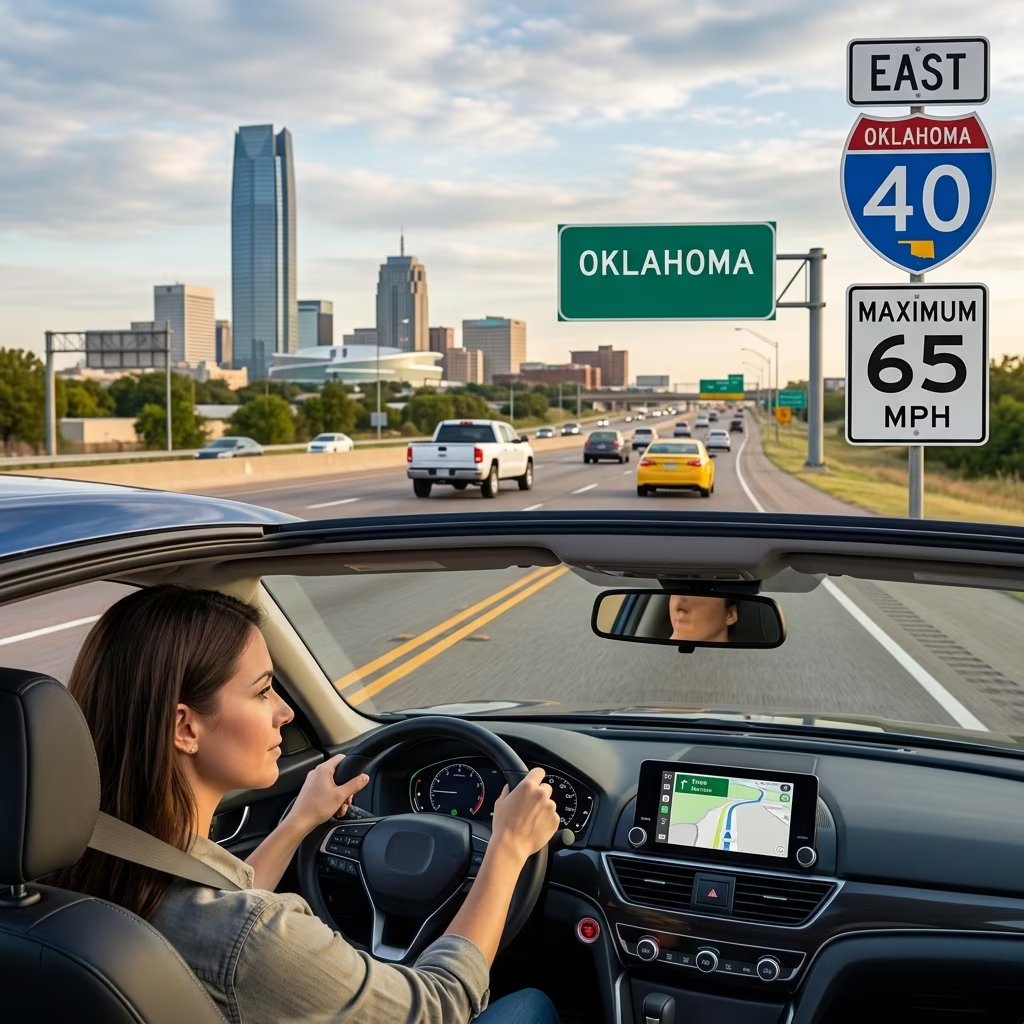
Oklahoma’s traffic laws are collected primarily in Title 47 of the Oklahoma Statutes, which sets out the rules for how vehicles are driven, licensed, and regulated throughout the state. Understanding these rules is essential not only to avoid tickets, but also to reduce crashes and keep all road users safe.
This guide offers a practical overview of core Oklahoma traffic rules, using plain language rather than legal jargon. It does not provide legal advice, but it will help you understand the basic expectations for motorists and what can happen when those rules are violated.
Overview of Oklahoma Traffic Law Framework
Most general traffic rules in Oklahoma are found in Title 47 – Motor Vehicles of the state statutes. These laws govern how roads are used, how vehicles must be equipped, and how drivers are licensed.
- Title 47 covers definitions, rules of the road, licensing, registration, insurance, and penalties.
- The Oklahoma Judiciary and court network publish current statutory text online, making it easier to verify the law’s wording.
- Specific regulations for new motor vehicles and dealers are organized separately, but still under Title 47.
When you receive a citation or face a license issue, the officer or court will generally refer to a specific section of Title 47 that explains the alleged violation.
Core Rules of the Road
Regardless of where you drive in Oklahoma, certain basic rules apply on public streets and highways. These laws are designed to ensure predictable movement of traffic and minimize conflicts between drivers, pedestrians, and cyclists.
Lane Use and Staying in Your Lane
Oklahoma law requires that a vehicle be driven “as nearly as practicable entirely within a single lane” and that drivers may not move from that lane until it is safe to do so. This rule is the basis for many citations involving unsafe lane changes and weaving between lanes.
- Drivers must keep their vehicle within the boundaries of a single lane.
- Before changing lanes, drivers must make sure the maneuver can be completed safely.
- Improper lane changes can lead to citations and may be considered evidence of careless or distracted driving.
Right-of-Way Basics
Right-of-way rules determine who proceeds first at intersections, crosswalks, and when merging. Oklahoma follows widely used principles similar to many other states.
- At stop signs, the driver who arrives first generally has the right-of-way, but all drivers must proceed only when it is safe.
- At uncontrolled intersections, drivers must yield to traffic already in the intersection and to vehicles approaching from the right.
- Drivers must yield to pedestrians in crosswalks and to emergency vehicles with lights and sirens activated.
Failure to yield is one of the most common causes of intersection crashes and can result in significant civil liability if injuries occur.
Turning Movements and Signals
Although the exact turning rules are scattered throughout Title 47, the core ideas are straightforward:
- Use turn signals in advance of turns and lane changes.
- Make left turns from the designated left-turn lane or the far left lane whenever possible.
- Right turns should be made from the rightmost lane into the rightmost available lane.
- Obey signs that prohibit certain turns, such as “No Right Turn on Red.”
Improper turns are frequently cited in crash reports and can be a basis for both traffic tickets and increased insurance premiums.
Oklahoma Speed Limit Rules
Speed control is one of the most important aspects of traffic safety. Oklahoma sets different limits depending on the type of roadway, and these limits can be changed by local authorities through posted signs.
| Road Type | Common Posted Range | Notes |
|---|---|---|
| Urban residential streets | 20–35 mph | Often reduced near schools and parks. |
| Urban arterials and business districts | 35–45 mph | Frequent signals and intersections. |
| Two-lane rural highways | 55–65 mph | May vary based on geometry and crash history. |
| Interstates and turnpikes | 65–75 mph | Higher speeds allowed where conditions permit. |
Drivers can be cited not only for exceeding the posted limit, but also for driving too fast for conditions—such as heavy rain, fog, or icy roads—even when traveling below the posted speed.
Licensing and Registration Requirements
In addition to obeying rules of the road, motorists must comply with Oklahoma’s licensing and registration requirements to legally operate a vehicle.
Driver Licensing
Oklahoma issues different types of driver licenses depending on age and vehicle type. Although administrative details are governed by multiple statutes and regulations, some basics apply to all motorists:
- You must hold a valid Oklahoma driver license, or a recognized license from another jurisdiction, to drive on public roads.
- Driving with a suspended, revoked, or expired license can lead to additional penalties and possible vehicle impoundment.
- Commercial drivers are subject to stricter rules because they operate large vehicles and carry passengers or cargo.
Vehicle Registration and Insurance
Most vehicles operated on Oklahoma roads must be registered with the state and carry minimum liability insurance.
- Registration typically must be renewed yearly, and license plates must be visible and legible.
- Operating an unregistered or uninsured vehicle can result in citations, fines, and possible suspension of driving privileges.
- The Oklahoma New Motor Vehicle Commission oversees statutes related to new vehicle sales and dealer activities, which indirectly affect how vehicles are titled and sold.
Special Rules for Bicycles and Other Devices
Oklahoma applies many of its traffic rules to people riding bicycles and using certain scooters or similar devices on public roads.
- Bicyclists are generally required to obey the same rules of the road that apply to motor vehicles, including signals and lane usage.
- Riding while clinging to another moving vehicle is prohibited for safety reasons.
- Local ordinances may impose additional requirements, such as helmet rules for minors in some communities.
These rules recognize that cyclists and similar road users are vulnerable and must operate predictably for everyone’s safety.
Emergency Vehicles and Yielding Obligations
Oklahoma law places special obligations on ordinary drivers when emergency vehicles such as police cars, fire trucks, and ambulances are responding to incidents.
- Authorized emergency vehicles must be equipped with sirens and flashing lights consistent with statutory requirements.
- When an emergency vehicle approaches with lights and siren activated, drivers must yield the right-of-way, pull to the right if practical, and stop until it is safe to proceed.
- Failing to yield to emergency vehicles can lead to serious penalties and may aggravate liability in crash situations.
Distracted Driving and Texting Rules
While the detailed statutory language has evolved over time, Oklahoma has taken steps to address distracted driving, including texting at the wheel.
- Texting while driving has been limited by state law, particularly for certain categories of drivers.
- Even where specific conduct is not expressly banned, officers may cite drivers under broader unsafe or inattentive driving provisions if distraction contributes to reckless behavior.
- Using hands-free technology reduces risk, but drivers are still expected to maintain full control of their vehicle.
Studies and enforcement experience show that distracted driving significantly increases collision risk, making this a high-priority area for safety campaigns.
DUI, Impairment, and Child Endangerment
Driving under the influence of alcohol or drugs is one of the most serious traffic offenses in Oklahoma. Penalties can include jail time, fines, license suspension, and mandatory treatment. Public safety messaging has also emphasized enhanced consequences when children are present in the vehicle.
- Oklahoma law imposes criminal penalties on drivers who operate vehicles while impaired by alcohol, drugs, or a combination of substances.
- Transporting a child while impaired can be charged as child endangerment, reflecting the heightened risk to minors.
- Repeat DUI offenders may be required to appear before a judge and face stricter sanctions compared to first-time offenders.
Because DUI laws intersect with criminal statutes and administrative license rules, anyone facing such charges should consider seeking legal counsel to understand all potential consequences.
Common Violations and Possible Penalties
Traffic citations in Oklahoma can range from minor infractions to serious misdemeanors or felonies. While exact fines and sanctions depend on the statute and the driver’s record, a few types of violations appear frequently:
- Speeding – Exceeding posted limits or driving too fast for conditions.
- Failure to yield – Ignoring right-of-way rules at intersections and crosswalks.
- Improper lane usage – Weaving, unsafe lane changes, or failing to maintain lane.
- Distracted driving – Texting or other behaviors that remove attention from the road.
- DUI/Impaired driving – Operating a vehicle under the influence of alcohol or drugs.
Penalties can include:
- Fines and court costs
- Points or notations on the driving record
- License suspension or revocation for serious or repeated offenses
- Higher insurance premiums or policy cancellation
In cases involving injury or property damage, civil lawsuits may be filed in addition to the traffic charges.
Local Ordinances and How They Interact with State Law
While most core rules stem from Title 47, Oklahoma cities and towns may adopt local traffic ordinances that supplement state law.
- Municipal codes often mirror state law but may add details about parking restrictions, school zones, and residential speed limits.
- Local ordinances may set procedures for installing signals, signing intersections, and designating one-way streets.
- Drivers are responsible for obeying both state statutes and lawful local rules, even if they are unfamiliar with the specific community.
Practical Tips for Staying Compliant
Given the breadth of Oklahoma traffic laws, it helps to focus on a few practical habits that reduce risk of violations:
- Observe posted signs and markings – They provide the most immediate guidance on speed, lane use, and turns.
- Drive defensively – Anticipate errors by other drivers and leave space to react.
- Avoid distractions – Put phones away or use hands-free options; adjust navigation before you start driving.
- Never drive impaired – Arrange for a sober driver or alternative transport if you have been drinking or using drugs.
- Keep documents current – Maintain up-to-date license, registration, and proof of insurance.
Frequently Asked Questions About Oklahoma Traffic Laws
Do Oklahoma traffic laws apply to bicyclists?
Yes. People riding bicycles on public roads are generally required to obey the same rules that apply to drivers of motor vehicles, including signals, lane use, and right-of-way.
Can I be cited for speeding even if I am below the posted limit?
Potentially. If your speed is unsafe for current conditions—such as heavy rain, ice, or limited visibility—you may be cited under general provisions requiring reasonable and prudent driving, even when you are below the posted limit.
What happens if I fail to yield to an emergency vehicle?
Failing to yield to an emergency vehicle using lights and siren can result in a citation and may increase your liability if a crash occurs. Drivers are required to pull over and stop when it is safe to do so.
Is texting while driving illegal in Oklahoma?
Oklahoma has enacted restrictions on texting while driving, particularly for certain drivers, and officers may also rely on broader unsafe driving laws when distraction leads to hazardous behavior.
Where can I read Oklahoma traffic statutes directly?
You can review current statutory language in Title 47 through official or authoritative online collections of Oklahoma law. These resources provide the exact text that courts and officers rely upon.
References
- Oklahoma Statutes Title 47. Motor Vehicles — Oklahoma Legislature. 2019-12-01. https://oksenate.gov/sites/default/files/2019-12/os47.pdf
- Oklahoma Traffic Laws — FindLaw. 2024-01-01. https://www.findlaw.com/state/oklahoma-law/oklahoma-traffic-laws.html
- 2025 Oklahoma Statutes: Title 47. Motor Vehicles — Justia Law. 2025-01-01. https://law.justia.com/codes/oklahoma/title-47/
- Title 47 of the Oklahoma Statutes — Oklahoma State Courts Network (OSCN). 2024-01-01. https://www.oscn.net/applications/oscn/Index.asp?ftdb=STOKST47&level=1
- Chapter 1 Traffic Code; General Provisions — Lone Grove Municipal Code. 2023-01-01. https://codelibrary.amlegal.com/codes/lonegroveok/latest/lonegrove_ok/0-0-0-2515
- Laws, Rules, & Statutes — Oklahoma New Motor Vehicle Commission, Oklahoma.gov. 2024-01-01. https://oklahoma.gov/onmvc/laws-rules-statutes.html
- 5 Driving Laws in Oklahoma You May Not Know — Fulmer Sill. 2026-01-01. https://www.fulmersill.com/blog/5-driving-laws-in-oklahoma-you-may-not-know/